
Visit
€
Praia Grande
Sintra
Named by The Sunday Times as one of Europe's 20 best beaches, Praia da Adraga still demands effort to reach, and that's part of what makes it worth it. Dramatic cliffs, rock pools at low tide, and an Atlantic that doesn't forgive complacency.
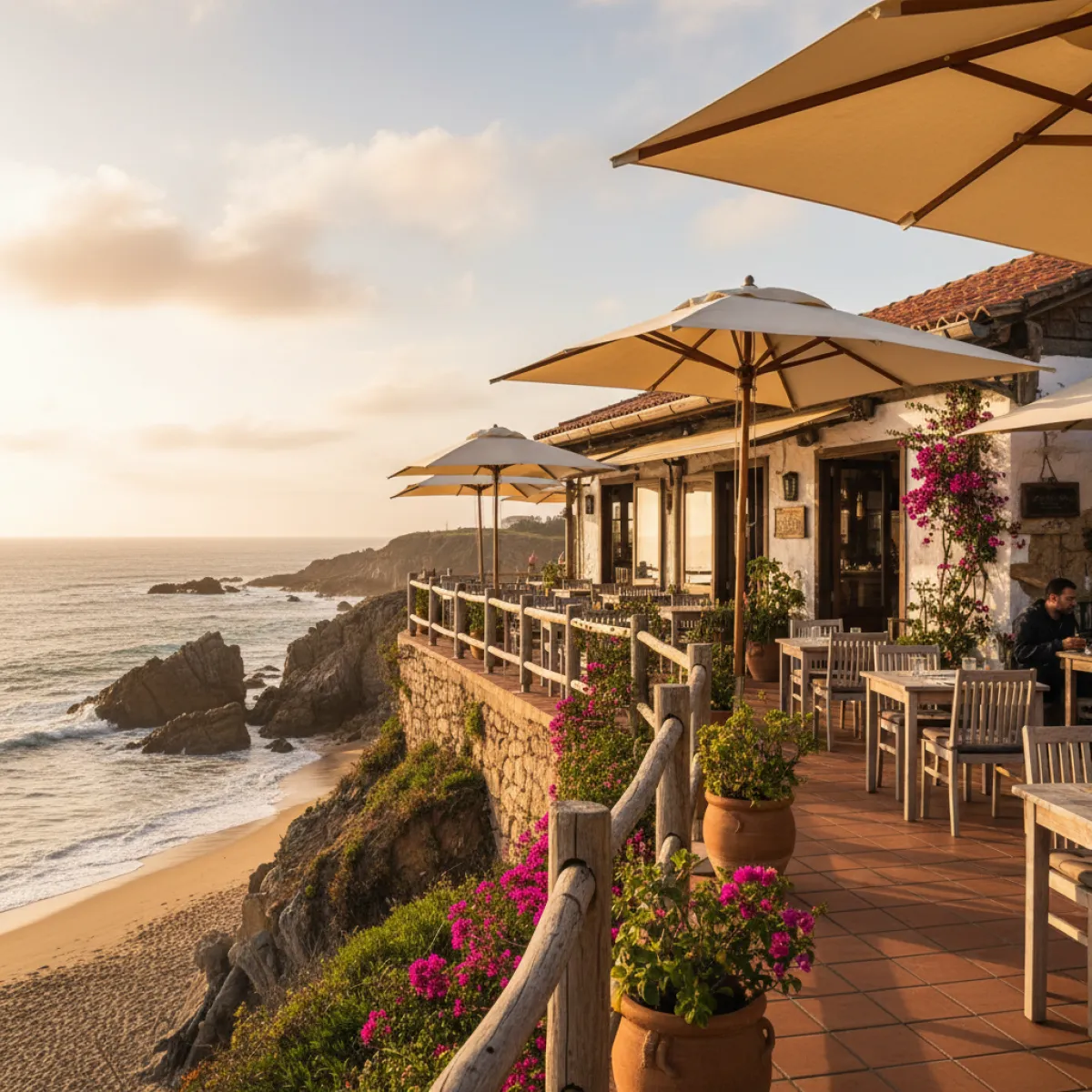
In 2003, The Sunday Times listed Praia da Adraga among Europe's 20 best beaches. For anyone who'd been driving the winding road to Colares since childhood, the reaction was mixed, pride, plus a slight panic that the word was out. Two decades on, Adraga still requires effort to reach, and that effort works as a natural filter.
The official address is R. da Praia da Adraga, 2765-065 Colares, Sintra, but no GPS can prepare you for what happens when the narrow road ends and the Atlantic appears framed between dark rock cliffs. This isn't a postcard beach, it's too dramatic for that. The rock formations jutting from the sand look like they belong on another planet, and the late afternoon light does something to the whole scene that no phone camera can properly capture.
Adraga sits within the Sintra-Cascais Natural Park, in the parish of Colares. From Sintra town, it's roughly a 20-minute drive via the N375 toward Colares, then follow signs to the beach. The road narrows considerably in the last stretch, if you meet a tour bus coming the other way, someone's reversing. The car park at the clifftop is small, and on summer weekends it fills early. My advice: arrive before 10am or after 4pm. If the lot is full, there's informal parking along the road, but never block the lane.
Without a car, things get tricky. There's no direct public transport to the beach. An Uber from Sintra runs about €12-15, but getting one for the return can be a challenge, save a local taxi number or arrange a pickup time in advance.
Adraga has fine sand and clear water, but clear doesn't mean warm. This is the Atlantic, western coast, water temperature rarely tops 18°C even in August. Bring a wetsuit if you plan to properly swim, or do what most people do: wade in to your waist, yelp, and retreat to your towel.
Currents can be strong, particularly on an incoming tide. There are lifeguards during beach season (June through September), but outside that window the beach is unmonitored. Respect the ocean, it's not a pool.
What makes Adraga special is the rock. At low tide, tidal pools form along the base of the cliffs, full of anemones and small crabs. It's a perfect activity for kids (and adults who still like turning over stones). The cave on the northern end of the beach is accessible at low tide and worth exploring, but check tide times before you wander in.
There's a restaurant right by the beach, Restaurante da Adraga, serving grilled fish and seafood. It's not cheap for what it is, expect €€ for a full meal, but the location justifies part of the markup. If you're on a budget, pack a picnic. There's no shop nearby, so stock up in Colares or Sintra before heading down.
If you'd rather explore the area, nearby Praia Grande has more dining options and is equally spectacular, though with a different character, more open, more surfers, more bustle.
Adraga works brilliantly as part of a day dedicated to Sintra's coastline. If you're planning your visit, our 2-day Sintra itinerary includes suggestions for combining palaces and beaches without losing your mind in traffic. And if you want to understand the geography, Colares, Várzea de Sintra, the serra, the Sintra neighborhood guide gives you the full picture.
For accommodation near the coast, Moon Hill Hostel is a budget-friendly option well positioned for exploring this side of Sintra without being stuck in the historic center.
Praia da Adraga doesn't need inflated adjectives. The cliffs speak for themselves, the sand is good, the water is cold, and the road down filters out anyone who doesn't really want to be there. In 2026, that's already worth a lot.