Top 10 Things to Do in Sintra, Palaces, Gardens & Unexpected Corners
From the terraces of Pena Palace to the grottoes of Quinta da Regaleira and the wild sands of Praia da Ursa, a practical, opinionated guide to exploring Sintra with the right shoes and enough time.
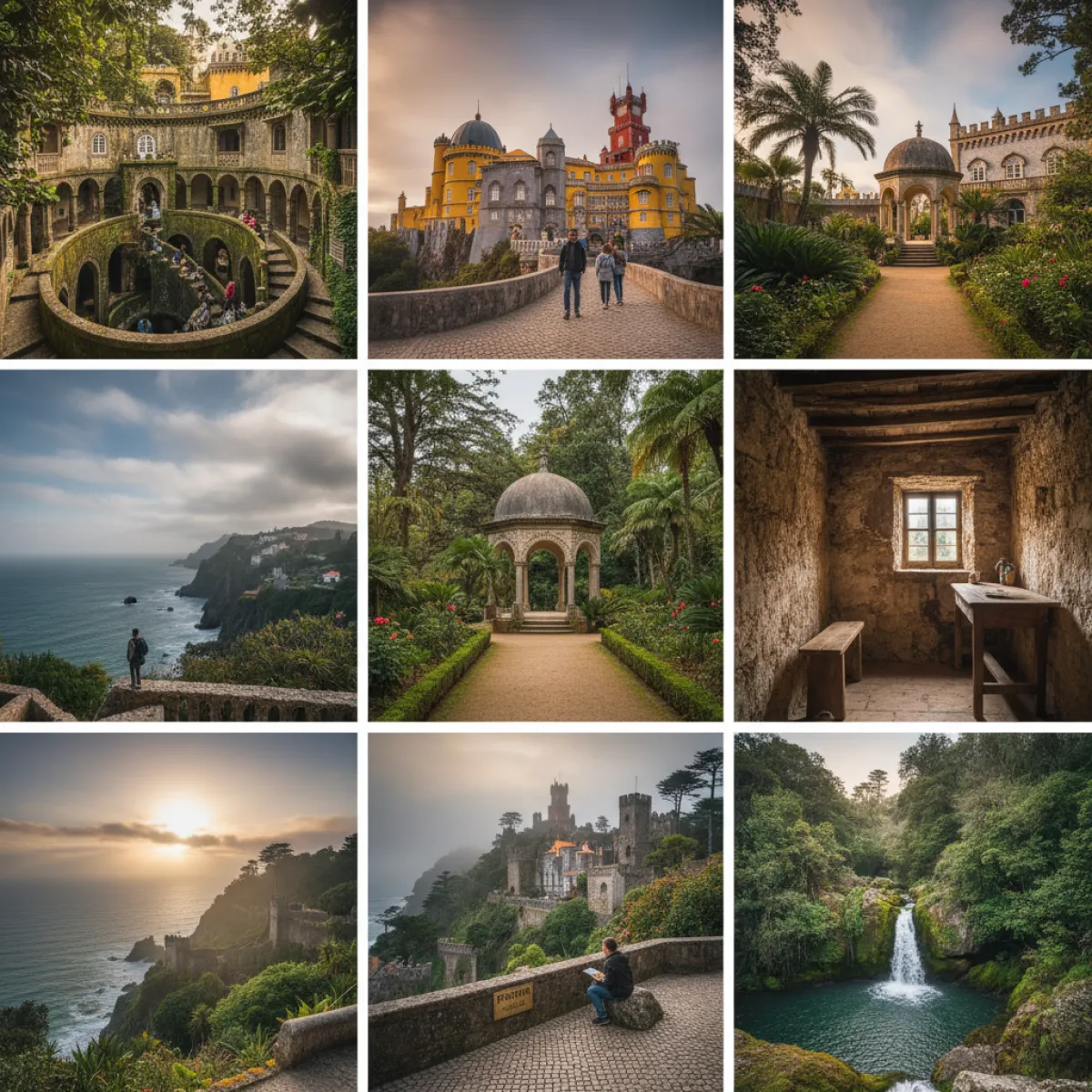
Sintra doesn't welcome visitors so much as it absorbs them. The serra, perpetually wreathed in mist and carpeted in moss, operates on its own terms, cooler, damper, and considerably more theatrical than the rest of the Lisbon coast. Byron called it a "glorious Eden" in 1809, and while the tour buses have arrived since then, the landscape remains stubbornly faithful to his description. The trick is knowing how to navigate it.
1. Pena Palace: The Case for Early Rising
Yes, it's the most visited monument in Sintra. Yes, the colours, canary yellow, terracotta red, lavender, look like they were chosen by a particularly exuberant child. And yes, it works. The Palácio da Pena, perched at the highest point of the serra, is a nineteenth-century Romantic fantasy made real: part Gothic, part Moorish, part Manueline, entirely committed to the idea that more is more. Fernando II, the German prince who commissioned it, wanted a summer retreat that doubled as an aesthetic manifesto. He succeeded. Arrive at 9:15, when the gates open and the morning fog still clings to the towers, and you'll have fifteen minutes of relative solitude before the crowds appear. Tickets are €14 for the full circuit (palace and park); book online. The surrounding park, 85 hectares of sequoias, tree ferns, and centuries-old camellias, deserves at least ninety minutes of unhurried walking.
2. Quinta da Regaleira: Descending into the Strange
The Regaleira is quite possibly the strangest place in Portugal, which, in a country with a long tradition of architectural eccentricity, is a meaningful claim. Built at the turn of the twentieth century for António Augusto Carvalho Monteiro, a Brazilian-born magnate with deep pockets and deeper interests in Freemasonry, alchemy, and the Knights Templar, the estate is an esoteric theme park disguised as a palace garden. The centrepiece is the Initiation Well, a 27-metre inverted tower that spirals down nine levels into the earth. Descend in silence (if other visitors allow it), and you'll emerge into a network of grottoes and tunnels that open onto a small lake. Admission is €10. Go early morning or late afternoon, when the light filters through the canopy and gives the whole place a quality that borders on the hallucinatory. For a broader sense of the town's layout and its distinct quarters, our Sintra neighbourhood guide is a useful starting point.
3. Castle of the Moors: Walls with a View
Most visitors leap straight to Pena and skip the medieval castle that occupies the adjacent ridge. This is a mistake. The Castelo dos Mouros, originally built in the eighth century and restored by Fernando II in the nineteenth, offers Sintra's finest viewpoint, and the climb along the crenellated walls, with uneven stone steps and intermittent handrails, has a quality of genuine adventure that the polished palace interiors can't match. Entry is €8 (or included in the combined ticket), and the full circuit takes about 45 minutes. Wear shoes with grip; the stone gets slippery in the damp.
4. The Historic Centre: Lanes, Pastries, and Proper Coffee
Sintra's centre is small, walkable in thirty minutes, but dense. The Palácio Nacional, with its twin conical chimneys visible from half the town, anchors the main square and is worth visiting for the Sala dos Brasões (a ceiling painted with the coats of arms of 72 noble families) and the Sala das Pegas, decorated with 136 painted magpies. Legend holds that each bird represents a lady of the court who spread gossip about King João I. Admission is €10. Afterwards, thread your way through the side streets to Fábrica das Verdadeiras Queijadas da Sapa, in operation since 1756. Order half a dozen (around €5) and eat them warm, the flaky pastry crumbles, and the filling of fresh cheese, cinnamon, and sugar dissolves on the tongue. The travesseiros at Piriquita are the other essential Sintra pastry: almond cream wrapped in puff pastry, best eaten at the counter with a strong espresso.
5. Monserrate Palace and Park: The Quieter Romanticism
Monserrate is the anti-Pena. Where the Palácio da Pena shouts in colour and form, Monserrate whispers. This mid-nineteenth-century neo-Moorish palace, surrounded by one of Europe's most remarkable botanical gardens, was the project of Francis Cook, an English textile merchant with more money than restraint. The result is a 33-hectare park containing species from five continents, organised by geographic zone, Mexican fern valley, rose garden, Japanese garden. The palace, recently restored, has stucco interiors so delicate they look like they were carved from icing sugar. Admission is €8, and because it sits 3.5 km from the centre, it receives a fraction of the visitors that crowd the other monuments. Drive, or take bus 435. Allow two hours.
6. The Capuchos Trail: Walking the Serra Properly
The Convento dos Capuchos, wedged into the rocks of the serra at 450 metres above sea level, is an exercise in radical asceticism. Built in 1560 by Franciscan friars, the cells are so small you enter sideways, the corridors are lined with cork, and the silence is total. Admission is €7. The convent sits 10 km from the centre, fifteen minutes by car, roughly two hours on foot along the serra trail. The path, marked but unpaved, cuts through dense forest of oak and cork, and ranks among the best walks in the greater Lisbon region. Bring water and a windbreaker; the weather shifts fast at altitude.
7. Praia da Ursa: The Wild Coast
Sintra isn't only about the serra, it's also about the coast. Praia da Ursa, reached by a steep 20-minute trail from the road to Cabo da Roca, is one of Europe's most dramatic beaches: 100-metre vertical cliffs, wind-sculpted rock formations, golden sand with zero infrastructure. No bar, no sunbed rental, no lifeguard. Go with proper footwear, sunscreen, and the understanding that the climb back up is demanding. The best time is late afternoon, when the low-angle light turns the rocks to gold. If you'd rather something more accessible, Praia da Adraga, five minutes by car, has parking, a decent restaurant, and safer swimming conditions. Those travelling from Cascais for the day will find Sintra one of the most rewarding excursions within easy reach.
8. Seteais: Tea with a View of the Serra
The Palácio de Seteais, now the Tivoli Palácio de Seteais (a five-star hotel), is one of Portugal's most elegant neoclassical buildings. Even if you aren't staying, you can book afternoon tea on the terrace (around €35 per person) and take in the view across the serra and the Pena Palace while eating scones with berry compote and cucumber sandwiches that would make a London hotel blush. Reservations required. The triumphal arch connecting the palace's two wings frames the Pena in the distance, one of the most perfectly composed visual moments in the country.
9. Markets and Local Life: Beyond the Palace Circuit
Sintra has a life of its own that escapes visitors who stick to the monument trail. The Mercado Municipal de São Pedro runs on the second and fourth Sunday of each month and is one of the best in the region: stalls selling Azeitão cheese, cured meats from the serra, honey, corn bread, and local ceramics. Arrive before 10 a.m. for first pick. On other days, Café A Raposa on Rua Gil Vicente serves rye bread toasts with melted serra cheese and cured ham that justify the detour. For dinner, if you stay until evening, and you should, try Incomum, chef Luís Santos's restaurant in a converted wine cellar, where the menu changes weekly and the tasting menu runs to €65. Book two days ahead. Understanding how local culture across greater Lisbon expresses itself in its various territories makes Sintra's distinctiveness all the more vivid.
10. Queluz National Palace: Portugal's Versailles
Technically in Queluz rather than Sintra, but just 15 minutes by train and almost always overlooked by conventional itineraries. The Palácio de Queluz, the royal family's eighteenth-century summer residence, contains rococo interiors of a richness that rivals any European court. The Throne Room, entirely in gilded woodwork, and the Ambassadors' Hall, with its chessboard floor in pink and white marble, are particularly striking. The formal gardens, fountains, mythological statuary, and a tiled canal where the court once took boat rides, are among the best preserved in the country. Admission is €10, and the visit pairs naturally with the train journey between Lisbon and Sintra.
Practical Information
The train from Lisbon (Rossio station) to Sintra takes 40 minutes and costs €2.35 with a Navegante card. On arrival, bus 434 loops through the serra monuments (day ticket: €6.90), but in summer the queues can be long, seriously consider renting a car or using a taxi or ride-hailing app for more distant points like Monserrate and Capuchos.
The combined ticket for Pena, the Moorish Castle, Monserrate, and the National Palace costs €31 and is valid for two days, which is exactly the time Sintra deserves. One day is possible but rushed. If forced to pick three experiences: Pena first thing in the morning, Regaleira mid-morning, Monserrate in the afternoon. Everything else is a bonus.
Avoid weekends and public holidays between June and September. Mondays are the quietest day, though some museums close. The best time to visit? October and November, when the serra turns amber and the crowds evaporate.
