Where to Stay in Guimarães: Pick Your Neighborhood
Guimarães is a twenty-minute walk end to end, but changing streets means changing centuries. An honest guide to the four main neighborhoods, three verified places to stay, and the areas where you definitely shouldn't.

Guimarães is a small city. You can walk it end to end, from the castle to the railway station, in twenty unhurried minutes. That ought to make the choice of neighborhood irrelevant. It doesn't. In Guimarães, changing streets means changing centuries, and sleeping a hundred meters further north or south will change the kind of morning you have, the sounds you wake to at seven, and the cafe you end up walking into every day because it's closer. Stay on Rua de Santa Maria and you wake to street sweepers pushing leaves over medieval stone. Stay on Avenida Conde de Margaride and you wake to TUG city buses. Both cities are real. The question is which one you want.
This is not a list of hotels. It's a mental map of central Guimarães, drawn by someone who has slept in different parts of it and realized, by night four, that they'd picked wrong. We'll go neighborhood by neighborhood, from the most touristed to the most discreet, with practical notes, honest opinions (including what to skip) and three verified places to stay, each excellent for a very different kind of traveler.
The Historic Center: Largo da Oliveira and the obvious temptation
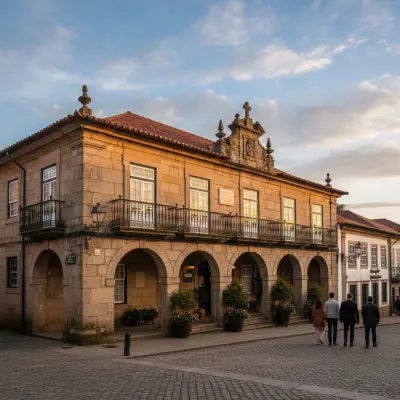
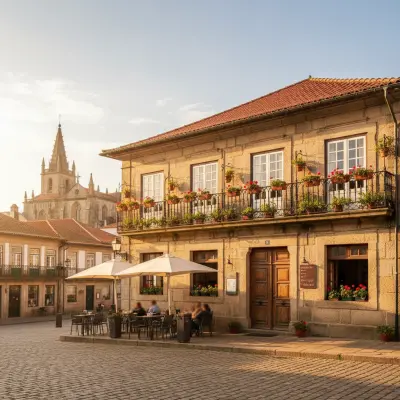
Let's start with what everyone wants. The historic center of Guimarães, listed by UNESCO in 2001, is the postcard: Largo da Oliveira, Praça de Santiago, Rua de Santa Maria, the Padrão do Salado, dark wooden balconies and courtyards with hydrangeas. Staying here means walking out of your room and being, within thirty seconds, inside the thing you came to see.
The obvious choice, and the right one, is Hotel da Oliveira, leaning right onto Largo da Oliveira in a historic building that was renovated without being destroyed. Rooms are restrained rather than vast, but the location pays for everything: leave at eight in the morning, before the tour groups arrive, and you can have the whole square to yourself with the collegiate church bell ringing. For a three-night first trip, this is the right pick. For a week-long stay, weekends can get loud, especially around Praça de Santiago, where bars fill up at night and the echo between stone walls performs acoustic miracles for the wrong reasons. Ask for an interior-facing room.
What to do with the morning if you stay here: walk down Rua de Santa Maria before nine, stop at Confeitaria Clarinha (the house of Guimarães' toucinho do céu) for breakfast, then climb to the castle and the Paço dos Duques before the heat and the buses. The combined ticket for the castle, palace and church of São Miguel runs about 8 euros, but check locally, the pricing changes from time to time.
This neighborhood suits
- First-time visitors, short trips (2-3 nights)
- Travelers who want to walk to everything, including dinner
- People who accept paying 50-70% above the city average for location
- Those without a car, or willing to park it and forget about it
What to avoid: hotels and rentals on Rua de Santa Maria with windows over the street if you're sensitive to noise. The street is narrow, it echoes, and the guided groups start at nine sharp. Also confirm vehicle access before booking, because much of the old town is restricted-circulation and unloading luggage can mean dragging it across uneven cobble.
Costa: the monastic hill where the bell keeps time
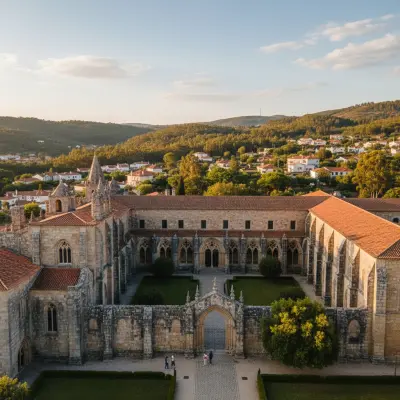
Climb the Costa, the hill that crowns the city to the northwest, and you're in another Guimarães. This was the site of the Mosteiro de Santa Marinha da Costa, founded in the 10th century and now converted into Pousada Mosteiro de Guimarães. It is one of the most spectacular places to stay in Portugal, and I say so without exaggeration: you sleep in a thousand-year-old cloister, eat lunch overlooking the city below, and spend your afternoon walking the gardens where monks once walked.
The price is high (from around 180 euros in low season, considerably more in summer and Holy Week), but the Pousada doesn't compete with urban hotels. It competes with memory. Staying here is deciding that the trip itself is the destination, not just the base from which to see the center. I recommend at least two nights. One night is a waste: you arrive tired, you sleep, you leave without understanding the place.
Practical detail nobody warns you about: the Pousada is a 25-minute walk from the castle, mostly uphill. You can walk down to the center (15 minutes), but coming back is a workout. There's the Teleférico da Penha cable car nearby, but it serves Penha, not Costa. The best system is to use the Pousada's parking and take a taxi to the center in the evening, walking back in the morning. A taxi between the center and the Pousada costs 5 to 7 euros, check locally.
If you stay at the Pousada, I'd pair it with a morning of vinho verde tasting at Casa de Sezim, twenty minutes by car, which gives you the perfect rural counterpart to the monastery's formality: green wine, a long lunch, and the sensation of stepping into a manor house that still works as a house, not a museum.
São Paio and Avenida Conde de Margaride: the working city
Cross the Toural heading south and you're in a different city again. This is contemporary Guimarães, with wide avenues, sixties and seventies apartment blocks, cafes that pour espresso for 80 cents, and the Mercado Municipal, where real life happens on Tuesday and Friday mornings. This is where locals actually live, not where tourists sleep, which is exactly why you eat better here for less.
Hotel de Guimarães sits in this area, and it's the one I recommend to anyone traveling on a moderate budget, traveling with family, or staying more than four nights and wanting to breathe outside the tourist zone. It's a functional four-star with an indoor pool, gym and comfortable rooms without any historic pretension. It's a ten-minute walk from Largo do Toural (the south gate of the historic center) and twenty minutes from the castle. After a full day on cobblestone, a properly comfortable bed matters more than you'd think.
Big practical advantage: its own parking, no old-town complications. If you're arriving by car, and especially if you're using Guimarães as a base to explore the Minho, this alone justifies the choice. From here, Braga is 25 minutes, Gerês 50, Porto 45 via the A3.
Where to eat in São Paio
- Mercado Municipal: fresh fish on Fridays, Serra cheese, presunto, and small lunch counters upstairs for 10-12 euros
- Tascas around Avenida D. João IV for bacalhau à Braga and rojões à minhota
- Pastry shops on Avenida Conde de Margaride for the local breakfast: espresso, buttered toast and the morning paper
This neighborhood isn't photogenic. You won't post Instagram shots of the avenue. But it has real rhythm, and by day four of any trip, that's worth more than another Manueline balcony.
Toural and Largo do Carmo: the sweet spot
Between the old town and the new sits a strip that is, in my opinion, the best place to stay in Guimarães for a four-to-seven-night trip. It runs around Largo do Toural, climbs Rua de Gil Vicente, and arrives at Largo do Carmo. You're three minutes from Praça de Santiago but the nighttime tourist noise doesn't reach. There are good cafes, old pastry shops (Costa do Castelo on Rua Paio Galvão makes some of the best croissants in town), and a supermarket for your morning yogurt.
Accommodation here is mostly small guesthouses, holiday apartments and two or three boutique hotels. Prices run 20-30% below the historic core. The location-to-value ratio is the best in the city.
One detour worth taking: head to the top of the Eurostars Santa Luzia building for a drink at sunset at the Rooftop Bar at Eurostars Santa Luzia. It offers the best panoramic view over the historic center, which is rare in Guimarães because the topography is tricky and most traditional viewpoints (Penha, the castle) are far from the center. Beer at 4 euros, wine at 5, a gin and tonic around 8. Sunset between seven and nine depending on the season. You don't need to be a guest.
Costa do Castelo and Rua de Donães: the quieter north side
North of the castle, off the most obvious tourist circuit, are streets that feel out of time without needing to announce it. Rua de Donães, Rua de Camões, and the Caldeiroa neighborhood have low granite houses, stone water tanks at the doors and a few capped wells. There are few rentals here but the ones that exist are excellent for travelers who prize quiet. You're a seven-minute walk from the castle, but it could be seventy.
Advice: if you book here, ask the host for very clear location references because GPS gets lost in the medieval alleys, and arriving by car with bags can be a challenge. Arrange your arrival window in advance.
Where NOT to stay, or when to hesitate
- South industrial belt (Covas/Creixomil): cheap, but too far on foot. Only worth it if you're traveling for business in the industrial park.
- Veiga: pretty name, heavy traffic zone. Hotels here are functional but lack any neighborhood character.
- Near the CP railway station: handy for arrivals, but the area has no nightlife and no real morning life either. If you're just spending one night before a train, fine. Otherwise, walk the 600 meters up to the Toural.
When to go, and how it changes your neighborhood choice
Guimarães in May and June is, in my view, the best city in the north of Portugal to visit. The Festas Gualterianas (first weekend of August) flood the historic center, push prices up 60-80%, and make the central neighborhood a bad choice for sleeping. If you're coming in August, stay in São Paio or at the Pousada, away from the noise. Holy Week in Guimarães is discreet compared to its neighbor; if the subject interests you, our Holy Week in Braga 2026 guide is worth a read and you should consider visiting both cities.
From November to February, Guimarães empties, it rains often, and the historic center returns to its residents. The Pousada drops its rates, hotels run promotions, and you can sleep on Largo da Oliveira for half the summer price. Bring warm clothes, waterproof shoes, and accept that you will get wet. In exchange, restaurants are quiet and a glass of vinho verde with francesinha tastes better.
Getting there and getting around
By train from Porto: the Guimarães line departs from Campanhã, takes 70 minutes and costs around 3.25 euros (check locally). The station is a 10-minute walk from the Toural.
By car: A3 plus A7, about 50 minutes from Porto. Parking in the historic core is restricted to residents. Use the Multiusos, Toural or São Lázaro car parks, around 1 euro an hour.
If you're using Guimarães as a base for the wider region, read our best day trips from Porto guide, which covers Guimarães in the opposite direction and gives ideas for combining it with Braga (we have a dedicated guide to the neighboring city as well).
The summary, in three sentences
First-timer, three nights: book Hotel da Oliveira and walk everywhere. Five nights and want historic luxury: split your stay between Pousada Mosteiro de Guimarães (two nights) and the Toural area (three nights). Family or traveling by car: choose Hotel de Guimarães and trade the photogenic backdrop for a comfortable bed. Each of these three returns you to a real city, which is rarer than it sounds.