Where to Stay in Caldas da Rainha: Neighborhood by Neighborhood
Historic center, Parque D. Carlos I, station area, or Foz do Arelho? In Caldas da Rainha, choosing where to sleep is choosing which city you'll see. An honest neighborhood-by-neighborhood guide with prices, best hours, and the marble-counter café I won't name.
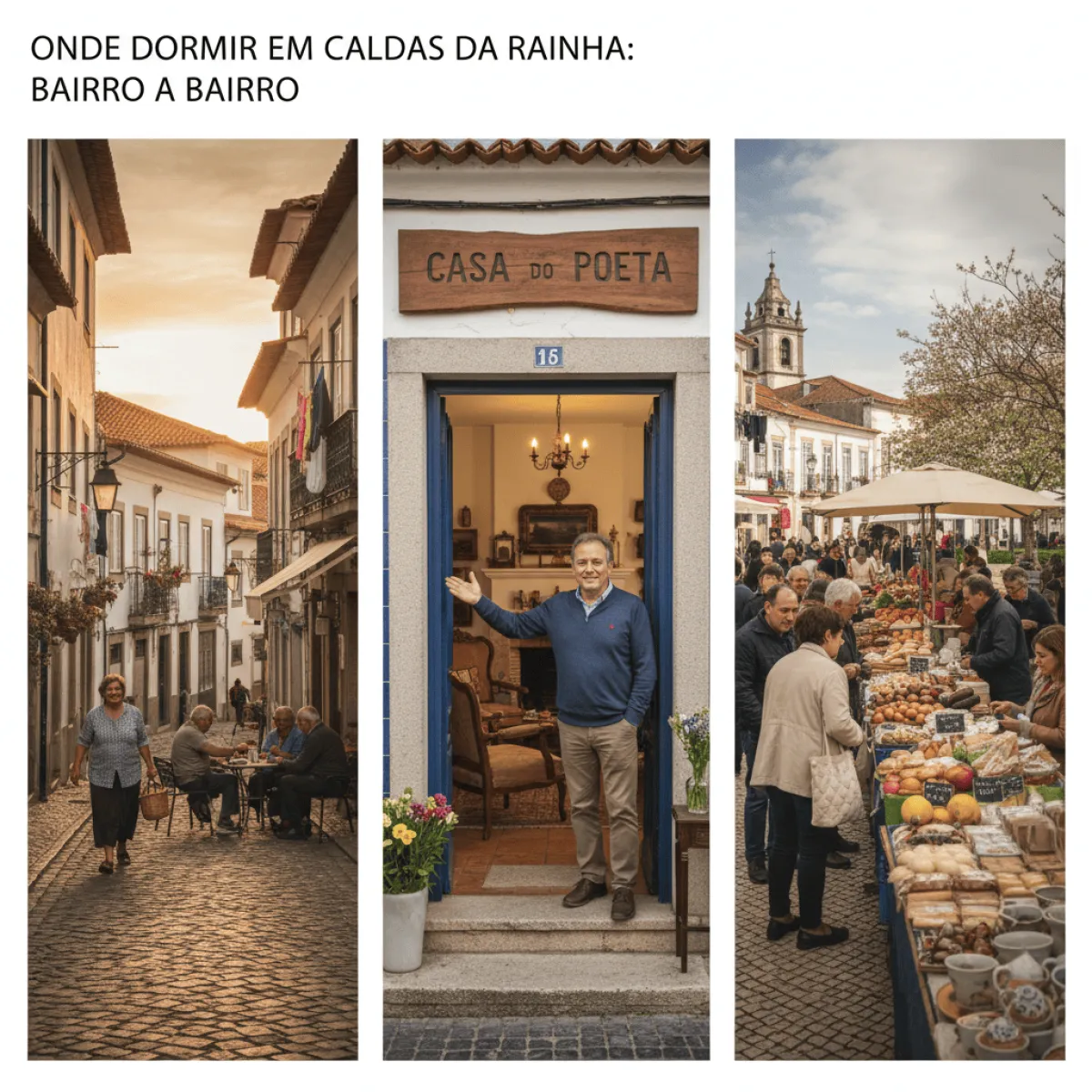
Caldas da Rainha is not an easy sell. It doesn't have the postcard perfection of Óbidos fifteen minutes down the road, nor the Atlantic showmanship of Nazaré. What it has is an oval square with proper fruit stalls on Tuesday mornings, three museums worth the detour, and neighborhoods with personalities so different that choosing where to sleep is really choosing which city you'll see. This guide is for travelers who have already decided to come and now need to know whether to stay in the historic center, near the Parque D. Carlos I, around the train station, or out by Foz do Arelho ten kilometers away from the noise.
One thing first: Caldas works better as a base than as a single destination. If you're staying three nights, plan at least one day for the Óbidos Lagoon and another for Óbidos itself or São Martinho do Porto. The city gives you everything you need (bed, decent coffee, an honest dinner, transport), but the best mornings are spent outside it.
The Historic Center: Praça da Fruta and Rua de Camões
This is the obvious choice, and for good reasons. Staying three minutes' walk from the Praça da República, the famous Praça da Fruta, means you wake up, get dressed, and you're drinking coffee where actual locals drink coffee. The square works Monday through Saturday, but Tuesday and Friday mornings are when it comes alive, with vegetable stalls from the surrounding villages. Get there before 10am. After that, it's just what's left.
The practical advantage of this neighborhood is simple: everything is on foot. The José Malhoa Museum, the Ceramics Museum, the Hospital and Caldas Museum, and the church of Nossa Senhora do Pópulo (the oldest part of the spa complex commissioned by Queen Leonor) all sit within a fifteen-minute radius. If you plan to do the cultural museum marathon route, staying central saves you an hour of travel a day.
The downside? Noise. Rua de Camões and the axis running from the square toward Largo do Município have bars that close late on Fridays and Saturdays, especially between September and June when students from ESAD (the city's art and design school) are around. If you're a light sleeper, ask for an interior room or for one of the quieter parallel streets, like Rua Heróis da Grande Guerra.
Who this neighborhood suits
- Short trippers (one or two nights) wanting to maximize walkable time.
- Ceramics and art lovers: the city lives off Rafael Bordalo Pinheiro's legacy and there are still working studios five minutes from the square.
- Travelers without a car. Bus stops for Lisbon, Leiria, and Óbidos are within steps.
Typical daily rates in a local guesthouse with kitchen: 60 to 95 euros off-season, 90 to 140 between July and September. There are a couple of three-star hotels with breakfast included in the 75 to 110 euro range, but check locally for current rates before booking.
Parque D. Carlos I: The Plane Tree Neighborhood
A few minutes south of the square, Parque D. Carlos I is the city's green lung and the reason I personally prefer sleeping here rather than in the center. The streets around it (Rua de Camões on the southern end, Rua Almirante Cândido dos Reis, the front facing the lake) have low buildings, some with balconies overlooking century-old plane trees, and a quietness the historic center simply doesn't offer.
In the morning, you cross the gate and you're inside a park designed in 1889, with a lake, the Carlos Relvas pavilion, a bandstand, and the José Malhoa Museum inside the park itself. It's the kind of day-opener that justifies the trip: coffee at the kiosk, twenty minutes watching ducks, then either the cultural marathon or the road to the coast.
Evenings here are a different proposition. There are one or two restaurants in the area serving decent Portuguese cooking without tourist traps, with bacalhau à brás and duck rice at small-town prices (12 to 16 euros a plate). I won't name them: any hotel concierge will tell you where. Avoid menus printed in four languages.
Who this neighborhood suits
- Couples who want to walk in the morning before getting in the car.
- Families with small children (the park is safe, flat, and has public restrooms).
- Anyone working remotely for a day or two and needing reliable wifi and silence.
Train Station Area and Southern Edge
Here we enter utilitarian territory. Caldas da Rainha's train station sits to the south, and the neighborhood around it is more residential, with 1980s and 1990s apartment blocks, proper supermarkets, and lower accommodation prices. If you're coming by train (Linha do Oeste, connections to Lisbon and Leiria), staying here makes practical sense, but you'll walk fifteen to twenty minutes to reach the square.
It's also where you'll find the best morning coffee in town, according to my experience across six stays. I won't say which one. Figure it out. The hint: marble counter, and the owner calls regulars by their last name.
Honestly, I only recommend this area in three scenarios: you arrive by train without a car, you're on a tight budget, or you're staying more than four nights and want a more residential, less touristy feel. Otherwise, pay the extra twenty euros and stay near the center or the park.
Foz do Arelho: The Sea Option
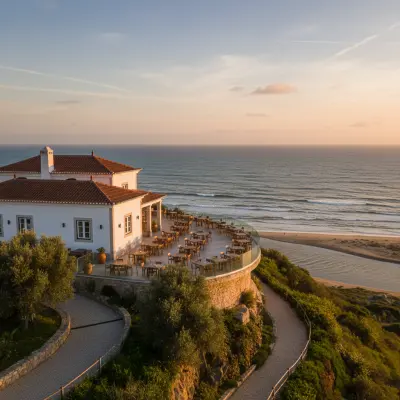
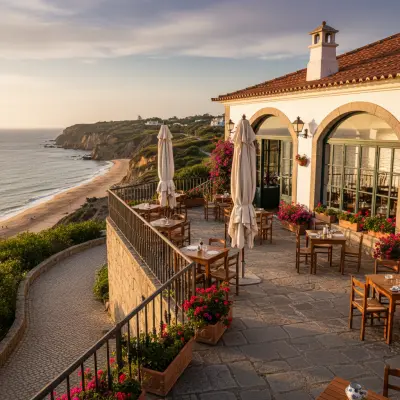
Ten kilometers west, Foz do Arelho is where Caldas goes to the beach. It's not a separate parish by geography, it's a separate parish by temperament. Here the sea meets the lagoon: open Atlantic on one side, the calm waters of Óbidos Lagoon on the other, ideal for kids and light sailing. If you're traveling between May and September, this is my number one recommendation.
Staying in Foz do Arelho means three practical things. First, you wake up five minutes from the beach. Second, you eat grilled fish at one of the lagoon-front restaurants without having to drive after. Third, you have direct access to the Foz do Arelho viewpoint, which at sunset gives you the best view of the lagoon spilling into the ocean anywhere on the western coast. Go around 7:30pm in summer, 5:45pm in winter. Always bring a sweater.
The drawback is obvious: you're ten kilometers from the center of Caldas and from most of the museums. If your trip is half beach, half culture, you'll be driving a lot. For a sea-only stay, or for travelers with kids who need space, it's worth it.
Foz do Arelho is also the natural starting point for bird watching at Óbidos Lagoon, especially during migration months (September-October and March-April). Egrets, the occasional flamingo, sandpipers, spoonbills. Bring binoculars. Local guides charge between 25 and 45 euros for a two-hour session.
Who this neighborhood suits
- Summer families.
- Surfers (the beach has regular waves, schools offer lessons from 30 euros).
- Anyone who prefers waking up to the sound of the sea rather than N8 traffic.
Salir do Porto: The Neighborhood Almost No One Considers
Halfway between Caldas and São Martinho do Porto, Salir do Porto is the village everyone drives past without stopping. Mistake. It has one of the largest dunes in mainland Portugal, a peaceful riverside front, and the Salir do Porto viewpoint from which you see the bay of São Martinho like an old postcard.
There's limited hotel supply, mostly local accommodation in village houses. Prices are fair: 55 to 80 euros off-season. The strongest argument is the silence. At night, you hear dogs in the distance and little else. In the morning, a café on the main street opens at 7am and serves toast on local bread, three euros and a good morning.
Who's it for? For travelers who already know Caldas and want to sleep away from the noise but close to the sea and to the interesting spots. For couples on longer escapes. For writers and painters on an improvised retreat.
The Caldas Card: Viewpoints and Trails
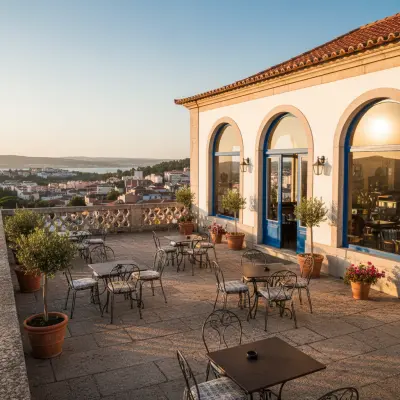
Regardless of which neighborhood you choose, you'll want to climb somewhere. The Santa Catarina viewpoint is the closest to the center and the most logistically simple: fifteen minutes on foot or five by car, and the whole city is at your feet, with the green park in the middle and the Serra dos Candeeiros in the background. Works best early in the morning, before 9am, when the light is low and there's no wind yet.
If you prefer walking, April is the perfect month for hiking here. Our honest guide to April walks around Caldas goes into which trails are worth it and which are city hall marketing. Mandatory reading before lacing up your boots.
When to Come: The Realistic Calendar
Caldas has three practical high seasons: May (great weather, no crowds yet), July and August (warm sea, packed city), and the week between Christmas and Three Kings (lights, market, intimate atmosphere). Avoid November unless you don't mind rain.
If you come in May, remember that the region is close to two other big phenomena. May 13th is the great Fátima pilgrimage, about an hour's drive away: read our honest pilgrimage guide to Fátima on May 13th before deciding whether to take a look. And Coimbra, an hour and a half from here, hosts Queima das Fitas in May, a student festival that deserves a detour if it lines up with your weekend.
The Final Recommendation
For most visitors on a two-to-three-night trip, stay in the historic center or near Parque D. Carlos I. You walk everywhere, you eat where locals eat, and you spend less on gas. For summer family holidays, Foz do Arelho wins, no argument. For travelers who already know Caldas and are looking for something quieter, Salir do Porto. For train-traveling backpackers, the station area does the job.
One last thing: don't come to Caldas looking for glamour. The city has none and doesn't want any. What it has is a human scale that's disappearing across Portugal, a square that still functions as a square, and three neighborhoods offering three different trips for the price of one. Choose wisely and the city gives you the rest.