Walking Ponte de Lima: An Architectural Route Through Old Town
In the early morning, when low-angle light hits the granite facades and the streets are still empty, Ponte de Lima offers the Minho's most compact catalogue of Portuguese architecture. A walking route from Romanesque to neoclassical in under two hours.
Ponte de Lima likes to introduce itself as Portugal's oldest town, chartered in 1125 by Queen Dona Teresa. Fair enough. But what makes the historic centre genuinely worth your time isn't the title, it's what survived. Within a compact area you can walk in under two hours, there's a condensed catalogue of Portuguese architecture spanning Romanesque to neoclassical, all in granite, all still standing, most of it ignored by the tour bus crowd heading to Porto or Lisbon.
Start at the Bridge
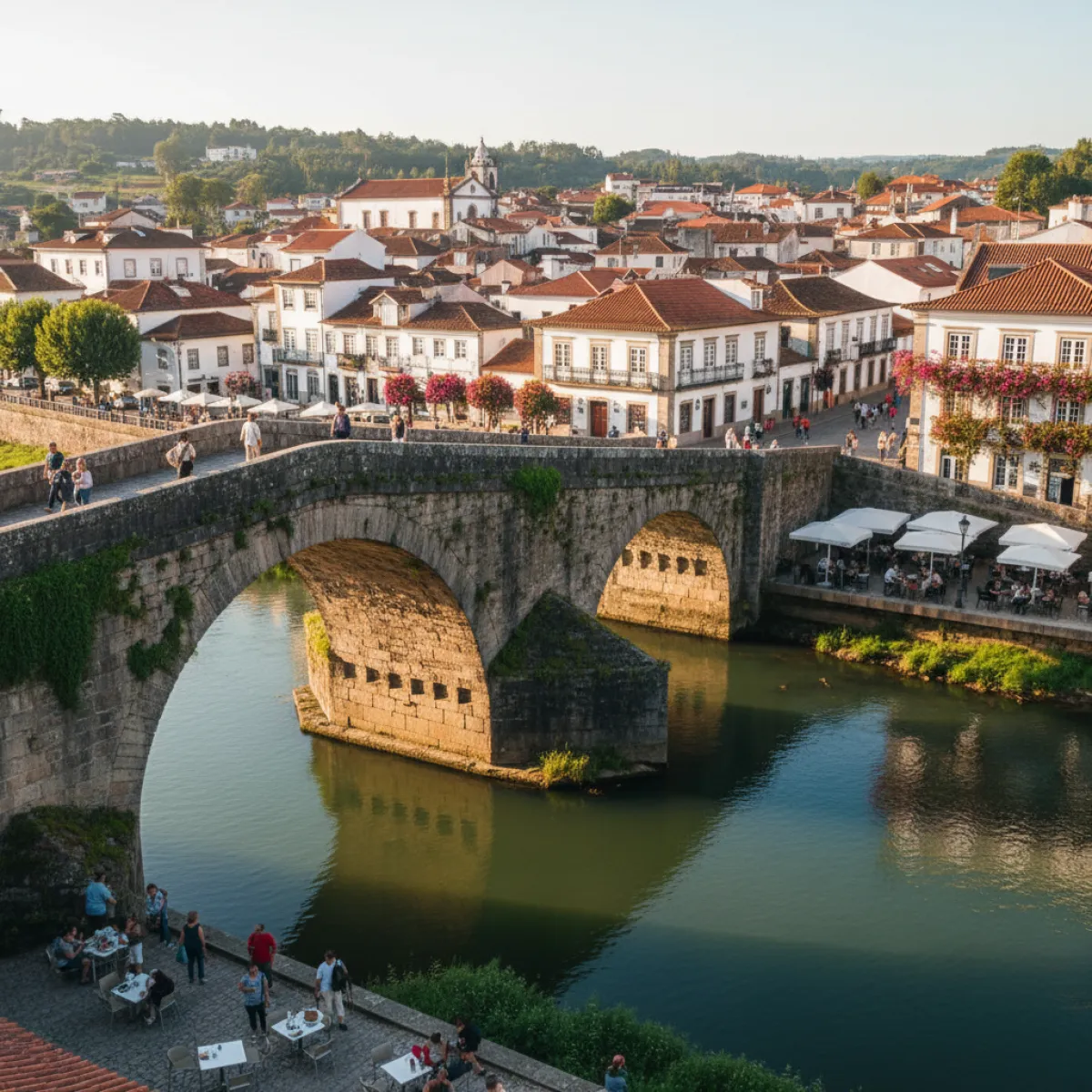
Every route through Ponte de Lima should begin at its namesake: the bridge. And don't just march across it, stop and look. It's 380 metres long and joins two distinct eras: the Roman section from the 1st century, with lower, sturdier arches, and the 14th-century medieval extension, taller and more refined. The Roman ashlar blocks are darker and more irregular; the medieval stonework is lighter and more uniform. If you pay attention, you'll spot where one era hands off to the next within the first few arches.
The bridge is classified as a National Monument, and it earns that status. Stand at the midpoint early in the morning, say, 8am, and look toward the Avenida dos Plátanos, a row of centuries-old plane trees forming a green tunnel along the riverbank. There's a stillness at that hour that you simply don't get in more visited Minho towns.
Praça da República and the Paços do Marquês
Cross the bridge and you walk straight into Praça da República, the civic heart of the town. On your left, the Paços do Marquês, now the Town Hall, commands the square with unapologetic presence. Built in 1469 as the residence of the Viscounts of Vila Nova de Cerveira (later Marquises of Ponte de Lima), the facade pairs military severity with unexpected elegance: two crenellated square towers flanking a portal and two wide Manueline windows that the original builder's grandson had installed in the 16th century.
Don't just glance at the front. The subtle concave curve of the central body is a rare architectural detail showing unusual sophistication for the period. Most people walk past without noticing. Don't be most people.
The Medieval Towers
From Praça da República, walk left along what remains of the medieval walls. King Pedro I had these built in the 14th century, they originally had nine towers and six gates. Two towers survive and both deserve your attention.
The Torre da Cadeia Velha served as the town prison until 1960 and now houses the tourist information office. It's a sensible first stop for grabbing a map. The construction is exactly what you'd expect from a building designed to keep people in: thick granite walls, battlements, no nonsense.
A few steps away, the Torre de São Paulo has a detail worth the detour on its own: an azulejo panel on the facade reading "São cabras, senhor" ("They're goats, my lord"), a reference to a local legend about townsfolk who allegedly mistook goats for enemy soldiers during a battle. The locals tell this story with a half-suppressed grin, and the tile ensures nobody forgets it.
Two Churches, Two Eras
Continue along Rua Cardeal Saraiva, one of the main arteries of the old town, and you'll find two churches facing each other, each telling a completely different architectural story.
The Igreja Matriz (Church of Santa Maria dos Anjos) has medieval foundations, but what you see today is the result of centuries of interventions. The central nave and two side aisles are separated by pillars with classical capitals. Inside, the ceilings shift from panelled wood in the nave to a stone barrel vault in the chancel, a mix that reveals the building's different construction phases. The most striking facade element is the neo-Gothic rose window, added in 1932 and inspired by the Church of São Francisco in Porto. It sounds like it shouldn't work. It does.
Across the way, the Igreja da Misericórdia is more restrained but no less interesting. It's Mannerist and Baroque in a single-nave plan. The Mannerist portal topped by a figure of the Virgin is elegant without being showy. Inside, look for the gilded wood pulpit and the altar frontal depicting the Miracle of the Multiplication of Loaves, it's a remarkable piece that often gets overlooked because visitors are already thinking about lunch.
Teatro Diogo Bernardes: The 19th-Century Standout
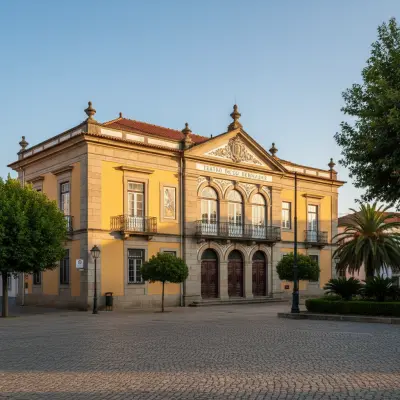
If there's one building in Ponte de Lima that deserves a longer pause, it's the Teatro Diogo Bernardes. Commissioned in 1893 by a group of local citizens led by João Rodrigues de Morais, the project was designed by António Adelino de Magalhães Moutinho, then the municipal architect of Viana do Castelo. It opened on September 19, 1896, with the Portuguese Comic Opera Company.
The theatre follows the Italian model, a longitudinal plan with two rectangular bodies on axis across five floors. The auditorium has a horseshoe-shaped floor plan surrounded by three levels of balconies with flattened arches. The ceiling is domed, and the proscenium arch echoes the same flattened profile. Originally, there were ceiling paintings and a stage curtain featuring a panoramic view of Ponte de Lima by Eduardo Reis, the paintings, sadly, are gone.
After years of decay, the town council acquired the building in 1992. Architect Luís Faro Viana led the restoration, completed with a reinauguration in 1999. Today it's an active cultural venue, check the programme before you visit, because watching a performance here is the best way to appreciate the interior.
Where to Eat After the Walk
Architecture builds an appetite. Ponte de Lima handles that well.
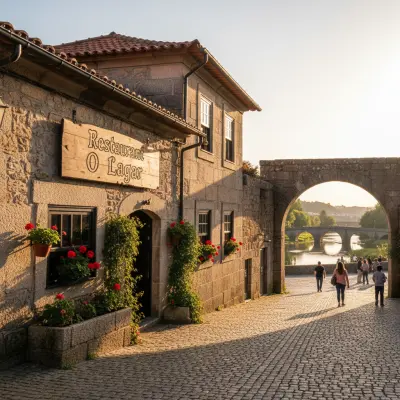
Restaurante O Lagar is a reliable choice with well-executed regional cooking. The arroz de sarrabulho and the bacalhau are safe bets. It's centrally located, so it fits neatly at the end of this route.
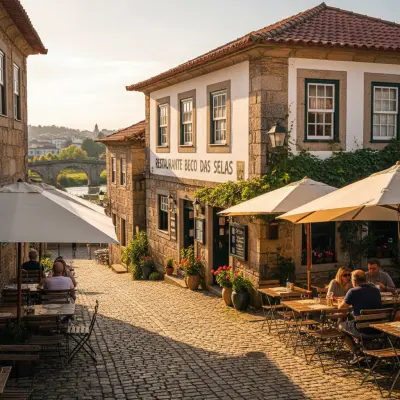
If you want more character in the setting, Restaurante Beco das Selas sits in an alley, as the name suggests, with a more intimate feel. The Minho cooking here is honest and direct. Order whatever's regional and seasonal. The vinho verde list is, as you'd expect in this area, generous.
If You Want to Stay Longer
If the walking route leaves you wanting more, and Ponte de Lima has that effect, there are two experiences worth considering.
For serious unwinding, the Ritual of Silence at Axis Wellness is a wellness programme that takes the concept of rest to its logical conclusion. This isn't your average hotel spa, it's designed for genuinely switching off.
Alternatively, the Silent Minho Retreat at Carmo's Boutique Hotel pairs boutique accommodation with Minho countryside. It's the kind of place you book for one night and stay for three.
Practical Notes
The route I've described takes a comfortable ninety minutes to two hours, depending on how long you spend examining stonework details (and you should spend plenty). Wear comfortable shoes, the granite cobbles get slippery when wet, and in the Minho region, rain is a regular companion.
The best time to walk this route is early morning, before ten. The low-angle light does remarkable things to the granite facades, and the streets are essentially empty. On Saturday mornings, there's a market along the riverbank, it's been running for centuries, literally, and combining the two makes for a full morning.
If you're driving, there's free parking near the riverbank by the Avenida dos Plátanos. Public transport connections exist from Viana do Castelo and Braga, but check schedules locally as they vary by season.
And if you're exploring the wider region, Barcelos is less than thirty minutes away with its own draws, from museums worth your time to proper café culture done right.