Walking Miranda do Douro: Walls, Streets and Steak
On Rua da Costanilha, Miranda do Douro's oldest street, sixteenth-century houses still frame Gothic portals and the shadow of Cervantes. This is a walking guide to a city where you hear Mirandese in the cafés, eat charcoal-grilled veal steak, and where medieval walls offer views into Spain that day-trippers never discover.
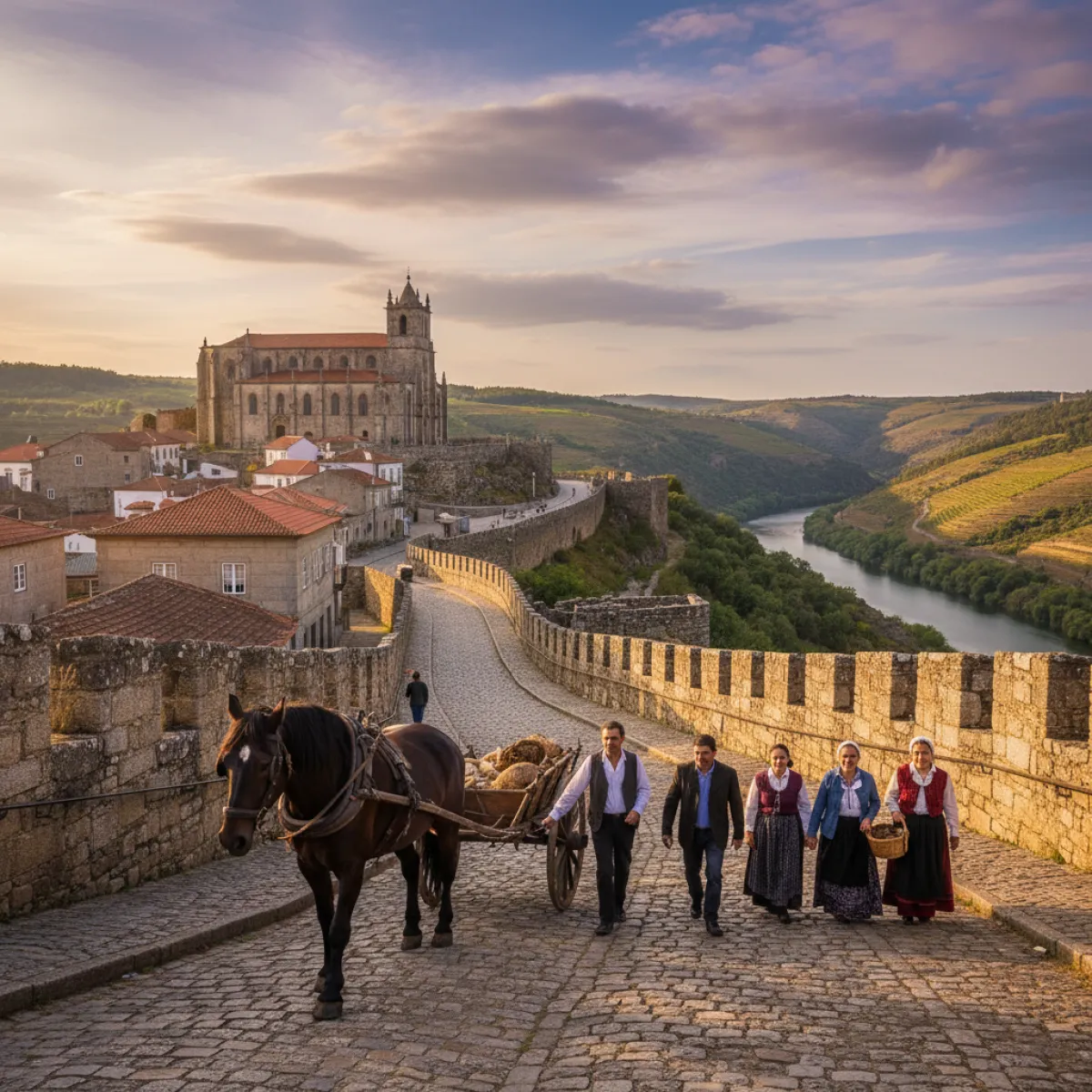
Miranda do Douro is a city you can walk in two hours. That's exactly why it deserves an entire day. When the territory is small, details matter more. And Miranda, perched on the eastern edge of Trás-os-Montes with Spain staring back across the Douro gorge, has details that no weekend getaway guide will tell you about.
Park outside the walls. Seriously. Don't try to squeeze your car through the old town streets. There's free parking near the city entrance, and from there everything is a few minutes on foot. Miranda within the walls is tiny, and that scale is part of the point.
Rua da Costanilha: Where Miranda Shows Its Age
Start with Rua da Costanilha, west of Praça D. João III. This is the oldest street in Miranda do Douro and the most beautiful one, no contest. The sixteenth-century houses are still standing, with stone facades and architectural details you won't find anywhere else in Trás-os-Montes. The slope is steep, the walls are tall and narrow, and at the bottom of the street there's a Gothic portal that has survived the centuries.
Halfway down, look for the Casa das Quatro Esquinas. Legend says Cervantes slept here, which is probably fiction, but the house is real and remarkable: four corner windows, decorated corbels on the walls, a piece of medieval civil architecture worth stopping for. It's not open as a museum, but the facade tells its own story.
The Costanilha is best early morning, before the Spanish day-trippers arrive mid-morning. At nine o'clock, you'll likely have the street to yourself, with nothing but the sound of your own footsteps on cobblestone.
Praça D. João III: Where Everything Converges
All of Miranda's life flows through Praça D. João III. Here you'll find two statues representing a Mirandese couple in traditional dress, the former Domus Municipalis building (now the Museu da Terra de Miranda), and the cafés where locals sit and watch time go by.
The Museu da Terra de Miranda deserves at least an hour. Housed in a seventeenth-century building that served as both Town Hall and prison until the 1970s, it holds ethnographic collections that explain life in this borderland: costumes, farming tools, popular religiosity, and of course, the Pauliteiros. If you want to understand why Miranda is different from the rest of Portugal, start here. Admission is a few euros; check locally for current hours.
Speaking of Pauliteiros: this stick dance, performed by exclusively male groups with complex percussive choreography, is one of the country's most distinctive traditions. If you want to go beyond watching videos in the museum and actually experience Mirandese culture firsthand, there's a Mirandese language and Pauliteiros workshop worth considering. This isn't staged folklore for tourists. It's real participation.
The Cathedral and the Boy in the Top Hat
A few steps from the square, the Concathedral of Miranda do Douro is the largest temple in Trás-os-Montes. Built in the sixteenth century with Renaissance and Manueline features, designed by Gonçalo Torralva and Miguel de Arruda, it has a gilded interior that contrasts sharply with the austere exterior.
But what really draws people here is the Menino Jesus da Cartolinha. A small wooden figure of a boy wearing a top hat, bow tie, and a silver sword across his chest. Legend has it he appeared during the Spanish siege of 1711, rallying the Mirandese to victory. True or not, the devotion is real: the Menino has an entire wardrobe of outfits, stitched by local devotees over the centuries. It's one of the most genuinely strange and fascinating things you can see in a Portuguese church.
Entry to the Concathedral is free. Go in the late afternoon, when the light enters through the side windows and catches the gilded altarpieces.
The City Walls: The Walk Nobody Takes
Here's what the day-trippers miss: the Caminho de Ronda, the patrol path along Miranda's medieval walls. Most visitors see the cathedral, eat a steak, and head back to their cars. But walking the remnants of the walls, with views over the Douro gorge and into Spain, is the best walk in the city.
The walls preserve traces of the primitive Gothic castle from the tenth and eleventh centuries. You can enter the citadel through several gates: Porta da Senhora do Amparo, Porta de Santo António, Porta da Cerca, and Porta do Postigo. Each offers a different perspective on the city and the valley. The stretch near Porta do Postigo, facing the river, is where I'd stop with a bottle of water and spend ten minutes staring into the gorge.
Rua Mouzinho de Albuquerque: The Commercial Side
If the Costanilha is medieval, Rua Mouzinho de Albuquerque is Miranda's nineteenth and twentieth century. Wider, brighter, lined with shops and commerce. This is where you buy the traditional capes, regional products, and where locals stroll in the late afternoon. It's not spectacular, but it's genuine: a small Portuguese town street that works, where people do real shopping, not just souvenirs.
In the shops along this street you'll find smoked Bísaro pork sausages, local cheeses, and honey. Miranda's smoked meats are among the best in Trás-os-Montes, and taking home an alheira or salpicão is practically mandatory.
Where to Eat: The Steak and Everything Else
Don't leave Miranda without eating posta mirandesa. It's a thick veal steak, charcoal-grilled, served with punched potatoes and greens. The dish originated in the village of Sendim, where a woman named D. Gabriela used to grill enormous steaks that she sold at fairs inside bread. The restaurant bearing her name still operates in Sendim, run by her descendants, and it's worth the 20-minute drive if you have a car.
In the city, several restaurants serve quality posta. Always order the portion for two, unless you have a Transmontano appetite. It's a generous piece of meat. Pair it with a Douro red and forget your diet.
Beyond the posta, try the roast kid Miranda-style and bacalhau à mirandesa. Prices are honest: expect 15 to 25 euros per person for a full meal with wine. This is Trás-os-Montes, not Lisbon.
Where to Sleep
Miranda has solid options for an overnight stay, and spending a night completely changes the experience. In the late afternoon, when the day visitors head back to Spain, the city goes quiet, and that's when you actually feel the place.
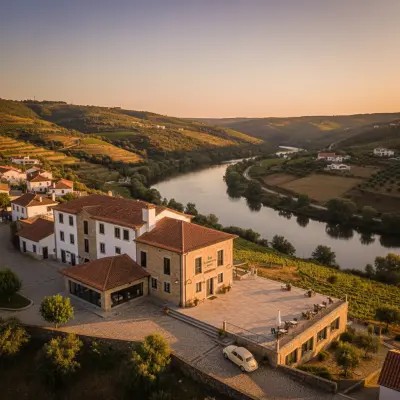
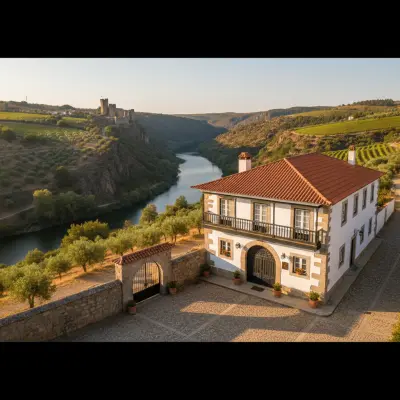
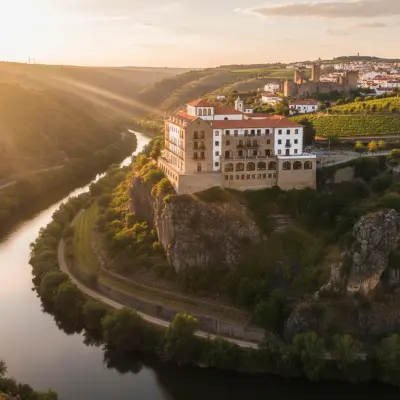
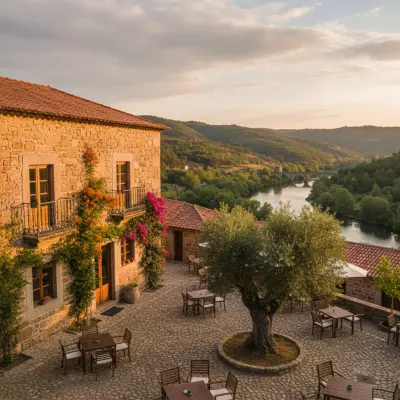
Hotel Turismo Miranda is the classic choice, with views over the gorge. Hotel Miranda do Douro D. João III has a central, practical location. For something more budget-friendly, Hotel Mirafresno does the job well. And if you want something with more local character, Puial de l Douro, whose name in Mirandese already tells you everything about the spirit of the place.
The Language You Can Still Hear
One last thing, and this matters. Miranda do Douro is the heartland of Mirandese, Portugal's second official language since 1999. It's not a dialect: it's a language with its own grammar, descended from Latin, closer to Asturian and Leonese than to Portuguese. Street signs are bilingual, some restaurant menus too, and if you pay attention in the cafés around the square, you'll hear Mirandese spoken naturally among older locals.
It's an endangered language, with only a few thousand speakers. But it's alive, taught in schools as an optional subject, and the fact that you can hear it in the streets is one of the things that makes Miranda fundamentally different from any other Portuguese city.
Getting There and When to Go
Miranda do Douro is about 90 km from Bragança, almost entirely on national roads. There's no direct motorway. The drive is beautiful but slow, through depopulated lands and windswept plateaus. From Lisbon, count on 5 hours by car. From Porto, about three and a half hours.
Go in spring or early autumn. Summer is hot and dry, winter is properly cold, with sub-zero temperatures common. But if you can handle the cold, winter has the advantage of finding the city entirely to yourself.
If you're exploring Trás-os-Montes with more time, combine Miranda with other stops in the region. Montesinho Natural Park near Bragança is a perfect complement. And if you head south, the thermal springs of Chaves are a civilised way to recover from the Transmontano roads.
Miranda do Douro isn't a city of grand monuments or attractions that justify queues. It's a human-scale city where walking is the programme itself. Stone streets, walls with a view, a language you won't hear anywhere else, and a veal steak that justifies the journey. Sometimes that's all you need.