Vila do Porto: The Azorean Cheese Trail Nobody Talks About
The Azores produce nearly a third of all Portuguese milk, yet almost nobody talks about their artisanal cheeses. In Vila do Porto, on Santa Maria island, the scale is so small you can meet the producer, and sometimes even the cow.
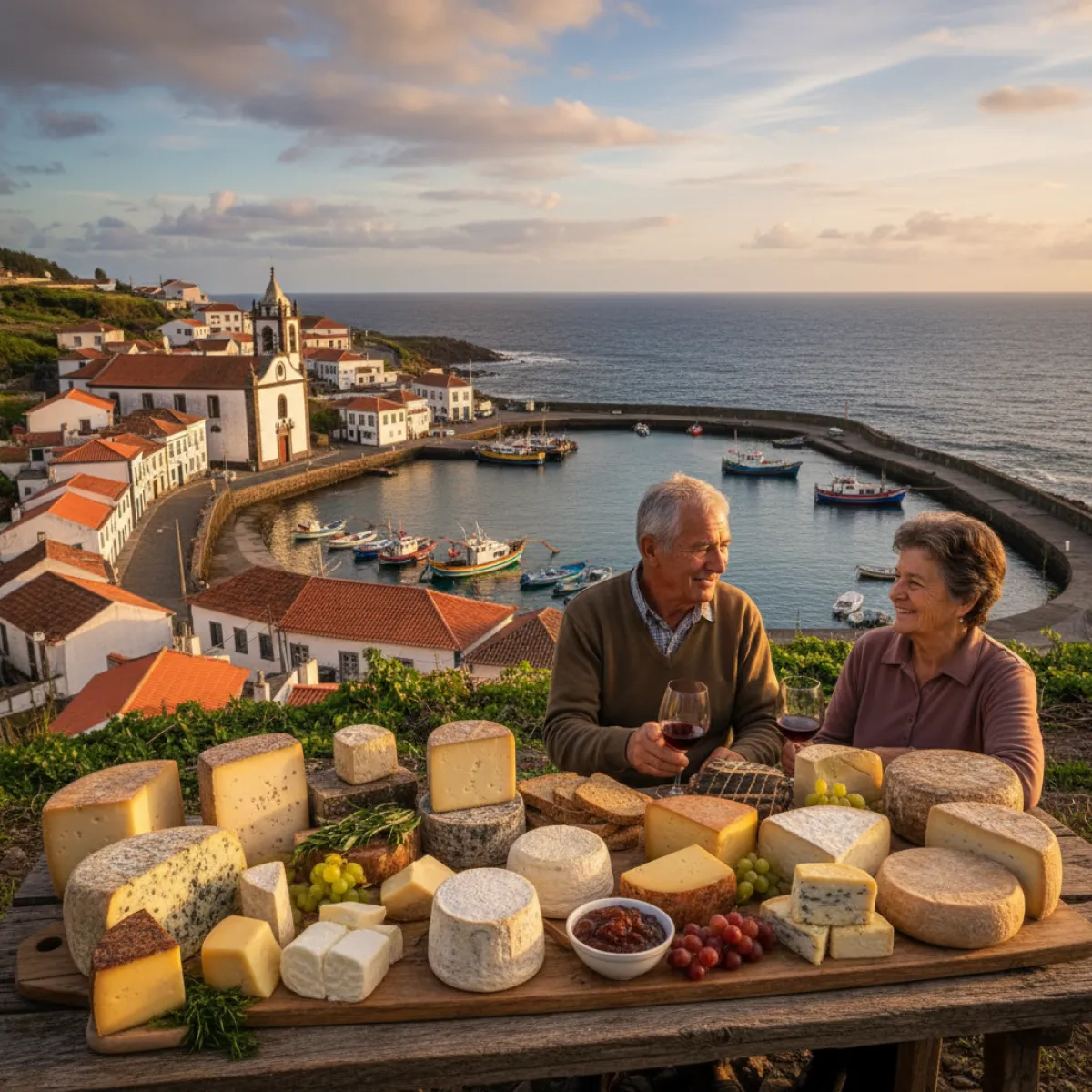
Here's an uncomfortable truth about Portuguese cheese: everyone goes straight to Serra da Estrela. And fair enough, that spoonable, almost liquid sheep's milk cheese is one of the world's great dairy achievements. But if you think Portugal's cheese story ends in the mountains of central mainland, you're missing half the plot. That other half lives out here in the Azores, where cows graze on volcanic soil and the milk carries an intensity that the continent simply can't match.
Vila do Porto, on the island of Santa Maria, is the ideal starting point for this journey. Not because it's the Azorean cheese capital, that crown belongs to São Jorge, no contest, but because Santa Maria still operates at human scale. Here, when you buy cheese, you know who made it. Sometimes you even know the cow.
Cheese Born from Volcanoes
The Azores produce roughly 30% of all Portuguese milk. Read that again: an archipelago with fewer than 250,000 people supplies nearly a third of the country's dairy output. This isn't an accident. Volcanic soil, constant humidity, and pastures that never dry out create conditions no mainland region can replicate.
São Jorge cheese, the undisputed king of the archipelago, is a semi-hard cheese, aged for months, with a peppery bite that intensifies as it matures. A seven-month São Jorge is one thing; a twelve-month one is an entirely different animal. If you've never tried São Jorge aged beyond nine months, reserve judgement on Azorean cheese.
But São Jorge doesn't stand alone. Each island has its own dairy traditions, and Santa Maria is no exception. The scale is smaller, more familial, we're talking producers who make fresh cheese and requeijão for local markets, not industrial cooperatives. And it's precisely that scale that makes the experience worthwhile.
What to Look For in Vila do Porto
Vila do Porto is small, the oldest settlement in the Azores, in fact, founded in the 15th century. Don't expect a signposted cheese trail with multilingual maps. Things work differently here: ask at the café, chat with the man at the grocery store, show up at the municipal market early in the morning.
Fresh cheese from Santa Maria is what you'll find most readily. It's simple, honest, made with milk from local pastures. Eat it with corn bread and a drizzle of Azorean honey, another product that deserves its own article. The requeijão, when you catch it still warm from the morning's production, is the kind of thing that makes you question why anyone pays €8 for a packaged version at the supermarket.
For more complex aged cheeses, here's the honest recommendation: buy in Vila do Porto, but accept that the finest examples from the archipelago come from São Jorge and, to a lesser extent, Terceira and São Miguel. Any decent grocery in Santa Maria will stock São Jorge cheese, ask to taste before buying, and always choose the most aged one available.
Where to Eat Cheese Properly
In Vila do Porto's restaurants, cheese typically appears as a starter or accompaniment. Look for dishes that pair regional cheese with other local products: grilled limpets followed by a cheese board with honey and walnuts is a sequence that always works. Check locally which restaurants offer artisanal cheese boards, the selection changes frequently on a small island.
One thing the Azores do extraordinarily well is combining cheese with conventual pastry traditions. Queijadas, which exist on several islands with different recipes, are the perfect example of this marriage between dairy and baking heritage.
Serra da Estrela vs. Azores: The Conversation Nobody's Having
Now, the inevitable comparison. Queijo Serra da Estrela DOP is made from raw Bordaleira sheep's milk, coagulated with thistle flower. It's a soft cheese, creamy, with that texture hovering between solid and liquid when it hits the perfect point. It's unique in the world.
Azorean cheese is a completely different proposition. Cow's milk, firmer paste, longer aging. Comparing the two is like comparing Port wine with Vinho Verde, both excellent, both Portuguese, but different animals entirely.
The mistake most people make is ranking them. Is Serra da Estrela better? Depends on the context. For spreading on warm bread on a winter's day, probably yes. For grating over pasta, eating with quince jam, or pairing with a full-bodied red? A twelve-month São Jorge gives it a serious run for its money.
If you want to explore Azorean gastronomy in more depth, our gastronomic expedition through Ponta Delgada makes an excellent companion piece to this cheese journey.
The Landscape That Makes the Cheese
You can't talk about Azorean cheese without talking about the landscape that produces it. And on Santa Maria, that landscape has characteristics unique in the archipelago. It's the driest island, the warmest, the one with the most sunshine hours. The pastures are different from São Jorge or Flores.
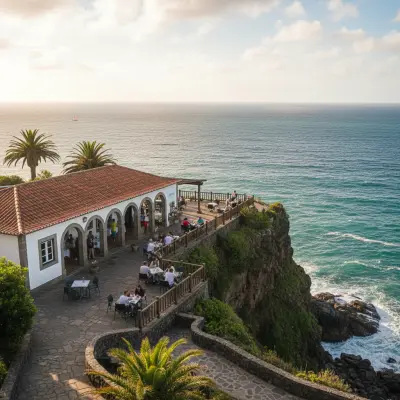
Head up to Miradouro da Macela in the late afternoon. The view over the island and the Atlantic is spectacular, but look down too, at the cultivated fields and pastures rolling down to the coast. That's where the cattle graze that produce the milk that becomes the cheese you'll eat at dinner. In the Azores, farm-to-table isn't a marketing slogan, it's literally what happens.
This relationship between landscape and product is something the Azores share with Serra da Estrela. In both cases, it's the terrain, whether volcanic or granite, that defines the cheese's character. The difference is that in Serra da Estrela, it's sheep at altitude; in the Azores, it's cows on Atlantic pastures.
Practical Route: How to Build Your Trail
If you're on Santa Maria for two or three days, which is the ideal time for the island, weave cheese into the programme without making it the whole programme. Santa Maria has excellent beaches, coastal trails, and a quietness that deserves to be savoured.
Day 1: Arrive, settle in, have dinner in Vila do Porto. Order a regional cheese board as a starter. Try at least one local fresh cheese and one aged São Jorge. Pair with Terras de Lava white wine, well chilled.
Day 2: In the morning, stop by the market or a local grocery. Buy fresh cheese and requeijão for a picnic. Add bread, fruit, and honey. Spend €5 to €10 total. Then hit a trail or beach, and picnic when hunger strikes.
Day 3: Before leaving, buy cheese to take home. An aged São Jorge travels well. Fresh cheese should be eaten on the day, don't risk it.
How Much It Costs
Artisanal fresh cheese in the Azores runs about €3 to €6 for a small wheel. Aged São Jorge, depending on maturation time, sits between €15 and €25 per kilo. At a grocery in Vila do Porto, you can buy a generous wedge for €5 to €8. At restaurants, a cheese board ranges from €6 to €12. These are indicative prices, check locally.
Beyond the Cheese: What Else to Do
If this Azorean journey has whetted your appetite, literally and figuratively, there's plenty more to explore. The islands are different from each other, and each deserves its own time.
If you're passing through Horta, on Faial, make the most of it: our guide to 24 hours in Horta helps you maximise a short stop. And if you want views with your meals, the best rooftops and panoramic spots in Horta are essential reading.
But don't rush away from Santa Maria. The oldest island in the Azores has its own rhythm, and that rhythm asks you to slow down. Eat slowly, drink slowly, walk slowly. After all, cheese needs time to get good too.
The Essentials
- Best time to go: May to October for weather; cheese is good year-round
- Getting there: SATA flights to Santa Maria from Lisbon or Ponta Delgada
- Where to buy cheese: Municipal market and groceries in Vila do Porto, ask for local producers
- Cheese to take home: Go aged (São Jorge); fresh ones won't survive the journey
- Cheese budget: €15 to €30 to taste well and take some home