Viana do Castelo: An Atlantic Anchor for Deciphering the Minho
Viana do Castelo serves as the gateway to an authentic and telluric Minho. From the ancient bridges of Ponte de Lima to the pottery workshops of Barcelos, this guide explores the granite landscapes and rich traditions of Northern Portugal.
The Geometry of Granite and the Atlantic Breath
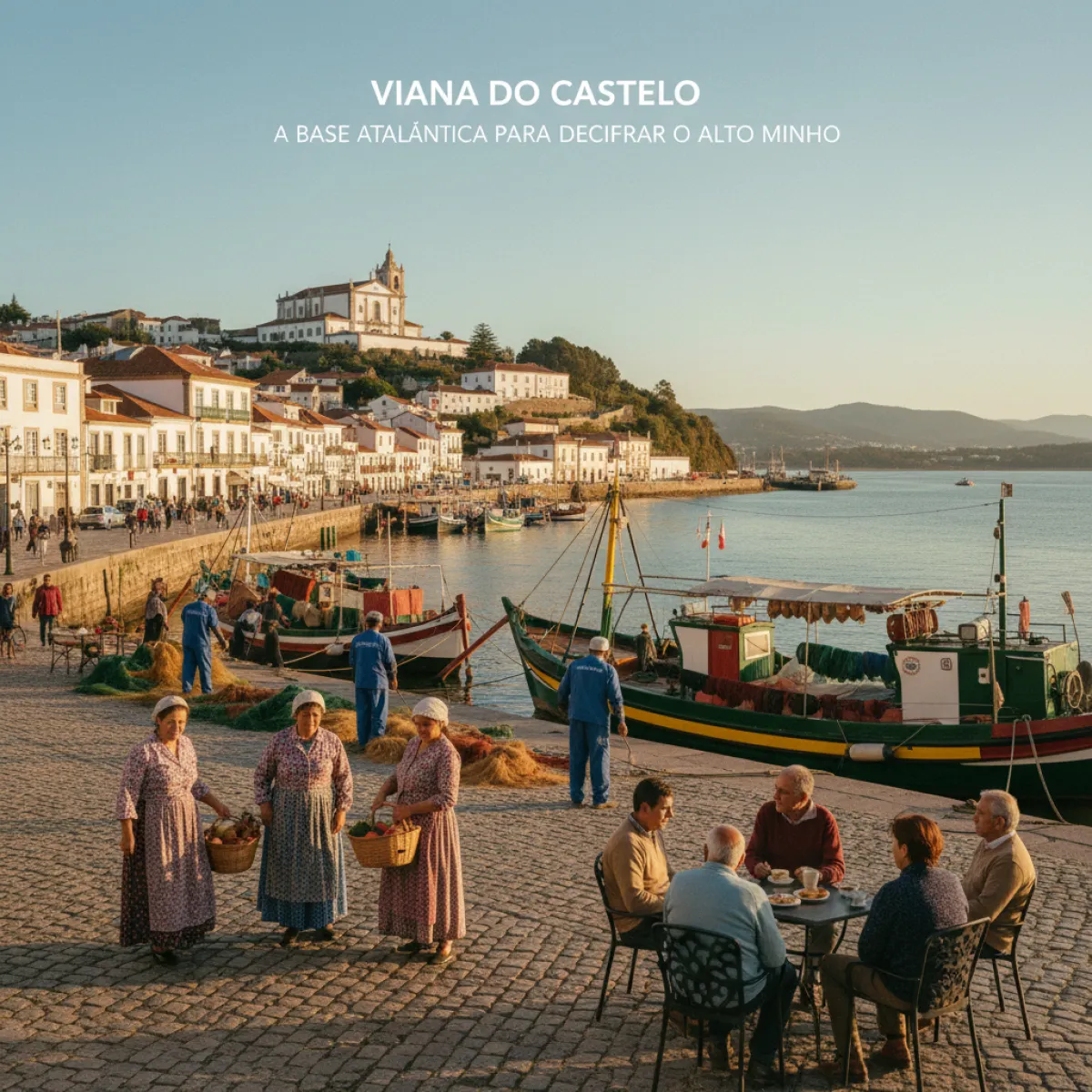
Viana do Castelo is not merely a port city; it is the fulcrum between the rawness of the ocean and the fertility of the Lima Valley. While southern Portugal often bows to the sun and mass tourism, the Alto Minho maintains an aristocratic composure, anchored in granite and an identity that refuses to be diluted. Establishing a base in Viana is a strategic decision for the traveler seeking more than postcards; it is the starting point for a tectonic exploration of a region where tradition is not a performance, but a daily inevitability.
The city itself demands a slow morning. Begin at the Praça da República, where the Misericórdia building and the 16th-century fountain recall an era of mercantile opulence. There is no cosmopolitan rush here. The rhythm is dictated by the wind moving up the river. Before heading inland, it is essential to recognize the local cultural heritage; references such as Amália em Viana punctuate the collective imagination, linking the soulful voice of Fado to the resilience of the seafaring people. This spirit, simultaneously melancholic and vigorous, prepares the traveler for the incursions that follow.
The Lima Valley: Where Time Gains Density
Leaving the coast behind and following the course of the Lima River eastward, the landscape transforms. The horizon closes into deep valleys where Atlantic moisture settles as dense mists. Ponte de Lima, about twenty minutes away, is the antithesis of modernism. Crossing the medieval bridge is an exercise in historical humility. In winter, the village acquires a cinematic, almost mystical aura. To understand this seasonal shift, one must delve into why Ponte de Lima is Portugal’s most evocative winter escape, a period when the feast becomes a form of resistance against the cold and the silence of the cobbled streets.
Gastronomy here is a serious affair. Arroz de Sarrabulho, a rich rice dish accompanied by pork offal and deep flavors, is not just lunch; it is a rite of passage. It should be consumed in tascas where paper tablecloths are the only concession to modernity, and the red Vinho Verde, served in white ceramic bowls, challenges the palate with its sharp acidity and blood-red hue. This is a cuisine of substance, made for those who work the land and for those who wish to know it deeply.
However, Ponte de Lima also reveals a solar and welcoming side, ideal for those traveling with time on their side. During the spring and summer months, the riverbanks become the stage for endless walks and a sense of family conviviality that seems to have stalled in a simpler era. For families seeking this paused cadence, this family guide to Portugal’s oldest village provides the necessary perspective to navigate the thematic gardens and the legends that inhabit every corner of the town.
Barcelos: The Metaphysics of Clay
South of Viana, the Cávado River dictates the rules. Barcelos is often reduced to the symbol of the rooster, but the city's reality is far more telluric. It is here that the Minho shapes its own soul from the earth. The Thursday market in the Campo da República is one of Europe’s largest fairs and a spectacle of living sociology. Amidst agricultural tools and livestock, the craftsmanship of Barcelos stands out for its ability to elevate the utilitarian to the artistic. Figures like Rosa Ramalho or Júlia Côta created a visual lexicon that blends the sacred and the profane, the real and the dreamlike.
For those who wish to go beyond the superficial souvenir and understand the technique and passion that sustain this craft, we recommend a deep dive into the pottery of Barcelos. Discovering the pottery workshops on the outskirts of the city allows one to witness the raw process of transforming mud into identity. Barcelos is a city of textures, the cold touch of clay, the heat of the kilns, and the dry sound of metal tools against the potter’s wheel.
Logistics and Palate: Minho Survival Tips
- Transport: While the train connects Viana to Barcelos, a car is the essential instrument of freedom in the Alto Minho. National roads, such as the N202, offer views of manor houses and vineyards that highways ignore.
- Timing: Avoid Mondays, when many small museums and family-run restaurants are closed. The Thursday morning market in Barcelos is non-negotiable.
- Budget: The Minho remains one of the best value-for-money regions in Europe. A full lunch at a reference tasca fluctuates between €15 and €25 per person.
- What to Order: In Viana, the Bacalhau à Gil Eannes; in Ponte de Lima, the Sarrabulho; in Barcelos, the Galo Assado (roasted rooster). And everywhere, the leite-creme (custard) burnt on the spot.
The Permanence of the Minho
Exploring the surroundings of Viana do Castelo is to confront the idea of permanence. In a world that values the ephemeral, the Alto Minho prides itself on its solidity. Whether in the fog that envelops the Lima River or in the dexterity of the hands shaping clay in Barcelos, there is an aesthetic and emotional coherence rarely found elsewhere. Viana serves as the safe harbor, the city that welcomes us with the sea breeze after a day immersed in the density of the interior. It is a journey of necessary contrasts, where every kilometer traveled is a layer of history being revealed.