The Weight of Memory: The Renaissance of Portuguese Wool at the Burel Factory
Discover how the Burel Factory in Manteigas rescued a centuries-old tradition to create a contemporary design icon. A deep dive into the Zêzere Glacial Valley and the mastery of Portuguese wool.
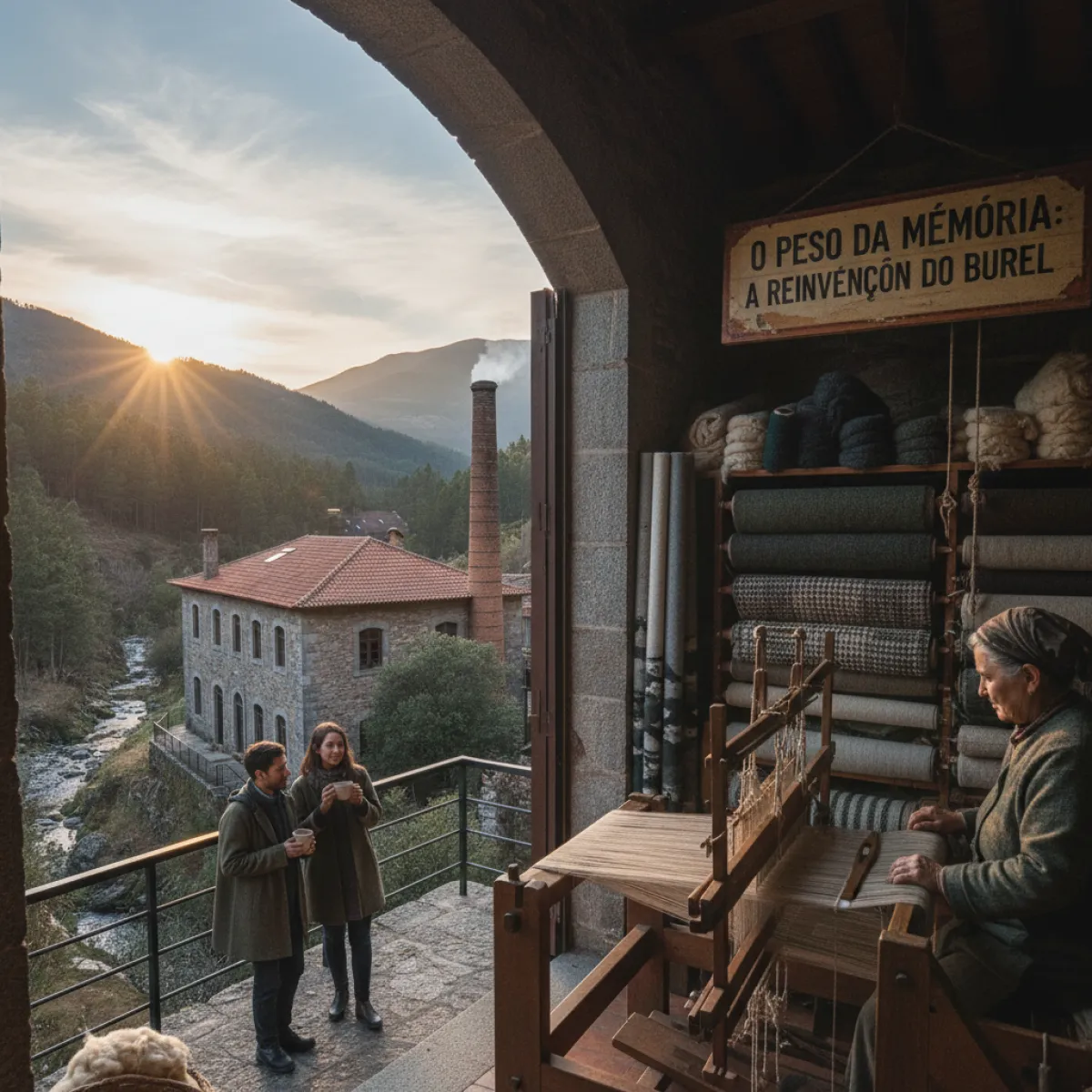
The Glacial Valley and the Rhythm of Looms
Reaching Manteigas requires a certain surrender to verticality. The Zêzere Glacial Valley, one of Europe’s most dramatic landscapes, unfolds like a natural amphitheatre where granite peaks and deep greens collide. It is here, in the heart of the Serra da Estrela, that time seems to have found a different cadence, dictated not by the flicker of digital screens but by the hypnotic, mechanical beat of 19th-century looms. The Burel Factory is not merely a production unit; it is a manifesto of cultural and aesthetic resistance that has transformed a coarse shepherd's fabric into an object of international design desire.
The air in Manteigas is crisp, dense, and carries the faint scent of washed wool and mountain spring water. For those visiting the factory in Amieiros Verdes, the first sensation is one of sound. A metallic, rhythmic thumping that echoes the 1940s and 50s, when this industry was the backbone of the region. Entering the restored industrial building, you are transported to an era where manufacturing was the norm, yet with a contemporary sensibility that avoids easy, sentimental nostalgia.
The Alchemy of Wool: From Fleece to Burel
Burel is, at its core, a fabric made of 100% sheep’s wool (mostly from the local Bordaleira breed), undergoing a radical transformation process. At the Burel Factory, the journey starts with raw wool, which is carded and spun before being woven on massive, vintage looms. However, the secret to its legendary durability and water resistance lies in the fulling process. The fabric is beaten and scalded in a traditional 'engenho de maços' (a water-powered hammer mill), which causes the fibers to compress and intertwine so tightly that the final result is a dense, fire-resistant, water-repellent material with extraordinary acoustic properties.
Watching the machines in action, some of which were rescued from defunct factories and meticulously restored, is a masterclass in historical engineering. The operators, many of whom hold knowledge passed down through generations, move with a precision that modern robotics rarely replicate. There is no rush here. The production time is respected, as the quality of burel depends on the integrity of every step, from the initial wool selection to the final manual finishing where tiny impurities are painstakingly removed.
The 2010 Rescue and the New Language of Design
The trajectory of the Burel Factory changed in 2010, when Isabel Costa and João Tomás, owners of the nearby Casa das Penhas Douradas, decided to acquire the Lanifícios Império factory, then on the brink of collapse. Their goal was not just to save local jobs, but to elevate burel to a new category of luxury. Through collaborations with renowned designers, the factory began producing more than just traditional geometric blankets; it started creating backpacks, laptop sleeves, furniture, and acoustic wall panels that now adorn the offices of global tech giants.
This holistic approach to industrial heritage connects with other preservation initiatives across the Serra. For those who appreciate this fusion of history and modernity, it is worth exploring Modernism in the Mountains: The Architectural Legacy of Cottinelli Telmo in Seia, where 20th-century functionalist architecture found its home among the granite summits, much like burel has found its place in modern interior design.
The Changing Mountain Aesthetic
Visiting Manteigas in different seasons radically alters your perception of the factory and the fabric. In winter, burel is a shield against the biting cold and the snow that blankets the Torre peak. In spring, the landscape softens. It is during this time, usually between March and April, that the region becomes a mandatory stop for those seeking seasonal contrasts. While the nearby slopes of Fundão turn white with blossoms, as detailed in The Ephemeral Bloom: A Guide to Seeing Cherry Blossoms in Fundão, in Manteigas, the yellow gorse begins to flower and the meltwater thunders down the Zêzere.
This contrast between the deep interior and the rugged coastline defines the Portuguese travel experience. If the mountains offer introspection and texture, the sea offers dynamism. For those planning a cross-country journey, the Surfing Portugal in March: The Best Beaches and Conditions guide provides the perfect counterpoint to the industrial stillness of Manteigas, proving that Portugal is simultaneously a land of wool and sea salt.
Practical Guide: Visiting and Dining
When to Go and What to Expect
The Burel Factory offers essential guided tours that are crucial for understanding the project’s scope. These typically take place at 11:00 and 16:00, but booking in advance is highly recommended. The tour fee (approximately 12 euros) is a direct investment in the maintenance of this living heritage. Autumn is perhaps the most photogenic season, as the changing leaves mimic the earth and mustard tones of the dyed wools found in the factory shop.
Where to Eat
- Restaurante Berne: Located at the village entrance, this is the place to try Zêzere trout, prepared simply and honestly. The atmosphere is classic and welcoming.
- O Central: In the heart of Manteigas, this restaurant serves robust mountain fare. The 'feijão com couve' (bean and cabbage stew) and roasted kid goat are essential for recharging after a day of exploration.
Logistics and Budgeting
Manteigas is not a quick pit-stop destination; it requires at least two nights to truly absorb. Accommodation prices range from 90 euros in high-quality local guesthouses to 250 euros in design-led hotels like Casa de São Lourenço. Regarding shopping, expect to invest between 150 and 200 euros for a high-quality double blanket, an heirloom piece that, if properly cared for, will last generations.
Conclusion: More Than a Fabric
The Burel Factory represents a paradigm shift. It demonstrates that it is possible to be global while maintaining a human and local scale. When touching a piece of burel, you feel the controlled coarseness of a material that doesn't pretend to be silk, but instead claims its nobility through functionality and history. In Manteigas, wool is not just a commodity; it is the thread that binds Portugal’s industrial past to a future where authenticity is the ultimate luxury.
