Modernism in the Mountains: The Architectural Legacy of Cottinelli Telmo in Seia
Discover how architect Cottinelli Telmo transformed the slopes of Seia into a laboratory of modernism, merging raw granite with the clean lines of 20th-century architecture.
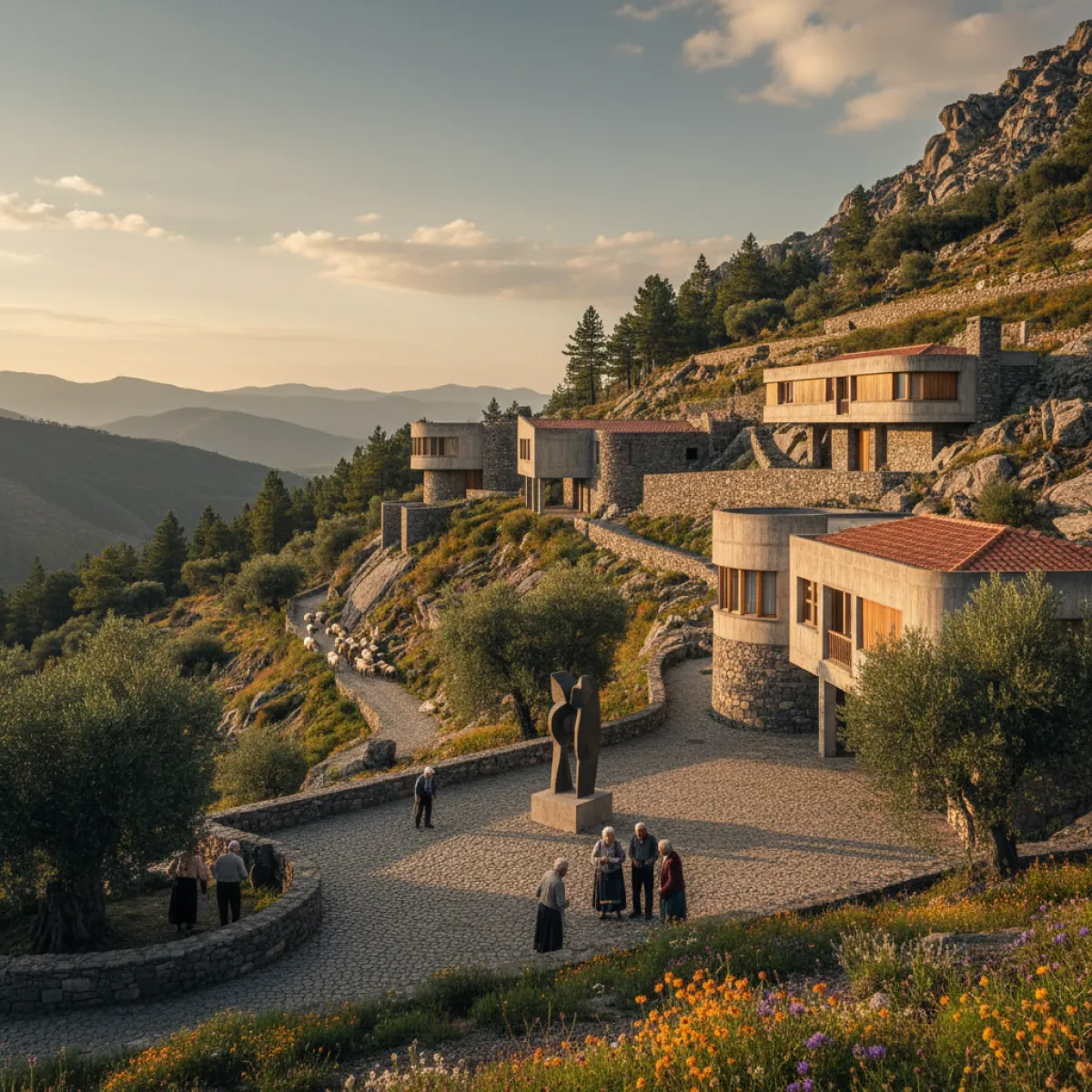
The Aesthetic of Granite and the Straight Line
Ascending the EN339 from Seia toward the central plateau of the Serra da Estrela, the landscape undergoes a geometric mutation. Where nature offers the organic chaos of granite boulders, the hand of man, during the 1940s, imposed a rigorous, modernist order. At the heart of this transformation was José Ângelo Cottinelli Telmo, a figure whose influence on 20th-century Portuguese architecture is as vast as the slopes he sought to domesticate. In Seia, his legacy is not merely a collection of buildings; it is a statement of intent on how modernity should inhabit the mountains.
Cottinelli Telmo was the total architect. A filmmaker, illustrator, and urban planner, he brought to the Beira Alta region a vision that reconciled the austerity of the Estado Novo regime with internationalist functionality. His work in the region, most notably the iconic Pousada de São Lourenço, represents a turning point. Before him, mountain architecture in Portugal was little more than a rustic mimicry of Swiss chalets. Telmo changed the paradigm, using local granite not as a decorative prop but as a structural element that dialogues with clean volumes and horizontal windows that frame the valley like cinematic screens.
Pousada de São Lourenço: The Manifesto of Penhas Douradas
Perched on the threshold between Seia and Manteigas, the Pousada de São Lourenço is perhaps the most significant work of this period. Designed in 1940, the inn was conceived as a showcase for national progress. Here, Cottinelli Telmo demonstrated a rare sensitivity to the terrain. The building seems to emerge from the rock, yet it refuses to be discreet. Its volumetry is decisive, with precisely pitched roofs and an internal organization that prioritizes thermal comfort without sacrificing aesthetics.
The interior, originally decorated in collaboration with Maria Keil, is a study in applying regional materials within modern contexts. The use of burel, the dense wool fabric typical of Seia, and chestnut wood creates an atmosphere that is simultaneously monastic and luxurious. It is a lesson in design that remains relevant: luxury lies not in excess, but in the quality of the material and the precision of the scale. For the contemporary traveler, entering this pousada is to step back into a time when travel was a ritual of contemplation and architecture its primary stage.
Industrial Seia: Modernity in Electricity and Burel
The influence of modernism in Seia extends beyond high-altitude inns. The town itself benefited from a wave of industrialization that adopted the architectural language of its time. The Electricity Museum, housed in the former Senhora do Desterro power station, is a remarkable example of modernist industrial archaeology. The functional lines of the building, the organization of the machinery, and the integration with the Serra's water landscape reveal the same concern for order and efficiency that Telmo championed.
Similarly, Seia’s textile industry, focused on burel, has successfully reinvented itself. What was once a coarse material for shepherds has become a design element sought after by architects worldwide. This capacity for transformation is profoundly modernist at its core: taking tradition, stripping it of the superfluous, and giving it a new functional utility. When visiting the production units in Seia, one realizes that the architecture of the factories and the product that emerges from them share the same DNA of resilience and visual clarity.
March Transitions: From Snow to Bloom
Visiting Seia in March offers a unique perspective on this architectural heritage. It is the month of transition, where the cold winter light begins to yield to the clarity of spring, sharpening the edges of the worked granite. While the higher altitudes may still sport patches of snow, the valleys surrounding Seia begin to teem with new life. This seasonal shift is an invitation to explore the region more broadly.
A short distance away, the landscape transforms radically. For those who appreciate how nature draws its own scenarios, The Ephemeral Bloom: A Guide to Seeing Cherry Blossoms in Fundão offers a perfect contrast to the granitic austerity of Seia. If Telmo’s mountain is ruled by the straight line and the permanence of rock, in Fundão, it is the fleetingness of white blossoms that dictates the rhythm of the journey.
For those who prefer constant motion and the pull of the coast, March is also the month when the Atlantic waters begin to surge with new energy. Should the contemplative silence of Seia’s mountains be interrupted by a craving for adrenaline, our guide to Surfing Portugal in March: The Best Beaches and Conditions provides all the necessary coordinates for a fluid transition from altitude to the shoreline.
A Practical Guide for the Seia Traveler
- What to order: Queijo da Serra da Estrela (PDO) is mandatory, especially in March when production is at its peak. Look for artisanal cheesemakers around Seia. The rye bread, dense and dark, is the ideal pairing.
- What to visit: Beyond the Pousada de São Lourenço, spend an afternoon at CISE (Serra da Estrela Interpretation Center) to understand the geology that Cottinelli Telmo had to confront. The Bread Museum offers a commercial but interesting insight into local culture.
- Logistics: Renting a vehicle with good traction is advisable if you intend to explore the backroads connecting Seia to the mountain villages. In March, temperatures can swing between 4°C and 16°C in a single day; dress in layers.
- Budget: A stay at the Pousada de São Lourenço ranges from €180-€260 per night. Meals at quality local restaurants vary between €30 and €50 per person, including wine.
Cottinelli Telmo’s architecture in Seia teaches us that the mountain does not have to be a place of rustic, nostalgic refuge. It can be, instead, a laboratory of modernity. Walking through these structures, we realize that the true legacy of Portuguese modernism was its ability to be cosmopolitan without ever losing its footing, or, in this case, its grip on the unshakeable granite of the Serra da Estrela.
