Seia: Day Trips Worth the Detour
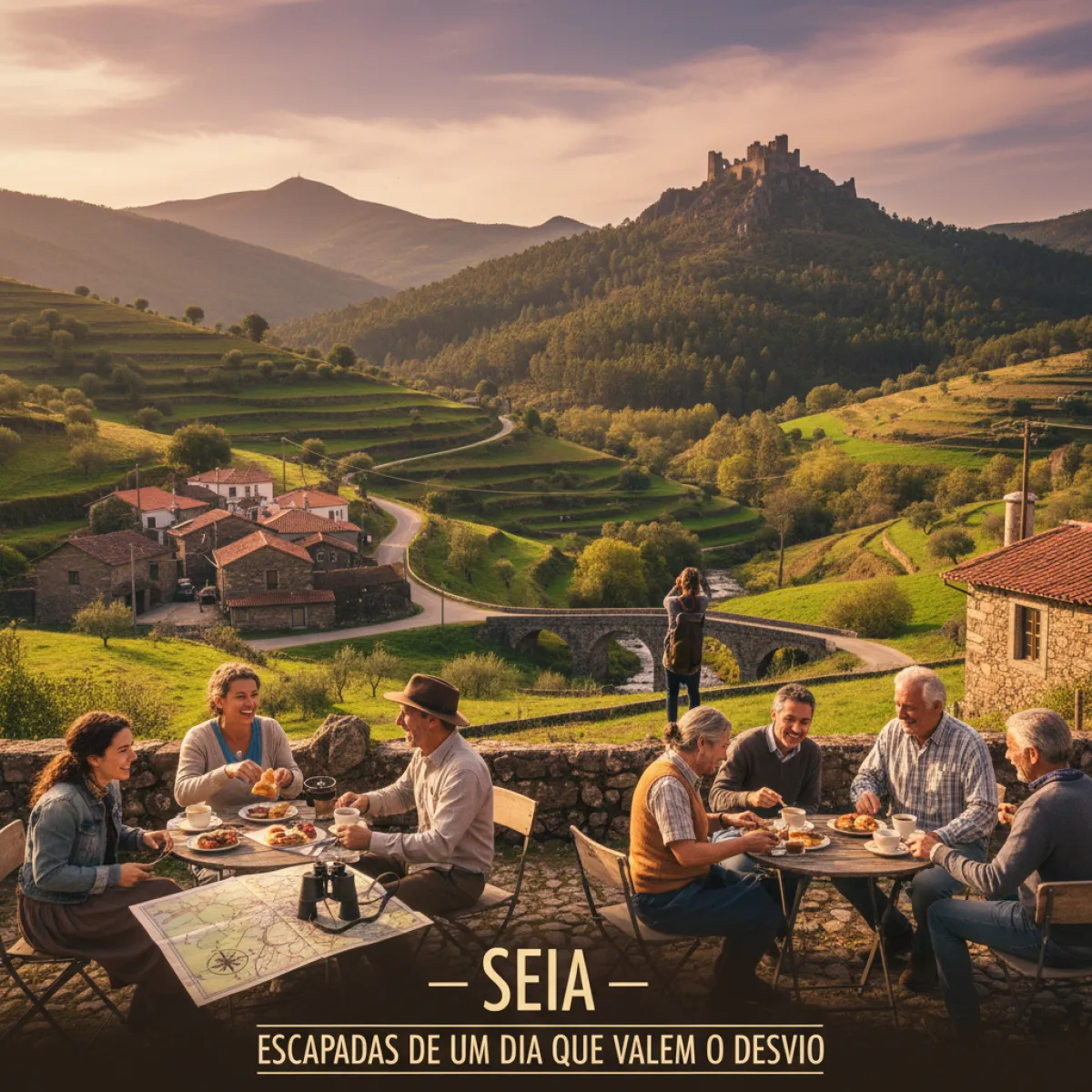
Seia isn't just the launchpad for Torre. Within an hour's drive, you've got schist villages, glacial valleys, and cherry orchards in bloom, if you know when to go. Here's the day-trip playbook for using Seia as your Serra da Estrela base camp.
Seia has a reputation problem. For most people, including most Portuguese, it's just the place where you pick up the road to Torre, the highest point on mainland Portugal. But reducing Seia to a launchpad for the summit is like saying Porto is merely a stopover for the Douro Valley. Not wrong, just woefully incomplete.
The truth is that Seia sits at one of those geographic sweet spots that make trip planners grin. Within an hour's drive, you've got schist villages frozen in time, glacial valleys with genuine drama, cherry orchards that explode into bloom every April, and mountain plateaus where silence is still the default setting. It's a base camp with range.
But before you head out, start the day properly.
The Non-Negotiable Breakfast
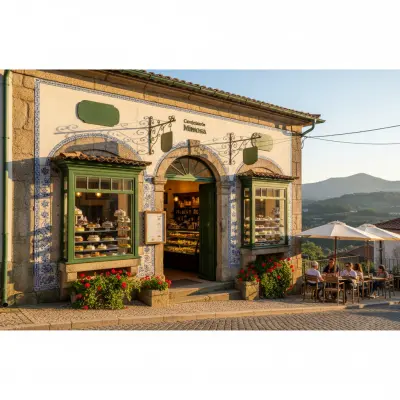
Don't leave Seia without eating first. Confeitaria Mimosa is the kind of place that makes sense at 8am, when the counter is still fully stocked and the coffee machine has just warmed up. It's not an Instagram café, it's an eating café. Order a pastel de nata or a bolo de arroz and a short espresso. No elaborate brunches. You're in the Beira interior, not Lisbon's Príncipe Real.
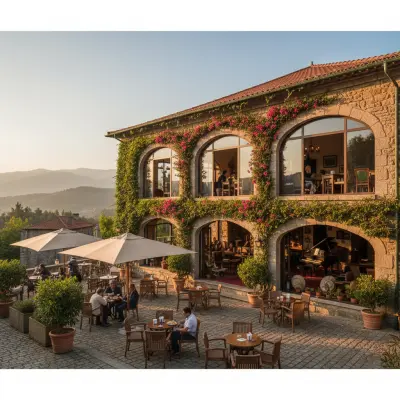
If your morning starts later, or you need a second coffee before hitting the road, Café Concerto is a solid alternative with character. It's not just another town-centre café: it has enough personality to justify a stop even if your car is already warming up outside.
Manteigas and the Zêzere Glacial Valley
The first day trip I'd recommend, and the one I consider non-negotiable, is Manteigas. It's about 35 minutes by car on a road that climbs and drops with the insistence of a fairground roller coaster. But the payoff is proportional.
Manteigas sits wedged at the bottom of the Zêzere Glacial Valley, which is, without exaggeration, one of the most dramatic landscapes in Portugal. The valley was carved by glaciers thousands of years ago, and the result is a U-shaped depression flanked by granite walls, actual granite, the rock, rising on both sides like the backstage of a geological theatre.
What to do there? Walk. The Snow Wells trail takes you to the old stone structures where snow was stored to preserve food, 17th-century technology that worked without electricity. Our guide to the Manteigas Snow Wells trail has everything you need to plan the day. The hike is moderate, takes about three hours, and requires proper footwear, please don't show up in city trainers.
For lunch in Manteigas, look for a restaurant in the centre serving roast kid goat or Zêzere river trout. I won't name a specific one because quality rotates, check locally for what's in form that week. What I can say is: avoid anywhere with menus translated into five languages on the door. Red flag.
Getting there
From Seia, take the N339 toward the serra, then descend to Manteigas via the N338. The road has tight curves but is in good condition. There's no practical public transport, a car is essential.
Schist Villages: The Circuit Starting from Covilhã
The second day trip takes you further south, into the territory of the Schist Villages. These settlements, Piódão, Foz d'Égua, Casal de São Simão, among others, are mountain communities built from dark schist stone, with narrow streets and an atmosphere that seems to have stalled somewhere in the 19th century.
Piódão is the most famous and therefore the most crowded. If you go in August, prepare to fight for parking. But visit on a Tuesday in March or October and you'll have the village practically to yourself. The trick is always the same: off-season, off-weekend.
The best way to do this from Seia is to combine several villages into a circular route. Our one-day road trip from Covilhã to the Schist Villages details a route that adapts easily if you're starting from Seia, Covilhã is half an hour away and makes an excellent midpoint. Budget between 45 minutes and an hour and a half of driving time, depending on which village you're targeting.
A warning: the roads to some of these villages are narrow and winding. It's not difficult driving, but it demands attention. And fuel in the tank, petrol stations are scarce on these routes.
Fundão and the Cherry Blossoms
This day trip has a precise window: late March to mid-April, depending on the year and temperatures. That's when the cherry orchards of Fundão and the slopes of Serra da Gardunha bloom, turning the valley into a spectacle of white and pink that lasts just a few weeks.
Fundão is about 50 minutes from Seia via the A23. The region is Portugal's largest cherry producer, and when the trees bloom, the landscape is genuinely stunning. This isn't a manufactured tourist attraction, it's agriculture that happens to be beautiful.
To make the most of it, read our guide to seeing cherry blossoms in Fundão before you go. The best viewing spots shift from year to year, and having some guidance makes the difference between finding the right valley and spending the day driving aimlessly.
After the blossoms, Fundão itself deserves an hour of wandering. The historic centre has been recovering in recent years, with cafés and shops that prove not every interior town is emptying out.
Getting there
A23 towards Fundão. It's motorway almost the entire way, fast and uneventful. If you prefer a scenic route, the N18 and N230 are options, but significantly slower.
Torre and the Serra da Estrela Plateau
Yes, I know, I said Seia was more than a launchpad for Torre. But it would be dishonest not to include the serra in a list of day trips, because the ascent from Seia is genuinely the most interesting of the approaches to the plateau.
The road via the N339 climbs from Seia's 500 metres to Torre's 1,993 metres in about 40 minutes. Along the way, you pass through Sabugueiro, Portugal's highest village, which sells serra cheese and cured meats from practically every doorstep, and through landscapes that change radically with every hundred metres of altitude gained.
At Torre itself, the experience depends on the season. In winter, there's snow (and sometimes the road closes, check before leaving). In spring and autumn, you get the plateau virtually to yourself with visibility that on clear days reaches Spain. In summer, you get crowds and a telecommunications tower that won't be winning any architecture prizes.
My recommendation: go up early in the morning, avoid good-weather weekends, and don't skip stopping in Sabugueiro on the way down to buy a cured serra da estrela cheese. Buy from the shepherd, not the air-conditioned shop.
Before You Leave: The Bread Museum
If you have time before or after your day trips, the Museu do Pão (Bread Museum) in Seia is worth a visit. I know, a museum about bread sounds like a filler tourist attraction. But it's genuinely interesting. The collection traces the history of bread from the Neolithic, there's a bakery where bread is made the old-fashioned way, and there's a section on bread's role in religion and culture that's more engaging than you have any right to expect.
It's especially good for families with children, who get to put their hands in the dough, literally. Check hours before visiting, especially outside peak season.
Practical Logistics
- Car: Essential. None of these day trips is viable by public transport unless you have infinite patience and flexible schedules. Rent in Coimbra or Viseu if you don't have your own vehicle.
- Fuel: Fill up in Seia before heading out. Petrol stations become scarce as you climb into the serra or enter schist village territory.
- Season: Spring (March–May) and autumn (September–November) are ideal. Summer is hot in the valleys and crowded on the serra. Winter is beautiful but unpredictable, roads can close with snow.
- Time needed: Each of these day trips fills a full day if you want to do things properly. Don't try to combine two in one day, you'll end up racing from viewpoint to viewpoint without absorbing anything.
Seia doesn't show up on lists of Portugal's most beautiful towns. And maybe that's exactly why it works so well as a base. There's no pressure to see everything, no crowds pushing you toward the next selfie spot. There's an enormous mountain range at your doorstep, villages that seem to have stopped in time, and cherry orchards that for two weeks a year justify any detour. Start with breakfast at the Mimosa, decide your direction over a second coffee, and let the rest happen.