The Silent Estuary: Birdwatching and Eco-Design in Caminha
Discover Caminha through a lens of sophistication and sustainability. A guide to the Minho River mouth, where elite birdwatching meets contemporary design and transitional gastronomy.
The Geometry of the Mouth: Where River Meets Sea
Caminha is not a destination for those seeking the obvious. Tucked into the northwestern corner of Portugal, where the Minho River dissolves into the Atlantic under the watchful eye of Spain’s Monte de Santa Tecla, the town demands a different cadence. Here, the light possesses a silvered quality, filtered through the moisture of the estuary and the morning fog that often dictates the day’s choreography. This is a borderland, not just a geopolitical one, but a sensory one. On one side, the Camarido Pine Forest offers a barrier of resin and deep shade; on the other, the transitional waters serve as a sanctuary for wildlife that ignores the lines drawn on maps.
For the modern traveler, Caminha’s allure lies in its refusal to surrender to mass tourism. The town has preserved an austere elegance, visible in its granite towers and the quiet sophistication of its newer lodging projects. Unlike much of the Portuguese coast, luxury here is not manifested in opulence, but in silence and intelligent integration with the landscape. It is an approach that prioritizes ethical design, where architecture serves as a vantage point for nature rather than an obstacle.
The Estuary as Sanctuary: The Art of Observation
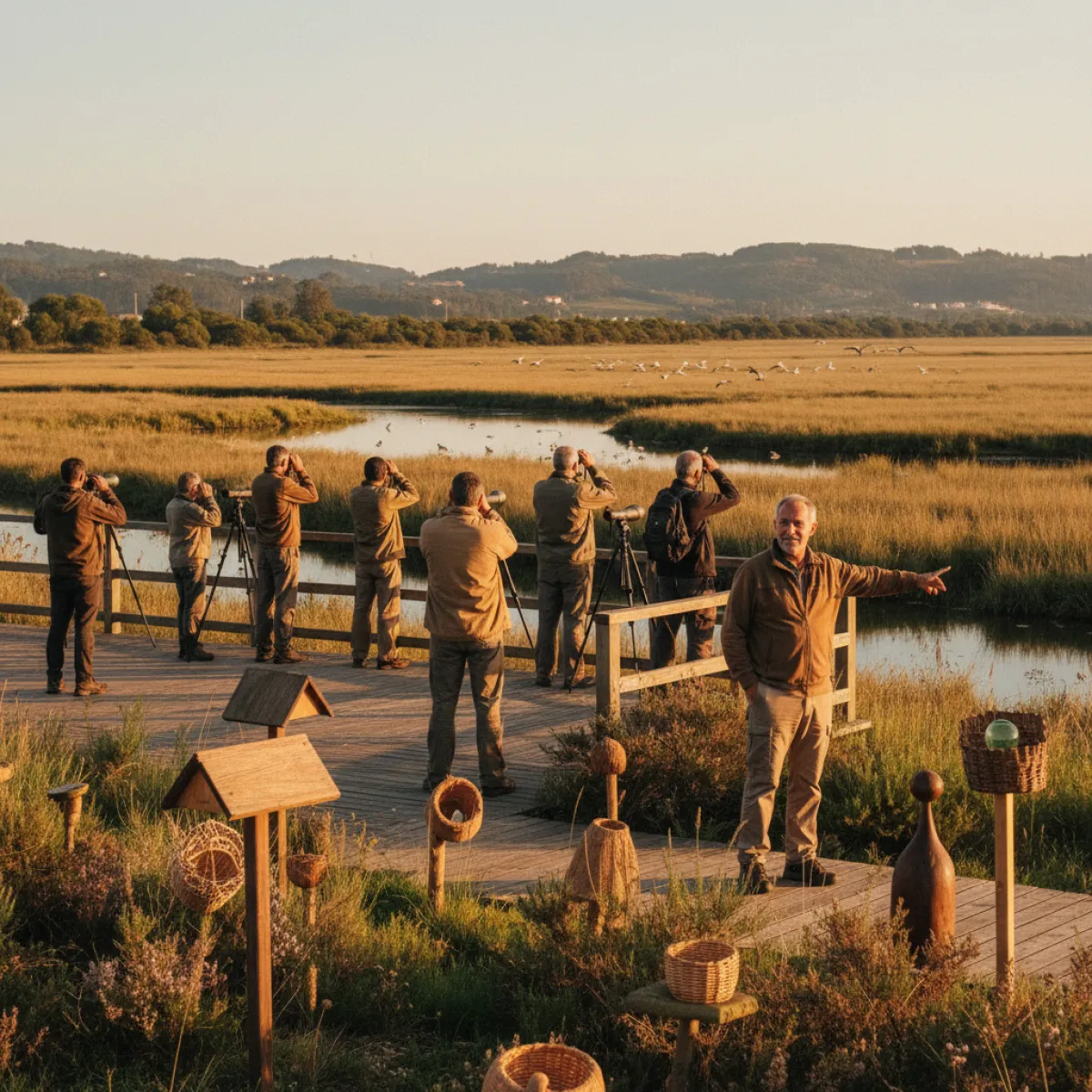
The Minho River Estuary is one of European ornithology’s best-kept secrets. For those dedicated to birdwatching, the salt marshes and sandbanks that emerge at low tide are stages for a constant performance. Armed with binoculars and a near-meditative patience, observers can find the Grey Heron (Ardea cinerea) or the Spoonbill (Platalea leucorodia), both of which find the nutrient-rich waters essential for their migratory routes. Silence is the currency here; the quieter the observer, the more generous nature becomes.
This fragile ecosystem requires low-impact tourism. The wooden boardwalks that weave along the riverbank were designed to allow access without disturbing the habitats. Walking these paths in the late afternoon, as the sun dips behind the Santa Cruz Fort on the island of Ínsua, is to understand the true scale of the estuary. It is an experience that invites contemplation, much like the one we describe in The Fog and the Feast: Why Ponte de Lima is Portugal’s Most Evocative Winter Escape, where an atmosphere of introspection defines the journey.
Eco-Design and Rehabilitation: Caminha’s New Face
Caminha’s urban renewal has followed an exemplary path. Instead of disruptive new builds, the town has focused on rehabilitating manors and historic buildings with a contemporary vocabulary. The Design Wine Hotel, housed in an 18th-century structure, is a textbook example of how architectural daring can coexist with Manueline heritage. The interiors play with noble materials, slate, wood, glass, creating spaces that breathe. This isn't merely about aesthetics; it is a statement of intent regarding how we inhabit the land.
The influence of design extends to furniture and small details. There is a clear valuation of local production, echoing the artisanal traditions of the Minho region, as explored in our deep dive into The Living Craft of Minho: A Deep Dive into the Pottery of Barcelos. In Caminha, this connection to manual craft manifests in linen textiles and lighting fixtures that mimic the organic forms of the riverbed. It is an aesthetic ecosystem that reinforces regional identity without resorting to cliché.
Gastronomy of Transition: From River to Ocean
Dining in Caminha is a navigation between two worlds. Proximity to the river guarantees delicacies like lamprey and shad (in season), while the sea offers sea bass and bream of irreproachable freshness. Solar do Pescador, in the historic center, maintains the rigor of traditional cooking, serving a 'debulho' rice that is, in itself, a reason for the trip. For something more contemporary, look for tables that prioritize the wines of the Monção and Melgaço sub-region, where the Alvarinho grape reaches its most mineral expression.
Breakfast should be taken slowly, observing the movement in Praça Conselheiro Silva Torres. It is the ideal moment to plan the day: perhaps a ferry crossing to La Guardia in Galicia, or a hike up Monte de Santa Trega for an aerial view of the confluence. For those traveling with children and seeking a gentler pace, it is worth consulting The Slow Rhythm of Ponte de Lima: A Family Guide to Portugal’s Oldest Village, which offers leisure alternatives just a short drive away.
Practicalities for the Discerning Traveler
- Timing: Spring and autumn are the peak seasons for birdwatching. Winter is melancholic and beautiful, ideal for those seeking isolation and hearty gastronomy.
- What to order: Sea Bass Rice, fried Shad, or the legendary Lampreia à Bordalesa (January to April).
- Budget: A stay in a design hotel will range from €120 to €200 per night. A full meal at a top restaurant is around €40 to €60 per person.
- Access: The regional train from Porto offers one of the most scenic journeys in the country, hugging the coastline for much of the route.
Caminha is, ultimately, a lesson in balance. Between the force of the Atlantic and the serenity of the Minho, between ancient stone and modern design, the town provides a refuge for those who understand that travel is an act of attention. Do not come merely to see; come to observe, to hear the beat of wings in the salt marsh, and to feel the texture of the granite. In Minho, haste is a form of rudeness, and Caminha is the ideal place to practice the art of slowness.
