The North’s Raw Edge: Coastal Rhythms and Basalt Walls in São Vicente
Discover the raw beauty and basalt tides of São Vicente, Madeira’s northern retreat where surfing and brutalist architecture meet the untamed power of the Atlantic.
Crossing the Divide: Where Madeira Reinvents Itself
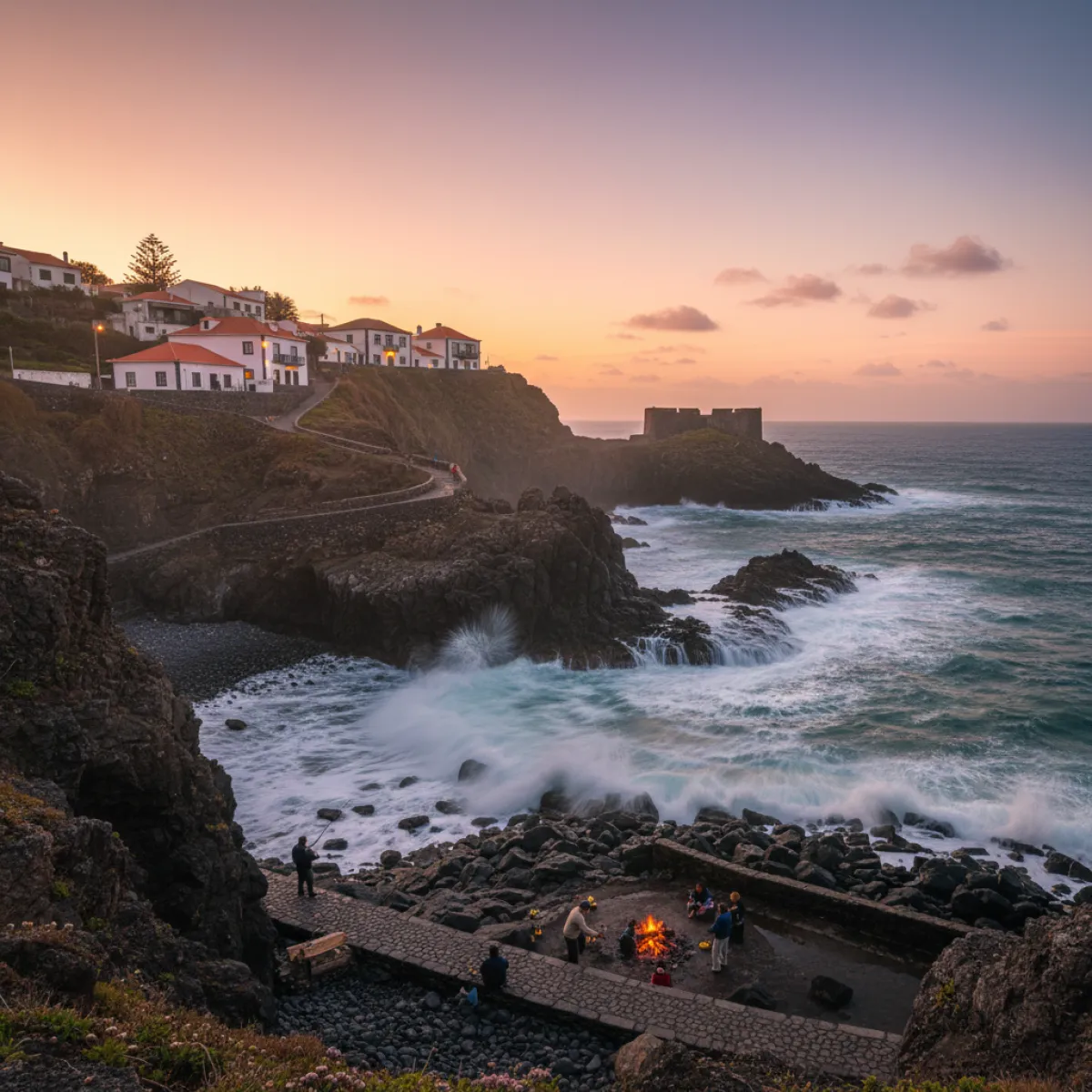
There is a specific moment when Madeira stops being the sun-drenched postcard of Funchal and transforms into something more visceral. It happens at the Encumeada pass, where clouds often rest upon the mountain ridges, acting as a curtain between the gentle south and the dramatic north. To descend toward São Vicente is to enter a theatre of basalt and deep forest green, where the Atlantic Ocean is not just a backdrop but a constant, rhythmic roar. For the coastal traveler, this is not a realm of sun loungers and manicured piers; it is a place for contemplation, for surfers navigating cold currents, and for architecture that feels as though it were carved directly from the rock face.
Unlike more traditional stops such as Câmara de Lobos: The Fishing Port That Seduced Churchill, where the charm is picturesque and historical, São Vicente imposes itself through its raw honesty. Here, the coastline is defined by cliffs that plunge vertically into the surf, and the beaches, if we can call them that, are stretches of volcanic black sand or weathered basalt pebbles that demand respect. It is a landscape that attracts a different breed of traveler: those who prefer the sound of waves crashing against stone to the hum of a marina.
Fajã da Areia: The Epicenter of Salt and Surf
The unavoidable meeting point for those who live by the sea in the north is Fajã da Areia. This small bay, protected by a breakwater that frequently fails to tame the Atlantic’s impulse, is the heart of the island’s surfing culture. The setting is formidable: on one side, the ink-blue vastness of the ocean; on the other, mountains that seem to pierce the sky, often shrouded in a heavy mist. The beach itself is minimal, but the wave quality is legendary among locals.
For the casual observer, the pleasure lies in the seafront promenade connecting the village to the water. It is an exercise in linear architecture that respects the existing topography. Walking here, one realizes that São Vicente does not attempt to hide its untamed nature. On the contrary, the village has integrated concrete and basalt in a nearly symbiotic fashion. This relationship between human design and geological force is masterfully explored in The New Northern Brutalism: Contemporary Art and Design in São Vicente, which details how modern aesthetics found a home on these steep slopes.
The Ritual of a Coastal Lunch
In this part of the world, gastronomy eschews unnecessary flourishes. What one seeks are *lapas* (limpets), served sizzling in a cast-iron skillet with butter, garlic, and a squeeze of lemon. A budget of €25 to €35 per person is standard for a meal of this quality, including the essential *bolo do caco*, a flatbread cooked on stone and generously slathered with garlic butter. While the panoramic Quebra Mar is a classic choice, the smaller surf bars at Fajã offer a more immediate experience, where the sea spray feels like an extra seasoning.
The Geometry of Tides: Porto Moniz and Seixal
While São Vicente serves as the ideal base, the coastline extends westward with a beauty that defies easy description. Seixal, just a few minutes’ drive through tunnels cut into the mountain’s core, offers one of the island’s few natural black sand beaches. It is a place of unexpected softness within such a rigid context. The waters here are a deep emerald, contrasting sharply against the dark sand. There is no heavy infrastructure here, only nature in its most unadulterated state.
Further along, the natural pools of Porto Moniz represent a triumph of engineering over volcanic fury. Carved into the basalt by time and tides, these pools allow for a swim in the Atlantic with a safety that the open sea rarely grants at this latitude. For those traveling with younger explorers, it is an essential stop, ensuring that contact with the ocean is joyful rather than intimidating. This focus on safe, educational exploration is a cornerstone of São Vicente: A Family Expedition to Madeira’s Untamed Northern Coast, which highlights learning opportunities within the volcanic caves and the surrounding Laurissilva forest.
The Aesthetics of Isolation
What makes São Vicente truly distinctive is its refusal to be domesticated. While the south of the island expands with luxury hotels and integrated resorts, the north maintains a human scale. Guesthouses are often restored manor houses or modern structures that use local stone to disappear into the landscape. The silence, broken only by the wind and the sea, is the greatest luxury available here.
In the late afternoon, the light in São Vicente takes on a silvery hue. This is the ideal time to visit the Capelinha de Fátima, perched on a hill overlooking the valley. From this vantage point, you see the village huddled between the mountains and the ocean, a scene that evokes an older, resilient Madeira, deeply connected to its terrain. It is an aesthetic experience that goes beyond conventional tourism, requiring the visitor to be willing to slow down.
- When to go: Between May and September for longer days and calmer seas. However, winter offers a spectacular display of waves for photography enthusiasts.
- What to pack: A windproof jacket is essential, even in summer. The northern microclimate is notoriously fickle.
- Transport: Renting a car with a powerful engine is mandatory. The inclines are steep, and the tunnels require focused driving.
São Vicente is, ultimately, an exercise in humility before nature. It is a place where beaches are not concessions to comfort, but dramatic boundaries. For those who value authenticity and the sheer power of the landscape, the Vicentine coast is not just a stop on a map; it is the final destination where the island reveals its most indomitable soul.
