The Machico Frequency: Slow Travel and Ecological Integrity in Madeira’s First Capital
Discover Machico through a lens of sustainability and slow travel. From minimalist architecture to high-altitude gastronomy, explore Madeira’s first capital away from mass tourism.
The Atlantic Decompression
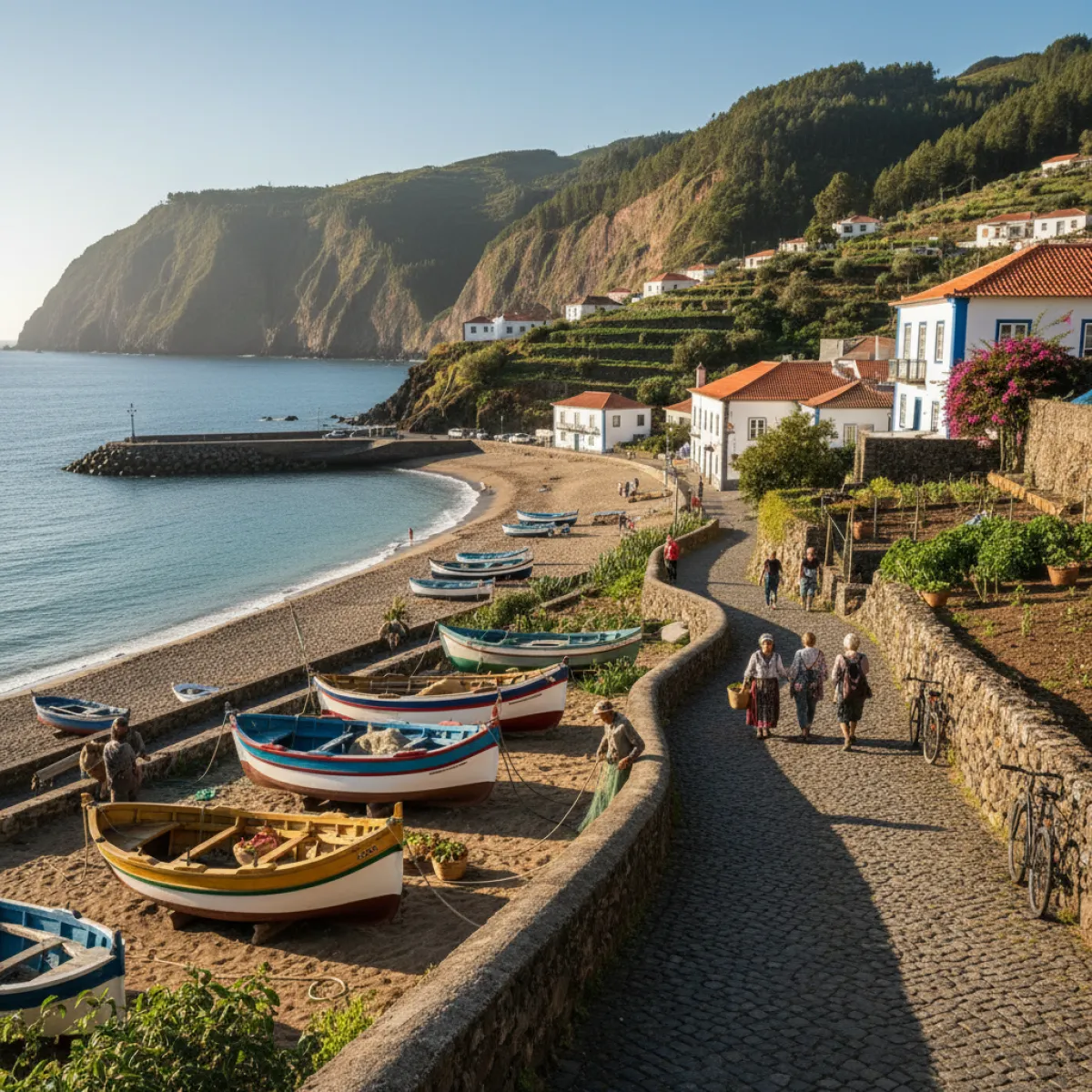
Machico does not reveal itself at first glance. For those arriving in Madeira via Santa Cruz airport, the bay appears as a brief interval of civilization before the urban density of Funchal. However, it is precisely in this pause that the essence of sustainable travel resides. Machico was where it all began, the landing point for Zarco and Vaz Teixeira in 1419, and today, ironically, it is where one can escape the frantic narrative of mass tourism. Choosing Machico is an act of intention. It is deciding that the rhythm of the trip will be dictated by geology rather than the cruise ship calendar.
Sustainability here is not a marketing label but a necessity imposed by the terrain. Unlike the more developed south, the east of the island maintains a rawness that demands respect. Traveling in an eco-conscious way in Machico involves understanding the water cycle and the role of the levadas. The Levada do Caniçal, for instance, offers a technical and visual introduction to the island's hydraulic engineering, allowing one to traverse the transition between the laurissilva forest and the arid zones of Ponta de São Lourenço without the carbon footprint of an off-road vehicle.
Architecture That Respects the Place
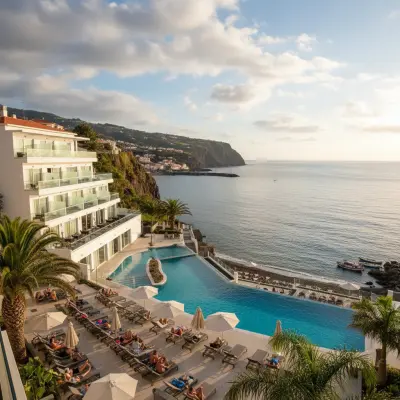
In the town center, accommodation reflects this transition toward more thoughtful tourism. Local aesthetics have been moving away from Madeiran pastiche to embrace a modernity that dialogues with the environment. An example of this is the restrained architecture of Hotel White Waters. Located just steps from the main square, this space avoids the giantism of typical resorts, opting instead for minimalist lines and an urban integration that allows the traveler to feel part of the community rather than an external observer. It is the ideal starting point for those seeking to explore on foot, reducing dependence on private transport.
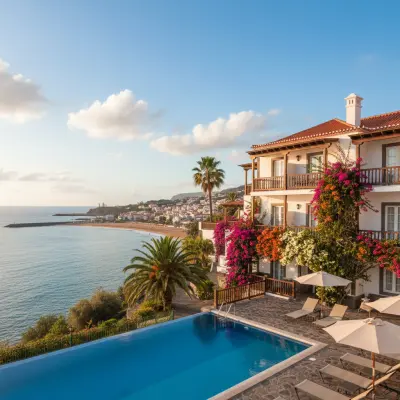
For those who prefer absolute proximity to the sea, Hotel Vila Bela offers a different perspective. Situated on the waterfront, this hotel maintains a human scale that is rare in other parts of the island. Here, luxury is not measured in square meters of pool space but in the ability to fall asleep to the sound of pebbles rolled by the tide, a sensory experience that defines Machico's relationship with the Atlantic. It is an exercise in simplicity that aligns with slow travel principles, encouraging longer stays and a deeper exploration of the local territory.
High-Altitude Gastronomy and Seasonality
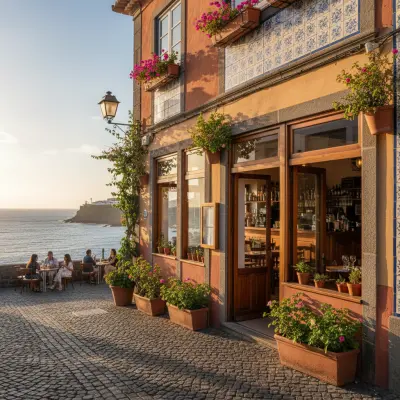
Eating sustainably in Machico requires an ascent. Leaving the coastline behind and heading toward the ridges and hills, one finds a cuisine that still relies on what the land provides. The journey to Restaurante Lily is a geography lesson in itself. Located at a high altitude, this culinary sanctuary stands out for its use of ingredients that haven't suffered the wear and tear of long cold chains. The menu here is a celebration of seasonality, where coastal fish meets tubers grown in the neighboring terraced fields (poios). We recommend looking for variations of limpets (lapas) and black scabbard fish, prepared without unnecessary artifice, respecting the original flavor of the raw material.
Practicalities and Budgeting
- When to go: Spring (April to June) offers the ideal balance of mild temperatures for hiking and the floral explosion of the mountains.
- Transport: Use the interurban bus network to connect Machico to Funchal or Caniçal. On foot, the town is perfectly navigable.
- Budget: A quality dinner costs around €25-35 per person. Boutique hotel accommodation ranges from €90 to €150 per night, depending on the season.
Connecting with the Rest of the Island
While Machico is a complete ecosystem, its position allows for interesting contrasts with other Madeiran realities. While Câmara de Lobos maintains its heritage linked to scabbard fishing with more direct exposure to international tourism, Machico preserves an austerity that appeals to the more independent traveler. The comparison is useful for understanding the different speeds of development on the island.
To the north, the landscape becomes more dramatic and the architecture more experimental. It is worth observing how Madeira has evolved aesthetically, something visible in the contemporary design movements of the north in São Vicente. This transition from exposed concrete and geometric shapes integrated into basaltic cliffs shows a commitment to design that is also found, on a smaller and more urban scale, in Machico.
The Future is Circular
The success of Machico as an ecological tourism destination will depend on its ability to maintain its scale. Supporting local businesses, from small bakeries serving traditional bolo do caco to diving companies operating in the natural reserve, is fundamental. Being a responsible tourist here means understanding that every euro spent has a direct impact on landscape preservation. Machico doesn't need new golf courses or expansive marinas; it needs travelers who know how to appreciate the silence of Pico do Facho at dawn and who understand that the true privilege of traveling in Portugal is finding places that still belong to themselves.