The Other Side of Machico: Past the Golden Beach
Most people see Machico for seven minutes, from the motorway, on the way to Funchal. Mistake. The town where Madeira began hides murals, vertiginous trails and the east's best scabbardfish, all on the other side of the river.
Most people experience Machico for exactly seven minutes. That's how long it takes to drive past it on the expressway from the airport, glancing at the bay while the bay glances back, before flooring it toward Funchal. Which is a shame. Because Machico, Madeira's second city and the spot where the island's history literally began in 1419, gets treated as a roundabout with a sea view. Those who do stop, stop at the beach. And the beach, decent as it is, is the least interesting part.
Let me be blunt: Machico's beach is made of sand imported from Morocco, dumped over the pebbles in 2008 to give the town a prettier postcard. It works. The water is calm, there are showers, and on an August evening it's full of local families. But if you crossed the whole island for this, you crossed it for nothing. What makes Machico worth your time is on the other side of the river, in the Banda d'Além quarter, and up in the hills behind town. That's where we're going.
Start where Madeira started
The official story says João Gonçalves Zarco and Tristão Vaz Teixeira landed here in 1419 and named the place after Robert Machim, an Englishman who, legend has it, was shipwrecked in this bay while fleeing with his beloved Anne d'Arfet. It's probably half myth, but the Chapel of Miracles (Capela dos Milagres) is real and worth a look, mostly for the flood story: the original chapel was swept out to sea in 1803, and the crucifix was later recovered offshore by an American ship. Around 8 or 9 October, the Festa do Senhor dos Milagres fills the town and fills the bridge with a procession.
Mid-morning, before the heat builds, visit the 15th-century parish church (Igreja de Nossa Senhora da Conceição), with its Manueline portal and marble columns gifted by King Manuel I. Then walk down to the Forte de Nossa Senhora do Amparo, the ochre-coloured triangular fort by the river mouth, built in the 18th century to defend the bay from pirates. It now houses the tourist office. It's small, ten minutes and you're done, but it sets the scale: Machico mattered long before Funchal was Funchal.
The Banda d'Além and the art nobody notices
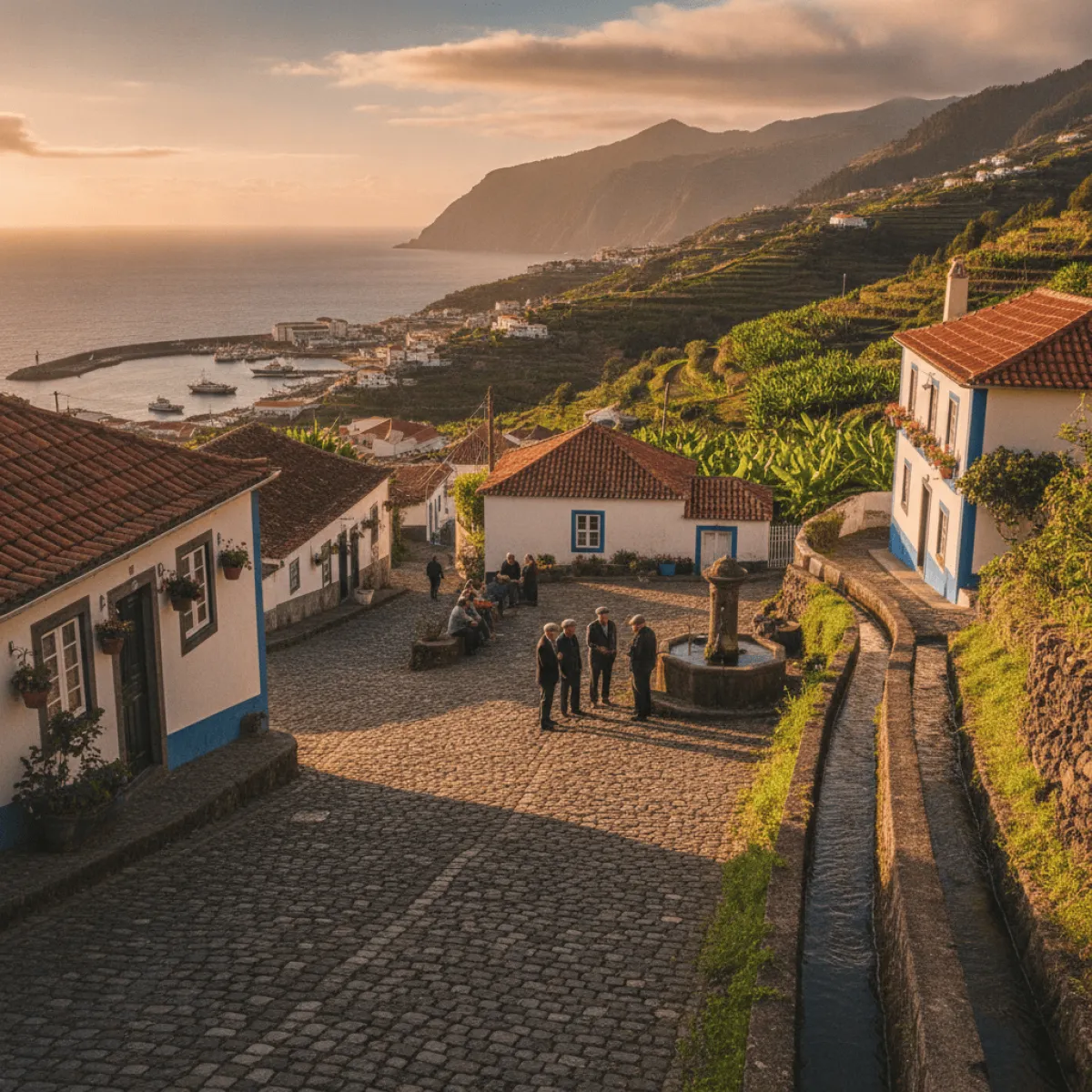
Cross the river to the eastern side, the Banda d'Além, and the town changes character. Streets narrow, washing hangs from balconies, and murals start appearing on the walls. This is the part of Machico the tour buses never see, and frankly it's the best part. I'd do the self-guided street art walk through the Old Town, which links the main murals into a loop of just over an hour. Do it early or late in the day, when the light comes in sideways and the colours sing. Bring a camera and comfortable shoes: there are slopes.
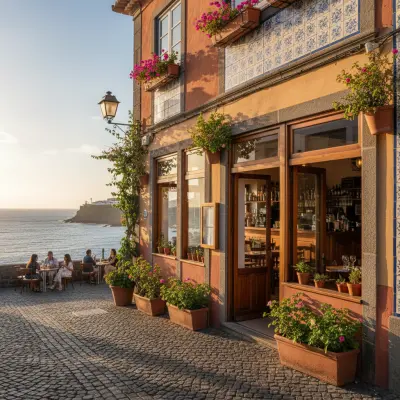
Between the murals are neighbourhood cafés where an espresso costs under a euro and nobody speaks English, which is precisely the point. Sit down, order a slice of bolo de mel (honey cake) or a broa, and watch. The Banda d'Além is where Machico is still Machico, not a backdrop for people passing through.
Where to eat (and what to order)
Here's the golden rule: in Machico, eat fish and seafood, not meat. The skewered beef (espetada) on a bay laurel stick is excellent across the island, but this is a sea town and the freshness shows. At Restaurante Lily, start with grilled limpets (lapas) in garlic butter and lemon, then order black scabbardfish, the ugly deep-water fish Madeira turned into an institution. If it comes with fried banana and passion fruit, that's the classic Madeiran combination, sweet and savoury at once, which divides opinion and wins most people over.
Get bolo do caco on the side, the round bread cooked on stone and slathered in garlic butter that lands on every table before you even ask. To drink, a poncha. The real thing is sugarcane spirit, bee honey and lemon juice, stirred with its own little wooden tool, the caralhinho. It's treacherous: tastes like juice, hits like a fist. One at lunch is plenty.
Budget roughly 15 to 25 euros per person for a fish meal with a starter and a drink, depending on what you order. Fish is often priced by the kilo, so check locally before you choose.
Climb the Pico do Facho and vanish into the Larano
The view worth the trip isn't on the beach: it's up top. Pico do Facho rises around 320 metres above the bay and hands you the whole of Machico at your feet, the river mouth, the fort, the imported-sand beach, and across the water the Ponta de São Lourenço stretching brown and bare into the sea. You can drive almost to the summit, but if you've got the legs, walk it. The name comes from the beacons (fachos) once lit there to warn townspeople of approaching pirates.
For anyone who wants more than a viewpoint, the trail is Machico's real reward. The Vereda do Larano, the old fisherman's trail, leaves Machico and clings to the cliffs all the way to Porto da Cruz, with the Atlantic pounding far below for most of the route. It's a mid-slope path, partly cut into the rock, with vertiginous stretches protected by steel cable. Not for those scared of heights, but it's one of the most beautiful coastal trails on the island and, unlike the central levadas, it's rarely crowded. Bring water, a hat and shoes with grip. The walk takes around two to three hours one way, so plan your return transport, either a taxi or the bus from Porto da Cruz.
If you'd rather do the classic levadas, it's worth saving a day for the essential levada walks near Funchal, which are a different animal, greener, wetter, more tunnels and laurel forest. But if you're based in Machico, the Larano is the one right on your doorstep.
Where to stay
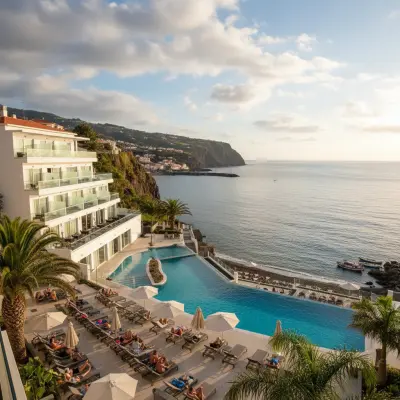
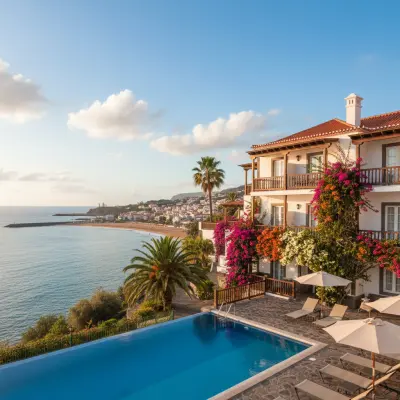
Machico is a smart, underrated base for exploring the east of the island: ten minutes from the airport, twenty-five from Funchal, and a hop from Ponta de São Lourenço and Caniçal. For a room right on the water, the Hotel White Waters sits by the bay and is handy if you land late. For something with more character and a garden, the Hotel Vila Bela is a solid, quiet choice. Both put the beach, the restaurants and the trailheads within walking distance.
Getting there and around
By car, it's about five to ten minutes from Madeira Airport and twenty-five to thirty from Funchal on the expressway (VR1). By bus, the SAM company links Funchal to Machico several times a day; confirm timetables locally, as they shift by season. In town you walk everywhere: fort to beach, beach to Banda d'Além, it's all flat and close, except when you decide to climb the Pico do Facho.
Make Machico a base, not a stop
The classic mistake is treating Machico as the thing you see from the motorway. Use it instead as a launchpad. From here you easily reach Caniçal and its Whale Museum, the arid Ponta de São Lourenço peninsula for sunset, and the green north of the island. To combine it with the best of the capital at a special time, the guide to Funchal in June, with tuna, levadas and festival nights, shows what the city does well, and it's a half-hour drive away. For a slower day at the island's own pace, the itinerary for 24 hours in Santana, with its triangular thatched houses, is just over forty minutes up the north coast.
But save the first morning for Machico itself. Get up early, cross the river, climb the streets of the Banda d'Além before the sun bites, and you'll understand that the town where Madeira began is not a roundabout with a beach. It's a place with history, with good fish, with breathtaking trails, and with the rare advantage of not yet having been found by everyone. Enjoy it while it lasts.