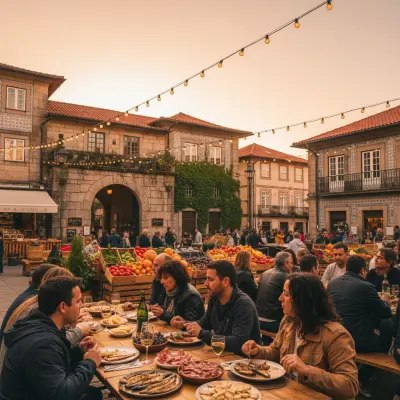
The Last Frontier: Finding Stillness in Bragança
Discover Bragança through a lens of sophistication and stillness. From the granite isolation of Montesinho to the serenity of the Sabor Lakes, explore the northeastern frontier where tradition is an act of resilience and hospitality knows no rush.
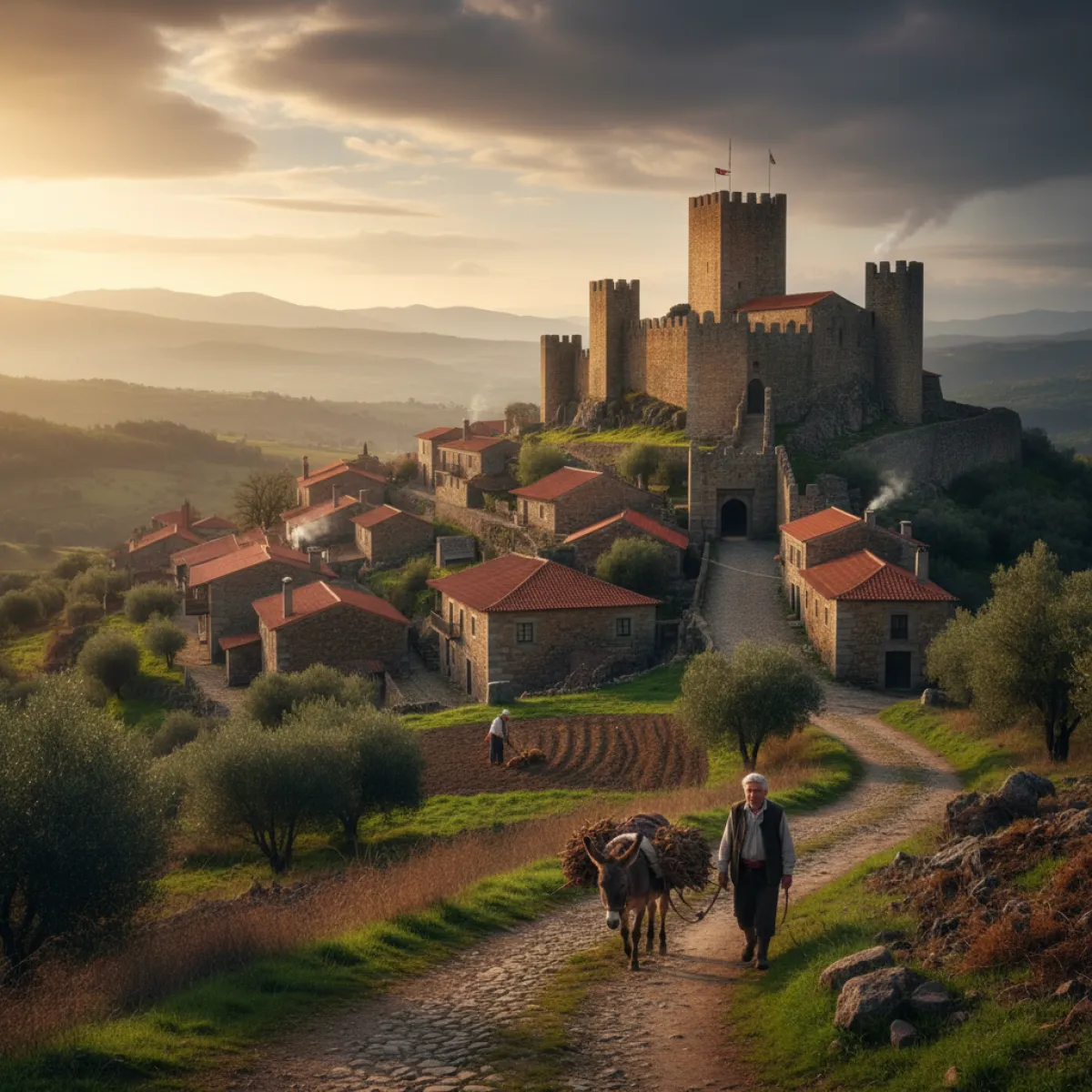
The Geography of Isolation
To arrive in Bragança is not a geographical accident; it is an aesthetic choice. For those ascending from the coast, the A4 highway serves as a bridge between contemporary Portugal and a plateau where time seems to have been held back by the density of granite. Here, in the northeastern Trás-os-Montes, the air is thinner and the silence has a physical texture. Bragança does not reveal itself immediately to those seeking easy spectacles. It is a city of layers, where medieval austerity lives alongside a discreet sophistication manifested in its food, wine, and a hospitality that knows no rush.
The journey must be undertaken with the awareness that you are entering the 'Terra Fria' (Cold Land). In winter, hearth smoke draws grey columns against a sky of almost painful blue; in summer, the heat is dry, smelling of rockrose and scorched earth. It is this climatic rigor that shapes the region's character and, consequently, the experience of its visitors. One does not come to Bragança to collect photographs of monuments; one comes to understand the resilience of a culture that has remained authentic precisely because of its historical isolation.
The Citadel Stronghold and the City's Pulse
The historical heart of Bragança, the Cidadela, is one of the best-preserved fortified perimeters in the country. Walking through its narrow stone streets is to feel the weight of centuries of frontier vigilance. The Castle of Bragança, with its imposing Keep, dominates the landscape, but it is in the Domus Municipalis where we find the city's true architectural enigma. This pentagonal building, unique in the civil Romanesque architecture of the Iberian Peninsula, served as a cistern and a meeting place for the town's 'good men.' Its acoustics and the light filtering through its slits create an atmosphere of solemnity that invites a pause.
Outside the walls, the modern city pulses with a surprising energy, fueled largely by the academic community and the vitality of local commerce. For those seeking a meeting point where tradition intersects with modernity, Mercado Club is an essential reference. Located in the old municipal market, this space has transformed into a social hub where one can observe the daily rhythm of the 'brigantinos' while enjoying a glass of regional wine. It is the ideal place to feel the city's pulse before venturing into the villages surrounding the urban center.
The Montesinho Natural Park: Where Time Stagnates
If the city is the administrative center, the Montesinho Natural Park is the region's wild soul. Covering over 75,000 hectares, this territory is one of the last bastions of intact biodiversity in Europe. The villages of Montesinho, Rio de Onor, and Guadramil are living museums of a communal way of life that refuses to vanish. Here, schist and slate architecture blends with the landscape, creating a mimicry that is as functional as it is beautiful.
For those visiting in the colder months, the experience becomes even more intense. There is something deeply meditative about watching snow fall on slate roofs, a feeling we explore in detail in the guide The Silence of Montesinho: A Winter Retreat in the Last Frontier of Portugal. It is in these moments that the true essence of Trás-os-Montes is understood: the ability to find comfort in the rawness of the elements. Isolation here is not a deprivation but a privilege that allows for a reconnection with the essential.
The Search for Serenity and the Challenge of the Waters
Nature in Bragança is not merely for passive contemplation. It is an invitation to introspection and physical activity that purifies the mind. For those feeling the weight of urban chaos, there is the opportunity to participate in Serenity in Trás-os-Montes: A Yoga Experience in the Heart of Montesinho. Practicing yoga surrounded by granite mountains, where the only sound is the wind in the oak canopies, is an experience that redefines the concept of well-being. This is not a conventional luxury retreat, but an immersion in the telluric energy of a land that has always been considered sacred by its original inhabitants.
Countering the idea that the interior is only dry land, the Sabor Lakes offer a mirror of water that has transformed the landscape and the possibilities for exploration. The Sabor River Kayak Expedition: Navigating the Deep Waters of Trás-os-Montes allows for the discovery of corners inaccessible by land, where cliffs plunge vertically into the river. It is an exercise in silence and physical effort that reveals the monumental scale of the territory, providing a unique perspective on the region's geology and fauna, including the observation of birds of prey nesting in the crags.
The Transmontana Table: A Ritual of Resilience
Eating in Bragança is an act of respect for the land. Local gastronomy is the result of centuries of subsistence economy elevated to an art form. Posta Mirandesa (steak), Bragança chestnuts (with Protected Designation of Origin), and traditional smoked meats are the pillars of a table that admits no artifice. Montesinho honey, with its hint of heather and chestnut, is the liquid distillation of the park's flora.
The influence of neighboring regions is also evident, creating a gastronomic dialogue that enriches the local offering. While Bragança is the bastion of beef, Mirandela, a short distance away, offers a different perspective on the region's culinary soul. We recommend reading Beyond the Alheira: Mirandela’s Culinary Resilience to understand how popular creativity transformed necessity into a delicacy. This gastronomic triangle between Bragança, Mirandela, and Chaves is essential for any traveler who truly wants to know the Northeast.
The Waters and the Roman Legacy
No trip to this frontier would be complete without an incursion into the thermal history that the Romans so highly valued. The proximity to Chaves allows for a necessary detour to understand the legacy of the legions. The guide The Roman Legions' Legacy: Exploring the Ancient Thermal Springs of Chaves explains how these waters, bubbling up at extremely high temperatures, have been used since antiquity for healing and relaxation. It is the perfect contrast to the rigor of Bragança's mountains: the deep heat of the earth balancing the freshness of the plateau.
Practical Information and Planning
Bragança demands time. Do not try to visit the region on a hurried weekend. Reserve at least four days to alternate between urban exploration, hiking in Montesinho, and river experiences on the Sabor. Your budget should consider that, while the cost of living is lower than on the coast, the quality of local products and personalized experiences justifies a conscious investment.
In terms of clothing, a layering system is mandatory, regardless of the season. Thermal ranges are significant. If visiting in winter, prepare for negative temperatures; in summer, sun protection and hydration are critical. But above all, bring an open mindset for the unexpected. In Bragança, the best experiences happen when you stop looking at your watch and start listening to what the land has to say.