The High Country: Vinhais and the Reclaiming of Family Time
Explore Vinhais with the family: from the Biological Park's indigenous wildlife to the schist villages of Dine and Moimenta. An editorial guide on discovering Portugal's Smoked Meat Capital with children, focusing on nature, chestnuts, and the slow pace of the High North.
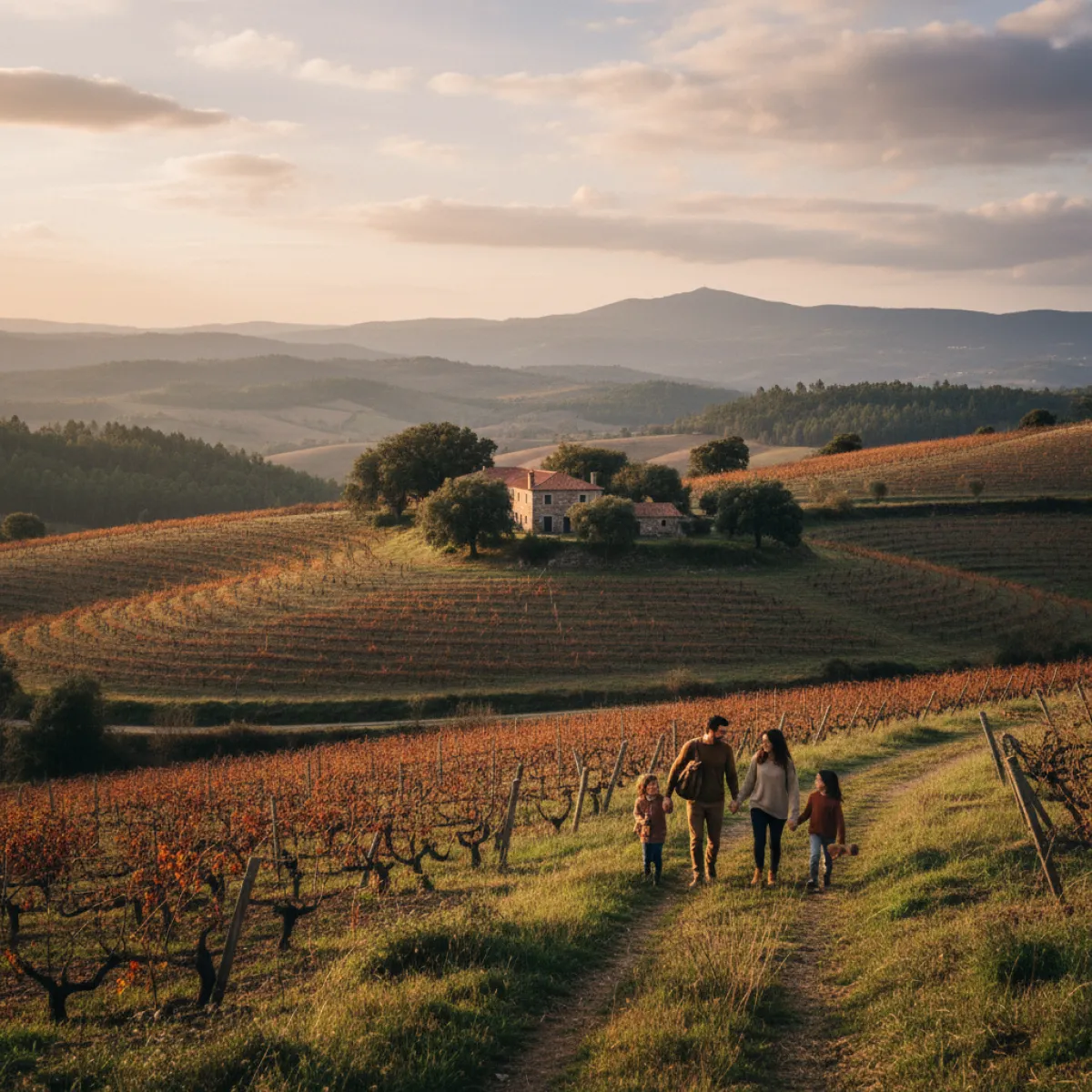
The Geography of Awe in Portugal's High North
Vinhais is not a destination for the hurried traveler. Located in the heart of the 'Terra Fria Transmontana' (the Cold Land of Trás-os-Montes), this town and its surrounding municipality operate on an emotional time zone distinct from the rest of Portugal. For families seeking an escape from aesthetic saturation and constant urban noise, Vinhais offers a profound lesson in physical and human geography. Here, the landscape is defined by granite outcrops, ancient chestnut trees that resemble living sculptures, and a light that, in autumn, dyes the hillsides in deep ochre. Traveling with children to this latitude requires a paradigm shift: fewer artificial amusement parks and more immersion in the raw, beautiful complexity of the natural world.
The foundation of any trip to Vinhais starts with embracing its geographic isolation as a luxury asset. This is not a forgotten region, but rather a territory that has preserved rhythms the coast discarded long ago. Driving along the roads that snake between the Tuela and Rabaçal river valleys, one realizes that the journey itself is the primary activity. Children, accustomed to the featureless speed of highways, are forced to observe the changing vegetation and the occasional presence of Mirandesa cattle herds that occupy the road with ancestral authority.
The Biological Park: A Pedagogical Sanctuary
The Vinhais Biological Park (Parque Biológico de Vinhais) is the epicenter of the family offering. Unlike conventional zoos, this space focuses exclusively on the indigenous fauna and flora of the Montesinho Natural Park. The experience begins at the Interpretation Center, but the real discovery happens outside. Walking the trails that lead to the enclosures of deer, wild boar, and roe deer is an exercise in patience and observation. Younger visitors will likely be fascinated by the preservation of local breeds, such as the Bísaro pig, the region's economic architect, or the Garrano ponies, which children can ride on controlled tours.
For those visiting during the warmer months, the park's biological swimming pool is an essential stop. Here, water filtration is performed by aquatic plants, eliminating the smell of chlorine and providing the sensation of bathing in a mountain river with the safety of a monitored structure. On-site accommodation in wooden bungalows, perfectly integrated into the hillside, allows guests to wake up to birdsong and the scent of fresh oak. Entry prices are remarkably affordable, around 4 euros for adults and 2 euros for children, making it one of the highest-value pedagogical investments in northern Portugal.
Dine and the Archaeology of Daily Life
About ten kilometers from the town center, the village of Dine warrants a slow visit. It is home to the Dine Interpretive Center, built around restored lime kilns and a prehistoric cave. It’s an opportunity to explain to children how humans lived millennia ago and how local geology dictated survival. The local museum is small but focused, displaying finds ranging from the Iron Age to the Roman era. Walking through the streets of Dine is an exercise in observing vernacular architecture in its purest state: schist and granite houses, wooden balconies, and the inevitable silence that characterizes this area. This atmosphere is perfectly complemented by the themes explored in The Silence of Montesinho: A Winter Retreat in the Last Frontier of Portugal, where nature immersion reaches its zenith.
The Chestnut Legacy and the Smokehouse Cycle
Vinhais calls itself the Capital of Smoked Meats (Fumeiro), and it does so with good reason. The local economy revolves around the chestnut and the Bísaro pig. For a family, visiting the Chestnut Interpretation Center is essential to understand how this fruit, once the 'bread of the poor', now sustains entire communities. The museum is interactive, allowing children to touch and understand the life cycle of the chestnut tree, a species that can live for over a thousand years. If your trip coincides with late October or early November, the Rural Castanea festival transforms the town into a vibrant market where the aroma of roasted chestnuts dominates the air.
When it comes to dining, Vinhais' gastronomy is a challenge to the conventional Mediterranean diet but a celebration of local produce. At Restaurante O Pintassilgo, located within the Biological Park, or the historic Vasco da Gama in town, the order should be the Posta Transmontana. For children, the tender texture of the Mirandesa beef is unbeatable. However, the true protagonist is the Alheira de Vinhais (PGI). Unlike the Mirandela version, the Vinhais alheira is denser, richer in Bísaro pork and local wheat bread, smoked over oak wood. To understand the nuances of this cured meat, it is worth exploring the narrative in Beyond the Alheira: Mirandela’s Culinary Resilience, which provides an interesting contrast on the product's evolution in the neighboring region.
Logistics and Essential Extensions
Planning a trip to Vinhais requires autonomy. A car is the only viable way to explore the municipality's corners. An average daily budget for a family of four, including quality accommodation and full meals, is around 120 euros. It is advisable to pack warm layers even in summer, as nights on the Iberian Meseta tend to be cool.
A prolonged stay in Vinhais also allows for strategic incursions to nearby cities. To the west, about 45 minutes away, the city of Chaves offers a historical and relaxing counterpoint. After hiking mountain trails in Vinhais, there is nothing like plunging into the region's thermal heritage, as explored in The Roman Legions' Legacy: Exploring the Ancient Thermal Springs of Chaves. This combination of Vinhais' wild nature and Chaves' thermal comfort creates a balanced itinerary for all ages.
What to Pack
- Hiking shoes with good grip for schist trails.
- Binoculars for wildlife spotting in the Biological Park.
- A small cooler to transport cheeses and cured meats bought directly from local producers.
- Patience for the slow pace and a willingness to talk to locals, who are the best guides for every village.
Vinhais is not just a point on the map of Trás-os-Montes; it is a state of mind. It is a place where children learn that milk doesn't come from a carton and that silence has its own texture. When returning home, what remains in the memory aren't the perfect social media photos, but the taste of chestnuts roasted over a pine-needle fire and the sight of the Milky Way, which shines here with a rare intensity, far from the light pollution of the cities.
