Surf and Sea in Faro: Where to Ride, Learn, or Just Watch
Faro isn't a surf town, and we'll say so up front. But it has small waves for learning, the Ria Formosa for stand-up paddle, and an hour west by car you'll find some of the best waves in Portugal. Here's the honest guide, with prices, timing, and opinions.
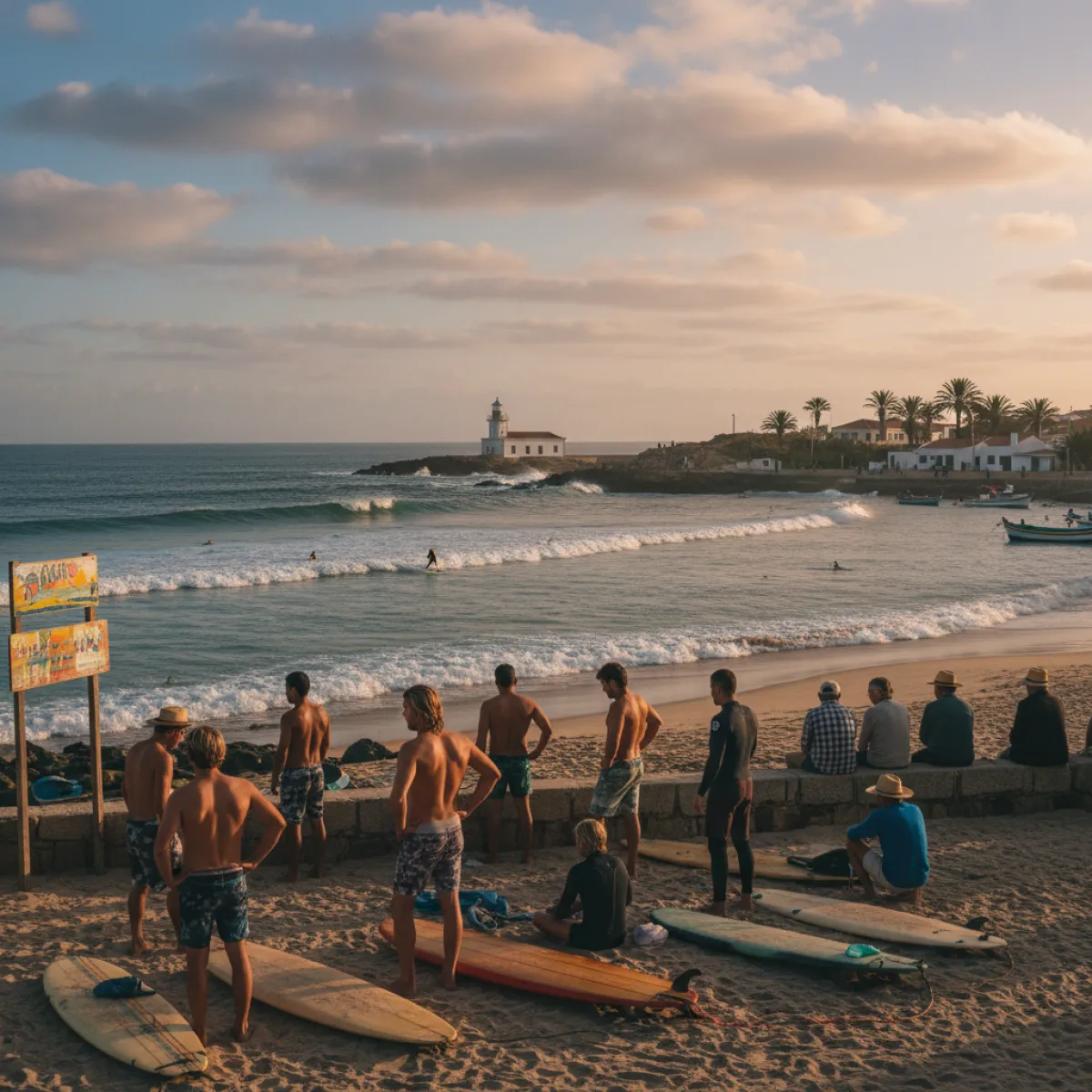
Let's start with an unpopular truth: Faro is not a surf town. If you arrive in the Algarve with a board under your arm expecting to see green walls breaking from the boardwalk, you'll leave disappointed. Faro's geography was designed for something else: a sheltered lagoon, a chain of barrier islands that kills the swell before it reaches shore, and waters where wind matters more than ocean energy. The sea here is a lake pretending to be the Atlantic. And that, precisely, is why Faro deserves a chapter in any surfer's diary. Because it teaches you to look at the sea differently.
This is the honest guide: where to find waves (and how many kilometres away), where to learn without breaking your collarbone, and where, alternatively, to simply sit with a coffee and watch the Atlantic do what it does best. Because watching the sea is also a way of knowing it.
The Praia de Faro problem (and why it isn't a problem)
Praia de Faro sits at one end of the Ancão Peninsula, connected to the city by a narrow bridge that fits one car at a time and a parking lot that fills by 9:30am in August. It's a long, flat beach, with warm water in summer and water as cold as a banker's heart in January. There are waves, yes, on the right tide, with northerly wind and a residual southerly swell. But the keyword is residual. On a good morning, you'll find something between 30 and 60 centimetres of clean face, enough for a lazy longboard and not enough for anyone who uses the word "shortboard" without quotation marks.
The upside: it's an honest learning beach. For a tourist who has never set foot on a board, this is the place. Several schools operate from the sand between June and September, with group lessons in the 35 to 45 euro range for two-hour sessions, board and wetsuit included. Check locally, prices fluctuate with demand and instructor stubbornness. The bottom is sand, no rocks waiting to chew your ankles, and when the swell is small (which is most of the time) it's forgiving, patient, didactic.
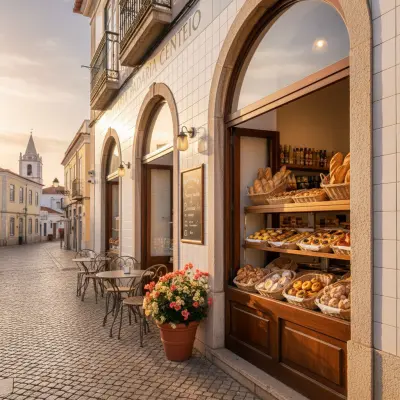
Before or after the lesson, take a detour to Pastelaria Padaria Centeio for a hot chouriço bread roll and a double galão. Eating sweets before surfing is a recipe for nausea, but bread and coffee always do the job. If you prefer the more classic ritual of a pastel de nata after the swim, Pastelaria Gardy has been open since the 1960s in the centre and serves one of those custard tarts where the pastry crackles the way it should.
Where the actual waves are: the hour-long drive west
This is where tourists separate from surfers: the Algarve's decent waves are on the west coast, and Faro is the perfect base for getting there. By car, in one hour to ninety minutes (depending on August traffic on the IP1 motorway, which can be biblical), you have access to some of the best waves on mainland Portugal.
- Praia do Amado and Carrapateira: Costa Vicentina, thermal northerly winds blowing with the regularity of a Swiss watch, waves breaking on both sides of the beach. All levels welcome. Free parking, food trucks in the lot, surf-camp crowds at peak summer.
- Arrifana: A crescent-shaped bay with red cliffs and a long right that can run 200 metres on a good day. A classic. The road down to the beach is narrow, drive carefully.
- Beliche and Tonel (Sagres): Beliche for bigger days, Tonel for the rest of the year. The southwestern tip of Europe, with the Sagres lighthouse watching from above.
- Zavial: Small, charming, with a fast right when the swell comes from the southwest. Lunch at the restaurant overlooking the beach, grilled fish, no pretension.
For those staying in Faro without a car, surf shuttles leave the city from 25 to 30 euros per day (transport only) or with packages including a lesson at 55 to 75 euros. The serious schools use 9-seater vans, leave between 8am and 9am, and return late afternoon. Book 24 hours ahead in high season.
The other sea: the Ria Formosa and stand-up paddle
I refuse to write an article about the sea in Faro without mentioning the Ria Formosa, because it would be dishonest. The Ria isn't the ocean, but it defines this city's relationship with water. It's a lagoon system covering 18,000 hectares, with five barrier islands, tidal channels that change shape twice a day, and wildlife that includes flamingos, chameleons (yes, chameleons), seahorses, and an absurd number of migratory bird species.
For a surfer used to pushing a board against the current, the Ria is a revelation. The water is flat, warm, transparent in some channels, with white sand and seagrass beds. It's stand-up paddle, kayak, and rowing paradise. On a kayak from Faro toward the islands without taking a tour boat, you cross channels where you can see the bottom three metres down and where, on calm mornings, it feels like paddling inside an aquarium.
If you prefer the more passive version of the same programme, the boat trip through the Ria from Faro does the classic island circuit, usually with stops at Ilha Deserta or Culatra. It costs between 30 and 45 euros per person, depending on duration and operator. Worth it on its own, worth it twice as much if you're recovering from a hard session on the west coast and want warm, still water.
Just watching: the underrated art of doing nothing
There's a category of traveller who goes to the sea not to conquer it but to witness it. I'm one of them. And Faro has some of the best still-sea viewpoints in Portugal, precisely because the sea here is still.
Start with a walk through the lesser-known corners of the historic centre, which ends, if done properly, on the wall by the Arco da Vila overlooking the dock. From here, late in the afternoon, you watch the Ria turn pink as the fishing boats come back in. It's a ritual that costs zero euros and that few tourists actually do because they'd rather be inside a restaurant halfway through a sangria.
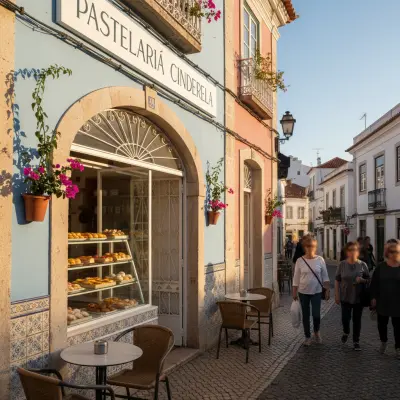
Another quiet viewpoint: the Marina pier at end of day. The seagulls, the retired fishermen pretending to fish, the smell of brine and diesel mixed with the smell of coffee from the café next door. Sit with a galão and watch for 40 minutes. Don't pick up your phone. Don't take pictures. Just watch. It works even better with a pastel de nata from Pastelaria Cinderela, which has some of the flakiest pastry in town and is a few minutes' walk away.
If you have a car and the inclination, head out to Cabo de Santa Maria on the Ilha da Culatra. It isn't easy to reach (boat to the island, then a walk), but it's the southernmost point of mainland Portugal, and from there you see the Atlantic open up with nothing in between until Morocco. It's a curious feeling, geographical, almost metaphysical, without needing words like "soul".
Learning to surf: the humility question
I know people who learned to surf in two weeks and never put the board down. I know others who've been trying for five years and still take off on their knees. The difference isn't talent, it's humility. Anyone learning in Faro has an unfair advantage: the waves are small, forgiving, and the ocean isn't actively trying to kill you.
Some practical truths if you're starting out:
- Go in May, June or September. July and August have too many people, too many tourists, too much chaos in the water. In September the temperature is still good and the beach is empty.
- Get a 3/2mm wetsuit if you come in winter. The water can drop to 14 degrees in January. It's not tropical, whatever they say.
- Use mineral sunscreen, not chemical. The Ria Formosa is a nature reserve, and there are microorganisms that hate chemicals.
- Don't rent a board without taking a lesson the first time. Sounds obvious. It isn't. I see people every summer trying and failing and walking back to the beach in a foul mood.
Lesson prices in Faro vary, but expect 35 to 50 euros for a two-hour private lesson, or packages of five lessons for 150 to 200 euros. The best instructors speak three languages and have the patience of saints. Look for those who ask about your level before trying to sell you a package.
The angle nobody talks about: fishing, shellfish gatherers, and the sea as a craft
It's easy to forget that the sea isn't just leisure. In Faro, and especially on the barrier islands, entire communities have lived from it for generations. The shellfish gatherers of Culatra, with their rubber boots and rakes, get up at 4am to harvest cockles at low tide. The fishermen of Fuzeta, just down the coast, still go out in six-metre boats to catch octopus in traditional traps.
Watching this, talking to these people (some speak English, some don't, all respect anyone showing genuine interest), is a layer of the Algarve most tourists never touch. For more on this side of the city, our guide to local culture in Faro goes deeper into the traditions and lived experiences of the authentic Algarve, far from terraces with menus in four languages.
And if you're travelling with kids and want a calmer beach alternative, with a medieval castle and a river island, I recommend combining two days in Silves, with our honest family guide. For those who want more surf and a livelier town after Faro, the Lagos neighbourhood guide is the natural complement to this article, because Lagos is where many surfers actually base themselves.
Practical summary, if you've made it this far
- Surf in Faro: small, forgiving, ideal for learning. Praia de Faro is the base.
- Real surf: one hour by car to the west. Amado, Arrifana, Sagres, Zavial.
- Stand-up paddle and kayak: the Ria Formosa is unbeatable. Flat water, astonishing wildlife.
- Just watching: historic centre walls at sunset, the Marina pier at end of day, Cabo de Santa Maria if you have the appetite.
- When to go: May, June or September. Avoid the August madness.
- Average lesson cost: 35 to 50 euros. Check locally.
The sea in Faro isn't a postcard sea. It's a working sea, a lagoon sea, a barrier-island sea, a sea of small and occasional waves. But it's also, perhaps for that reason, one of the most interesting seas in Portugal. You learn to look at it differently. And once you learn to look, you rarely want to go back to the obvious oceans.