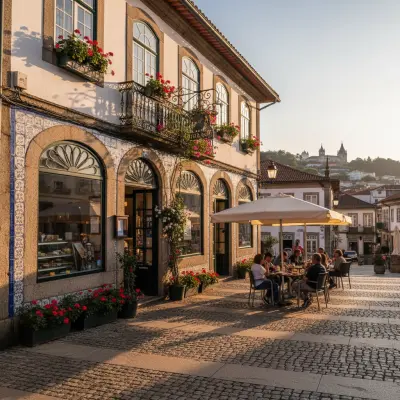
Stone Rigor and Glass Light: An Architectural Journey Through Viana do Castelo
An in-depth exploration of Viana do Castelo’s architectural landscape, from the eclecticism of Santa Luzia to the modernism of Siza Vieira and Souto de Moura. A guide for those seeking rigor, history, and design at the mouth of the Lima River.
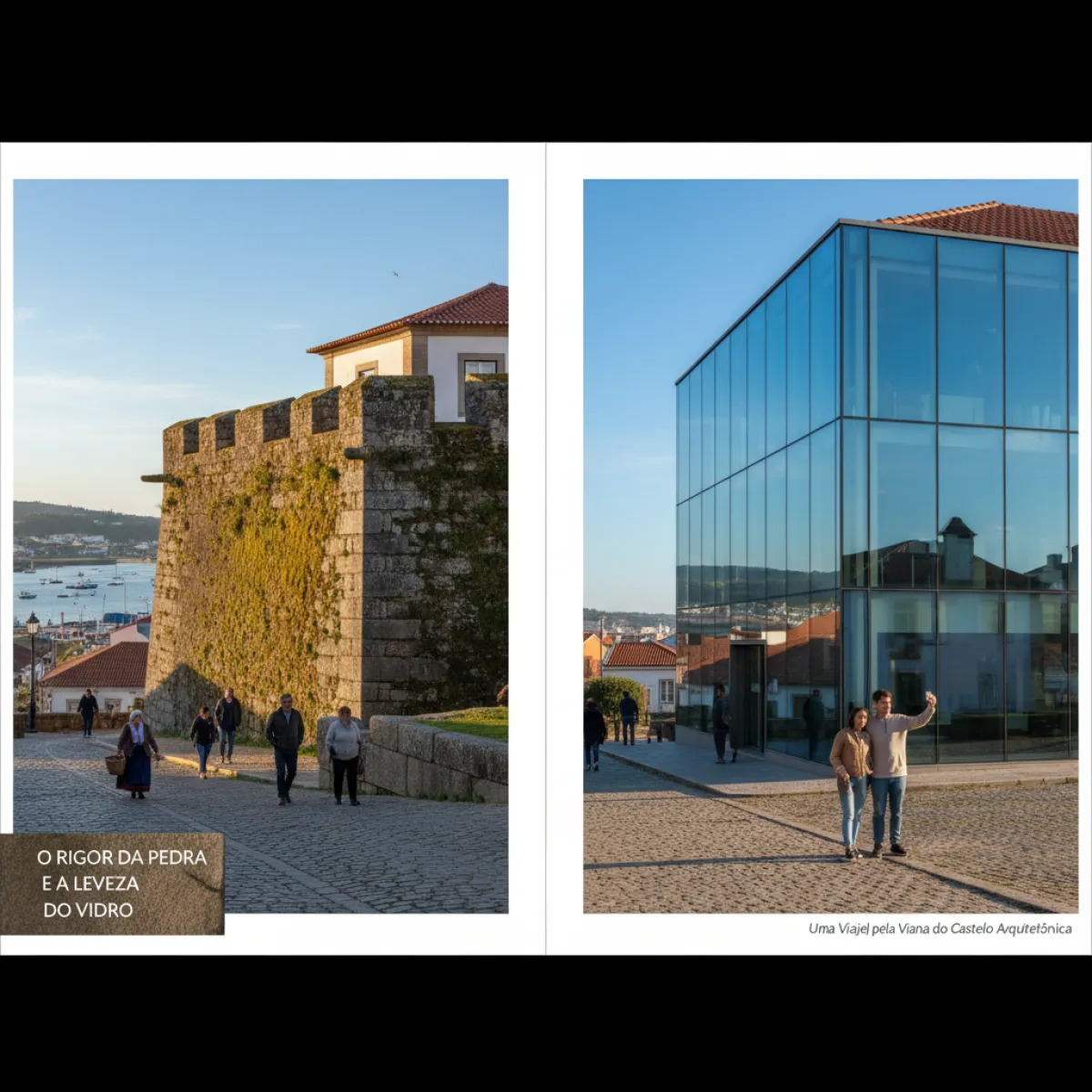
The Granite Vocabulary and the Atlantic Horizon
Viana do Castelo is not a city to be consumed in haste. Perched at the mouth of the Lima River, where the Minho region meets the Atlantic with a force that defines the very character of its people, the city presents itself as an architectural palimpsest that defies linear chronology. If Porto is the city of baroque density, Viana is the city of rigor, clear light, and a constant dialectic between the mountain and the sea. Here, granite, that stubborn stone that underpins the Portuguese soul, is not merely a building material; it is a vocabulary of resilience and elegance that spans from the 16th century to the minimalist lines of the contemporary masters of the Porto School.
For the traveler with an eye trained for form and function, Viana offers a rare lesson in how a small port city can absorb the avant-garde without sacrificing its maritime heritage. The journey necessarily begins on the horizon, where the Santa Luzia Sanctuary dominates the landscape with a monumentality that evokes the basilicas of Byzantium. Yet, the true discoveries lie at river level, where the white concrete of Álvaro Siza Vieira and the aluminum of Eduardo Souto de Moura dialogue with the iron structures of Gustave Eiffel.
Ventura Terra’s Crown: The Santa Luzia Sanctuary
Ascending Monte de Santa Luzia is an exercise in topographical understanding. The sanctuary, designed by Miguel Ventura Terra in the early 20th century, is a prime example of architectural eclecticism. With its imposing domes and monumental rose windows, reputedly the largest in the Iberian Peninsula, the building functions as both a spiritual and visual lighthouse. However, what makes this site truly relevant is not just its scale, but how the architect used light to filter the hardness of the granite. Inside, the frescoes and the light emanating from the stained glass create an atmosphere of introspection that contrasts with the vastness of the exterior panorama.
From this vantage point, Viana’s urban grid reveals itself as a map of intentions. One can see the precision of the commercial port, the gentle curve of the Lima, and, most importantly, the transition between the medieval historic center and the new modernist Viana. For those looking to explore the region’s soul further, this view serves as an ideal prologue to understanding how the river valley stretches inland toward the slow rhythm of Ponte de Lima, Portugal’s oldest village, which shares Viana’s profound respect for stone and water.
The Modernist Axis: Siza and Souto de Moura
Descending to the riverfront, the scenery shifts dramatically. Viana do Castelo holds what many consider the most elegant concentration of contemporary architecture in Portugal. The Municipal Library by Pritzker laureate Álvaro Siza Vieira is a study in silence. The building, a white volume suspended over a void, seems to float on the riverbank. The entrance, deliberately restrained, opens into reading rooms where natural light is manipulated with Siza’s signature mastery, creating an environment of intellectual clarity. There are no unnecessary ornaments here; the beauty lies in the proportion of the openings and the tactile relationship between the stucco surfaces and the light wood of the furniture.
Adjacent to it, the Cultural Center by Eduardo Souto de Moura presents a sophisticated, brutalist contrast. Clad in aluminum sheets and featuring a structure that exposes its industrial vocation, the building is a tribute to Viana’s naval tradition. Large exterior ventilation ducts, painted in primary colors, recall the machinery of the ships that once filled the local shipyards. It is a piece of architecture that does not attempt to hide its complexity but integrates into the riverfront with disarming structural honesty. Together, these two buildings have transformed the city's face, elevating Viana to a compulsory destination for design enthusiasts.
Praça da República: The Renaissance Heart
Moving away from the river, we enter the granitic arteries of the historic center. Praça da República is one of the most harmonious urban spaces in Portugal. Here, the Old City Hall building, with its pointed arches and decorative battlements, recalls the power of municipal institutions in the 16th century. Next to it, the Igreja da Misericórdia and its annexed hospital represent the pinnacle of Renaissance and Mannerism. The façade, with its atlantes and richly carved columns, possesses a sophistication that rivals the great palaces of Italy, yet maintained with the chromatic sobriety of Minho granite.
It is impossible to discuss Viana without mentioning the tilework (azulejos) of the Misericórdia Church, the work of António de Oliveira Bernardes. The blue and white panels cover the walls of the temple, narrating biblical scenes with a baroque dynamism that brings life to the austere interior. This attention to decorative arts is a constant in the region, reflecting a spirit that molds materials with devotion, a trait also found in the clay-working traditions explored in our guide to the living craft of Barcelos pottery.
Floating Heritage: The Gil Eannes Hospital Ship
Viana’s architecture is not limited to what is anchored in the soil. The Gil Eannes, a former hospital ship that supported the cod-fishing fleet in the North Seas, is now a museum and a fundamental piece of the city’s industrial and maritime heritage. Its functionalist design, focused on medical efficiency and resilience against the extreme conditions of the Arctic, offers a different perspective on 1940s Portuguese modernism. Walking through its corridors, visiting the operating rooms and the wards, is to understand the human scale of the cod odyssey, an industry that financed much of the city’s growth.
Practicalities: The Architectural Guide
To experience Viana in its architectural splendor, spring is the ideal season. The light of May and June enhances the volumes of Siza’s buildings and clears the shadows from the narrow streets of the center. Regarding accommodation, look for the manor houses converted into design hotels in the historic center or the Pousada de Viana, located on the Santa Luzia hill, to wake up to the best view of the Atlantic coast.
The gastronomy in Viana is an extension of its geography: robust and authentic. At the restaurant O Louro, cod is treated with the reverence due to local history. Order the Arroz de Sarrabulho if you are ready for a complete Minho experience, but save room for the Tortas de Viana at the iconic Manuel Natário bakery. A budget for a three-day trip, including signature dining and stays in prestigious hotels, ranges from €600 to €800 per couple, excluding travel.
Viana also serves as the gateway to the rest of Minho. In winter, when the sea grows fiercer and the mountains are draped in mist, the city takes on a cinematic melancholy that invites short trips inland. It is the perfect time to discover the fog and the feast of Ponte de Lima, where comfort food becomes the center of social life. In Viana, culture is felt at every corner, whether in the subtle mentions of Amália em Viana or the silence of the libraries overlooking the sea. It is a city that demands attention to detail: the carving of a Manueline door, the sun's reflection on a library’s glass, or the sound of footsteps on secular cobblestones. Here, architecture is not just a backdrop; it is the ongoing dialogue of a people with their maritime destiny.