São João do Porto: Inside the North's Wildest Party
A million people, plastic hammers, sardines on every corner, and fireworks over the Douro at midnight. The honest guide from someone who has done (and survived) fifteen editions of Porto's São João.
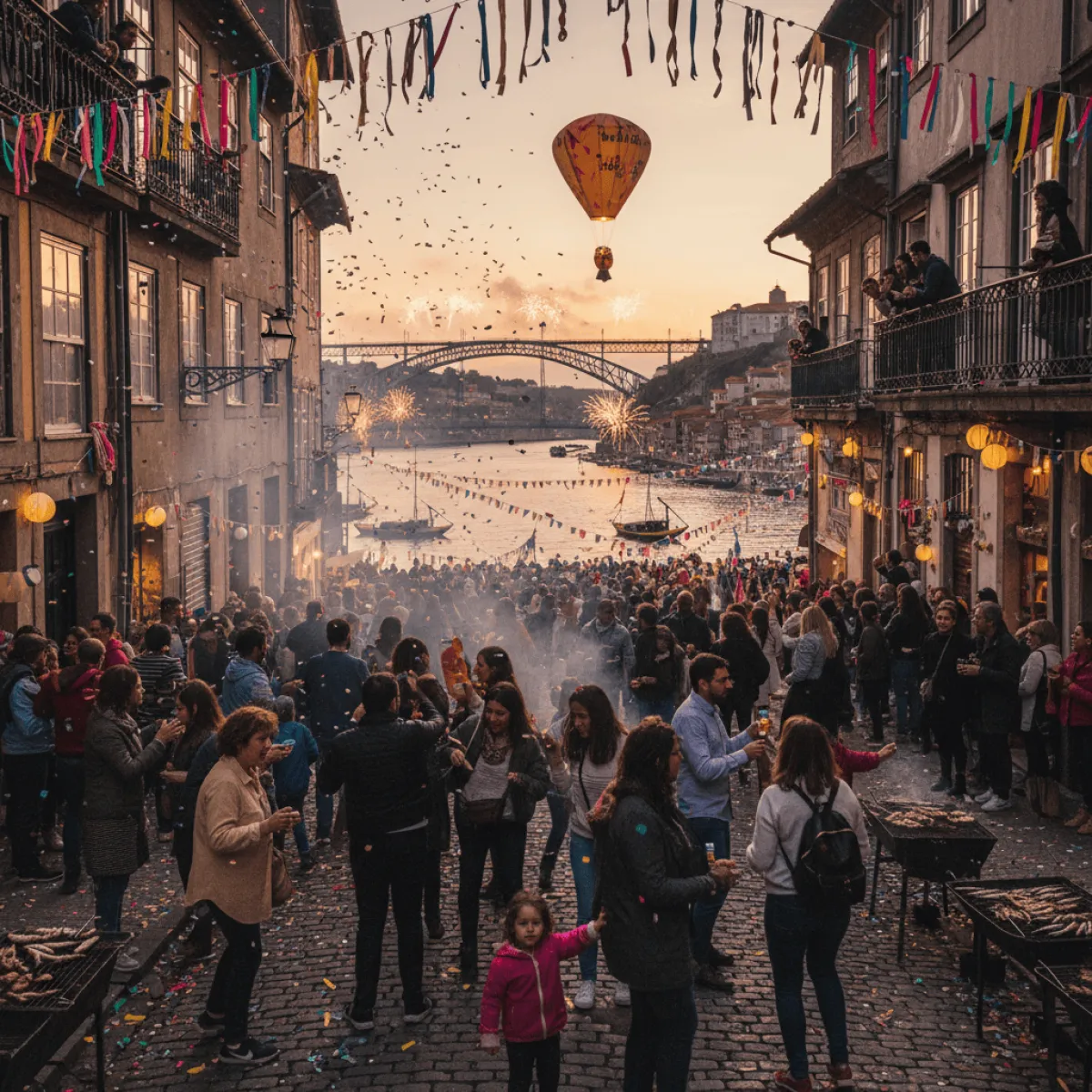
There is one thing you need to understand before setting foot in Porto on the night of June 23rd: São João is not a festival you watch. It is a festival that happens to you. You will be bopped on the head with a plastic hammer by a 78-year-old grandmother with an angelic smile, you will smell grilled sardines from three blocks away, and around midnight you will find yourself jumping over a basil plant in the middle of Avenida dos Aliados without quite knowing why. That is how it works. And it is magnificent.
São João do Porto is, with little room for argument, Portugal's biggest popular street party. Not by official scale, because officially nobody knows exactly how many people are in the streets, and estimates range between 500,000 and a million depending on which journalist you ask and how much Super Bock they have had by counting time. It is the biggest by intensity. By the way the entire city, from Bonfim to Massarelos, decides that on this one night nobody sleeps, nobody stays home, and nobody is embarrassed to sing badly.
Why are people hitting each other with plastic hammers?
Fair question. The short answer is: nobody knows for sure. The long answer involves two theories, both reasonable and both probably partially true.
The first says the hammer replaced the leek in the 1960s. Yes, you read that right: for centuries, Porto residents wandered the streets bonking each other with leek heads, in a gesture somewhere between a fertility ritual and a pagan game that survived the Christianisation of the festival. Somewhere during the dictatorship, an ambitious vendor decided plastic hammers squeaked better, were more hygienic, and, above all, sold to tourists. He was right. Today they sell by the hundreds of thousands.
The second theory, more romantic, is that the little hammer is a gentle stand-in for old ritual cuts that asked Saint John the Baptist for luck in love and health. Since he was beheaded, the symbolism stuck. Personally, I lean toward the first: it explains better why you can buy fluorescent pink hammers with flashing lights.
The basil, the saint, and why the 23rd
São João has three sacred objects: the hammer, the basil plant, and the sardine. The basil (which you buy with a four-line poem on a little paper flag) is supposed to last until next São João. People swear by secrets: never water it from above, do not bring it indoors on the 24th, talk to it quietly. I have never kept one alive longer than three weeks and have a theory that I am the only Porto native incapable of this. Still, buy one for the smell and the poem, which is usually delightfully patriarchal and convoluted.
June 24th is the liturgical eve of Saint John the Baptist, cousin of Jesus, the man of the desert and the locusts. But the party starts on the night of the 23rd. It is solstitial, it is pagan, it is pre-Christian, and the Church only managed to baptise it, never tame it. This is the part I love: two thousand years of Christianity, and we still jump over street bonfires in central Porto.
Before the 23rd: what to do in Porto in June
If you arrive in Porto two or three days early (recommended, because finding flights and accommodation at the last minute is an exercise in financial masochism), use the time. The city builds up: balconies start getting dressed, paper garlands stretch from Cedofeita to Bonfim, and traditional neighbourhoods (Fontainhas, Sé, Miragaia) prepare their street parties with a seriousness that sits somewhere between military logistics and pilgrimage.
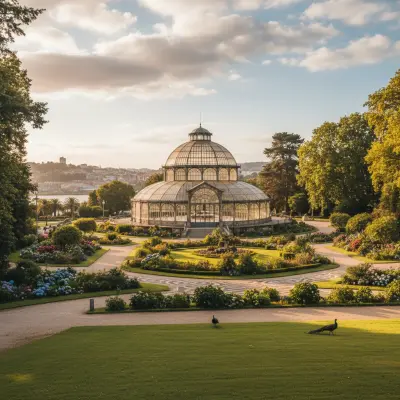
In the mid-afternoon, before the city boils over, head to the Jardins do Palácio de Cristal. Not for the Palace itself (which is not made of crystal at all, it is a 1950s concrete pavilion that still hurts anyone who loved the original demolished building), but for the views over the Douro, the peacocks strolling between tourists, and that feeling that even in a city about to detonate with a party, there are corners where you can breathe. Free entry. Check locally for hours, but in June it usually closes at sunset, and that, this far north, is late.
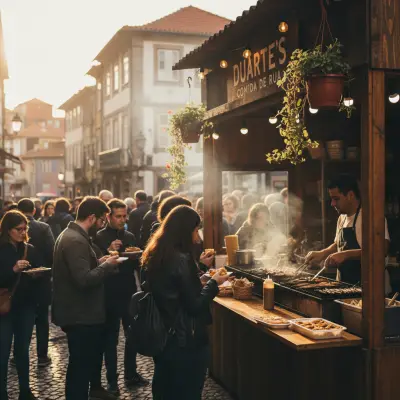
For a proper lunch before the festival, skip the touristed streets of Ribeira and head to Duarte's Comida de Rua. Contemporary Portuguese cooking, honest portions, and the kind of place where you sit down to eat and start planning your next meal before the bill arrives. Good preparation for what is coming.
If your São João leans more cultural than alcoholic (it exists, I promise), give a morning to learning the city properly. I recommend the Porto historic centre walking tour with Living Tours: it takes you through the Sé, Rua das Flores, São Bento, and explains things that Porto residents claim to know but generally do not (for example, I only recently found out that São Bento Station has 20,000 tiles. I had walked past it for 20 years and never counted. Nobody counts).
The night of June 23rd: a workable itinerary
There is no correct itinerary. But there is one that works. I have done it, with variations, for fifteen years.
5pm to 7pm: neighbourhood street parties
Start early. The neighbourhood arraiais are the best secret of the festival, and they remain a secret because tourists concentrate almost entirely on Ribeira and Aliados. Go to Fontainhas: narrow streets, basil on every balcony, grilled meat for 4 or 5 euros a plate, vinho verde in plastic cups. The Sé has another, more intimate. Miragaia another still. None require reservations, all serve caldo verde, sardines, broa cornbread, pork strips. Walk, taste, decide.
7pm to 10pm: the descent to the Douro
This is where São João separates itself from most Portuguese festivals: it is alive outdoors, across the entire city, but it has a cardinal point. That point is the river. Around eight in the evening, start drifting down toward Aliados. On the way you will cross paths with everyone: groups of friends carrying bunches of basil, kids with hammers, elderly couples watching the procession from their balconies. Stop on a corner, drink a beer, listen. Brass bands march in procession, some neighbourhoods send out rusgas (groups of folk singers who walk through the city). Watch one. You do not need to understand the lyrics, just the rhythm.
10pm to midnight: street, sardines, smoke
By now, the city smells. It smells of sardines grilled on thousands of improvised charcoal stoves on streets, in front of doorways, in school courtyards. Buy a plate (usually 6 to 8 euros with bread and roasted peppers), eat standing up, leaning against any wall, watching the crowd pass. This is the moment you realise São João is not a festival, it is a city temporarily reconfigured so that everyone can eat and drink outdoors.
Midnight: the fireworks
At midnight there are fireworks over the Douro, launched from the Dom Luís I Bridge, lasting about fifteen minutes, and they are, without exaggeration, the best fireworks in Portugal. Best spots: the Avenida dos Aliados balcony (crowded but electric), the Vitória viewpoint (calmer), the Guindais stairs (intimate, good for small groups), or Vila Nova de Gaia across the river (frontal view, more space, but getting back is an adventure). If you stay on the Porto side, count on an hour to clear the riverside zone.
1am to 6am: bonfires, paper balloons, the sea
After the fireworks, there are two paths. The first: bonfires. They are lit in several neighbourhoods, and tradition requires you to jump over them three times for luck in the coming year. This is not symbolic. They are real bonfires, with waist-high flames, and people actually jump, some barefoot, all a little drunk. Wear closed shoes. Please.
The second path: release São João balloons (paper hot-air balloons with a small candle inside) and walk down to Foz to watch the sun rise over the Atlantic. This is a less universal tradition than it sounds. Plenty of people are home by three. But if you can stay up, it is the most beautiful possible ending. Foz is the mouth of the Douro, there are beaches, there are cafés that open for breakfast, and around six-thirty in the morning the sun appears over the Atlantic with a light that justifies the whole night.
Where to eat (and where not)
Practical rule: on São João night, any restaurant open will have a 90-minute wait. Eat in the street. But if you want a proper sit-down meal on the morning of the 23rd, or on the 25th when the city resurrects, there is plenty of choice. I have already mentioned Duarte's Comida de Rua; it deserves the detour and the calm.
On francesinhas: everyone will tell you where the best one is, and everyone will disagree. The truth is there are five or six excellent places, and your favourite francesinha will probably be the first one you ate with someone you liked. I will not recommend one. But order it with the sauce on the side if it is your first: the sauce is strong, spicy, alcoholic, and not everyone copes with it on a first try.
How to survive: the logistics nobody will tell you
- Accommodation: book three to four months ahead. Prices double, sometimes triple. Consider Gaia, across the river, or Matosinhos.
- Transport: Porto metro usually runs all night on São João eve. Confirm closer to the date, but it is the smartest way in and out.
- Car: forget it. Central streets close, police divert everything, and parking is impossible.
- Cash: bring it. Many street stalls only take cash. ATMs in the riverside area run dry by about eleven at night. Seriously.
- Clothes: Porto in June can be 28 degrees in the afternoon and 14 at four in the morning. Layers, a jumper in your bag, closed shoes.
- Phone: bring a power bank. The network jams around midnight. Agree on meeting points in advance.
If you have time, leave Porto
If you stay four or five days, use Porto as a base and explore the north. Two detours I recommend. A day in Braga (forty minutes by train, around three euros each way) to understand how religious north and academic north live in the same city: there is our guide to Braga, and if you happen to be visiting around Easter, also read our guide to Braga's Holy Week to understand how the north lives its rituals. And if you want to go further in a single day, our guide to the best day trips from Porto covers Guimarães, the Douro, Aveiro, and a few less obvious options.
What nobody tells you about São João
You will get tired. You will smell of smoke through the next three showers. You will lose a friend in the crowd and find them again at four in the morning as if nothing strange happened. You will dance with people you will never see again. You will hear a seventy-year-old man sing a salty rhyming verse to a seventy-year-old woman and realise that this festival is, at its core, pagan and beautiful and unembarrassed.
And on the morning of the 24th, when you cross the Avenida dos Aliados covered in plastic and basil petals with a municipal team already sweeping up the wreckage, you will feel something rare: the sense of having taken part in something that existed before you and will exist after you. That feeling is not common. Take it.