Santos Populares in Sabrosa: June Sardines and Wine
Forget Porto's São João and Lisbon's Santo António. In Sabrosa, June means neighbours dragging grills onto Rua de Cima, 1.50€ sardines, and house wine that actually comes from someone's house. An honest, no-fluff guide to doing the festivals like a local.
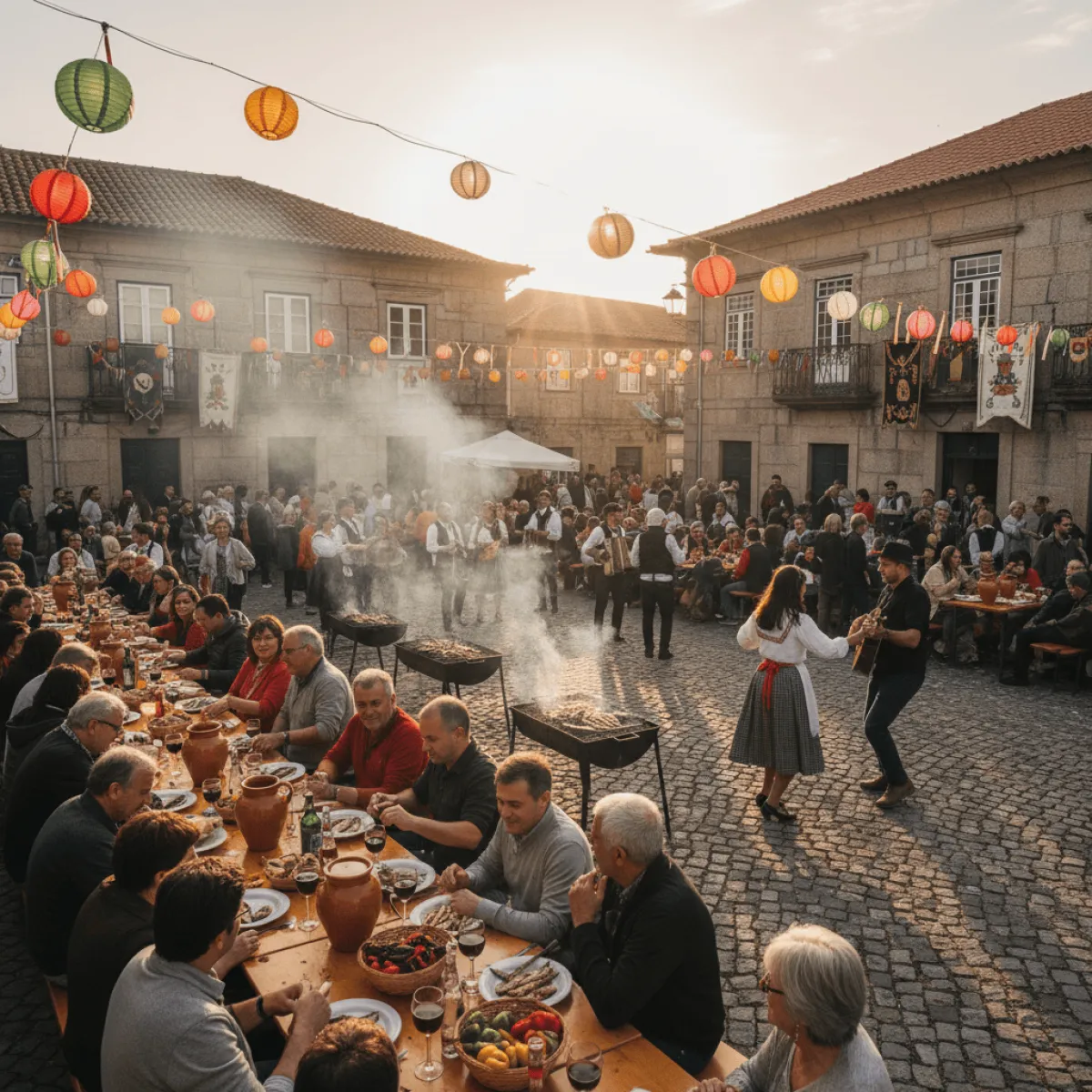
In June, Sabrosa smells of grilled sardines and basil. That's not metaphor: it's what hits you when you turn the corner onto Rua de Cima around eight in the evening, when neighbours drag cast-iron grills onto the pavement and light the charcoal with old newspaper. Lisbon has its televised Santo António. Porto has its tourist-thumped São João. Sabrosa, in the heart of the Douro wine country, has something quieter and, in my opinion, more honest: neighbourhood parties where everyone still knows each other by name, where the house wine actually comes from someone's house, and where the outsider gets that very Trás-os-Montes welcome of curiosity mixed with mild suspicion that dissolves around the third sardine.
This guide is for those who want to swap the chaos of central Lisbon for the improvisation of a five-thousand-person village. It's also a warning: if you're after DJs, food trucks and selfies with plastic balloons, head to the Baixa Pombalina instead. Up here, the party is a different animal.
Why Sabrosa, and why June
Sabrosa is the birthplace of Ferdinand Magellan, but that's a story for another time. In June, what matters is the choreography of three saints' days: Santo António on the 13th, São João on the 24th, São Pedro on the 29th. Three saints, three excuses to light the charcoal, three weekends when the village transforms. The geography is convenient: half an hour from Vila Real, an hour from Porto via the A4, in the middle of the Upper Douro terraces. You come for the festival, you stay for the wine.
June here is not coastal June. Mornings are cool, with mist rising off the river, and by midday the granite walls are throwing heat back at you. At night, always carry a sweater: at 400 metres altitude, even on the solstice, it cools sharply once the sun drops behind the Marão range. Anyone arriving in shorts and a t-shirt learns this lesson quickly.
The calendar, no fluff
- 12 to 13 June, Santo António: the night of the 12th is the big one. Dances in the parishes, sardines on the street, and the almost-forgotten tradition of basil offered with a hand-written quatrain. In Sabrosa-village, the festival centres on Largo do Loureiro.
- 23 to 24 June, São João: the most-attended. There's artisanal fireworks, bonfires at the village crossroads (Provesende, Celeirós, Gouvães do Douro), and yes, plastic-hammer bopping, but at human scale. The cascatas, miniature shrines with figurines and tiles, still appear on some doorsteps.
- 28 to 29 June, São Pedro: the most rural, with mass, procession and dance. It's the fishermen's festival on the coast, but inland it marks the end of the cycle, when the neighbours are exhausted but insist on one more night.
For a deeper historical dive into these festivals in Sabrosa, our detailed guide to Santos Populares in Sabrosa is worth your time. Here I want to focus on the practical: what to eat, where to nurse a hangover, and how to avoid looking like a lost tourist.
What to eat (and what to skip)
The rule is simple: eat what's being grilled in front of you. Sardines in June, in Sabrosa, are imported (we are not the coast) but arrive fresh from the Matosinhos fish market to the village butchers. Expect to pay between 1.50€ and 2€ per sardine at a festival stall, served on a slice of rye bread that has caught the dripping fat. That bread, that dark thick-crusted bread, is half the experience. Do not throw it away.
Beyond the sardine, three things deserve attention:
- Bola de carne transmontana: a savoury pastry layered with cured ham, chouriço and linguiça. Each parish has its own version. Provesende's, with more salpicão, is my favourite.
- Caldo verde with local chouriça: served in plastic cups at the dance. It looks banal, it isn't. The chouriça here is oak-smoked, not the industrial rubbish.
- Folar bread out of season: yes, some bakers make folar in June to pair with sweet wine. It's an anomaly, but a good one.
Things to skip: the pre-made pregas in burger buns that show up at some of the newer stalls. If you want a prego, find a café that grills it to order. Speaking of cafés, there are two places I recommend you stop at between festival nights, just to sit and breathe.
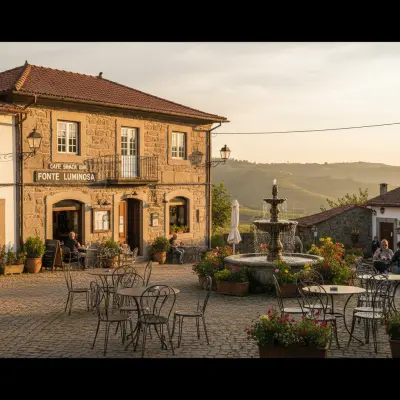
The Café Snack Bar Fonte Luminosa is the kind of place that has no Instagram, doesn't need one, and serves short espressos at 80 cents while pensioners play sueca at the corner table. Go in the morning after São João night, looking the worse for wear. Order a galão and a buttered torrada. It's the village's official therapeutic breakfast.
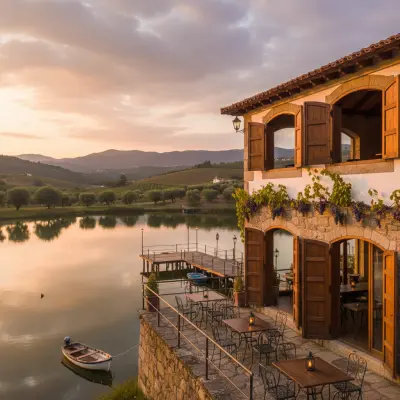
The Lagoa Bar, on the other hand, is where the festival can stretch into the small hours. Cold lagers, no-pretension cocktails, and a terrace that fills up but never quite suffocates. It's also where, around two in the morning of São João, someone will put Quim Barreiros on the speaker and everyone will pretend to hate it while singing every word. Accept the ritual.
The wine, obviously
This is the Douro. Refusing wine here in June is vaguely offensive. Most homes pour vinho da casa, from a cousin's quinta, from the godfather in Celeirós, and the quality swings between brutal (in a good way) and brutal (in the literal way). If you want to guarantee something decent without playing roulette, there are two strategies.
First: book a wine tasting at Wine & Soul in Sabrosa for the morning of the 13th or the 24th. It's a kind of reverse hydration: you start with serious wine, from a producer making some of the most interesting reds in the Douro, and that calibrates the palate for the rest of the day. The Pintas, in particular, justify the trip on their own. Book ahead, this is not walk-in territory.
Second strategy: bring a bottle to the street party. Locals don't take offence, quite the opposite. Buying a bottle from a regional winery and opening it in the street, sharing with the table next to yours, is practically a greeting. For a more ambitious tour of the local producers, our guide to the Sabrosa estates avoids the tourist traps of the Pinhão riverfront.
Where to sleep, and when to book
Public service warning: June in Sabrosa, especially the São João weekend, sells out. It's not Lisbon in August, but supply is limited and local demand (people from Porto, Vila Real, the diaspora) gets there first. If you haven't booked yet, do that now, before reading on.
Three options, in ascending price order:
- Rural guesthouses in the parishes: Provesende, Gouvães and Celeirós have restored stone houses from 70€-90€ a night. You'll need a car.
- Pousada de Alijó (next door): 15 minutes from Sabrosa. Pricier, more predictable, swimming pool. A good option for couples who need to recover by day.
- Quinta-hotels in the Douro: Quinta Nova, the former Aquapura (now Six Senses) and so on. From 250€ a night. If you're going there, you know what you're doing.
My honest advice: stay in a rural guesthouse in a parish, not in the village itself. Sabrosa-village hosts the main festival but is small, and the noise at one in the morning is considerable. In a hamlet 5 km away, you sleep with the window open, you hear crickets, and you still reach the festival in ten minutes by car.
How to get there, and the mistake everyone makes
From Lisbon, around 4 hours via the A1 and A4. From Porto, 1h15 via the A4. From Vila Real, 25 minutes. The Douro railway line runs trains as far as Pinhão (a beautiful journey, I do recommend it), but from there you'll need a car or taxi to climb up to Sabrosa, another 20 minutes of winding road.
The classic mistake: coming for the day and driving back at night with wine in your bloodstream. Don't do this. It's not just about the fine, it's about the curves of the N322. Bring a designated driver, sleep over, or grab a taxi from Vila Real. Life is long, the N322 at one in the morning may not be.
What to pack
- A long-sleeved layer, even in June.
- Closed shoes (cobblestones and hot embers do not pair with sandals).
- Cash in small notes. Many stalls don't take card, and some that do have the system mysteriously broken precisely when you need it.
- A cloth bag for the basil pot, if you decide to buy one. They'll hand it to you in flimsy plastic, but it travels badly.
Beyond the festivals: the day after
June isn't only Santos Populares. If you have two or three days, widen the radius. Half an hour by car gets you to Torre de Moncorvo, on the other side of the Douro, with a surprising spring flora that runs well into June: our guide to the gardens of Torre de Moncorvo works as an antidote to the hangover.
Other practical ideas: a morning walk on the PR3 SBR (Sabrosa's signposted footpath, around 8 km, three hours at tourist pace); a visit to the Magellan house-museum (2€ entry, an hour is enough); a descent to Pinhão for a riverside lunch. Avoid Pinhão on the São João weekend, it's heaving.
What to take from Sabrosa
The temptation is to fill the boot with bottles. Do that, of course. But also take something that doesn't fit in a bottle: the memory of a festival where nobody tried to sell you anything, where the woman at the counter asked where you were from and was genuinely curious about the answer, where a neighbour topped up your glass simply because. Santos Populares in Sabrosa isn't a product, it's a cultural residue. The kind that still exists, but will only last as long as the neighbours who drag the grill into the street. Go before this too becomes a wristband-and-QR-code festival.
And if you see an old man in a flat cap offering you aguardente velha at eleven in the morning: accept. But only one glass. You have a long night ahead.