Santos Populares in Lisbon: Complete June Guide
On 13 June, Lisbon smells of grilled sardines at nine in the morning and Avenida da Liberdade closes for the neighbourhood parades. This guide tells you where to eat the right sardine, which neighbourhood to avoid, and how to survive the year's longest night without paying eight euros for a warm beer.
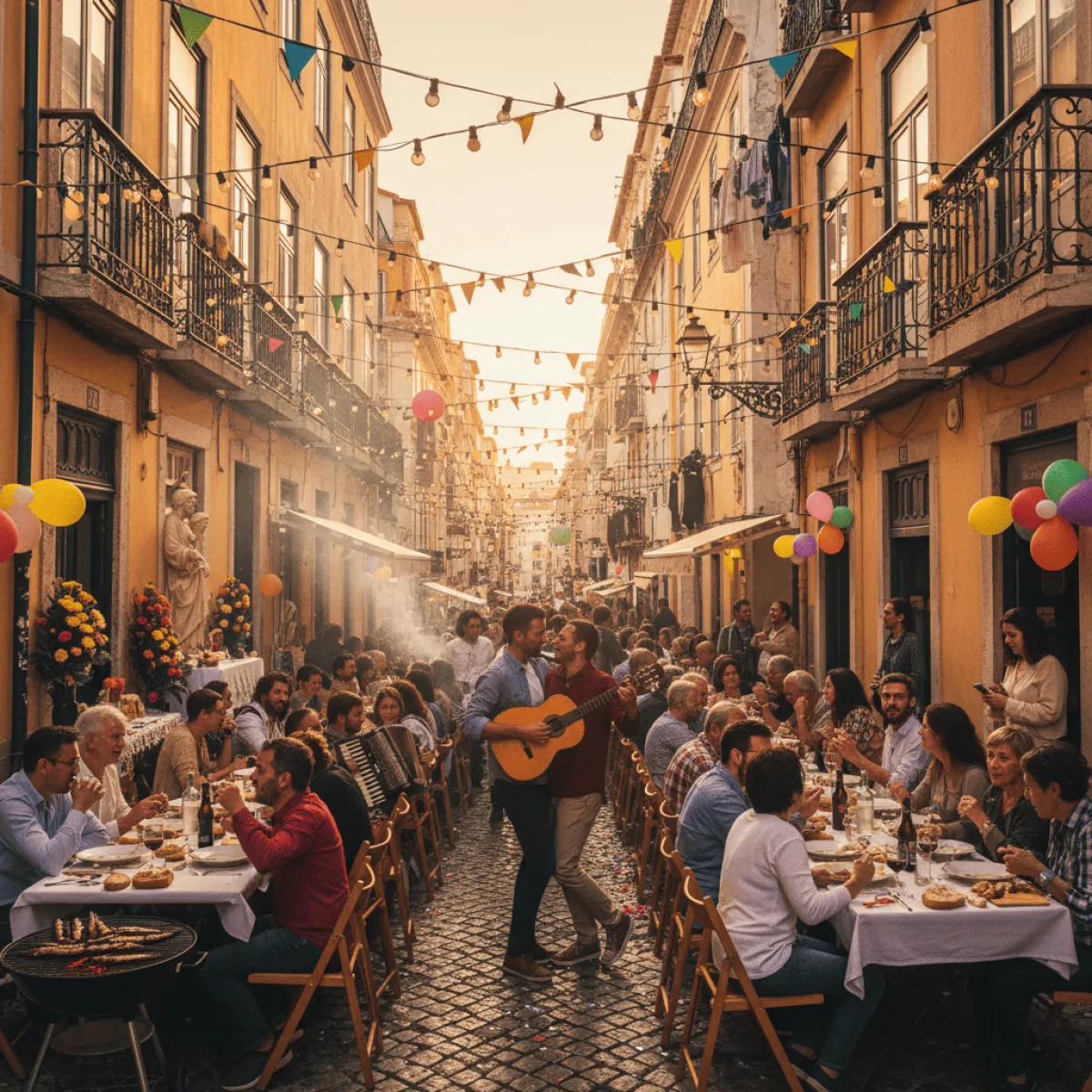
There is a time of year when Lisbon smells of grilled sardines at nine in the morning. It is June, and if you have never woken up to the smoke from your neighbours drifting in through the window, to basil plants in clay pots sold on every corner, and to paper bunting stretched from balcony to balcony in Mouraria, you have not yet met the city. The Santos Populares are not a festival. They are the month when Lisbon finally stops pretending to be a sophisticated European capital and goes back to what it always was: a cluster of villages stuck together, each with its own saint, its own parade, and its own neighbour who insists on making caldo verde for sixty people.
This guide is for those who want to live June for real. Not the Instagram version, with the styled sardine on the white plate of the Belém restaurant. The other one. The one that smells of charcoal, of red wine at three euros a jug, and of honest sweat from someone who danced pimba until four in the morning.
The Calendar That Matters: The Three Saints and Why
Strictly speaking there are three saints, and celebrating all of them is not the same thing. Saint Anthony, on 13 June, is Lisbon's saint, which is why he counts most for the city. Saint John, on the 24th, belongs to Porto, but the day off applies here too and is an excuse to drag the party along. Saint Peter, on the 29th, is more discreet, but in places like Sintra or Montijo he still carries weight. In Lisbon, however, everything revolves around Saint Anthony.
The night of the 12th is the peak. The 13th is a municipal holiday, mandatory hangover, and the day half the city goes to mass at Santo António à Sé without having set foot in a church since their baptism. Anyone arriving on the 14th or 15th will still catch neighbourhoods in party mode, but the intensity is that of a bottle of wine opened two days ago: still drinkable, but no longer the same.
The Real Neighbourhood Map: Where to Go, Where Not To
Here is an unpopular opinion: skip Bairro Alto. Thirty years ago it was the place; today it is a tourist trap with eight-euro sardines and five-euro beers. Bairro Alto in June is what happens when someone takes a popular festival and turns it into a stag-do bar. If you are over twenty-five and like hearing what the other person is saying, avoid it.
The neighbourhoods still worth your time are three, in order:
- Alfama: The heart of the party. Chaotic, yes, but authentic. The people who live there set up their own stalls, and there are streets where the locals still outnumber visitors. Walking up Rua de São Pedro or down Escolas Gerais is stepping into the script.
- Mouraria: Rougher, less polished, more real. This is where fado was born and where the popular marches have genuine roots. Largo da Severa is an obligatory stop.
- Madragoa and Bica: Smaller, more intimate. If you want to snack quietly and hear your own conversations, this is where to go.
Castelo is too touristy. Graça has gone hipster, with sardines priced like Catalan tapas. Anjos and Intendente try to throw a party but cannot compete.
The Marchas Populares: The One Show You Cannot Miss
On the night of 12 June, Avenida da Liberdade closes to traffic and each neighbourhood sends a parade: coordinated costumes, choreography rehearsed for months, and a competitive spirit that would embarrass a football final. The neighbourhoods compete for a prize, and the matter is taken seriously. There are century-old marches and marches that turn up every five years with a modern twist.
Practical tip: get a paid seat in the stands or be ready to arrive on the Avenida by three in the afternoon. The stands sell out months in advance through EGEAC and cost between twenty and forty euros depending on the row. If you prefer standing, choose the Praça dos Restauradores side, which is less crowded.
Those who cannot make it to the Avenida have an alternative: the marches return to their respective neighbourhoods between the 13th and 14th and parade through home turf. Watching the Alfama march come down Rua do Limoeiro, with lights flickering and people clapping from windows, beats any ticketed seat.
The Sardine: How Not to Ruin the Simplest Meal in the World
The sardine is June's totemic dish, and simultaneously the easiest to mess up. The rules are two: it has to be large (ideally three to a plate), and it has to be grilled over open charcoal. Everything else is a lie.
In the neighbourhoods, the stalls serve the classic setup: three sardines on top of a slice of country bread that absorbs the fat, roasted peppers, boiled potato or salad. The fair price in 2026 sits between ten and fifteen euros. Above that, you are paying for the view.
For those who want sardine without the street chaos, there are always sit-down snack options. For an escape from the madness, a stop at As Bifanas do Afonso on a quieter day is a relief: not every June meal has to be sardine, and a well-seasoned bifana on homemade bread is the perfect opposite of festival excess.
Caldo Verde, Bifanas and Other Dishes of the Long Night
Anyone who only eats sardine in June is not living the month properly. The popular menu is much richer, and the secondary dishes often outshine the headliner.
- Caldo verde: The Galician kale soup with chouriço is mandatory. The best are home-made, from stalls run by residents' associations. Four euros and a steaming mug.
- Bifana: Bread, marinated pork loin, spicy sauce. Simple, and therefore hard to do well. Stall bifanas vary; a classic tasca is safer.
- Chouriço grilled in alcohol: It comes whole, on a clay roof tile, in flames. A table spectacle.
- Farturas: For the end of the night, when your stomach no longer knows whether it wants to sleep or carry on. Sugar and cinnamon in immoral quantities.
Drink vinho tinto da casa, nameless, in a plastic cup or clay jug. Beers are expensive at the stalls and never cold enough. The ginjinha in chocolate cups is for tourists, but in June even the locals give in.
The Manjerico and the Bawdy Verse
You cannot cross June in Lisbon without buying a manjerico. It is the small-leaved, fragrant basil plant, with a paper flag stuck in it bearing a popular quatrain, usually cheeky, always affectionate. It costs between two and five euros and, if you treat it well (indirect sun, real water, never touch the leaves), it lasts until September.
The tradition is to give the manjerico to your boyfriend, girlfriend, or the person you have your eye on. The bold ones write their own verse. It is the Portuguese equivalent of Valentine's Day, but with more humour and fewer industrial roses. Saint Anthony, after all, is the matchmaker saint.
Buy the manjerico at markets like Ribeira or at Praça da Figueira. Street vendors in the neighbourhoods sell smaller, fresher versions.
What to Do During the Day: When the Heat Hits
June in Lisbon can hit thirty-five degrees. The parties are nocturnal for a reason. The day calls for a different strategy.
In the morning, before the sun becomes unbearable, it is time for culture. The Museu Nacional de Arte Antiga, in Santos, holds the Painéis de São Vicente, by Nuno Gonçalves, which everyone claims to know and few have actually seen. Go early, it stays empty until eleven, and the rear gardens overlooking the Tagus are a cool refuge for a coffee and a pause.
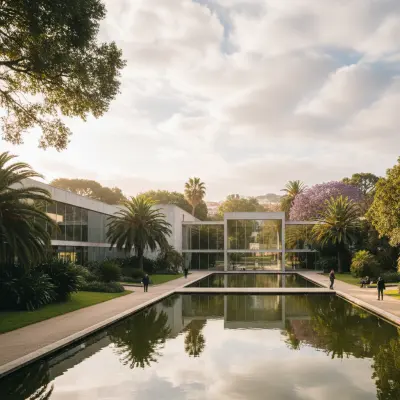
The Museu Calouste Gulbenkian is the second option, and its garden may be the best spot in Lisbon for a civilised nap under the pines. In June they programme outdoor concerts, worth checking the schedule.
Another option, for those who want to move: take advantage of early morning for a downhill cycling route from the top of the city to Belém, before the heat sets in. Or a calmer ride along the riverside, catching the breeze from the Tagus and allowing stops for pastel and espresso in half a dozen places.
Saint Anthony Weddings: The Tradition Almost Nobody Knows
On 12 June, Lisbon City Council organises collective weddings for couples from disadvantaged backgrounds. The ceremony takes place at the Sé, with a procession to the City Hall. For poor couples it is a real opportunity; for the rest of the city it is one of the most beautiful visual spectacles of the month: brides and grooms streaming out of the Sé with paper flowers and bunting, the municipal band playing, and tourists not understanding what is going on.
It is one of the oldest and least publicised traditions. If you pass by mid-morning on the 12th, stop and watch. You will not forget it.
Fado in June: Where and When
June is a difficult month for traditional fado. Many houses close mid-month because the artists are tied up with neighbourhood festivities. But anyone serious about fado, outside the Bairro Alto circuit, should head to O Faia, on Rua da Barroca. It is one of the more serious houses, with respected fadistas and a programme that holds its standard even in festival weeks. Book ahead, it sells out.
Alternatively, there are improvised fados (called fado vadio) in taverns of Mouraria and Alfama throughout the month. There is no programme; it is luck. If you walk by and hear it, go in.
The Café Where Everyone Ends Up
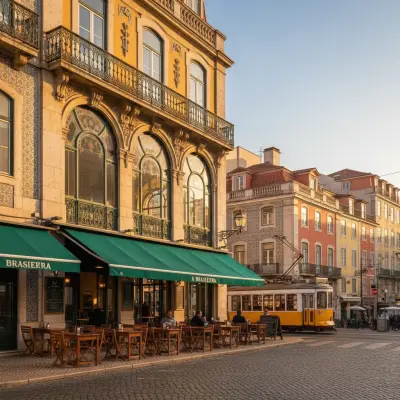
At some point during June you will need a strong espresso to survive. A Brasileira, in Chiado, is one of the city's most sentimental stops. Yes, it is touristy. Yes, you pay more than you should. But the terrace with the Fernando Pessoa statue, late afternoon on the 13th when the city is still sleeping off its hangover, has something that justifies the three euros and fifty cents for the espresso.
If you want to understand better what makes Lisbon, Lisbon, it is worth reading our guide on local culture in Lisbon, which goes deeper into many of the traditions June explains.
Logistics: How to Survive the Party
A few practical truths nobody tells you:
- Transport: The metro runs until 2am during the festive period, and on the night of the 12th to the 13th it often extends later. Check the Metro de Lisboa website. Taxis are impossible to catch. Walk.
- Footwear: Comfortable, closed shoes. Portuguese cobblestone soaked in sangria is unforgiving.
- Cash: Many stalls only take cash. Bring small notes; nobody breaks a fifty.
- Toilets: Use café bathrooms while you can. At night it is chaos.
- Wallets: Lisbon does not have more pickpockets than any other European capital, but June creates more opportunity. Backpack on the front.
Possible Escapes: When Lisbon Wears You Out
The festival is intense, and by the third day you may crave fresh air. Sintra is forty minutes by train from Rossio station and is the perfect antidote: trees, mist, coolness. Our guide to Sintra's neighbourhoods helps plan the day beyond the palace queues.
If you are after a sweeter, less rowdy tradition, Mafra is also worth a visit while still in late May or early June, before the heat hits hard. The Easter sweets route in Mafra shows a side of the region that survives Saint Anthony.
The Last Word
The Santos Populares are the best time to come to Lisbon, and simultaneously the worst. Best because the city is genuinely awake, with people on the streets who know their neighbours, with music on every corner, with living traditions that are not staged tourism. Worst because the chaos is real, prices climb, hotels sell out in January, and there is always someone throwing up outside your door.
But if you can take it, it is worth it. Buy a manjerico. Eat the sardine on the slab of country bread. Drink too much red wine. Dance pimba with a stranger. Wake up on the 13th with your clothes smelling of smoke and your head aching, and realise, over an espresso at A Brasileira, that you have just lived Lisbon the way it wants to be lived. At least once in your life.