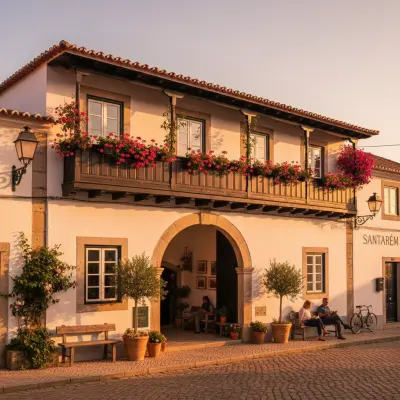
Santarém: Where Locals Actually Eat (Skip the Tourist Menus)
Santarém has been Portugal's gastronomy capital since 1980, but the best places to eat aren't in the guidebooks. From torricado at Casa dos Torricados to the four-generation Taberna do Quinzena, this is the guide to eating like a local in Ribatejo's food heartland.
Santarém has called itself Portugal's capital of gastronomy since 1980. Usually when a city gives itself a title like that, it's marketing fluff. Not this time. Santarém might be the only place in Portugal where you can walk into any restaurant blind, point at something on the menu, and walk out happy. The problem is most visitors never find the right spots, they get stuck at terrace restaurants in the historic centre eating generic bifanas while locals are lunching two streets away at half the price.
This is the guide to eating like someone who actually lives here.
The Torricado: The Dish Nobody Knows (But Should)
If you can only eat one thing in Santarém, forget sopa da pedra, that's from Almeirim, and the locals here will absolutely correct you. The dish of Santarém is the torricado. In its purest form, it's wheat bread grilled over coals, rubbed with garlic, drenched in olive oil, and topped with regional ingredients: shredded salt cod, sardines, cured meats. It was the meal of Ribatejo field workers, survival food that evolved into comfort.
Casa dos Torricados, near the Municipal Market, took this tradition and gave it dignity without turning it into fine dining. They serve the classic salt cod torricado alongside versions with octopus, black pork, and alheira sausage. Prices are fair and portions generous, check locally for current prices, but expect a full meal for under €15.
Taberna do Quinzena: Four Generations of Doing the Same Thing Well
If one restaurant in Santarém defines "where locals eat," it's Taberna do Quinzena. It's been in Fernando Batista's family for four generations. Four. When a business survives that long in a small city, it's not by accident, it's because the quality is consistent and the prices are fair.
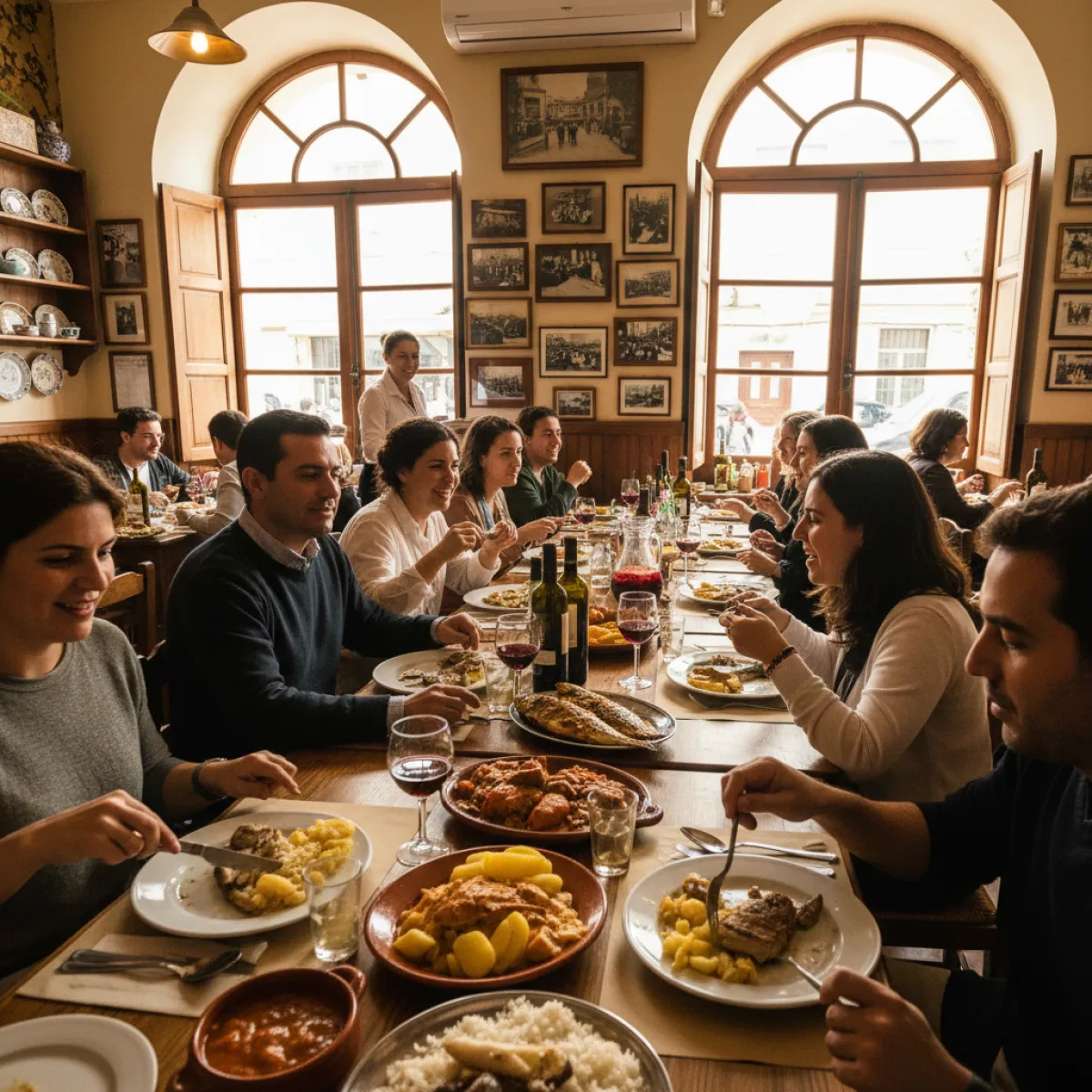
The atmosphere is proper tavern: tight tables, noise, TV on, regional wines in jugs. The menu shifts based on what's good at the market, but expect meat, lamb, veal, pork, cooked directly, without fuss. Nobody here is going to serve you a reduction of something with a foam of nothing. What you'll get is a plate with serious portions, honest flavour, and a price that makes you wonder how Lisbon restaurants charge three times more for the same thing.
Go at lunch. Dinner is good too, but midday is when you'll catch the local workers, the courthouse lawyers, the kind of mixed crowd that tells you a place is genuine.
The Municipal Market and the Art of Buying Well
Before eating out, do what locals do: hit the Municipal Market. It's not particularly pretty or Instagrammable, which is exactly why it works. The stalls sell Ribatejo fruit, regional cheeses, locally made cured meats. Bring a knife and some bread and you've got lunch for two or three euros on a bench in the Jardim da Liberdade overlooking the Tagus floodplain.
The market runs mornings, arrive before 11am, because after noon the best stalls have already closed.
O Fábio: For Unapologetic Carnivores
Near the market on Rua Dr. Jaime Figueiredo, O Fábio is the kind of restaurant that doesn't appear in tourist guides and will probably never have an Instagram page. The portions are absurdly generous, grilled meats are the specialty, and the prices will make you double-check the bill. If you like meat and have no patience for tasting menus, this is your place.
Order whatever the person at the next table is having. Seriously, it's the best strategy at places like this. If it looks good on their plate, it'll be good on yours.
Convent Sweets: The Ribatejo's Best Kept Tradition
Portugal is obsessed with convent sweets, and rightly so. But while everyone goes to Belém or Tentúgal, few think of Santarém, which is a mistake. Santarém's convents produced recipes for centuries that survived the dissolution of religious orders and ended up in local pastry shops.
Look for Queijinhos do Céu (they're not cheese, they're almond and egg sweets with a texture like miniature queijadas), Celestes de Santa Clara, and Pampilho. Any pastry shop in the centre will have at least two of these. Arrepiados de Almoster, from the neighbouring village of the same name, also show up frequently and are worth every calorie. If convent sweets fascinate you, our guide to traditional sweets in Mafra shows how this tradition extends across the wider Lisbon region.
O Balcão: For Those Who Want to Be Surprised
If Taberna do Quinzena is pure tradition, O Balcão is its contemporary counterpart. Chef Rodrigo Castelo works with local ingredients, especially freshwater fish from the Tagus, and does something few restaurants in the region attempt: giving centre stage to frequently overlooked products from Ribatejo cuisine. It's not expensive for what it offers, and the approach is less "author cuisine" and more "we cook what the river and land give us, but with attention."
Book ahead. The space is small and the locals have already found it.
Sopa da Pedra: The Truth About the Region's Most Famous Dish
I'll be honest: sopa da pedra is from Almeirim, not Santarém. They're neighbouring cities, about 10 minutes apart by car, and Almeirim locals get genuinely annoyed when you confuse the two. That said, you'll find good versions in Santarém, but for the real experience, the detour to Almeirim is worth it.
It's a thick soup of red beans with cured meats (chouriço, ham, pig's ear, black pudding), potato, coriander, and yes, an actual stone at the bottom of the bowl. The legend of the friar who convinced villagers to contribute ingredients to a "stone soup" is European folklore, but in Almeirim they treat it as local and sacred history. Every restaurant has its own version and swears theirs is the original.
Where to Stay and What Else to Do
For a base in Santarém, Santarem Hostel is a practical option in the city centre, ideal if your budget is for food rather than accommodation, which is frankly the right call in this city.
If you need to decompress between meals (and you will), the walking meditation at Quinta das Carvalhas is an unexpected way to experience the city's surroundings away from the usual tourist circuit.
Santarém works well as a stop on a broader trip through the region. It's less than an hour from Lisbon, and if you're exploring the capital, our guide to local culture and traditions in Lisbon pairs well with this food experience. For another side trip, our Sintra neighbourhood guide covers a very different but equally rewarding day out from the city.
When to Go
Any time is good for eating in Santarém, but if you want the main event, the Festival Nacional de Gastronomia happens in October at Casa do Campino. For roughly ten days, restaurants from across the country set up stalls, there are cooking demonstrations, competitions, and more food than any human can process. It's chaotic, packed, and absolutely recommended.
Outside the festival, spring and early autumn are ideal, comfortable temperatures for walking between restaurants and local produce at its peak.
The Verdict
Santarém isn't a city where you'll take pretty photos for social media. The viewpoints exist and the vista over the Tagus floodplain is spectacular, but that's not why you should come. Come because you want to eat properly, no pretension, no two-week waiting lists, no €80 menus. Come because a torricado with salt cod and a glass of Ribatejo red wine, in a tavern with paper tablecloths, is one of the best meals you'll have in Portugal. And it'll cost you less than a cocktail in Chiado.