Santarém Museums: Which Are Worth Your Time
Santarém has a diocesan museum worth every cent of its €4 admission, a medieval tower with free entry and panoramic views, and at least one space that will probably be closed when you arrive. Here's the honest itinerary.
Santarém calls itself the Gothic capital of Portugal, and to be fair, it's not wildly overselling itself. The problem is that such a grand title sets up expectations of a city brimming with world-class museums, and the reality is more interesting, more uneven, and more quirky than that. There are spaces that deserve a full afternoon, others you can breeze through in twenty minutes, and at least one that will probably be closed when you show up.
I've spent enough time walking between Largo Sá da Bandeira and the São Bento viewpoint to have opinions. Here they are.
The Diocesan Museum: The Best Museum in Town, Full Stop
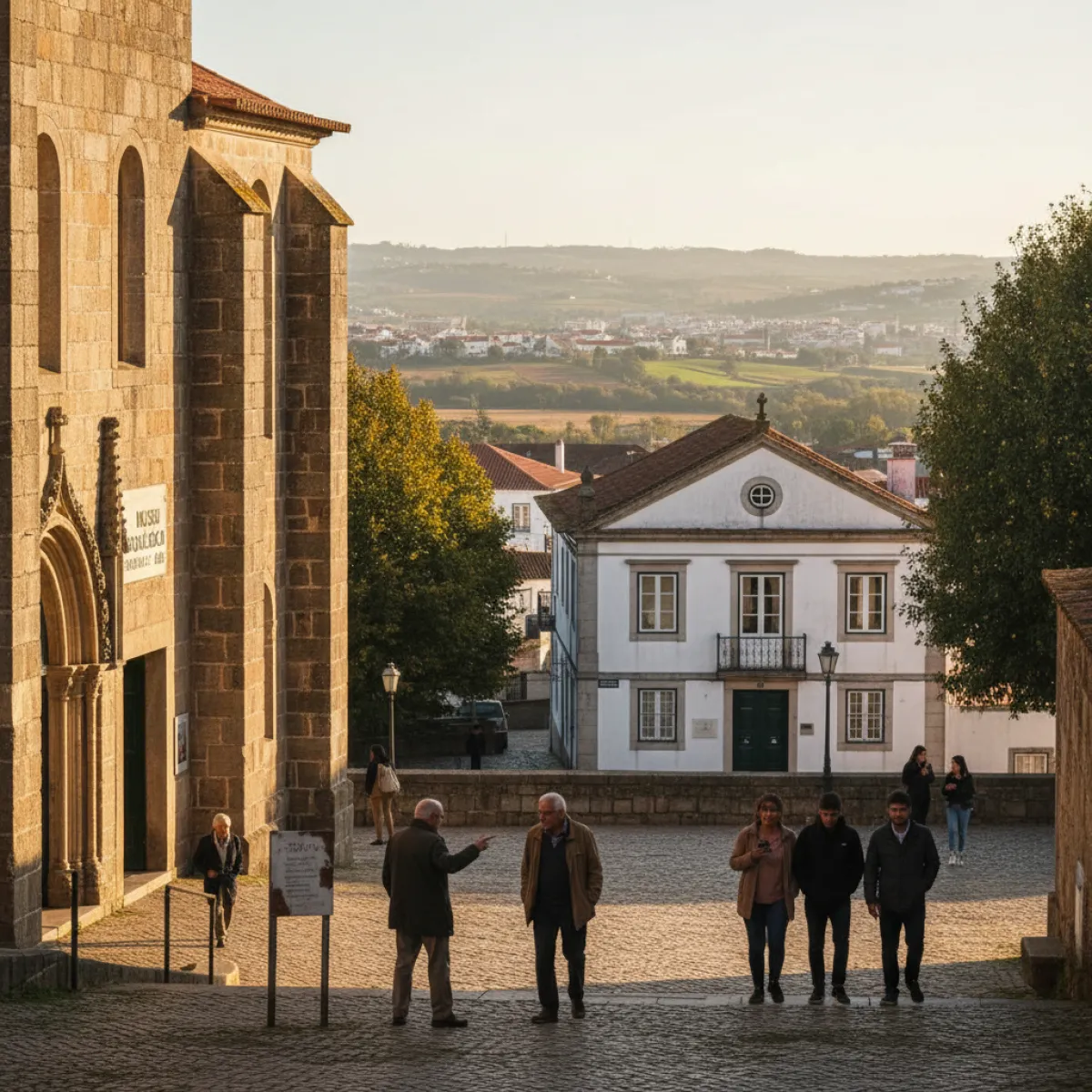
If you have time for just one museum in Santarém, make it the Museu Diocesano. It's housed in the north wing of the former Jesuit College on Praça Sá da Bandeira, a building constructed on the ruins of the Royal Palace, which tells you something about the scale of ambition here. The church, whose construction started in 1575 and wasn't finished until 1711, sets the tone: this is no modest collection.
The holdings bring together hundreds of pieces from 111 parishes across the diocese, paintings, sculpture, textiles, goldwork, and liturgical objects spanning the medieval period to the baroque. Not everything is extraordinary, but there are half a dozen paintings and sculptures that justify the visit on their own. The curation is competent and the explanatory panels exist and are readable, which in Portugal already counts as praise.
Open Monday to Friday 10am–1pm and 2pm–6pm, Saturdays and holidays 10am–1pm and 2pm–7pm, Sundays 2pm–7pm. Admission is €4 for adults, €3 for seniors, €2 for ages 10–17, and free for children under 10. Honest value for what you get.
Practical tip: go on a weekday morning. On Saturdays, especially during the October Fair, it can get crowded with tour groups.
Torre das Cabaças: Small, Free, and Oddly Charming
The Torre das Cabaças, on Largo Zeferino Sarmento, is a medieval tower roughly 30 metres tall that was once part of the old city walls and served as the town's public clock. The name comes from the eight clay gourds placed around the 17th-century bell to amplify its sound, an ingenious and delightfully practical solution.
Inside, the Núcleo Museológico do Tempo (Time Museum) fills four floors with antique clocks and an explanation of how humans have measured time through the centuries. It's a small museum, twenty, thirty minutes will do, but it has a rare quality: it doesn't try to be more than it is. The climb up the narrow staircase to the top rewards you with a panoramic view of Santarém's rooftops and the Tagus floodplain that, on a clear day, is worth more than half the city's museums.
Free admission. Open Wednesday to Sunday, 9am–12:30pm and 2pm–5:30pm. Closed Mondays and Tuesdays. If you're already near the viewpoint and have half an hour, there's no reason not to go in.
Igreja de São João do Alporão: Magnificent Building, Uncertain Museum
This is where things get complicated. The Igreja de São João do Alporão, built in the 12th century during the Reconquista, is one of Santarém's most beautiful buildings, a fusion of Romanesque and Gothic elements that works surprisingly well. Since 1889, it has housed the municipal archaeology museum, with notable funerary art including the tomb of D. Duarte de Menezes, one of the finest 15th-century examples in Portugal, plus Roman altars and a medieval sundial.
The catch? It's temporarily closed. And in Portugal, "temporarily" can mean six months or six years, check locally before adding it to your itinerary. Even when closed, the exterior is worth seeing, and it's on the same street as the Torre das Cabaças.
Igreja da Graça: Not a Museum, But Deserves More Time Than Some
Technically, the Igreja de Nossa Senhora da Graça isn't a museum. But since it's the cultural site in Santarém that draws the most visitors, it deserves a mention, and an honest assessment.
Built in the 14th century, it's been a national monument since 1910 and is one of the finest examples of Flamboyant Gothic architecture in Portugal. The rose window on the facade, carved from a single block of stone, is genuinely impressive. Inside, beneath the floor of the southern chapel, lies the tomb of Pedro Álvares Cabral and his wife, D. Isabel de Castro. A marble slab in the floor marks the spot, more modest than you'd expect for the man who reached Brazil in 1500, but there's something authentic in that simplicity.
In front of the church, a statue by sculptor Domingos Soares Branco honours Cabral. If you're interested in the Age of Discoveries, this is an essential stop. If not, the facade alone justifies five minutes of your time.
Verdict: worth it
The Igreja da Graça is free and takes fifteen to twenty minutes. For historical context, it's more interesting than half the paid museums in town.
What You Can Skip
Santarém has other minor museum spaces, small interpretive centres attached to churches that range from passable to skippable. Most suffer the same problem: dated information, unpredictable hours, and an air of neglect that's discouraging. If time is limited, focus on the Diocesan Museum and the Torre das Cabaças, swing by the Igreja da Graça, and don't feel guilty about ignoring the rest.
Beyond Museums: What Else to Do in Santarém
One of the best things about Santarém is that the city doesn't live on museums alone. The Portas do Sol viewpoint offers one of the most spectacular views in the Ribatejo, the Tagus winding through the floodplain, the vegetable gardens, the wide flat land. Bring a coffee and stay awhile.
If you're after something different outside the historic centre, the walking meditation at Quinta Carvalhas is a surprisingly effective way to slow down after a day of churches and museums. Not for everyone, but if you're open to it, the contrast between Gothic stone and the quiet of the estate works well.
For accommodation, Santarem Hostel is a practical, central option, don't expect luxury, but the location lets you do everything on foot.
Santarém in Context: Is It Worth the Trip?
Santarém is not Lisbon or Sintra. It doesn't have the density of cultural offerings those cities provide, if that's what you're after, our guide to local culture in Lisbon or the Sintra neighbourhood guide are better starting points. But Santarém has something those cities have lost: human scale. You can see the essentials in a day without rushing, have a proper lunch, and still have time to sit at the viewpoint watching the river.
The city is about an hour from Lisbon by train or car. If you're exploring the region and have an interest in food traditions in the Ribatejo and surroundings, Santarém fits perfectly into a route that includes Mafra or Tomar.
Practical Half-Day Itinerary: Santarém's Museums
- 9:30am: Start at the Torre das Cabaças when it opens. Twenty minutes inside, plus ten to enjoy the view from the top.
- 10:15am: Walk past the Igreja de São João do Alporão next door, even if closed, the exterior deserves attention.
- 10:30am: Walk to the Igreja da Graça (five minutes on foot). See the rose window, Cabral's tomb, move on.
- 11am: Diocesan Museum. Allow at least an hour, ninety minutes if you appreciate sacred art.
- 12:30pm: Lunch. Find a restaurant near Largo Sá da Bandeira and order what the region does well: sopa da pedra ribatejana or local Ribatejo beef.
With this itinerary, you see what matters without wasting time on what doesn't. Santarém rewards those who choose well, not those who try to see everything.