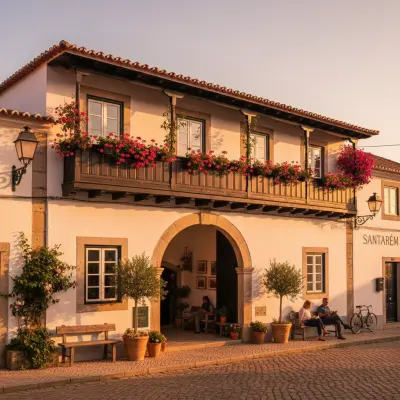
Santarém Beyond the Viewpoint: What Nobody Tells You
Santarém is less than an hour from Lisbon, yet almost nobody puts it on their itinerary. Big mistake. Between Gothic churches you can visit without queues, riverside eel stew, and the country's biggest food festival, the Ribatejo capital deserves more than a thirty-minute viewpoint stop.
Everyone who visits Santarém does the same thing: walk up to the Portas do Sol garden, take the obligatory photo of the Tagus with the Lezíria floodplain stretching to the horizon, eat something forgettable near the main square, and leave. If they're ambitious, they'll peek inside the Igreja da Graça. It's a ninety-minute itinerary, repeated endlessly across every travel blog in existence. And it's not wrong, the view really is outrageously beautiful. But Santarém is far more than a viewpoint with good framing for Instagram.
The problem is that the city doesn't market itself well. It's less than an hour from Lisbon, but it never appears on "day trip" lists alongside Sintra or Óbidos. Maybe because it doesn't have a photogenic fairytale castle or a pastry shop with a two-hour queue. What Santarém has is something else entirely: a density of Gothic churches that puts cities with triple the tourism to shame, a food tradition that earned it the National Gastronomy Festival (every year in October), and a river that defined centuries of local life but that almost nobody bothers to go see.
The Gothic Capital Nobody Actually Explores
Santarém calls itself the "Capital of Gothic" and, for once, the municipal branding isn't an exaggeration. Within an area you can walk in twenty minutes, there are half a dozen Gothic churches that each deserve their own dedicated pamphlet.
Start with the Igreja da Graça, on Largo Pedro Álvares Cabral. This is where the man who "discovered" Brazil is buried, or at least that's what tradition holds, and the plaque confirms it. The rose window on the façade is one of the most elaborate in Portuguese Gothic architecture. Inside, the silence and filtered light do what no audio guide ever could.
Then walk down to the Igreja de São João do Alporão, which now functions as a small museum. The building mixes Romanesque and Gothic elements, and inside you'll find the tomb of Duarte de Meneses, or rather, one of his teeth, which according to legend was the only thing recovered after the battle where he died in North Africa. It's the kind of macabre detail that no travel guide should leave out.
But the real showstopper, for my money, is the Convento de São Francisco. The convent church is considered the largest Gothic hall in Portugal, three broad naves that, even in partial ruin, convey a scale that catches you off guard. It's outside the main tourist circuit and, on a Tuesday morning visit, you'll likely have it entirely to yourself.
Go Down to the River: Alfange and Ribeira de Santarém
Here's the real test of whether you actually want to know Santarém: descend from the plateau where the historic centre sits to the banks of the Tagus. Most visitors never do, because the slope is steep and because nobody tells them it's worth the effort.
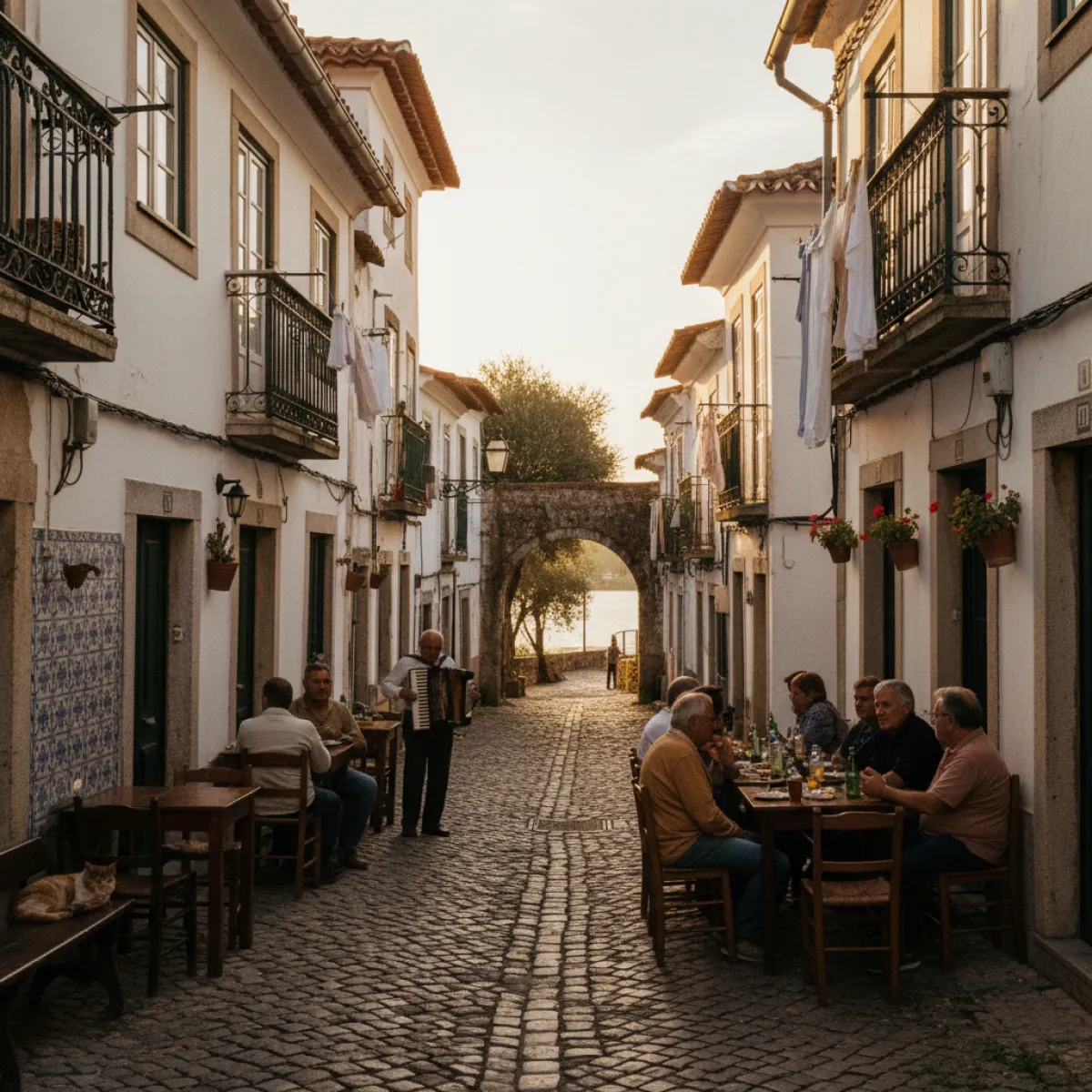
The Alfange neighbourhood, pressed against the river, runs at a completely different pace from the centre. Low houses, laundry hanging between windows, cats crossing the street without urgency. It's not postcard-pretty, it's real, and that's precisely why it matters. Ribeira de Santarém, slightly further north, retains traces of its historical importance as a river port. In the 13th and 14th centuries, a significant portion of Ribatejo's trade departed from these banks.
About five kilometres from the centre, the village of Caneiras is worth the detour. It's one of the last avieira villages on the Tagus, fishing communities that built wooden houses on stilts, with their own traditions that have little in common with the rest of the region. Some of those houses still stand, painted in bright colours, and the village maintains an end-of-the-world feel that contrasts sharply with its proximity to the city.
If you're looking for a different way to connect with this Ribatejo landscape, Walking Meditation at Quinta Carvalhas offers exactly that, a walking route through a rural setting on the outskirts of Santarém, free from the pressure of a conventional tourist itinerary.
Eating in Santarém: Forget the Tourist Menus
Food is perhaps the best reason to come to Santarém, and the most ignored by the visitor who grabs a soup and a steak at the first restaurant they find.
The dish that defines the city is ensopado de enguias, eel stew. It's not pretty: a thick mixture of eel cooked with onion, tomato, peppers, white wine and herbs, served over slices of fried bread. It looks like fisherman's food (and it is), but it has a depth of flavour that surprises. Look for restaurants that serve it as a daily special, not as a tourist curiosity, the difference is enormous.
Other dishes worth ordering: açorda de sável (shad bread stew, when it's in season between January and April), sopa de peixe do rio (river fish soup), and cachola de porco (pork offal stew). These are Ribatejo traditions, hearty, unpretentious, designed to feed people who work the land and the river. Don't expect fine dining presentation. Expect flavour.
For dessert, Santarém has a convent sweet tradition that rivals any city in the country. Queijinhos do céu are probably the best known, small almond and egg sweets that look simple but require a skilled hand. Celestes de Santa Clara and pampilhos (rectangular cakes filled with egg cream and cinnamon) are equally good and harder to find outside the region. Look for them in the pastelarias in the centre, not in restaurants.
If you're interested in the sweet-making traditions of the Lisbon and Tagus Valley region, Santarém offers its own distinct chapter, less touristy than Belém, more authentic than most.
The National Gastronomy Festival
If you can choose when to visit, come in October. The Festival Nacional de Gastronomia takes place annually at the Campo Infante da Câmara and is, without exaggeration, the most important food event in the country that doesn't happen in Lisbon. Restaurants from every Portuguese region set up stalls, there are cooking demonstrations, and above all, you eat extremely well at reasonable prices. It's also the best way to see Santarém full of life, during the rest of the year, the city can feel like it's napping.
Where to Stay and How to Get There
Santarém doesn't have a huge hotel scene, which is part of its charm and part of its problem. For anyone looking for an affordable, well-located base, Santarem Hostel is a practical option right in the city centre, ideal if you want to explore everything on foot without spending a fortune on accommodation.
By train, the connection from Lisbon's Santa Apolónia or Oriente stations takes about an hour on regional services. Santarém's station is in the lower part of the city, next to the river, which means you'll need to climb (on foot or by taxi) to reach the historic centre. By car, it's roughly 80 km via the A1 motorway, free parking is relatively easy to find on the streets around the centre.
One day is enough for the standard tourist route. But if you want the full version, churches, river, food, two days is the minimum. And honestly, the city deserves them.
Santarém in Context: What's Around It
One of Santarém's advantages is its central position. The Lezíria floodplain stretches south, with rice paddies, horses and bulls, the heartland of Portuguese campino culture. Almeirim, the neighbouring town, is famous for sopa da pedra (stone soup), and it's worth a stop for lunch.
For anyone building an itinerary through the Lisbon and Tagus Valley region, Santarém works beautifully as a counterpoint to the more obvious choices. Already been to Sintra? If so, consider swapping your next return trip for something different, our Sintra neighbourhood guide helps you dig into its lesser-known corners, but even so, Santarém offers a radical contrast. Here there are no tourists with selfie sticks, no two-hour queues. There's Gothic stone, traditional food, and a relationship with the river that most Portuguese cities have already lost.
Similarly, if you're exploring Lisbon's local culture and want to understand how the Portuguese live outside the capital, an afternoon in Santarém tells you more than a week spent in already-gentrified neighbourhoods.
What Actually Matters
Santarém doesn't need to be rescued by tourism, it just needs to be visited by people who deserve it. This isn't a city for ticking boxes on a list. It's for someone who wants to sit at a café terrace in Praça Sá da Bandeira at eleven in the morning, order a coffee and a pampilho, and realise that the elderly woman at the next table has been doing exactly the same thing for forty years.
It's for the person who wants to walk into a Gothic church without a ticket, without a queue, without an audio guide, and feel the weight of seven hundred years of stone above their head. It's for whoever wants to descend to the Tagus, to the Alfange neighbourhood, where the river runs slowly and the houses look like they grew from the ground without asking anyone's permission.
It's not spectacular. It's better than that, it's genuine.