Ribeira Grande Festivals: The Calendar That Matters
Holy Spirit feasts, São Pedro concerts, surf competitions at Santa Bárbara, and Europe's only tea harvest at Gorreana, Ribeira Grande's festival calendar barely takes a breath. A practical guide to knowing when to show up and what to expect.
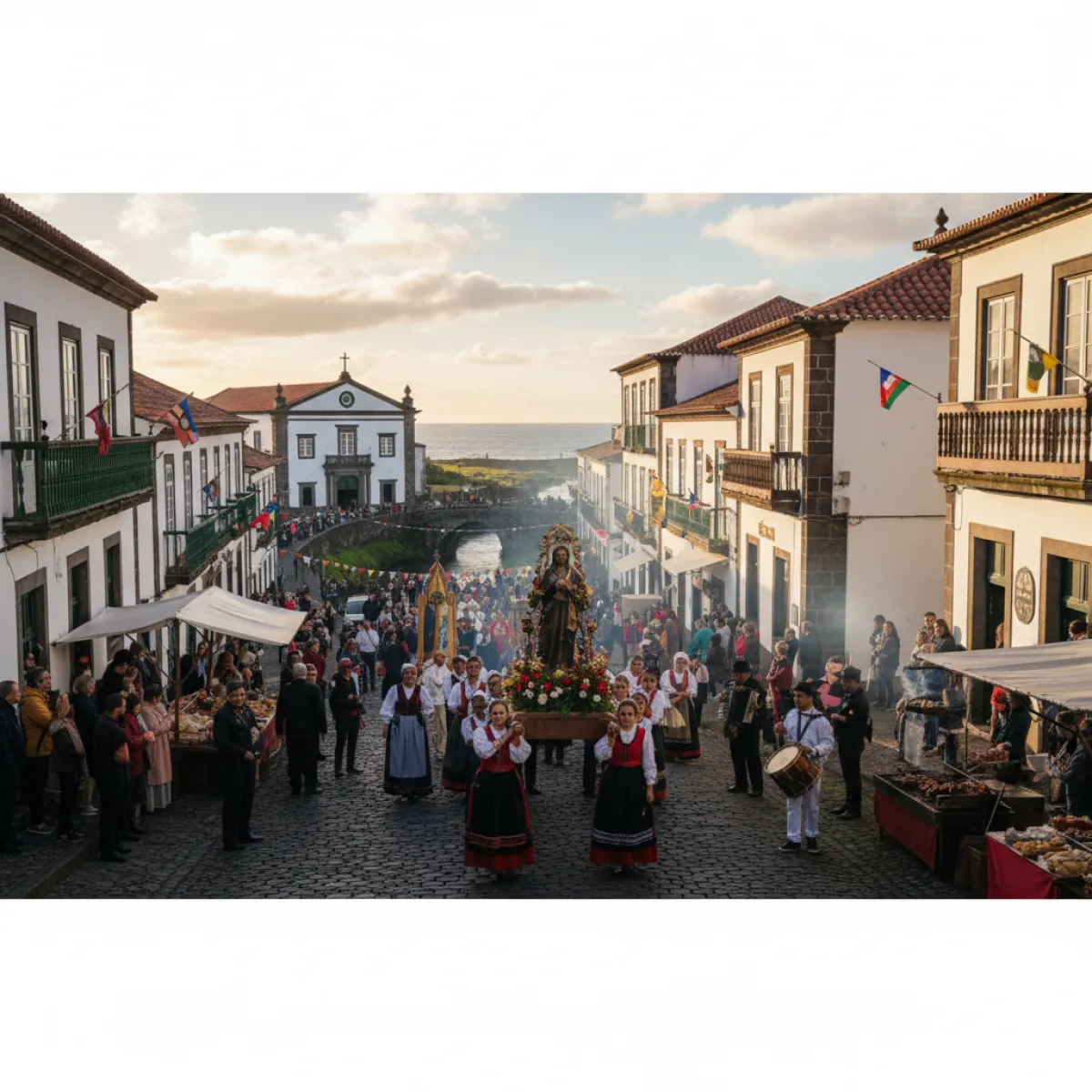
People come to the Azores for the green, the lakes, the quiet. Fair enough. But anyone who knows Ribeira Grande understands that this city on São Miguel's north coast runs on its own clock, and that clock is set by festivals, processions, pilgrimages, and events that fill the calendar almost without pause. If you want to understand Ribeira Grande properly, the landscape alone won't cut it. You need to show up when the city comes together.
The Holy Spirit Festivals: The Main Event
You cannot talk about Azorean festivals without starting with the Festas do Espírito Santo. In Ribeira Grande, as across the island, the Impérios, those small, colorful chapels you'll find in nearly every parish, are the center of everything between May and September. Each Sunday, a different parish organizes its celebration, complete with a coronation ceremony, procession, Espírito Santo soup, and massa sovada bread distributed to anyone who turns up.
This is not folklore for tourists. It's the island's social fabric in action. Families prepare for months, emigrants return specifically for it, and the sopas, slow-cooked beef with bread, cabbage, and spices, are served to hundreds of people for free. Yes, free. The principle is sharing, and if someone hands you a plate, take it. Refusing is almost an insult.
Practical note: the larger celebrations in Ribeira Grande happen between June and August. There's no reliable fixed calendar online, your best bet is to ask locally or check the posters pinned up at parish halls when you arrive. Processions are typically on Sunday afternoons, and the sopas are served at lunchtime.
São Pedro Festival and the Summer Eruption
The peak of Ribeira Grande's festival calendar is the Festas de São Pedro, typically held in the last week of June around the 29th. For several days, the city center transforms: a stage goes up along the riverside, concerts run every night, food stalls multiply, fireworks light up the sky, and there's that particular energy of a small city that knows how to throw a big party.
The concert lineups mix regional artists with names from the Portuguese national scene, in recent years, the São Pedro festival has attracted bills that rival those of much larger cities. Entry to the open-air shows is usually free, which makes the whole thing even more democratic.
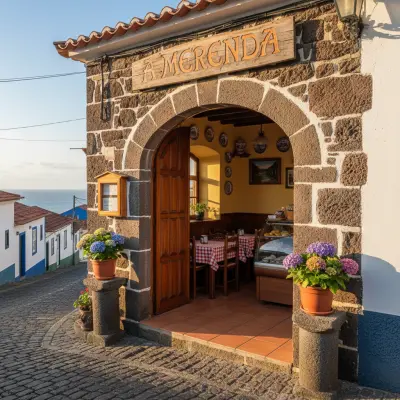
If you're in Ribeira Grande during the festival, book a table in advance at a place like A Merenda, during festival week, the city fills up and so do the restaurants. Common sense says eat early, then head to the center for the evening program.
What to eat during the festivals
At the street stalls, look for bifanas (marinated pork sandwiches), Azorean malassadas, deep-fried dough balls dusted with sugar and cinnamon that are the antithesis of any diet, and milho frito com couve (fried cornmeal with cabbage), an Azorean staple you won't find on the mainland. Local beer (Kima or Especial) to wash it down is mandatory.
Pilgrimages and Processions: The Religious Calendar
Ribeira Grande is deeply Catholic, like most of the island. The religious calendar dictates the year's rhythm with a precision that no cultural agenda can replicate.
Lent brings its own processions, notably the Procissão do Senhor dos Passos, which winds through the city center with religious floats, flower carpets, and a solemnity that contrasts sharply with summer's raucous celebrations. At Easter, the Compasso, the paschal visit house to house, with the priest blessing each home, is a living tradition that, if you're lucky enough to witness it, will give you a perspective on community that no guidebook can convey.
In August, many parishes celebrate their patron saint festivals. Nossa Senhora da Estrela in Ribeirinha and the festivities in Rabo de Peixe, just minutes from Ribeira Grande, are particularly lively. Rabo de Peixe, in fact, is a world unto itself: a fishing community where traditions persist with an intensity that surprises even those who already know the Azores.
Tea and Seasons: Events Off the Beaten Track
Ribeira Grande holds a card no other European city can play: tea. The Gorreana and Porto Formoso plantations, both in the municipality, are Europe's only tea estates, and throughout the year they host visits, tastings, and harvest-related events. If this interests you, and it should, it's worth exploring the Gorreana and Porto Formoso estates in depth. The main harvest runs from April to September, when the factories are in full operation.
Gorreana, founded in 1883, charges no admission and lets you wander the plantations freely. The shop sells tea at prices that make any Lisbon gourmet store look like highway robbery. The green Hysson is the classic, but the Orange Pekoe black tea is my personal favorite.
Santa Bárbara and the Surf Calendar
Santa Bárbara beach, with its dark volcanic sand, is the surf epicenter of the Azores. And with surfing came events: throughout the year, especially between September and November when the Atlantic swell starts delivering consistent waves, regional and national championships are held that draw surfers from across the country.
Even outside competition season, a dawn surf session at Santa Bárbara is one of those moments that justifies the trip. Local surf schools offer beginner lessons for roughly €30 to €50, and the vibe at the beach is relaxed and welcoming, far from the competitiveness you feel at more well-known mainland spots.
For specific dates on surf events, check the Portuguese Surfing Federation's calendar. The championships bring a different energy to the area: food trucks, music, outsiders. It's a good time to visit even if you can't tell a left from a right.
September to December: When the Island Slows Down
After summer's frenzy, Ribeira Grande shifts to a quieter pace, but not a standstill. September still brings the last Holy Spirit festivals and the final beach days. October is harvest month, and while São Miguel isn't a wine island like Pico, there's local wine and aguardente production worth paying attention to.
Christmas in the Azores has a particular sweetness. Filhós, fried dough pastries, are prepared in every household, and Ribeira Grande's churches set up elaborate nativity scenes worth visiting. Midnight Mass remains a significant community event, and in the weeks before Christmas, craft fairs and local markets pop up in the city center.
Carnival, in February or March, is surprisingly lively for an island in the middle of the Atlantic. Ribeira Grande organizes its own parade with floats, costumed groups, and an irreverence that contrasts with the religious sobriety of the rest of the year. It's not Rio Carnival, but it has an authenticity that makes it memorable.
Planning Your Visit
If you want to come to Ribeira Grande for the festivals, and you should, here's the essentials:
- Best time: June to August for popular festivals and good weather. May and September for fewer crowds and Holy Spirit celebrations.
- Accommodation: Book well ahead for São Pedro week. Outside festival periods, there's reasonable supply of local accommodation at €40 to €80 per night.
- Transport: Flights to Ponta Delgada (the airport is about 25 minutes from Ribeira Grande). A rental car is practically essential, public transport exists but isn't practical for exploring.
- Where to eat: Beyond A Merenda, explore restaurants in the smaller parishes, where you eat well and cheaply. Always ask for the prato do dia, it's nearly always the best option.
- Cash: Bring some. Street stalls and festival vendors don't always accept cards.
If you're already in the Azores and want to expand your exploration, Ponta Delgada deserves its own gastronomic expedition, it's less than half an hour away and has a dining scene that complements what you'll find in Ribeira Grande nicely.
What You'll Take From Ribeira Grande
I don't mean souvenirs. I mean what stays with you. Ribeira Grande's festivals aren't spectacle, they're community in motion. It's people who've known each other for generations sharing food, carrying religious floats, building stages. If you show up with genuine curiosity and no rush, you'll be included. That's how the Azores work.
And if the trip takes you further across the archipelago, Horta on Faial is another world entirely, more cosmopolitan, more maritime, with a character completely different from São Miguel. But that's another story.