Porto's São João: An Honest Guide to the Biggest Night
Half a million people, two-euro sardines, plastic hammers, and midnight fireworks over the Douro. An honest guide to Europe's biggest street party: where to eat standing up, why you should skip the Ribeira, and the one reason to be at Castelo do Queijo at 6am.
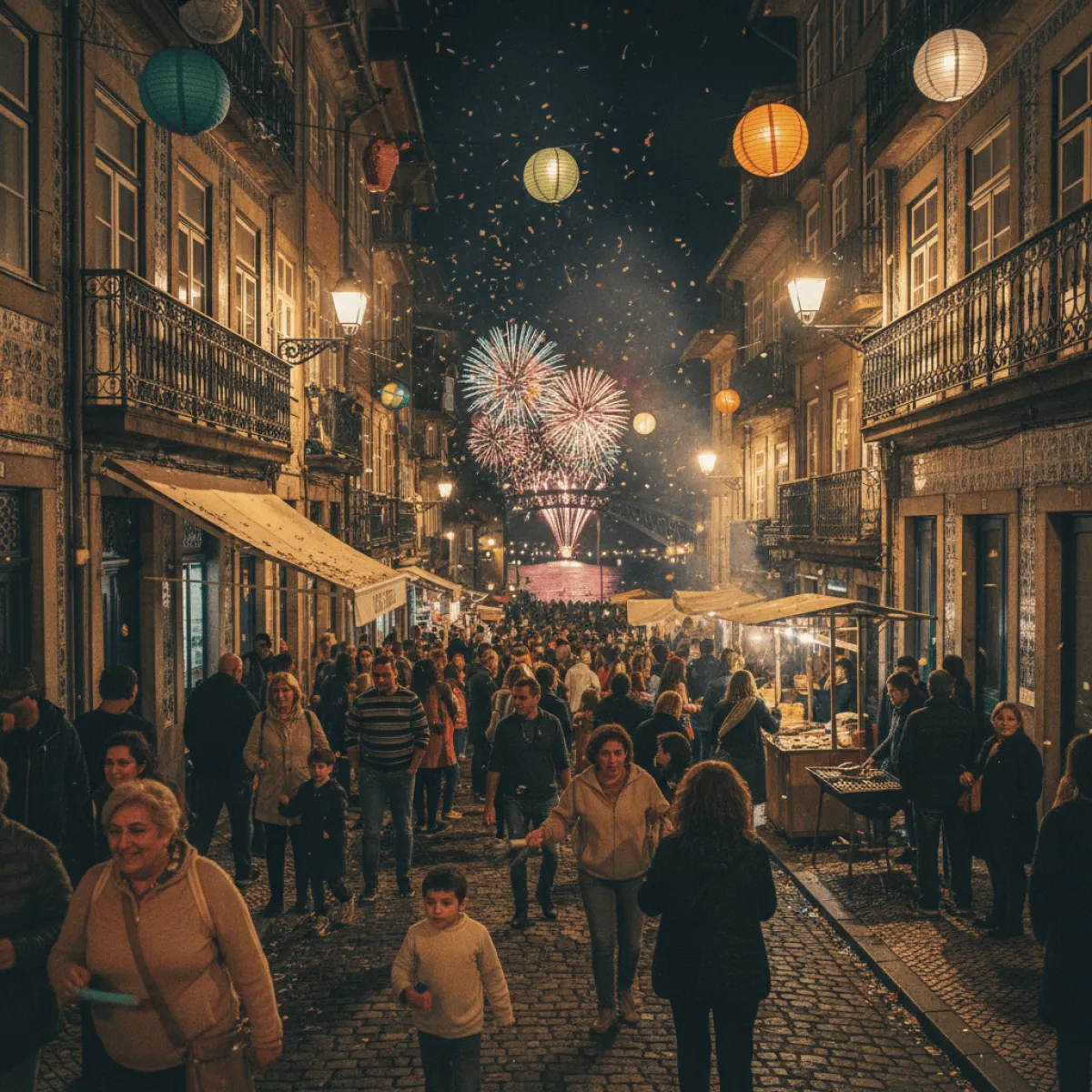
Here's something nobody tells you about Porto's São João: by 6am on June 24th, the Ribeira smells like burnt sardines, fried garlic and a vague memory of beer spilled across the cobblestones. The last surviving tourists are dragging themselves toward the metro. The locals, the actual Portuenses, are heading instead to Castelo do Queijo beach for the ritual dip in the Atlantic, plastic hammers still dangling from their hands. There's nothing mystical about it. It's just the biggest night of the year in a city that, for 24 hours, officially decides to lose its mind.
If this is your first time in Porto for São João, forget everything you've read about "authentic" Portuguese folk festivals. This is not a village romaria. This is an entire city, from Bonfim to Massarelos, from Foz to Campanhã, turned into a giant street party where everyone hits everyone else on the head with squeaky foam hammers. It's childish. It's absurd. It is, quite possibly, the best popular festival in Europe, and I say that without rhetorical exaggeration.
What São João actually is
Technically, it celebrates John the Baptist, on the night of June 23rd to 24th. Historically, it's a pagan summer solstice festival that Christianity later varnished. Practically, it's a pretext for Porto's residents to do what they do best: eat in the street, drink in moderate excess, sing badly and dance worse, all at the same time, with a manjerico basil plant on the windowsill and fireworks over the Douro at midnight sharp.
What separates Porto's São João from any other Portuguese popular festival is sheer scale. We're talking roughly half a million people in a city that normally houses 230,000. The streets close. The trams stop running. The metro runs all night. And sardines are grilling on every corner, literally, from the Cathedral down to Praça da Batalha.
The three-object ritual
To survive São João, you need three things. None of them are optional.
- Plastic hammer: 1 to 3 euros from street vendors. It replaced the leek in the 1960s, when someone realised hitting people with plastic is friendlier than with vegetables. You hit everyone on the head, including strangers, police officers, and small children. Everyone hits you too. That's the game.
- Manjerico: A tiny pot of basil with a paper carnation and a folk quatrain stuck in on a toothpick. You don't sniff it from beneath your nose, you sniff it from above, fingers brushing the leaves. Buying one without the carnation is considered bad form.
- São João lantern: Those paper sky lanterns that float up into the night. Technically banned in some zones because of fire risk, but they keep appearing. Look up around midnight and you'll see why.
Where to eat (and what to order)
Every grilled sardine in the world is concentrated in Porto on this single night. On any narrow street in the historic centre you'll find improvised grills with clay pots, smoking embers, and a sweaty man flipping fish with a cloth. A sardine costs, on average, between 1.50 and 2.50 euros tonight. You bring your own bread (or buy it there) and eat standing up on the pavement, grease dripping onto your shoes. That's how it works. There are no tables.
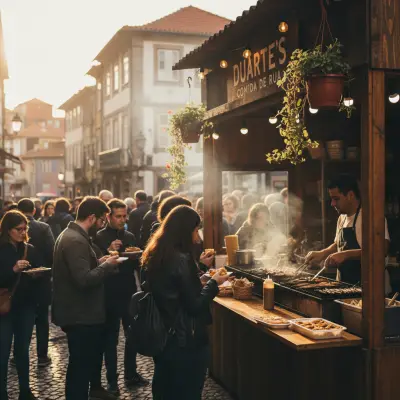
The canonical accompaniments are caldo verde (a green kale soup) served in paper cups, and broa de milho corn bread. Some of the older tascas serve grilled febras pork strips with bread, which are, in my opinion, better than the sardines when the grill is hot enough. If the street circuit wears you out and you want decent street food sitting down on a different day of your stay, Duarte's Comida de Rua is worth knowing about. On São João night itself, eating standing up is the whole point.
A tip few guides give you: around 2am, onion soup starts appearing on corners. It's not elegant. It's not even particularly tasty compared to French versions. But, after six hours drinking Super Bock from a plastic cup, it's a redemption. 2 or 3 euros. Accept it with gratitude.
The route I recommend
Afternoon: warm up without burning out
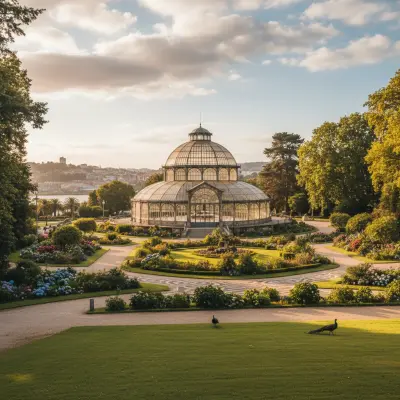
Start around 4pm at the Jardins do Palácio de Cristal. It's the best place in town to see the Douro without crowds before the madness begins, and there's enough shade to recover if June heat is serious that year (it usually is, 24 to 28 degrees Celsius). The peacocks roam freely. Don't bother them.
Around 6:30pm, walk down Rua de Cedofeita. It's closed to traffic on São João and full of small groups setting up plastic tables in the middle of the street. Here you can still hold a conversation. Two hours later, you won't.
Night: the Ribeira is a trap (and you'll want to go anyway)
Everyone will tell you to go to the Ribeira riverfront for the midnight fireworks. Everyone will be there. I won't tell you not to go, but I will tell you that going and staying means not moving for four hours, with 100,000 people pushing you from every direction. The view of the fireworks over the Douro is, admittedly, spectacular, with the display launched from both banks, Porto and Gaia, reflected on the water.
The alternative I'd defend: watch the fireworks from the Ponte do Infante or from the upper deck of the Ponte D. Luís I. You see exactly the same thing, with a third fewer people, and you have a quick escape route back toward Cedofeita or Praça dos Poveiros when the show ends.
After midnight: what nobody tells you
São João only truly starts at 12:01am. That's when the neighbourhoods come out. Walk up the Avenida dos Aliados toward Santa Catarina. Cross over to Poveiros, where the concerts run until 6am. If you still have energy, take the old tram line to Foz (warning, packed) and finish the night at sunrise at Castelo do Queijo, where the dip in the Atlantic separates the tourists from the actual survivors.
Where NOT to go (unpopular opinion)
There are restaurants in the historic centre that double or triple their menu prices on São João night and fill up with tourists eating poorly for 45 euros. Skip them. If you really want to sit down to eat that night, reserve outside the Aliados-Sé-Ribeira triangle, ideally in neighbourhoods like Bonfim or Cedofeita.
Another unpopular take: don't buy the "São João all-inclusive" package some hotels sell. It usually includes a very sad dinner and a reserved seat on a "VIP" balcony. São João is, by definition, in the street. A VIP balcony is not São João, it's an overpriced cocktail with a view.
Where to sleep (and the warning you need)
Accommodation prices in Porto double, sometimes triple, on the night of June 23rd. Book two or three months in advance if you can. Neighbourhoods like Bonfim, Cedofeita and Bolhão have moved toward the centre of the party in recent years and usually offer better value than the Baixa downtown.
If you're coming from out of town, consider staying in Vila Nova de Gaia across the river. You get the view of the Port wine cellars over the Ribeira, you cross the Ponte D. Luís I on foot in ten minutes, and you walk home without battling a crammed metro at 4am.
The day after (June 24th): municipal holiday
It's a public holiday in Porto. The main museums (Serralves, Casa da Música, Museu Nacional Soares dos Reis) are either closed or open late. So are the shops. June 24th is, traditionally, a day for cataplana or feijoada à transmontana at home, with family, around a quiet table, because everyone has a hangover.
If you want to use the holiday to see Porto from a different angle, I recommend the walking tour of the historic centre with Living Tours, which generally still runs on the holiday with reduced hours, and which takes you through streets where, twelve hours earlier, you were dancing with strangers.
If you stay longer: the obvious escapes
Porto is a perfect base for day trips. I've written a detailed guide to day trips from Porto covering everywhere from Aveiro to the Gerês.
For me, the best escape is Braga, half an hour away by urban train. Younger city, serious food, costs 30% lower than Porto. I've written a guide to Braga that's worth reading before you go, and if you happen to be there in March or April, Holy Week in Braga is the North's other great religious-popular festival, the exact emotional opposite of São João: where Porto screams, Braga prays.
Five final survival rules
- Closed shoes. Trainers, ideally. You'll be walking through sardine skins, embers and spilled beer for twelve hours. Sandals are for the beach the next day.
- Small notes. Many street vendors don't take cards and won't be able to break a 50 euro note.
- External battery for your phone. The mobile network drops several times due to overuse. Agree on physical meeting points with your group before leaving the hotel.
- Hydrate. June in Porto isn't August in the Alentejo, but with beer, salty sardines and eight hours on your feet, dehydration is real. There are public fountains, and bars will give you tap water if you ask.
- Play along with the hammer. Hitting people on the head with a plastic hammer sounds stupid, and it is. But it's the ritual. Refuse and you're outside it. Accept and, by the fifth head, you understand why this city gets through the longest night of the year with a silly grin on its face.
São João, in the end, isn't a festival you can explain well in writing. It's one you live standing up, grease on your fingers, basil in your hand, and a complete stranger smiling at you because they just whacked you on the head. Go. But go ready.