Porto's Hidden Art Nouveau: A Self-Guided Walking Route
Skip the Lello queue. Porto's real Art Nouveau hides in gates, balconies and stained glass nobody photographs. A four-kilometre self-guided walking route, seven stops, and one golden rule: always look up.
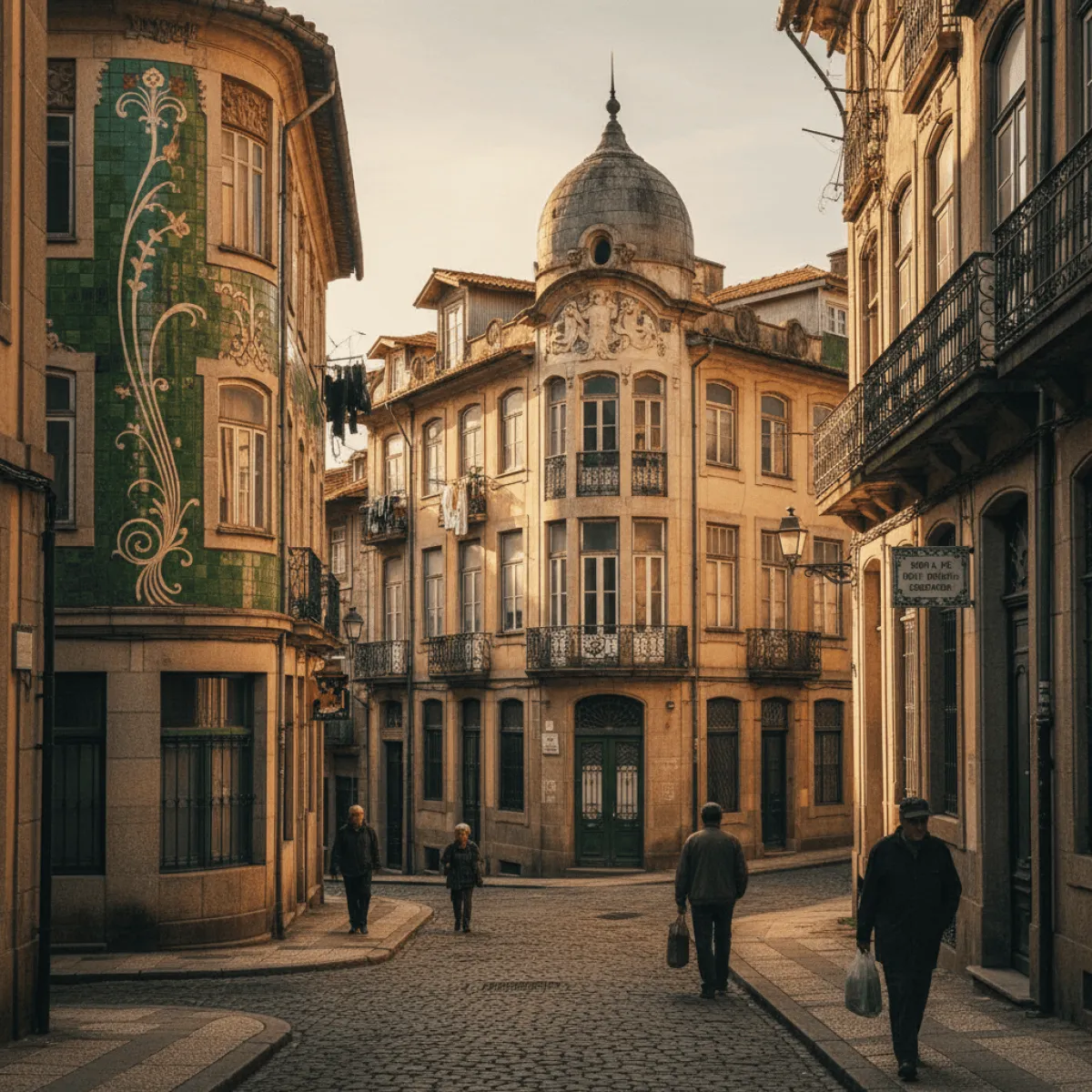
Every visitor to Porto takes the same photograph of Livraria Lello, queues for an hour to get in, and leaves convinced they've seen the city. I'll tell you the truth: Lello is pretty, but it's also a tourist trap with a paid ticket and a queue around the block. If you want to see the Porto nobody puts on Instagram, walk away from Clérigos for a few hours and look up. Above the azulejos, above the souvenir shop windows, at the curved facades, the iron balconies shaped like irises, the stained glass that looks like it was designed by someone with a fever. This is Porto's Art Nouveau, and it's hiding in plain sight.
The movement arrived in Porto around 1900, brought back by architects like José Marques da Silva and Francisco de Oliveira Ferreira, who'd been to Paris and returned with their heads full of Hector Guimard and Victor Horta. The problem is Porto never embraced the style the way Barcelona or Brussels did. Here it stayed in the details: a door, a balcony, a stained glass panel. So the game is different. We're not going to see whole buildings, we're going to hunt for fragments. And I promise, that's much more fun.
The one rule before you start: look up
People from Porto spend their lives looking down at Rua de Santa Catarina because the street is packed. You do the opposite. Most of Porto's Art Nouveau decoration sits on the first and second floors, above shops that have changed hands fifty times since 1910. Wear comfortable shoes, bring a water bottle, and ideally start around 9am, when the light is low and the relief on the facades catches a shadow. By midday, with the sun overhead, everything flattens out and you walk straight past it.
The route I'm proposing runs about 4 kilometres and takes three to four hours if you take your time, stop for coffee and stop for photos. It ends near the Jardins do Palácio de Cristal, where you can collapse under a magnolia tree and rest your feet while staring at the Douro. More on that in a minute.
Stop 1: Confeitaria do Bolhão and Rua Formosa
Start at Confeitaria do Bolhão, Rua Formosa 339. The shopfront dates to 1896, with original signage, dark wood, and stained glass that's still there out of sheer stubbornness. Go in, order a pão de Deus and a galão (around 3 euros for both) and eat at the counter like the people who actually work in this neighbourhood. Don't sit at the street terrace. That's the tourist option and it costs more.
Then walk down Rua Formosa towards Bolhão market. Look at numbers 266 and 274: doors with cast iron grilles drawing vegetal curves, classic French Art Nouveau. They could use a coat of paint, and that's precisely what makes them interesting. This is urban archaeology, not Disneyland.
Stop 2: Casa Oliva and Rua dos Clérigos
Cross towards Praça da Liberdade and head up Rua dos Clérigos. Before you reach the famous tower, stop at number 18: the old Casa Oliva, with a wrought iron gate that's a small symphony, and an upper facade nobody photographs because everyone is distracted shooting the tower. This is Porto tourism in miniature: the beautiful thing is always next to the obvious thing, and the crowd always picks the obvious thing.
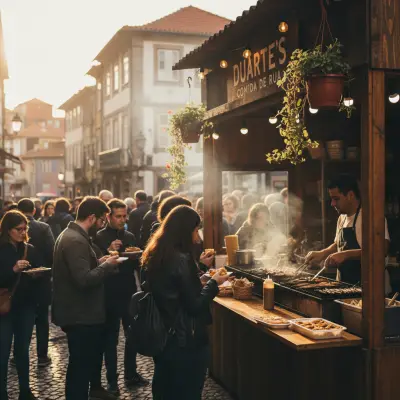
If you're hungry by this point and want a proper break, I recommend a small detour to Duarte's Comida de Rua. It's street food done well, no fuss, generous portions, and prices that still make sense in this city that's getting as expensive as Lisbon. Order a sandwich, sit on the terrace, and pick the route back up.
Stop 3: Rua de Cândido dos Reis and the missed facades
Head up Rua de Cândido dos Reis. This street is one of the best in Porto for Art Nouveau details, and almost nobody knows it because it sits outside the standard tourist loop. Look at the balconies at numbers 110 and 122, with iron curves that coil like vine tendrils. There are also original stained glass panels in some of the entrance skylights, but you have to peer through the half-open gates to see them. The porters, if any are around, will usually let you have a look. People here don't mind your curiosity about their city, as long as you don't start flashing photos inside someone's hallway.
Stop 4: Casa do Ferreira das Tabuletas
Loop back towards Praça de Carlos Alberto and find, on Rua das Carmelitas, the famous Casa do Ferreira das Tabuletas, with allegorical tile panels from 1864. Technically it predates Art Nouveau, but it's exactly the kind of facade the movement inherited and pushed further: an obsession with surface, with decoration, with drawing. Sit on the bench across the street for a minute and absorb it. This is arguably the best facade in Porto that isn't São Bento station.
Stop 5: Galeria de Paris and Café Magestic, but don't go in
Continue to Rua Galeria de Paris. At night, this area is bars and tourists drinking watery sangria. In the morning it's quiet and you can actually see the facades. Further along, on Rua de Santa Catarina, you'll pass Café Magestic. I know what you're thinking: I'll go in and have an Art Nouveau coffee. Don't. The coffees are 5 euros, the service is rushed, and the experience doesn't deliver. Photograph the facade from outside, move on. Later, in a neighbourhood café, you can order an espresso for 80 cents and it'll taste better.
Stop 6: Down to Miragaia and the forgotten facades
This is the part of the route where most guidebooks give up, which is exactly why you'll like it. Walk down Rua dos Caldeireiros towards the river and the Miragaia neighbourhood. Among collapsing houses and buildings rebuilt as short-term rentals, there are at least a dozen facades with Art Nouveau elements: round oculi with floral grilles, balconies with peacock motifs, gates with whiplash curves. I'm not going to give you the numbers because the fun is finding them. Walk slowly, look up, and stop whenever something catches your eye.
If you make it down to the Alfândega area, detour onto Rua do Infante D. Henrique. There's a run of eclectic buildings here with Art Nouveau elements mixed into neoclassical bones, inheritance of the late 19th-century commercial bourgeoisie that built this part of the city. It's a strange cocktail but it works.
Stop 7: Finish at the Palácio de Cristal gardens
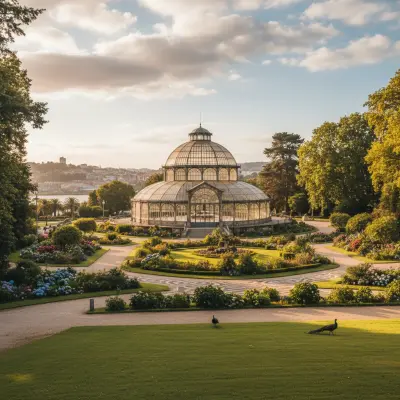
End at the Jardins do Palácio de Cristal. Free entry, open until sunset. The pavilion you see today isn't the original (that was demolished in 1951, one of the worst civic crimes Porto ever committed), but the gardens are still one of the best viewpoints over the Douro. Sit on a bench, open the water bottle, and tell me three hours of walking around Porto looking up didn't give you a completely different city from the one you saw yesterday.
Doing the route with a guide, if you prefer
If you'd rather do this with someone who knows the story behind every gate and can get you into buildings you couldn't enter on your own, it's worth considering the Porto Historic Centre Walking Tour with Living Tours. It isn't specifically an Art Nouveau tour, but the guide will adapt the route if you ask in advance, and there's always information a local guide has that a leaflet doesn't.
When to go and what to avoid
Porto is getting more crowded every year. In August, Rua de Santa Catarina is a slow-motion crush of people and the route loses its appeal. Go between October and May, ideally midweek. Avoid Easter, which is becoming a second high season, and avoid weekends from June to September. Early morning is always better than afternoon.
If you're in the north of Portugal and have time to look further afield, I'd recommend two easy detours. First, a day in Braga, with its baroque architecture and a university town few people expect. The Braga guide I wrote covers what you need. And if you happen to be there at the right time of year, Holy Week in Braga in 2026 is one of the most intense experiences you can have in Portugal. For more ideas, see also my piece on the best day trips from Porto.
What to bring and what to leave behind
- Comfortable shoes. Seriously. Porto has cobblestones and serious hills.
- A refillable water bottle. There are public fountains along the route.
- A camera with zoom, if you're a photographer. A phone covers most facades, but for second-floor details a zoom helps.
- Don't bring a big backpack or wheeled luggage. Nothing screams tourist louder than dragging a suitcase down Rua das Flores.
- A notebook, if you're the type. The route easily expands to twenty or thirty stops if you slow down.
The Porto worth seeing
Porto is in a complicated moment. It looks beautiful because it's been restored, but it's also losing the residents who gave it life. The Art Nouveau buildings I've described were mostly commissioned by a merchant bourgeoisie that no longer exists and designed by architects who knew they were making something unique. Today, many of those buildings are short-term rentals. It is what it is. The best we can do is look at them while they're still standing, understand why they were built, and tell other people to do the same. That's why I write these pieces.
Happy walking.