Porto Moniz: A Market Crawl Worth the Detour
Porto Moniz doesn't have a grand market hall, but it has cane honey dark as crude oil, limpets sizzling in cast-iron pans, and poncha beaten to order. Here's what to buy, what to taste, and what to leave on the shelf.
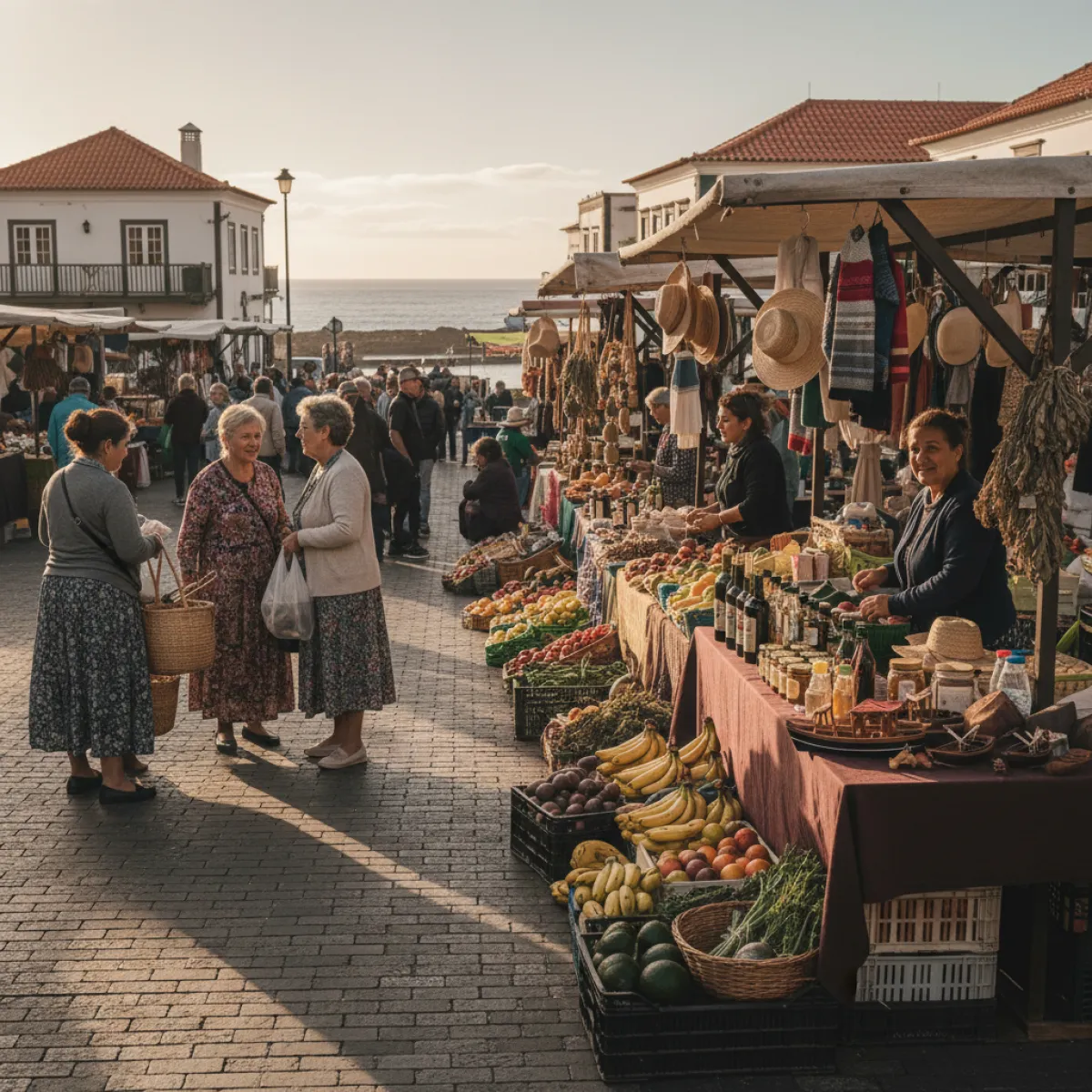
Most people come to Porto Moniz for the volcanic lava pools. They swim, take the photo, eat lunch somewhere forgettable, and drive back to Funchal. That's a waste. Because Porto Moniz, despite being small and on the far northwest tip of Madeira, is one of the best spots on the north coast for buying and tasting local products without the chaos of Funchal's Mercado dos Lavradores.
You won't find a grand covered market with numbered stalls here. What you'll find is better: a handful of small shops, local vendors, and a few essential stops where the product is fresh, the price is fair, and nobody's going to pressure you into buying a 200-euro piece of Madeira embroidery.
Start with bread, as you should
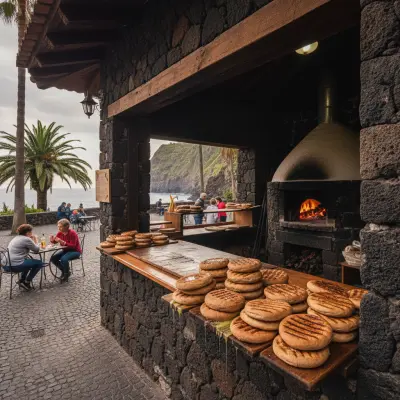
Any good day in Porto Moniz begins with bolo do caco. This sweet potato bread, baked on a stone slab, is one of the simplest and most perfect things in Madeiran food. Warm, slathered with garlic butter, it's the kind of breakfast that makes every Parisian croissant feel like a waste of carbs. You'll find it at virtually every restaurant and snack bar in town, but the trick is to order it fresh, first thing in the morning. By noon, many places are serving the leftovers.
Near Porto Moniz, the Rodripan bakery also deserves a detour. Beyond excellent bread, they make pastéis de nata and savoury pastries at prices that would make any Lisbon pastelaria weep. A few broas de mel, Madeira's famous honey cookies with cinnamon and nutmeg, are the kind of thing you buy to bring home and eat in the car before you get there.
Fruit and produce: what's worth your money
Madeira's north coast has a particular microclimate: wetter and greener than the south. That translates into fruit with sharper, more intense flavour. If you find a local stand or a regional products shop, look for:
- Anona (custard apple): Madeira's anona has protected designation of origin status. The flesh is creamy, sweet, slightly tart. If you've never tried it, imagine a cross between banana and pineapple, but better than both. Buy one that yields slightly to pressure. If it's rock hard, it needs a few days to ripen.
- Passion fruit: Madeiran passion fruit is smaller and more aromatic than Brazilian varieties. Eat it straight from the shell with a spoon. Or ask for fresh juice. Many restaurants in Porto Moniz will squeeze it for you.
- Madeira banana: Smaller, sweeter, with a completely different texture from supermarket bananas. The difference is real, not marketing.
What to skip? Fruit packed in wicker baskets with ribbon bows, sold as "typical gifts." Same fruit, double the price. Buy loose, directly from the producer when possible.
Cane honey and aguardente: Madeira's real gold
If there's one thing you should carry home from Porto Moniz in your suitcase, it's mel de cana, cane honey. Not to be confused with bee honey. Mel de cana is a thick, dark molasses made from sugarcane juice, and it's a fundamental ingredient in Madeiran sweets. They use it in bolo de mel (honey cake), in broas, and as a topping for desserts. A small bottle costs between 3 and 6 euros at regional product shops, and it lasts for months.
Then there's aguardente de cana, the base spirit of poncha. Madeiran aguardente is distilled from sugarcane juice, and it's completely different from Brazilian cachaça. Drier, rougher. Classic poncha mixes aguardente with bee honey and lemon juice, beaten vigorously with a mexelhote, that wooden tool that looks like a medieval torture device but actually produces one of the best drinks in the Atlantic.
In town, virtually any bar makes poncha. Order the regional version, with orange and passion fruit juice, and compare it to the traditional lemon one. The regional is smoother, perfect for anyone who finds the classic too aggressive. A glass runs between 2.50 and 4 euros, depending on the place.
What to skip: bottled poncha sold as souvenirs. It loses half its character. Poncha should be drunk fresh, made to order.
Fish and shellfish: what to order, what to ignore
Porto Moniz has a fishing tradition that dates back to the town's founding. The restaurants near the natural pools serve fresh fish, but you need to know what to choose.
Grilled limpets are mandatory. These small shellfish, grilled with garlic butter and lemon, are a classic of the Madeiran coast. Served in a cast-iron pan, they sizzle when they arrive at your table. Order them as a starter and don't share with anyone.
Espada preta (black scabbardfish) is Madeira's signature fish. It looks like an alien, with enormous eyes and a long dark body, but the flavour is delicate and the texture firm. Traditionally served with fried banana, a combination that sounds wrong until you try it. After that, it makes all the sense in the world.
What to avoid: generic "grilled fish" dishes with no specification. If the waiter can't tell you what fish it is, it was probably frozen. Always ask what's fresh that day.
Crafts and souvenirs: sorting the good from the junk
This is where most tourists waste their money. Porto Moniz has a few souvenir shops, and most of them sell the same things you'll find at any tourist spot in Madeira: fridge magnets, mini-bottles of dubious Madeira wine, and embroidery that may or may not be genuine.
What's actually worth buying:
- Regional liqueurs: Passion fruit, sour cherry, or chestnut liqueur. The artisanal versions, sold in simple bottles without elaborate labels, are generally better and cheaper than branded ones. Taste before you buy. Most vendors will let you.
- Cane honey and broas de mel: Already mentioned, but worth repeating. They're light, travel well, and everyone likes them.
- Madeira wine: But only if you know what you're buying. A good 5-year Madeira from a house like Blandy's or Henriques & Henriques is a serious gift. A bottle with no grape variety or age indication, sold for 5 euros in a souvenir shop, is one to leave on the shelf.
If Madeiran crafts genuinely interest you, consider the detour to Santana, where the tradition runs deeper. Our guide to Santana's crafts gives you the right coordinates for purchases with actual substance.
The route: how to plan your day
Porto Moniz works best as part of a full day on the north coast. The drive from Funchal, via the ER101 or the ER104 through São Vicente, is one of Madeira's most beautiful, with tunnels carved through rock and ocean views that justify every hairpin turn.
My advice: leave Funchal early. Arrive in Porto Moniz around 9:30am, before the tourist coaches. Start with bolo do caco and a coffee. Wander the town, browse the regional product shops. Have fish for lunch near the pools. After lunch, if the weather cooperates, the volcanic lava pools are worth the swim. Check hours and prices locally.
If you still have energy, Porto Moniz is also the starting point for more intense experiences. Canyoning at Ribeira da Laje is one of the best ways to explore the north coast's valleys, through waterfalls and volcanic rock.
On the drive back, or the following day, it's worth exploring the levada walks near Funchal, the irrigation channels turned hiking trails that are one of the island's finest experiences.
What to bring home (practical summary)
- Cane honey: 3-6€ per bottle
- Broas de mel (honey cookies): 2-4€ per pack
- Artisanal passion fruit liqueur: 5-10€
- Fresh anona (if your flight is short): 2-4€/kg
- Madeira wine from a reputable house: 10-25€ for a 5-year
And if you want to extend your north coast exploration, Santana deserves at least 24 hours. It's a different Madeira up there: more rural, slower-paced, with a personality entirely unlike the south.
Porto Moniz may be small, but it compensates with substance. Don't come looking for an Instagrammable market hall. Come looking for limpets sizzling in a cast-iron pan, poncha beaten to order in front of you, and cane honey so dark it looks like edible crude oil. That's what's worth the drive.