Porto in Spring: A Route Through Flowers and Gardens
Porto has been the City of Camellias since 1880, with 375 varieties scattered across its gardens. In spring, from peony bunches at the Bolhão market to centuries-old wisteria at Virtudes, the city becomes an open-air botanical route, nearly all of it free.
Porto is, officially, the City of Camellias. This isn't a tourism tagline: since 1880, the city has cultivated a serious obsession with this Asian flower, with around 375 varieties spread across parks, estates and municipal gardens. In spring, when the camellias are on their way out and roses, wisteria and azaleas take over, Porto becomes an open-air botanical route. And the best part? Most of it is free.
This isn't a guide for people who want to photograph flowers and move on. It's for anyone who wants to understand how green spaces define this city as much as granite and azulejos. For anyone who wants to lose a morning at a market choosing bunches of peonies, have lunch in a garden overlooking the Douro, and still have time for a detour to a park where nobody goes.
Mercado do Bolhão: where spring is sold by the kilo
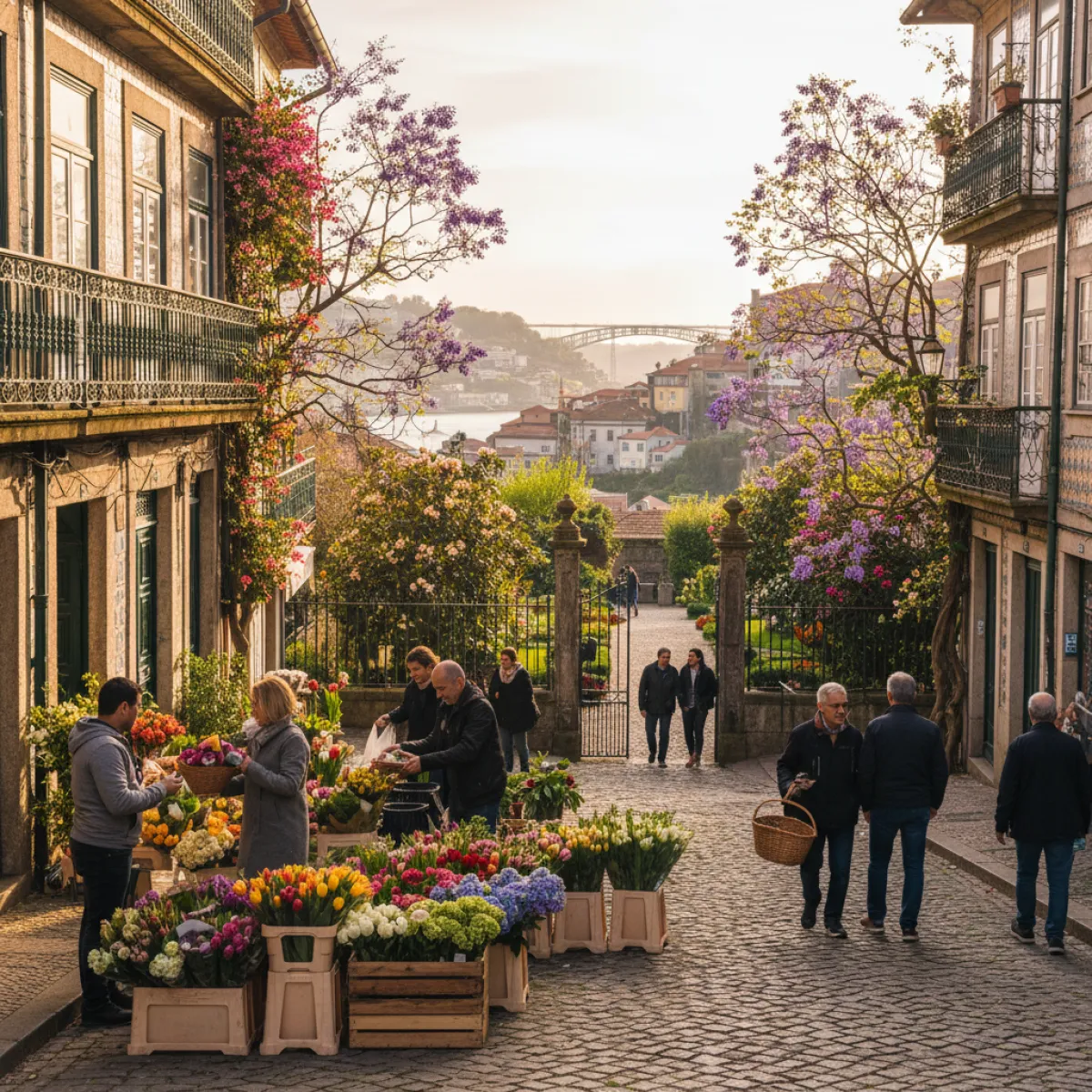
Any flower route in Porto starts at Mercado do Bolhão, not because it's the prettiest (though the recent renovation did it favours), but because it's the most honest. The flower sellers at Bolhão sell flowers the way the fishmongers sell fish: with opinions, with volume, and with zero patience for indecision.
In spring, the stalls fill with peonies, lilies, carnations and mixed bunches that cost a fraction of what you'd pay at a street florist. Look for Rosa Maria, who's been there for over forty years and will tell you exactly what lasts and what doesn't in the heat. Arrive early, before 10am, when the selection is still complete and the market has that Saturday morning rhythm you can't manufacture.
The market is open Monday to Friday from 8am to 8pm and Saturdays from 8am to 6pm. Sundays it's closed. While you're there, grab something to eat upstairs, where food stalls serve honest lunches at market prices.
Porto Botanical Garden: the city's worst-kept secret
Most tourists who visit Porto have never heard of the Botanical Garden. It sits on the Campo Alegre Estate, near the university, and belongs to the Museum of Natural History and Science. Entry is free, which makes it baffling that it isn't always packed.
The garden is divided into three distinct zones: the Rose Garden, the J Letters Garden and the Fish Garden, separated by camellia hedges that are among the oldest in Portugal. In spring, the Rose Garden is the obvious highlight, but the real pleasure is in getting lost along paths through centennial trees and exotic species that seem to have been left there by a Victorian collector.
It's open Tuesday to Sunday, 10am to 1pm and 2pm to 6pm (last entry at 5:30pm). Closed on Mondays. Bring a book and coffee in a thermos. There's no café on site, so plan accordingly.
Jardins do Palácio de Cristal: Porto's green terrace
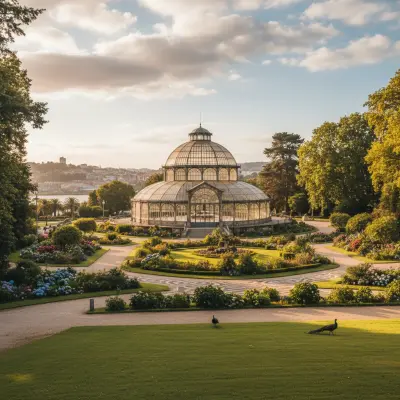
If the Botanical Garden is the secret, Jardins do Palácio de Cristal is the main stage. And rightly so. Few urban gardens in Europe offer a view like this: the Douro winding below, Serra do Pilar across the river, the rooftops of Foz in the distance. In spring, add roses in bloom, lavender beds, late camellias and peacocks strolling among visitors as if they were the actual owners.
The gardens are free and open year-round. My recommendation: enter through the main entrance on Rua de Entre-Quintas, do the full circuit through the themed gardens (including the Aromatic Garden, which in spring smells of rosemary and thyme), and finish at the viewpoint near the Almeida Garrett Municipal Library.
For lunch, head down to the centre and stop by Duarte's Comida de Rua, which sorts out hunger with honest food and zero pretension. It's the kind of place where you eat standing up or leaning against a wall, and nobody complains.
Timing tip
If you want the gardens without crowds, go on a Tuesday or Wednesday morning. On weekends, especially with sunshine, it fills up. It's not unpleasant, but you lose that feeling of having Porto to yourself.
Serralves Park: the formal garden worth the ticket
Serralves is better known for its contemporary art museum, but the 18-hectare park is, on its own, reason enough to visit. The formal garden, designed between 1932 and 1940 by French landscape architect Jacques Gréber, is a masterpiece of symmetry and restraint. In spring, the Rose Garden and the Camellia Garden are at their peak. There are gardenias, daffodils, and later in the season, hydrangeas beginning to show.
The park contains over 8,000 specimens of woody plants, trails through woodland, a romantic lake and corners where you can sit for half an hour without seeing another person. The park-only ticket (without the museum) is more affordable, but check current prices on the official website before going, as they've been changing.
To get there, bus 203 from Boavista drops you at the door. By car, there's parking on site, but weekends can be tricky.
Parque das Virtudes: wisteria and a hidden viewpoint
This is the park that locals keep for themselves. It sits in the Virtudes neighbourhood, between the historic centre and Miragaia, and has one of the oldest wisteria plants in Europe, a centuries-old specimen that in spring transforms the entire park into a cascade of violet. Timing is everything: the wisteria blooms for only a few weeks, usually between mid-March and mid-April. If you hit it right, it's spectacular. If you miss it, the park is still worth it for the Douro views and the terraced levels that descend towards the river.
Entry is free. There's no café, no toilets, nothing beyond an extraordinary garden and a view that justifies everything. Bring a water bottle and a towel to sit on the grass.
Beyond the gardens: a full spring itinerary
A full day dedicated to flowers and gardens in Porto can follow this rhythm:
- 9am: Mercado do Bolhão. Buy flowers, eat a pastel de nata at the market, soak up the atmosphere.
- 10:30am: Botanical Garden. A calm hour-long stroll, no rush.
- 12pm: Lunch in the centre.
- 2pm: Jardins do Palácio de Cristal. Two hours with stops at the viewpoints.
- 4:30pm: Parque das Virtudes. Wisteria and views to close the day.
If you have more time, add Serralves the following morning.
For those who want to explore on foot
Porto's historic centre is made for walking, even if the hills test your patience. If you'd rather have historical context as you cover the streets, the Porto Historic Centre Walking Tour with Living Tours is a good way to connect the dots between gardens, churches and viewpoints.
Spring as an excuse to go further
Porto in spring is excellent, but the surrounding region deserves attention too. If Holy Week hasn't passed yet, Braga, an hour away by train, offers one of the most intense religious celebrations in the Iberian Peninsula. Our guide to Holy Week in Braga explains what to expect and how to plan.
And if Braga sparks your curiosity, it's worth giving the city more time. It's a place that has been reinventing itself without losing its character. Our full guide to Braga covers the essentials.
For other escapes from Porto, from the Douro Valley to Gerês, via Guimarães and Aveiro, we have a dedicated guide to day trips from Porto that can help fill an entire week.
Practical notes
Spring in Porto is unpredictable. You can have three days of sunshine followed by horizontal rain. Always bring a waterproof jacket and layers. Average temperatures between March and May range from 10°C to 20°C, but the wind along the river makes it feel colder.
Municipal gardens (Palácio de Cristal, Virtudes, Cidade) are all free. The Botanical Garden too. Serralves requires a ticket but is worth the investment. Bolhão is a market, so bring small change for the flower sellers, as not all accept cards.
For transport, Porto's Metro covers the centre and Boavista well. For Serralves, the bus is more practical. For everything else, walk. It's the best way to stumble on the surprises that make Porto what it is.