Portalegre Without the Filter: A Real Weekend
Portalegre doesn't appear on anyone's top ten, and that's exactly the point. The capital of Upper Alentejo has a tapestry museum unlike anything in the world, unfussy Alentejo cooking, and the Serra de São Mamede right next door. A weekend for two for under €250.
Let me be upfront: Portalegre is on nobody's list. It doesn't trend on Instagram, it doesn't have a world-famous pastry, and the last travel influencer who passed through was probably lost on the way to Marvão. That's precisely why it's worth your time.
The capital of Upper Alentejo is a city that works for the people who live there, not the people who visit. That means no menus translated into six languages, no souvenir shops hawking mass-produced ceramics, no "authentic experience" that's been focus-grouped into oblivion. What you get instead is a city with a genuinely fascinating textile heritage, a cathedral that deserves more than a drive-by photo, and a relationship with food that is entirely unperformative.
This is how to do a weekend in Portalegre properly. No traps, no clichés, no filter. If you want the full rundown on avoiding tourist traps in Portalegre, you're in the right place.
Friday Night: Arrive, Settle In
Portalegre is roughly two and a half hours from Lisbon via the A6 motorway and then the N18. Not far, but far enough that most people never bother, which, again, is a feature, not a bug. Public transport exists via Rede Expressos buses from Lisbon (check schedules locally; they shift with the seasons).
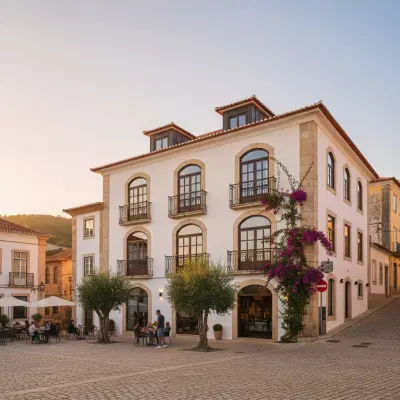
For accommodation, Rossio Hotel is the straightforward choice, and a good one. It sits right by the Rossio (the main square that functions as the city's living room), and offers the kind of practical comfort that doesn't try to dazzle you with design magazine aesthetics but works flawlessly where it counts. Clean room, good bed, perfect location for doing everything on foot.
On Friday night, don't overplan. Portalegre is not a nightlife city. Walk the Rossio, sit at a café terrace, order a glass of Alentejo white, yes, white; the region makes excellent whites that most people forget about, and go to bed early. Saturday is what matters.
Saturday Morning: The Old Town, Properly
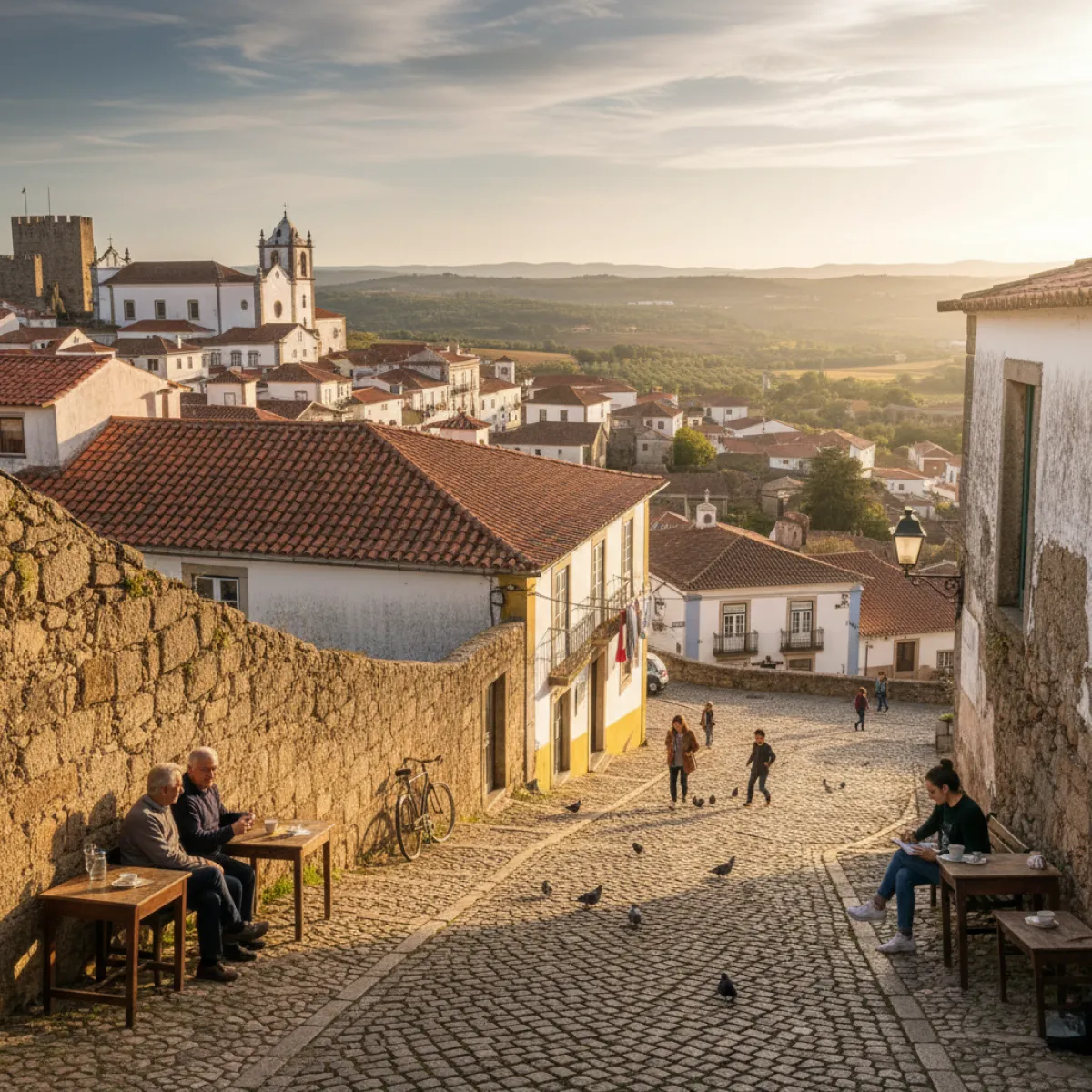
Get up early. Not out of discipline, but because early-morning Portalegre is a different city. The streets in the upper town are empty, the light cuts sideways through the narrow lanes, and the only sounds are shopkeepers unlocking their doors and the clatter of coffee cups being set on saucers.
Start at the Sé (Cathedral). It's 16th-century, Mannerist with Baroque touches inside, and has an altarpiece that genuinely rewards close looking. It's not the most spectacular cathedral in Portugal, Portalegre doesn't pretend to be what it isn't, but it has a sober dignity that works.
From there, walk uphill toward the Castle. Or rather, what remains of it. The medieval walls still trace the perimeter of the old town, and there are stretches where you walk right alongside them. The keep exists, but the real interest is the walk itself, the streets, the houses, the courtyards you glimpse through half-open doors. Our guide to Portalegre's walkable neighborhoods maps out the routes worth taking.
One essential stop: the Museu da Tapeçaria de Portalegre, Guy Fino. This is not a quaint regional museum. It's genuinely extraordinary. Portalegre tapestries use a unique stitch technique, found nowhere else in the world, that allows the reproduction of paintings with a fidelity no other tapestry tradition can match. The collection includes pieces based on works by major Portuguese artists like Almada Negreiros, Vieira da Silva, and Júlio Pomar. The museum is housed in the former Castelo Branco Palace, which is handsome in its own right. Budget at least an hour. Entry is around €3-4 (check locally for current pricing).
Saturday Lunch: Eat Like You Live Here
This is where Portalegre shines without trying. Upper Alentejo cuisine is robust, direct, and built to feed people who work, not to be photographed. We're talking lamb stews, migas with pork, tomato soup with a poached egg dropped in, açordas that taste like the earth they came from.
What to look for: restaurants where local workers eat lunch. Daily menus running €8-12, including soup, main course, drink, and coffee. The food isn't refined, it's honest. And that honesty, in a country where too many tourist-facing restaurants serve mediocre food at inflated prices, is worth its weight in gold. For the specific names and dishes, our guide to where locals actually eat in Portalegre has you covered.
Two things to keep in mind: the Alentejo eats lunch early (noon to one is peak) and portions are generous. Don't order a starter and a main unless you have a farmhand's appetite. The soup is almost always excellent and is enough to begin with.
Saturday Afternoon: The Serra and Some Perspective
After lunch, and after a strong coffee to counteract the stew effect, leave the city. The Serra de São Mamede is right there, and it's the highest point in southern Portugal. You don't need to be a mountaineer: there are accessible trails offering views across the Alentejo plain all the way to Spain.
The São Mamede Natural Park is one of the country's best-kept secrets for biodiversity. Bonelli's eagles, griffon vultures, red deer, all present in a mountain range most Portuguese can't even place on a map. Trails are reasonably well-marked, but bring the park map (available online or at the tourist office). The Pico de São Mamede at 1,025 meters is reachable on foot and the panorama from the top is staggering.
If you'd rather something less physical, the alternative is Marvão. Yes, Marvão is touristy. Yes, everyone's heard of it. But there's a reason: it's a medieval village perched on top of a granite cliff that looks like it was placed there by a set designer with a flair for drama. It's about 25 minutes by car from Portalegre. Go in the late afternoon, when the tour buses have left. The castle is free to enter and the sunset views justify everything.
Saturday Night: No Pressure
Return to Portalegre for dinner. Dinner in the Alentejo is lighter than lunch, or should be, given what you ate at noon. A soup, some petiscos (small plates), Nisa cheese (which is DOP-certified and extraordinary, a sheep's milk cheese curdled with thistle, with a semi-soft paste and a flavour that swings between sharp and buttery), regional cured meats, Alentejo bread.
Wine, obviously. We're in the Alentejo. Order regional and ask the waiter for a recommendation. North Alentejo wines are different from Central Alentejo, they tend to be fresher, with more acidity, thanks to the altitude from the serra. They're not the full-bodied blockbusters most people associate with the region. They're more elegant. Try them.
After dinner, a night walk through the old town. The lit streets, the quiet, the feeling of being in a city that isn't trying to sell you anything. It's rare, and it's valuable.
Sunday Morning: What You Missed
Sunday is for whatever you didn't get to. Some suggestions:
- Museu Municipal, housed in the former Seminary, it holds a collection of sacred art and regional archaeology that's surprisingly strong. Check opening hours locally.
- Casa-Museu José Régio, the poet and writer lived in Portalegre for decades, and his house is preserved with his personal collection of popular sacred art. It's an intimate, unusual visit unlike any conventional museum.
- Municipal Market, if it's a Sunday morning and the market is open (check locally), it's worth seeing what the region produces. Cheese, cured meats, preserves, serra honey.
Before You Leave: What to Take Home
Portalegre doesn't have a souvenir shop in the classic sense, and that's fine. What's actually worth taking:
- Nisa cheese, buy it in Portalegre directly or at a regional cheese shop. It's one of Portugal's best cheeses and costs a fraction of what you'd pay in Lisbon.
- Alentejo cured meats, paio, chouriço, farinheira. Buy at the market or a local butcher.
- North Alentejo wine, bring a bottle or two from local producers. Ask for recommendations wherever you have dinner.
The Practical Essentials
Getting there: By car, A6 to Estremoz, then N18 to Portalegre (about 2h30 from Lisbon). By public transport, Rede Expressos operates direct buses (check their website for current schedules and prices).
When to go: Spring (April-May) and Autumn (September-October) are ideal. Alentejo summers are brutal, we're talking 40°C regularly. Winter is cold by southern Portuguese standards (the serra makes a difference), but has its own appeal.
What it costs: Portalegre is affordable. Full lunch for €8-12, dinner for €15-20, accommodation from €50-80 per night in the centre. A weekend for two is doable for under €250 all-in.
What not to do: Don't just go to Marvão. Marvão is spectacular, but using Portalegre only as a base to visit Marvão is like going to Lyon just to eat at the airport. The city deserves its own time.
Portalegre doesn't need you to tell it it's special. It works, it feeds you well, it has real history, and it asks for nothing in return. In a country increasingly formatted for tourism, that's rare. Enjoy it while it lasts.