Portalegre Museums: Which Are Worth Your Time
The Guy Fino Tapestry Museum alone justifies the drive to Portalegre, but the city has more to offer, and one museum you can skip without guilt. An honest guide to which collections are worth your time in the Upper Alentejo.
Portalegre has more museums per capita than most Portuguese cities twice its size. That should be good news, except not all of them deserve your afternoon. Some are genuinely extraordinary, the kind of cultural experience that justifies the drive into the Upper Alentejo on its own. Others are the sort of municipal collections you enter out of politeness and leave twelve minutes later thinking about lunch.
After several visits, I've learned to tell them apart. Here's the honest verdict.
The Tapestry Museum Guy Fino: Go Here First, Go Here Always
If you only have time for one museum in Portalegre, there's no debate. The Museu da Tapeçaria de Portalegre, Guy Fino is the reason this city appears on any serious cultural itinerary. Housed in the former Palácio Castelo Branco, the building alone is worth the admission, but what's inside is something else entirely.
Portalegre tapestries use a technique that's unique in the world. I'm not exaggerating, this isn't tourist marketing. The Portalegre stitch allows the reproduction of paintings with a fidelity no other tapestry method can achieve. Each piece can take months or years to complete. When you stand in front of a tapestry based on a painting by Vieira da Silva or Júlio Pomar, your first instinct is to think you're looking at the painting itself. Only when you step closer and see the wool's texture does your brain process what you're actually seeing.
The museum is well laid out: you start with the history of the manufactory, move through production techniques, and end in the rooms with the large-format pieces. There are works based on artists like Almada Negreiros, Paula Rego, and Maria Helena Vieira da Silva. The room dedicated to the latter, with those geometric compositions translated into wool, is probably the highlight.
Allow at least ninety minutes. Most people underestimate the time needed and end up rushing through the final rooms, which is a mistake. Check hours and prices locally before visiting, they tend to vary seasonally.
Practical tip
Go in the morning. The natural light in the rooms is better and there are fewer people. Early afternoon, especially on weekends, the organized groups show up and you lose the chance to stand alone in front of the larger pieces.
Casa-Museu José Régio: Small, Strange, Fascinating
José Régio lived in Portalegre for decades while teaching at the local secondary school. The house where he lived is now a museum, and what you find inside is, at the very least, unexpected.
Régio was a poet, but he was also an obsessive collector of popular religious art. The house is filled with crucifixes, hundreds of them, of every shape, size, and era. Christs in wood, clay, metal. Some are sophisticated pieces, others are naive popular works that are disturbingly expressive. The cumulative effect is somewhere between an art gallery and a cabinet of curiosities.
It's not a museum for everyone. If religious art doesn't speak to you, it may feel repetitive. But if you have a sensibility for the strange and the obsessive, for understanding what drives a man to spend decades collecting representations of the same subject, it's a one-of-a-kind experience. The house maintains its original layout, with Régio's furniture and personal belongings, giving it an intimacy that larger museums can never achieve.
The visit takes about forty minutes. It's in the historic center, so it fits easily into a walking tour of Portalegre's neighborhoods.
Museu Robinson: The Industrial Surprise
This is the museum most people don't expect to find in Portalegre, which is perhaps why it works so well. The Museu Robinson occupies the former Robinson Bros. factory, a cork company founded by a British family in the 19th century. The story of how an English family ended up setting up an industrial operation in the Upper Alentejo is, in itself, a plot worth telling.
The space is large, we're talking about a real factory, not a room with informational panels. There's original machinery, reconstruction of production processes, and a well-crafted narrative about the impact this industry had on the city. Portalegre was, for decades, a factory town, cork, woolen textiles, tapestries, and this museum is the best place to understand that history.
The industrial building itself has a raw beauty that contrasts with the palaces in the center. If you like industrial archaeology or converted spaces, it's worth your time. If economic history bores you deeply, you might prefer to invest that time elsewhere.
I rarely run into tourists here, which is part of the charm. Admission is affordable, check the current price on site.
The Municipal Museum: You Can Skip This One
Now the less kind part. The Museu Municipal de Portalegre, housed in the former Diocesan Seminary, has a collection spanning sacred art, archaeology, and painting. In theory, it complements the other museums. In practice, it feels like a collection in search of a narrative.
There are interesting pieces, some quality religious statuary, local ceramics, but the museography doesn't help. The rooms follow one another without a clear thread, and the signage is minimal. If you've already visited the Casa-Museu José Régio for sacred art and the Tapestry Museum for cultural identity, the Municipal adds little. Unless you have a specific interest in regional archaeology or it's raining and you need to kill an hour, I'd say spend that time exploring the city on foot instead, or finding where locals actually eat in Portalegre.
It's not a bad museum. It's just redundant when the others are so much better.
The Cathedral: Not a Museum, But Worth the Note
The Sé de Portalegre doesn't charge admission and doesn't present itself as a museum, but it has more art inside than some museums I've visited in other Alentejo towns. The 18th-century azulejo panels and the Mannerist altarpiece deserve attention. The facade is sober, almost austere, but the interior surprises.
Walk in, sit on a bench, look up. That's ten minutes well spent between museums. And it's right in the center, so there's no excuse not to peek inside.
How to Organize Your Day
Portalegre isn't big. All these stops are within walking distance of each other, and a well-organized day lets you cover the three museums that matter with time to eat lunch and wander without rushing.
My suggestion: start with the Tapestry Museum in the early morning when it's quieter. Then walk through the center to the Casa-Museu José Régio. Have lunch, there are solid options if you know where to look, and the Alentejo food around here stays honest. In the afternoon, if you still have energy, stop by the Museu Robinson.
If you're staying more than a day, you can combine the museums with a full weekend in Portalegre that covers the best of what exists beyond museum walls, and there's plenty.
Where to stay
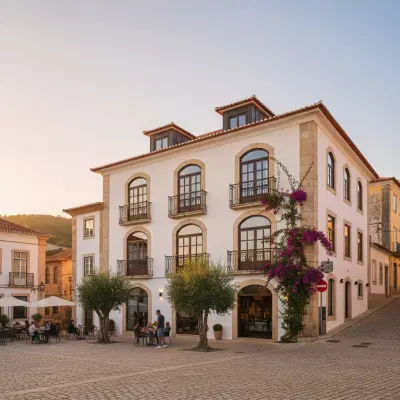
For a base, Rossio Hotel is a solid option. Central location, which means you're on foot from everything that matters. In a city this size, location makes all the difference, you don't want to depend on the car for dinner after a day of museums.
Getting there
Portalegre is about two and a half hours from Lisbon via the A6 and then the N18. There's no useful direct train, a car is practically required. Rede Expressos runs buses, but schedules are limited and not always convenient. If you're driving, parking in the center is generally easy outside market days.
The Final Verdict
Three museums are absolutely worth it: the Guy Fino Tapestry Museum (essential), the Casa-Museu José Régio (for those who appreciate the eccentric), and the Robinson (for anyone who values industrial history). The Municipal you can skip without guilt. And the Cathedral, which isn't a museum, is a ten-minute stop that complements everything.
Portalegre doesn't compete with Lisbon or Porto on museum numbers. It doesn't try to. What it does is offer three very distinct experiences, each with its own identity, in a city where you can walk from one end to the other in twenty minutes. That, combined with Alentejo cuisine and the Serra de São Mamede right at the doorstep, makes this a surprisingly complete cultural getaway.