Pinhão: The Architecture of the Discerning, Affordable Douro
Discover how to navigate Pinhão and the Douro Valley with a discerning, budget-conscious strategy. An expert guide to the Linha do Douro, authentic dining, and the granite architecture of Lamego.
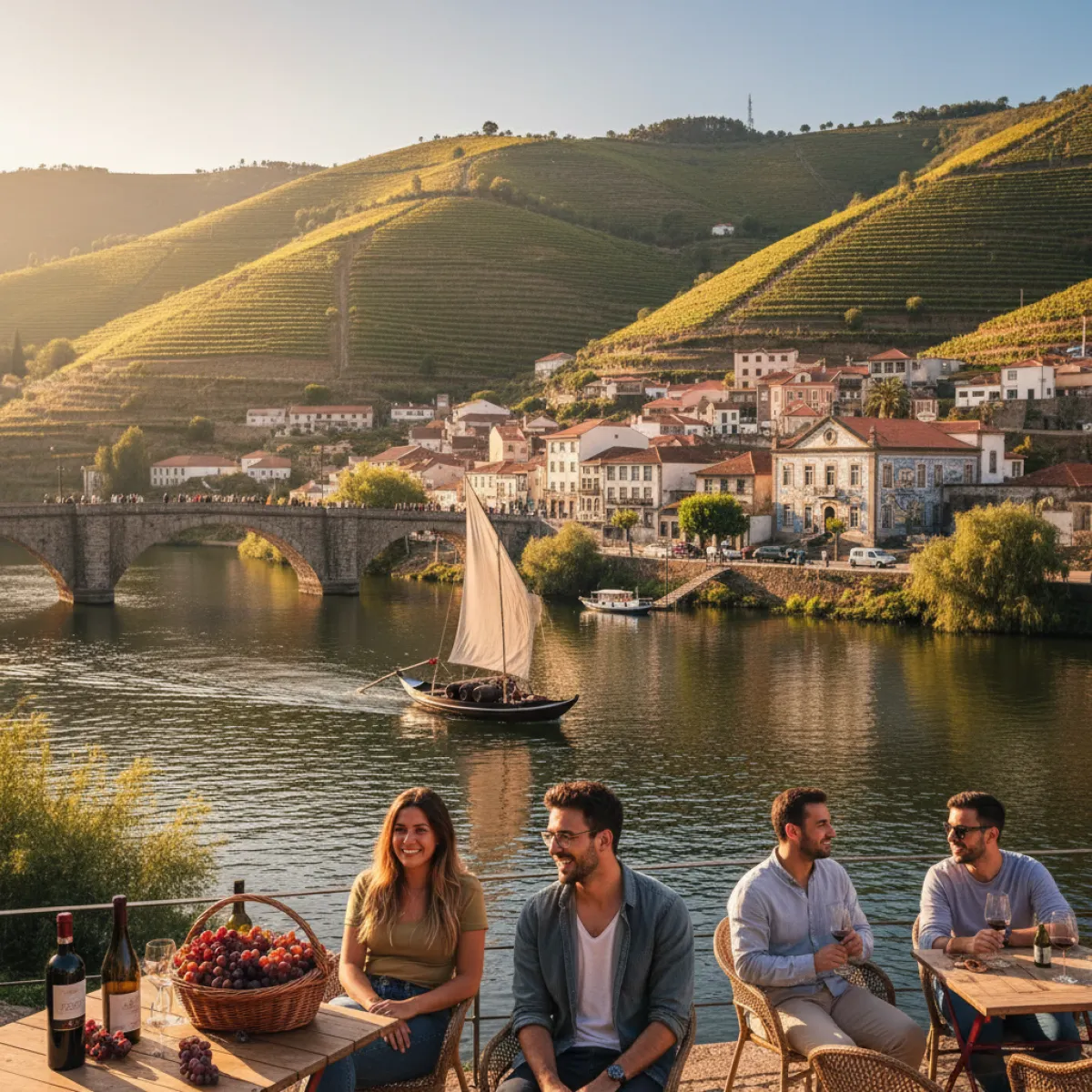
The Geometry of Access: Reaching the Heart of the Douro
Pinhão is not merely the geographic center of the Douro Demarcated Region; it is the point where the verticality of the slopes and the horizontality of the river meet with a clarity that borders on mathematical. For the traveler who prioritizes substance over spectacle, the approach to Pinhão should be executed with the same rigor a viticulturist applies to schist soil. Forget the two-hundred-euro private transfers from Porto. The true luxury of understanding the Douro lies in the Linha do Douro. For little more than ten euros, the train departing from Campanhã offers a lesson in engineering and landscaping that no motorway can replicate. It is an exercise in productive patience, where the riverbanks become so close you can almost touch the water from your carriage window.
The Station as a Manifesto
Upon arrival, the first essential stop, and entirely free of charge, is the railway station itself. The twenty-four azulejo tile panels by Jorge Colaço, dating back to 1937, are not mere decorations; they are an ethnographic document of the highest order. To observe these blue and white figures is to understand the harvest cycle before even ascending your first hillside. Here, you realize that the Douro was built by human muscle, stone by stone, in a constant struggle against gravity. For those traveling on a conscious budget, the station serves as the most relevant museum in town, offering historical context that many private estates charge dearly to share.
The Economy of Taste: Dining and Drinking with Discernment
In Pinhão, the tourist trap is easily identified: laminated menus with food photography and terraces promising panoramic views at Lisbon prices. The astute traveler seeks the tascas where vineyard workers and local residents take their meals. Look for the scent of woodsmoke and the sound of clay plates clattering. Order the house wine; in the Douro, 'vinho da casa' is frequently a nectar that in other European capitals would be served only under reservation. The goal here is the roasted veal or the salt cod with cornbread, dishes that sustain the body for the hikes to come.
For an experience that transcends simple consumption, turn away from the large tourist vessels that pollute the valley's silence with megaphones. Instead, seek to understand the mechanics of the river. One of the most authentic ways to interact with the region's living history is to join the Rabelo Boat Workshop: Learning Ancient Navigation on the Douro. Here, your relationship with the water shifts from passive to technical. Learning how these flat-bottomed boats navigated the Douro's treacherous rapids before the dams were built is fundamental to appreciating the scale of human effort that defined this territory.
The Topography of Rest: Where to Stay and How to Move
Accommodation in Pinhão can be prohibitive if one's focus remains exclusively on luxury quintas. However, high-quality local guesthouses, focused on simplicity and clean architectural lines, offer a superior alternative. The strategy is to stay in the town center, allowing for pedestrian mobility. Walking across the iron bridge designed by Eiffel’s studio is a sensory experience: the sound of metal underfoot and the unobstructed view over the mouth of the Pinhão River cost nothing and provide the best photographic perspective of the village.
Expanding the Horizon: The Lamego Connection
While Pinhão is the viticultural epicenter, a total understanding of this region requires a foray into the highlands. A short distance away, Lamego offers a counterpoint of granite and monumentality. For those seeking a break from the valley's intense heat, the guide on The Inland Coast: River Escapes and the Luxury of Stillness in Lamego reveals how water and shade define a different kind of Northern Portuguese comfort. It is a necessary transition: from the working vineyards to the historic Douro.
If your trip occurs outside the peak season, the experience becomes even more raw and authentic. Lamego assumes an almost monastic aura worth exploring, detailed in Lamego in Winter: The Geometry of Comfort and the Silence of Granite. The silence of the stones and the dry mountain cold are the perfect antidote to summer's tourist saturation. And to complete this cultural immersion, one cannot ignore the region's auditory dimension. Fado here is not that of Lisbon; it is an expression of northern sonic identity, as explored in The Resonance of Granite: Fado and the Sonic Identity of Lamego. These elements, when combined, form an itinerary of low cost but extremely high cultural density.
Practical Advice for the Independent Traveler
- Transport: Use the CP (Comboios de Portugal) app to buy tickets in advance. The regional train is slower but allows you to open the windows, essential for breathing in the scent of the vines.
- Timing: Avoid August weekends. Late September (harvest) is fascinating but crowded; late May offers the best light and milder temperatures for walking.
- Budget: Set aside €60 to €80 per day per person. This covers a high-quality meal, train transport, a visit to a family-run estate, and a coffee at the station.
- What to order: Ask for a Porto Tónico in the late afternoon. It is the democratic drink of the Douro, refreshing, unpretentious, and affordable.
Pinhão does not demand a deep bank account, but rather a keen eye. The beauty here lies in the repetition of the vines, the rigor of the terraces, and the hospitality that isn't bought with vouchers, but with genuine conversation at a tasca counter.
