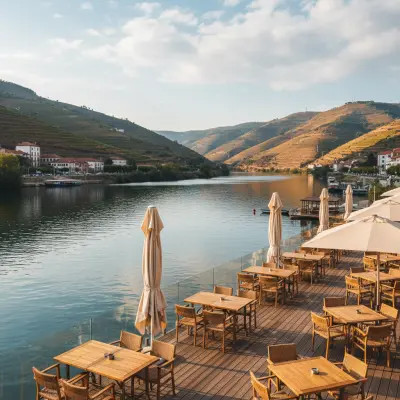
Pinhão River Beaches: Where to Escape the Crowds
Pinhão has no sea, it has something better: river beaches of jade-green water between vineyard terraces. The trick is knowing the right hours and the right coves to dodge the August hordes.
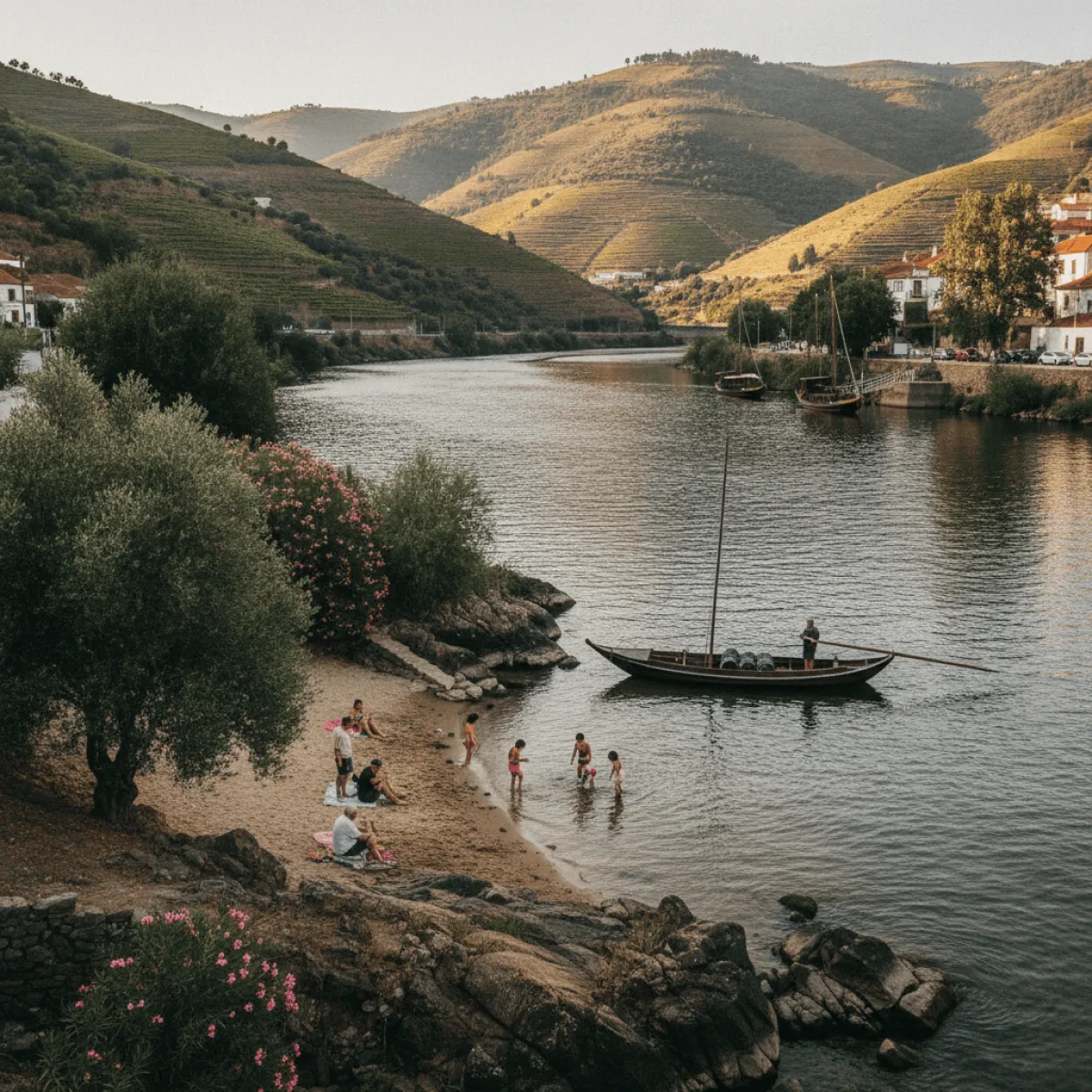
Let's clear something up right away: if you came to Pinhão looking for white sand and surf, you came to the wrong place. The ocean is more than an hour and a half away by car, on the other side of the mountains. What Pinhão has is better, in my opinion, and almost nobody figures that out in time. It has the Douro rolling slowly between terraced vineyards, jade-green water in summer, and a handful of river beaches where you can throw yourself into the water with a view that would cost thousands of euros if it were a hotel suite.
The problem, of course, is the usual one in the Douro: everyone discovered this place at the same time. In August, the Pinhão quay looks like an airport queue and the cruise boats dump hundreds of people in matching shirts. But the truth is you only need to walk five minutes in the right direction, or show up at the right hour, to have half the river to yourself. That's what we're here to talk about.
The beach right under your nose
Let's start with the obvious, because the obvious here is genuinely good. The Praia Fluvial do Pinhão sits a few minutes' walk from the centre, right on the river, and it's exactly what you need on a Trás-os-Montes summer day when the thermometer has no shame and reads 38 degrees in the shade. There's a grassy area, relatively calm water, and that postcard view: the vineyards climbing the slope on the far bank, a train passing high above now and then.
My advice? Get there early. And when I say early, I mean before ten in the morning. From midday onward in July and August, the grass fills up with families, towels, and speakers nobody asked for. But at nine in the morning the water is cool, there's real shade under the trees, and the only sound is a fisherman reeling in his line. Bring your own snack, because the cafés nearby fill up and slow down. A hunk of bread with mountain cheese and a Douro peach beat any rushed toastie.
The other golden window is late afternoon. Around six or seven, the daytime crowd has packed up for dinner and the sun hits the water sideways, gold, without burning. That's when Pinhão turns genuinely beautiful. Stay until the sun drops behind the terraces, then go eat.
The trick: head upriver to lose the crowds
Here's the tip that separates people who visit Pinhão from people who know it. The crowd always clusters in the same spot, by the quay and the main beach. But the Douro has dozens of nooks up and downstream where the water is just as good and the people are zero.
The most beautiful way to reach those spots is by water. The Douro river cruise heading towards Tua shows you exactly what I mean: as you move away from Pinhão, the banks turn wilder, there are little coves, and you start to see where the cleanest water is. Even if you take the cruise just for the ride, you'll come away with a mental map of places to explore later. The traditional boats, converted rabelos, run trips of one to two hours; check schedules and prices locally, because they vary a lot with the season and operator.
If you'd rather be in control, rent a small motorboat for short hops or a kayak. Paddling upstream first thing in the morning, when the water is flat as glass and there's no wake from the tour boats, is one of the best things you can do in the Douro. You pull up at a sandbank only you found, dive in, and head back for lunch. Check locally for conditions and rental points, because what's on offer changes from year to year.
Unwritten rules of swimming in the Douro
- The Douro is a river of dams, not a mountain lake. The current looks like nothing but levels can shift when the floodgates work. Don't stray too far from the bank and keep an eye on the kids.
- The water is colder than it looks, especially a few metres down. Get in slowly.
- There's tour-boat traffic during the day. Swim near the bank and in marked areas, not in the middle of the channel.
- Bring water shoes. The banks have stone and sometimes mud, and nothing ruins a swim faster than a cut foot.
When the heat is too much, climb the hills
Some days even the Douro's water isn't enough. Pinhão sits in a kind of funnel between slopes and the heat piles up in an almost physical way. On those days the locals' secret is simple: gain altitude. Climb the N222, the road out of Pinhão that has been voted one of the best in the world, and with every bend you feel the air change. Higher up, there's always a breeze.
It's also the road to a side of the Douro almost nobody knows. Head up towards Sabrosa and its quieter estates, where mass tourism hasn't arrived and you can taste wine without a queue. This is Magellan's birthplace and it has a calm that Pinhão loses in August. If you land there in June, you'll catch the Santos Populares in Sabrosa, with grilled sardines, basil plants, and an old-fashioned street party worth more than any beach.
The station worth a stop
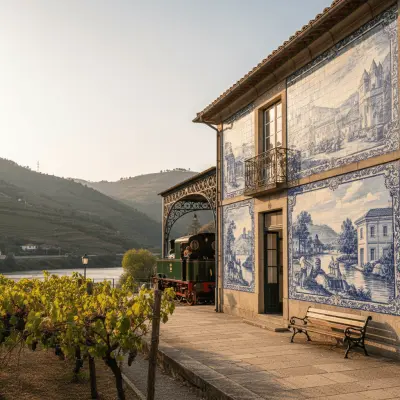
Before or after your swim, set aside fifteen minutes for something that has nothing to do with water but defines Pinhão: the Estação Ferroviária do Pinhão. It's one of the most photographed buildings in the Douro, and rightly so. The walls are lined with early-twentieth-century tile panels telling the story of the harvest and the wine landscape. Entry is free, it's always open because it's a working station, and it gives you cool shade in the middle of the day.
My favourite plan: swim in the morning, lunch, and in the dead heat of the afternoon, when the sun is cruel, go look at the tiles. Then catch the Douro line train just one or two stops, towards Tua or Pocinho, to see the landscape from water level. It's cheap, it's slow, and it's probably the best train ride you can take in Portugal. Tickets at the counter, change in coins, check the timetable because there are only a few connections a day.
Where to eat without falling into the tourist trap
By the quay, the restaurants live off people who pass through once and never return. I'm not saying they're bad, but you pay for the view and the location. The rule is the usual one: walk a few blocks away from the obvious terraces and ask where the estate workers have lunch.
As for what to order, you're deep in the Douro, so think country food: grilled Maronesa veal posta over coals, with smashed potatoes and greens; a meat-stuffed bola for the beach picnic; and, in season, regional cherries and peaches that taste like something else entirely here. To go with it, a young, chilled Douro red, or for a beach lunch, a very cold beer and nothing more. Save the Port for the end of the day, at a viewpoint, slowly.
A picnic done properly
If there's a place made for a river-beach picnic, it's this one. Before heading to the water, stop at a grocer or bakery in the centre and build the basket: fresh bread, Serra cheese, cured ham, olives, seasonal fruit, and water, lots of water. It costs a fraction of a restaurant lunch and you eat with your feet in the grass and the Douro in front of you. Hard to beat.
The secret calendar: when to go
The right question isn't where, it's when. And here's my opinion without the hedging:
- June: the best time, no hesitation. The water is already pleasant, the heat isn't unbearable yet, and the August hordes are months away. It's also festival season in the deep Douro.
- July and August: serious heat and serious crowds. It works if you respect the hours (early morning, late afternoon) and avoid the main beach. Skip midday and weekends.
- September: the connoisseur's secret. The water is still warm from summer, it's harvest time, the slopes start to turn colour, and the beach tourists have gone back to school. Maybe the best combination of all.
If you come in spring and the water is still too cold for swimming, no harm done. That's when the Trás-os-Montes interior blooms, and it's worth pairing the Douro with a side trip to see Torre de Moncorvo in bloom, with its gardens and almond trees, just over an hour's drive away.
Getting there and getting around
Pinhão is one of the few remote spots in Portugal that's best done by train. The Douro line links Porto to Pinhão in about two hours and is a journey in itself, especially past Régua, where the rails almost touch the water. If you drive, brace yourself for narrow, winding roads: beauty has its price. In summer, parking in central Pinhão is a nightmare from midday onward, one more reason to arrive early.
Once there, distances are short. The beach is walkable from the centre, the station is in the middle of everything, and the boat quay is right there. To climb to the hills or the estates, you'll need a car or an arranged taxi. Don't count on frequent public transport in the villages above; check locally.
The takeaway from someone who's been
Pinhão doesn't give you sea, it gives you river, and it gives it to you in one of the most beautiful landscapes in Europe. Manage your hours well and you dodge the crowds with no effort at all: water early morning or late afternoon, tiles and trains at midday, the hills when the heat bites, and September instead of August if you get to choose. Do this and you'll understand why people who really know the Douro wouldn't trade this river for any sandy beach.