Olhão: An Urban Archaeology in the Heart of Algarvian Cubism
Explore Olhão through its unique cubist architecture and the heroic heritage of the 1808 uprising. A deep dive into the maritime and industrial history of the Algarve's most authentic city.
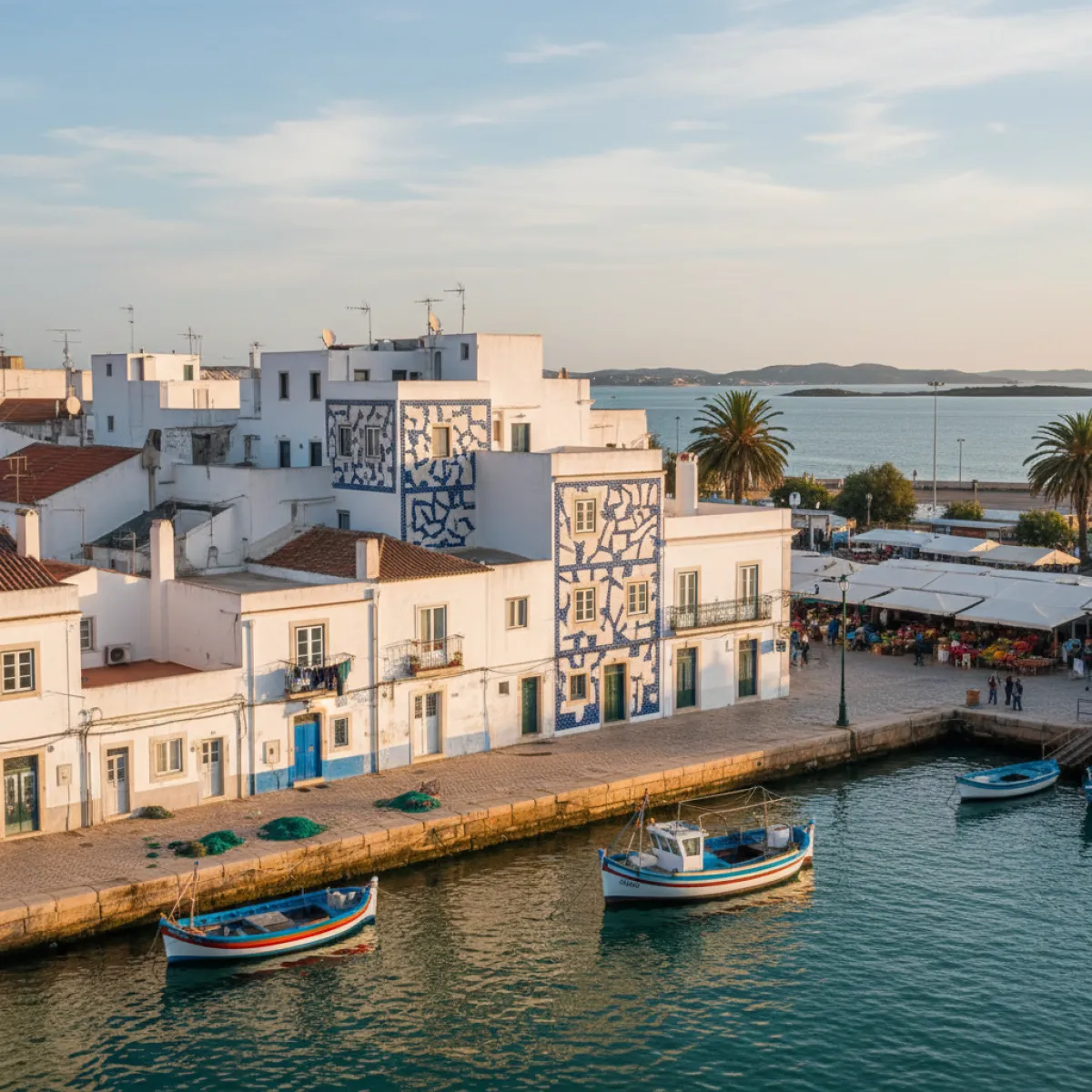
Unlike most Algarve towns that have surrendered to the homogeneity of mass tourism, Olhão remains a palimpsest of resistance and maritime identity. One does not come to Olhão in search of postcard beaches, but rather to decipher a unique architectural grammar and a history written with the blood of fishermen and the salt of the Ria Formosa. This is a city that does not apologize for its grittiness; its beauty lies precisely in the raw functionality of its white facades and the uninterrupted rhythm of a port that never sleeps.
The 1808 Uprising and the Audacity of the Bom Sucesso
To understand Olhão, one must return to 1808. While much of Europe bowed before Napoleonic troops, a small group of Olhão fishermen decided that their loyalty to the Portuguese crown and their freedom were non-negotiable. The expulsion of the French from Olhão was not merely a local act of bravery; it was the catalyst for one of the most unlikely voyages in Portuguese nautical history. Seventeen fishermen boarded the "Bom Sucesso" caíque, a vessel just 20 meters long with no modern navigation instruments, and crossed the Atlantic toward Brazil to inform Prince Regent D. João VI that the Algarve was free from the invader.
This audacity earned the town the title "Olhão da Restauração," and that spirit of independence still permeates the narrow streets of the Barreta neighborhood. Walking through these alleys, one senses that the city’s layout was designed to confuse invaders, a labyrinth where privacy is protected by tight angles and deep shadows. Unlike the cultural landscape of Faro, where ecclesiastical and aristocratic influence is evident, Olhão is a city built by and for the people of the sea.
Vernacular Cubism and the Allure of the Açoteias
The term "cubist city" is often applied to Olhão, not due to any deliberate artistic movement, but because of the organic geometry of its houses. The açoteias, the flat roof terraces that crown the dwellings, are the distinguishing element of this urban landscape. Originally designed for drying fish and dried fruits, or for watching the boats return to port, these platforms transformed the city into a cascade of white volumes that fascinated artists like Almada Negreiros.
The architecture of Olhão is a pragmatic response to climate and economy. The mirantes, small towers built upon the açoteias, served as privileged observation posts. Today, while many have been converted into leisure spaces, they maintain their function as the "lungs" of the house. This spatial organization differs significantly from the dynamics found in the Lagos neighborhood guide, where Manueline heritage and modern development have created a distinct aesthetic. In Olhão, the uniformity of white is only broken by the blue of window frames or the ochre of doors, maintaining a visual coherence that is rare in the region.
The Markets and Industrial Heritage
The gravitational center of Olhão is its two red-brick markets, inaugurated in 1915. These buildings, with their metallic domes, are monuments to the golden age of the canning industry. Inside, the spectacle is visceral: the freshest fish in the Algarve is displayed with a pride that borders on religious. Here, seasonality dictates the rules, from anchovies to octopus and the iconic razor clam.
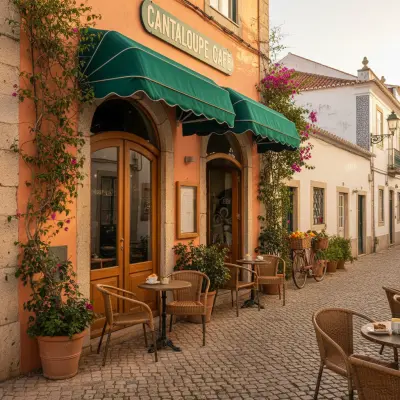
After the morning bustle, the Cantaloupe Cafe, strategically located next to the market, offers the ideal refuge. It is a space that exemplifies contemporary Olhão: where jazz replaces the noise of the fish auctions and where one can observe the Ria Formosa while planning the next exploration. The understated sophistication of this cafe contrasts with the more commercial atmosphere found in the soul of Albufeira, attracting an audience that values substance over spectacle.
Practical Guide for the Observant Traveler
- When to go: Late afternoon, when the oblique light accentuates the volumes of the cubist houses, is the ideal time for photography. Avoid the central hours of the day in August, when the heat reflected off the white walls can be grueling.
- What to order: Arroz de lingueirão (razor clam rice) in one of the tascas in the Levante neighborhood. Expect to pay between €15 and €20 per person for a genuine meal.
- Logistics: Parking in the center is scarce. Use the lot by the harbor and explore the city on foot; it is the only way to truly experience the Barreta neighborhood.
The Canning Legacy and the Future of the Ria
Olhão’s history is inseparable from the canning industry. In the early 20th century, the city housed dozens of factories exporting worldwide. While many have closed, Conserveira do Sul remains a bastion of this tradition. Visiting the old industrial zones is an exercise in industrial archaeology, where brick chimneys still stand like sentinels of a prosperous past. Olhão's current challenge lies in the balance between preserving this heritage and the real estate pressure that threatens to dilute its unique topography. Unlike other Algarve destinations, Olhão still belongs to its inhabitants, and it is this authenticity that constitutes its greatest luxury.