Óbidos Off the Wall: Where Locals Really Eat
Rua Direita is the worst place to eat in Óbidos, and we tell you why. Where to drink ginjinha properly, which salt cod cake is worth the detour, and how to skip the chocolate-cup trap entirely.
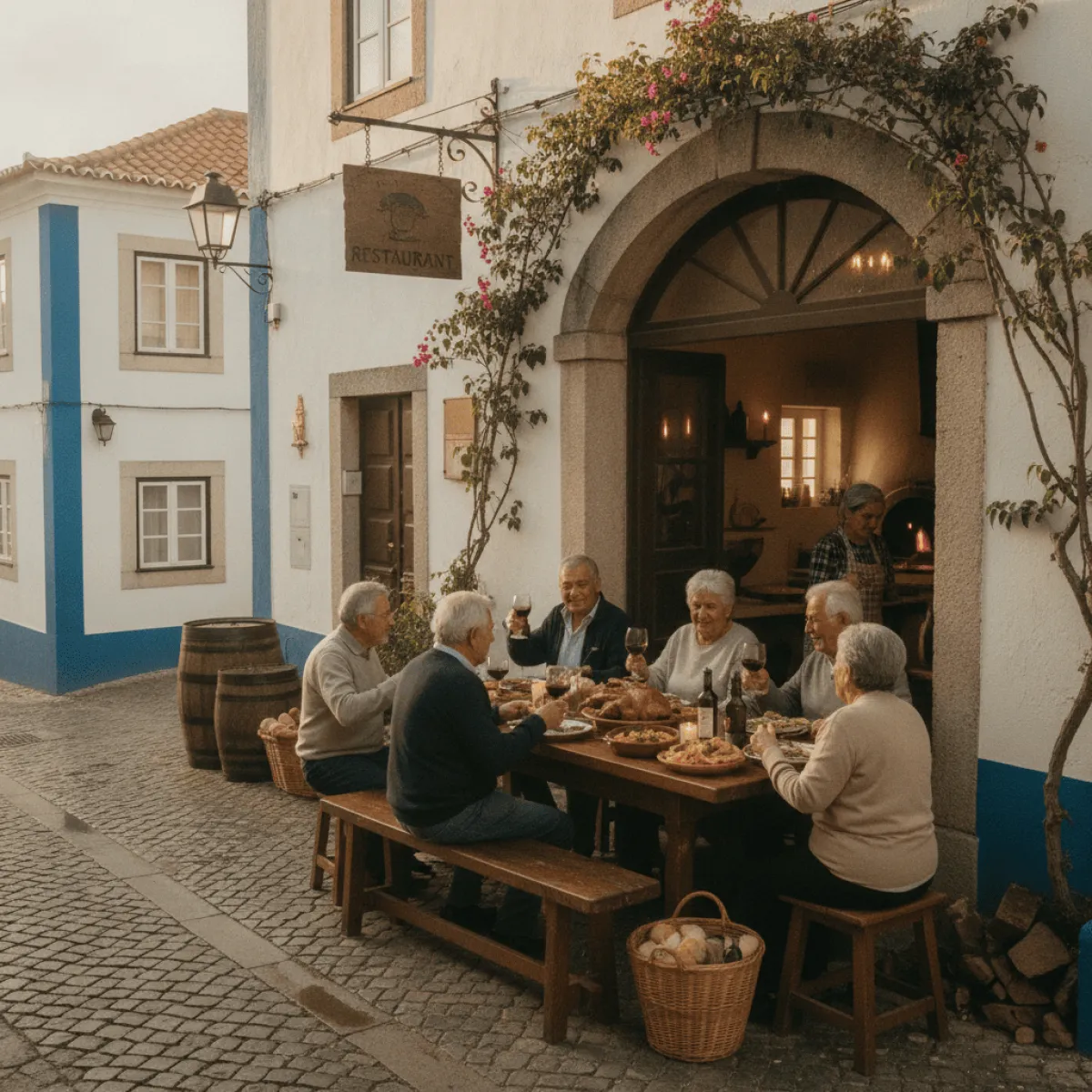
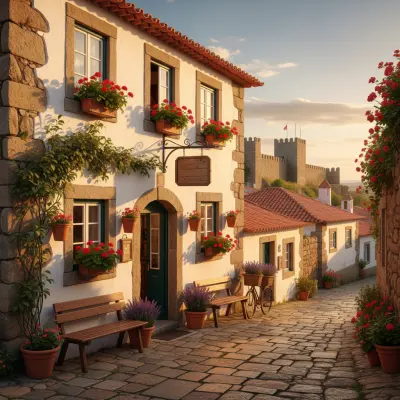
There are two villages inside the walls of Óbidos. One opens around ten in the morning, when the coaches pull up at the Porta da Vila and unload a few hundred people onto Rua Direita, all chasing the same thing: a shot of cherry liqueur served in an edible chocolate cup, a fridge magnet, a photo of the white houses with their blue and yellow stripes. The other village wakes at seven, when the only sound on Rua da Cidadela is an iron gate swinging open and the smell of coffee drifting from a half-open door. This piece is about the second village. Not the postcard. The one that actually eats.
Let me say the unpopular thing right away: Rua Direita, the main artery that ninety percent of visitors walk, is the worst place to eat in Óbidos. That is not snobbery, it is arithmetic. When a street lives off people who pass through once and never return, nobody has any reason to cook well. Prices climb, portions shrink, the cherry liqueur is industrial, and the salt cod is frozen. Turn your back on that street. Climb a side staircase, get lost in the parallel lanes, and the village changes character within twenty metres.
Ginjinha, and how not to drink it like a tourist
Let us settle this first because everyone asks. Yes, you should try ginjinha in Óbidos. It is a sour cherry liqueur, sweet and thick, with an almond edge that comes from the pit. The version poured into a chocolate cup costs around a euro and a half and is a charming trap: the chocolate is poor, it melts in your hand, and it smothers the liqueur. Drink one for the novelty and then do what locals do: order it in a small glass, no theatre. It tastes better and nobody looks at you like it is your first day.
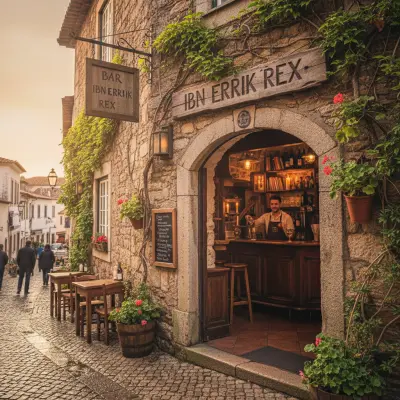
Where to drink it properly? At a counter that looks like a film set and has been here for decades: Bar Ibn Errik Rex on Rua Josefa de Óbidos. It is dark, stacked with bottles to the ceiling, decorated in a style that has not changed since the seventies, run by an owner who pours his own infusions. This is not a modern cocktail bar, it is a temple of homemade liqueurs. Ask for a house ginjinha, or let him choose for you. Go in the late afternoon, once the coaches have gone and the counter belongs to the people who live here.
Where to eat when you want food, not photos
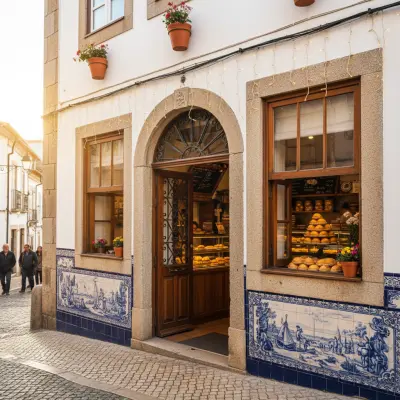
The best handheld snack in Óbidos is not the ginjinha, it is the salt cod cake. And one place treats it like a religion. Casa Portuguesa do Pastel de Bacalhau serves its cake stuffed with molten Serra da Estrela cheese, hot, falling apart in your fingers. Yes, the concept exists in other cities, and some people sniff at it for being a chain, but the truth is simple: it is well made, it is consistent, and in a place where so much is a tourist trap, a salt cod cake that delivers what it promises is worth the detour. Pair it with a glass of regional white wine. It costs a few euros and sorts out a light lunch before you carry on up to the walls.
For a proper sit-down meal, with a pot on the stove and time to spare, step off the tourist axis and find Capinha d'Óbidos. This is where the region's cooking shows up without disguise: fish stews, fresh seafood, meats from the west coast, homemade spoon desserts. The land between Óbidos and the coast, around the Óbidos Lagoon, produces shellfish and fish that many travellers associate with the Algarve without realising it comes from here. If there are eels or a good seafood rice on the day's board, go that way. Expect a full meal at honest prices, well below what you would pay on Rua Direita for half the quality.
What to order, specifically
- Salt cod cake with Serra da Estrela cheese: the best handheld bite in the village, hot, to eat while you walk.
- Fish and shellfish from the Óbidos Lagoon: the west coast is Lisbon's larder. Seafood rice, fish stew, clams.
- Trouxas de ovos and pão-de-ló: the region's convent pastries, an inheritance from the religious orders. Sweet, egg-rich, unashamed.
- Ginjinha de Óbidos: mandatory, but in a glass, not a chocolate cup, if you actually want to taste it.
The calendar runs the table
When you come to Óbidos decides what you eat, and almost nobody warns you about this. In March and April the village fills for the International Chocolate Festival, and for those weeks everything revolves around cacao, from giant sculptures to savoury dishes with a chocolate touch. It is good fun, but it is the busiest stretch of the year: go midweek if you can.
In July and August the Medieval Market turns the village into open-air theatre, with taverns of spit-roasted chicken, wild boar, dark bread and mead poured into clay mugs. It is touristy, of course, but the food is genuinely good and the night-time atmosphere, with torches burning along the ramparts, earns its entrance ticket. Eat standing, with your hands, and drink the mead even if you think you will not like it. At Christmas, Óbidos Vila Natal brings roasted chestnuts and seasonal sweets. Every season sets a different table.
If you like to understand food through the drink beside it, it is worth leaving the village for an afternoon. The winemaking tradition here is old and serious, and a visit to the historic cellars at Quinta do Sanguinhal shows you the wines and brandies behind much of what ends up on the table around here. It is the best way to understand why the west has its own culture of wines and liqueurs, not just the ginjinha in the shop windows.
Sleeping where the food is good too
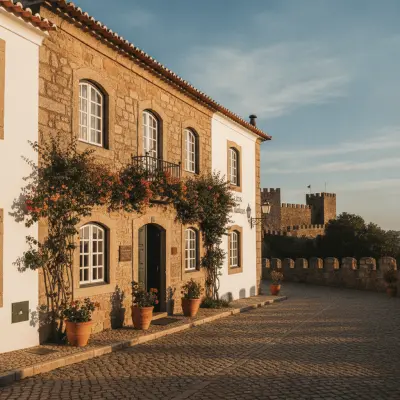
Óbidos is small, and the smartest decision you can make is to stay the night inside the walls. The village empties at the end of the day, and the privilege of having the stone streets almost to yourself at dusk and dawn is the real reason to sleep here. And it happens that the best places to sleep also solve dinner.
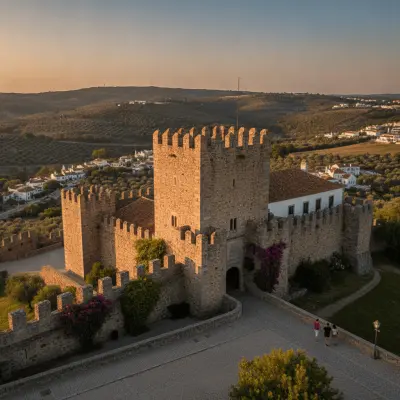
At the top, literally, is the Pousada Castelo de Óbidos, set inside the medieval castle itself. Sleeping within walls more than eight hundred years old is not cheap, but the restaurant serves Portuguese cooking in a setting nowhere else in the village can match. Even if you are not a guest, it is worth a dinner reservation for a special night.
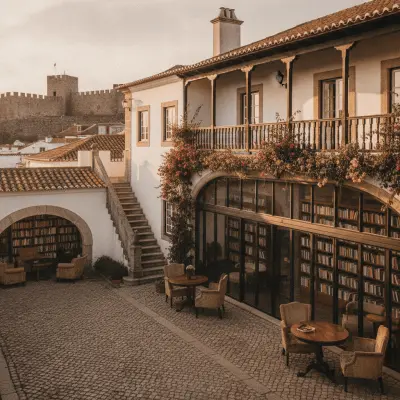
For something with more character and less ceremony, The Literary Man Óbidos Hotel is built around books, with tens of thousands of volumes lining the walls and a gin bar that is one of the best places in the village to end the night. Óbidos is, after all, a UNESCO literary village, and this hotel is the fullest expression of that identity. Drink a gin among the shelves after dinner; it is more Óbidos than any chocolate cup.
And for quiet refinement, Casa das Senhoras Rainhas, beside the church of Santa Maria, pairs elegant rooms with a restaurant that takes its cooking seriously. It is the kind of place where you linger over dinner, with no rush to catch the last bus, because your room is right upstairs.
How to get there, and the mistake everyone makes
Óbidos sits about an hour north of Lisbon. By car it is the A8; but parking inside the walls is forbidden and the car parks around the edge fill early in summer. The trick is simple: arrive before ten in the morning or after four in the afternoon, and you will get a space and a near-empty village. By public transport, there are express coaches with Rede Expressos from the Sete Rios terminal in Lisbon, taking about an hour. It is the more relaxed option if you would rather not drive.
The mistake almost everyone makes is to come as a half-day round trip, arrive mid-morning with the coaches, walk Rua Direita end to end, drink the ginjinha from the chocolate cup, and leave in the early afternoon. They see the village at its worst and carry away the impression of a tourist trap. Do the opposite. Arrive late, stay the night, eat slowly, wake early, and walk the walls with the mist still clinging to the battlements. The seven o'clock Óbidos has nothing to do with the noon one.
Beyond the table
Eating well in Óbidos also means understanding the village around the plate. Between the walks and the dinners, set aside an afternoon for the street art trail through the literary village, which reveals a contemporary side of Óbidos that escapes anyone who only walks the main street. It is proof that this is not a village frozen in time but a living place where tradition and the present share the same walls.
If Óbidos leaves you wanting to keep exploring the region around Lisbon through its food and customs, there is more to find. It is worth getting to grips with the most authentic traditions and neighbourhoods of Lisbon before or after Óbidos, and another fine day trip is the enchanted hill town to the west: the corner-by-corner guide to Sintra is a useful companion if you are stitching together a wider west-coast trip. Travelling at Easter? Do not miss the Easter sweets trail in Mafra, half an hour away, where convent pastry takes on another dimension at that time of year.
In the end, Óbidos comes down to a choice. It can be the village of the chocolate cup, photographed and forgotten in two hours. Or it can be the village of the hot salt cod cake eaten on a stone step, the ginjinha drunk at the counter of an old bar, the lagoon fish served far from the crowd, and the gin sipped among books once the coaches have gone. The second takes longer and costs a few euros more. It is worth every one of them.