Nazaré Market Crawl: What to Buy, Taste, and Skip
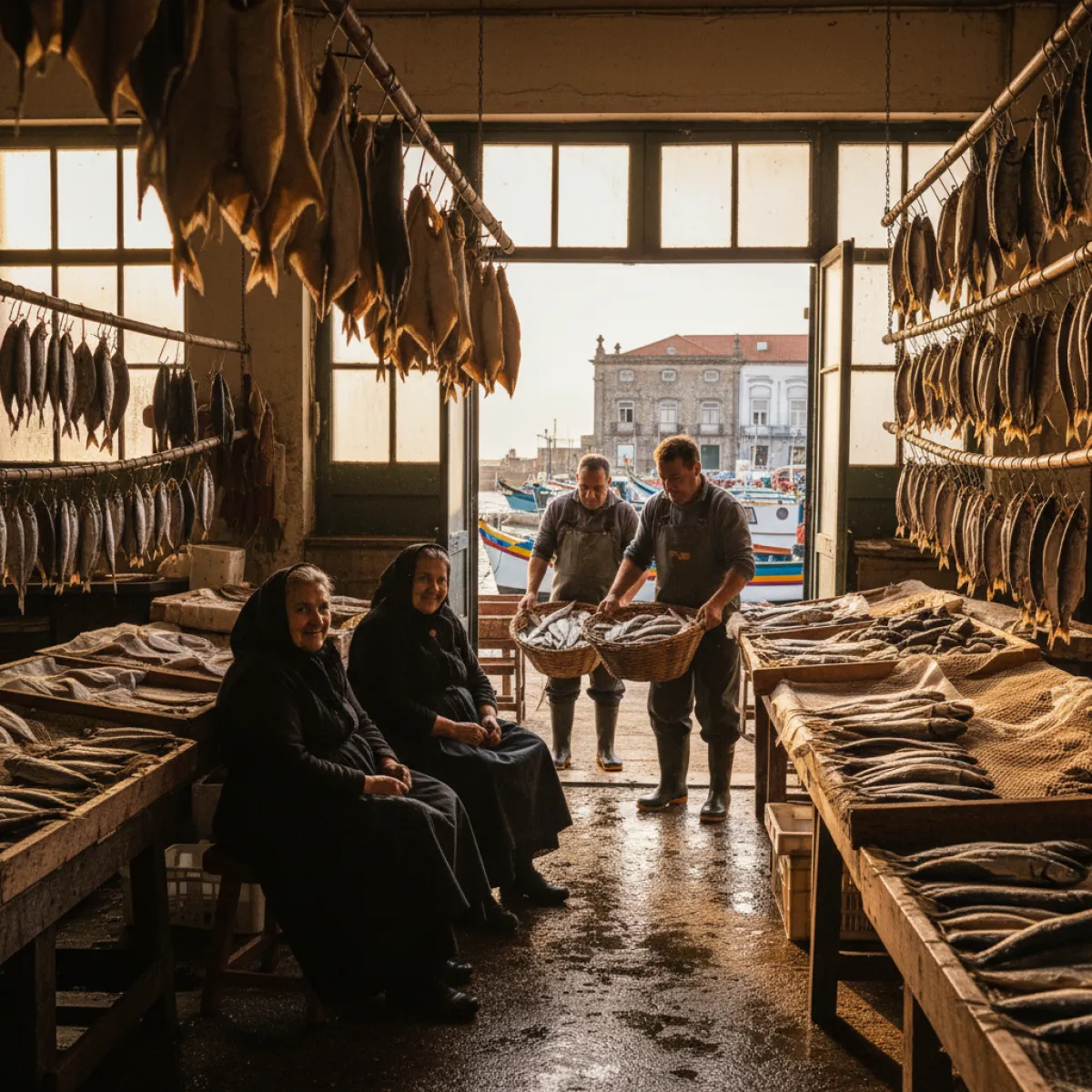
Forget the big wave hype for a second. The real pulse of Nazaré is found in the Municipal Market at 7 AM, where the briny scent of dried fish meets the sharp wit of vendors in seven skirts.
Morning Starts on the Avenue, Not the Wave
Forget, for a moment, the viral clips of Garrett McNamara dropping into liquid skyscrapers and the wind forecasts for Praia do Norte. If you want to feel the pulse of Nazaré, your alarm needs to go off at 7:00 AM. While the surf crowd is still dreaming of thirty-meter tubes, the real action is unfolding on Avenida Vieira Guimarães. This is where the Mercado Municipal de Nazaré throws open its doors, and it’s not for tourists looking for fridge magnets. It’s a precision logistical operation fueled by short espressos and the sheer grit of women who have carried the weight of generations on their shoulders.
Walking down Rua Adrião Batalha toward the market is a lesson in stripping away the tourist makeup. The smell of the ocean is everywhere, a sharp cocktail of salt, boat diesel, and that metallic tang of fresh fish just hauled onto the sand. Don't expect customer-service smiles inside. Here, the talk is direct, the volume is high, and the merchandise is serious business. If you hesitate too long over a tray of Atlantic horse mackerel, the vendor will move to the next customer without blinking. This pragmatism is why Nazaré remains visceral, surviving the relentless hype of social media.
What to Buy: From Alcobaça Orchards to the Drying Racks
The market is neatly divided into sections, but your eyes will immediately gravitate to the produce stalls. We are a stone's throw from Alcobaça, which means the apples and pears you find here possess a flavor that big-box supermarkets in Lisbon have long since engineered out of existence. Look for the fruit that doesn’t look perfect, the ones with spots, the small ones, the ones that actually smell like sun-warmed earth. A bag of apples will set you back about two euros and will be the best snack you’ll have all week.
But the true soul of Nazaré, or at least the edible part, is the dried fish. Head to the outdoor area or look for the women selling plastic bags of dried mackerel, sardines, or octopus. This isn’t just a delicacy; it’s an ancestral survival technique. Back in the day, when the sea was too rough for the boats to launch, dried fish fed the families. The "carapau enjoado" (semi-dried mackerel) is an acquired taste, but essential for understanding the local palate. Buy a bag to snack on, around five euros, but be warned: the scent will follow you in your rental car all the way to Coimbra. To truly understand the matriarchal backbone of this town, Nazaré's Seven Skirts Tradition with Alma Nazaré Tours offers the necessary context for the women you see ruling the market stalls.
What to Taste: Barnacles and the Freshness Dictatorship
If you see goose barnacles (percebes) at the market, buy them. Forget the cutlery, forget your dignity. Barnacles are the ocean’s summary: salty, intense, and perfectly textured. Prices fluctuate based on the sea state, if the Atlantic is angry, the price spikes because the harvesters risk their lives on the jagged rocks, but expect to pay between 15 and 25 euros per kilo. It is a luxury that is worth every cent. Eat them right there, or take them to one of the small taverns in the backstreets where, for a symbolic fee, they’ll let you consume your market haul if you order a few ice-cold beers.
Another essential stop is for the local pastries. While "Tamamar" or "Sardinhias" are the famous sweets of the town, what you really want is the fresh, still-warm bread from the wood-fired ovens to pair with the regional sheep’s cheese sold in a quiet corner of the market. It’s simple, honest, and costs less than a generic cappuccino on the main drag.
What to Skip: The Arroz de Marisco Trap
Here is my unpopular opinion: skip most of the restaurants with laminated photos of food on Praça Sousa Oliveira. The 12-euro seafood rice is almost always a watery soup of frozen shrimp and excessive tomato paste. If you want to eat well in Nazaré, you must move away from the first line of the sea. Look for the "tascas" where the fishermen drink their wine at 11:00 AM. If the menu is handwritten on a chalkboard and includes "Caldeirada" (fish stew), you’re in the right place.
Also, ignore the souvenir shops selling the same striped shirts found in every coastal town in Europe. The real Nazaré souvenir is the honey from the Serra d'Aire or a bottle of local cherry liqueur that doesn't come in a phallic-shaped bottle. Be discerning. Nazaré rewards those who look past the obvious.
Logistics and Urban Survival
Parking in Nazaré between June and September is a form of torture that should be avoided at all costs. My advice: leave the car in the upper town, the Sítio, and take the funicular down. It costs about €2.90 for a round trip and gives you the best view of the bay without the heart-attack-inducing search for a parking spot. If you are following a Portugal Itinerary: A Week in the Heart of the Country, use Nazaré as an early morning stop before pushing further north.
The market operates from Tuesday to Sunday. Monday is a day of rest for the fresh fish, so don't even bother. To avoid the tour bus crowds that descend around 10:00 AM, be there by 8:00 AM. This is when the light is at its most beautiful, hitting the narrow streets at a slant, and when the banter between vendors is still about their personal lives and not about the price per gram for tourists.
Nazaré in the Central Context
Many travelers make the mistake of seeing Nazaré in isolation. It belongs to a larger ecosystem. While Nazaré is the salt and the grit, nearby cities provide the intellectual and historical counterweight. After a morning at the market, the drive to Coimbra: The Grammar of Time in Portugal’s Intellectual Capital feels like a transition from a world of instinct to a world of ideas. This contrast is exactly why The Measured Pace: A Seven-Day Passage from Lisbon to Porto via the Ria is the best way to plan your time here: don't rush the geography; let the coast and the rivers dictate your speed.
At the end of the day, head back to the Sítio. Walk out to the lighthouse. The wind will be fierce, the roar of the waves will be deafening, and there will be hundreds of people trying to take the exact same photo. But you’ll have your bag of Alcobaça apples, the memory of the barnacles, and the quiet satisfaction of knowing you saw the Nazaré that the postcards can't quite capture.
