Monchique and the Sea: Surf, Waves, Mountain Escape
Monchique has no sea, but it has something better: 458 metres of altitude and the Costa Vicentina twenty-five minutes away. How to surf from the mountains, where to grab breakfast before driving down, and why this is the smartest Algarve base for anyone who loves waves.
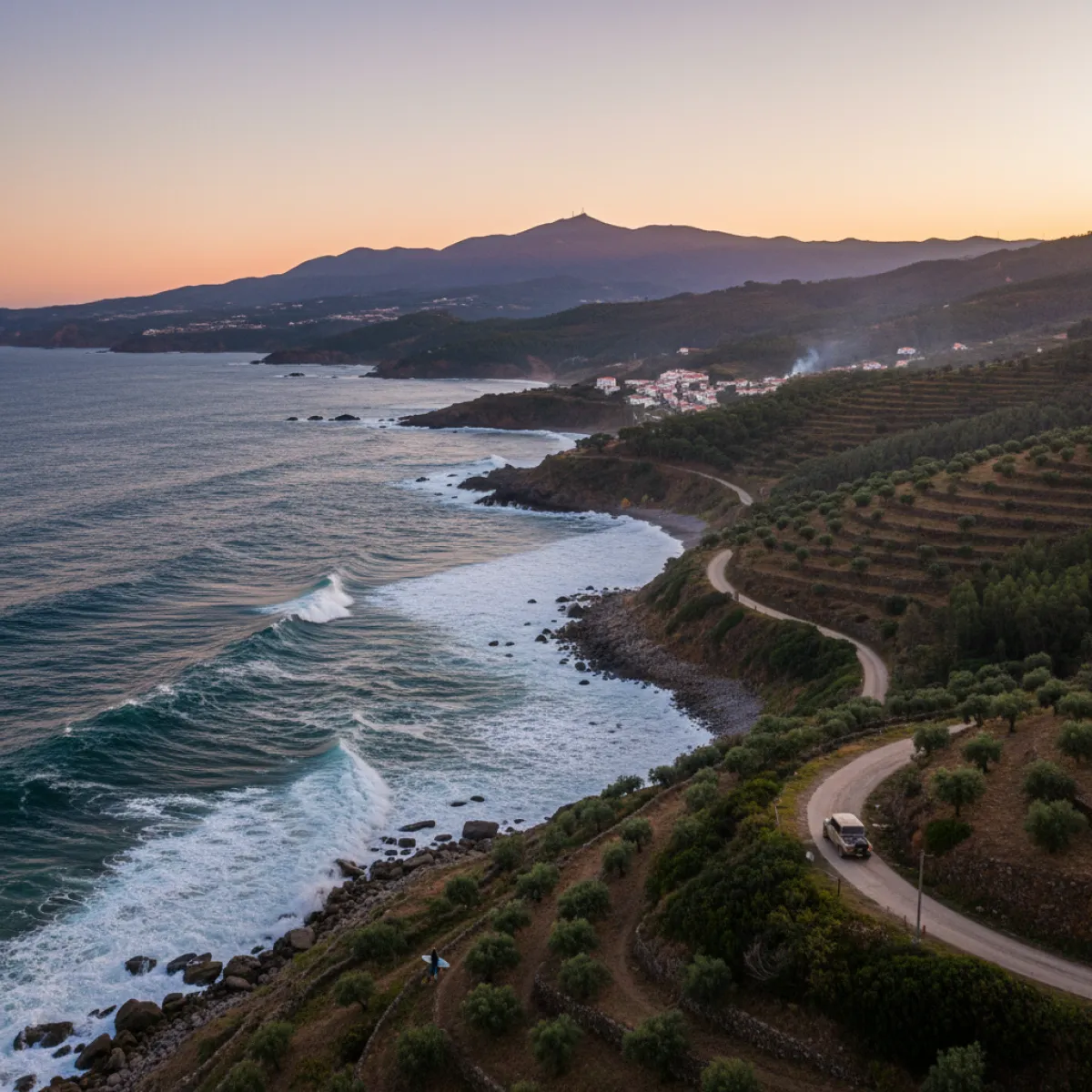
Let's get one thing straight: Monchique has no sea. No beach, no waves, no salt in the air. It sits at 458 metres above sea level, in the middle of a mountain range, and the water that runs here comes from the springs of Caldas, not the Atlantic. So why are you reading an article about surfing in Monchique?
Because that is exactly Monchique's unfair advantage. Twenty-something minutes by car, depending on the road you take, gets you to the best surf in the Algarve, possibly in the country. And at night you drive back up to the mountain, where the temperature drops several degrees, where the coastal mosquitoes do not reach, and where you can sleep with the windows open and hear only owls.
It's a scheme. A brilliant scheme that experienced surfers on the Costa Vicentina have known about for decades and that tourists still haven't figured out. This article is about how to use it.
The map: three coasts, one mountain
From Monchique you have three clear options, and they change everything depending on wind and mood.
To the west, going down the 267 to Aljezur and then cutting toward the sea, you reach the Costa Vicentina proper. Arrifana, Amoreira, Monte Clérigo, Bordeira. Thirty-five to fifty minutes depending on the destination. This is the wild coast, facing west, where the Atlantic swell hits unfiltered. Big waves, sand bottoms, dramatic cliffs. Few people have figured out yet that it's faster to come from Monchique than to be stuck in Lagos summer traffic.
To the south, going down the 266 to Portimão and on toward Sagres, you have Praia do Tonel, Praia do Beliche, and further east near Lagos, Praia da Luz and Meia Praia. About an hour. This coast is more sheltered, faces more south, and when the north wind blows hard (which it often does in spring) and the Costa Vicentina is unsurfable, this is where you go.
To the east-south, closer in, there are beaches between Portimão and Albufeira that work for beginners wanting calm water. But if you came all the way to Monchique, you didn't come for that. Skip them.
The obvious choice: Arrifana
If you only have one day, go to Arrifana. It's the beach that best combines accessibility, beauty, wave quality and infrastructure for someone learning. It has a long right, sand bottom, and can be surfed at almost any tide if you know how to read it.
Our advice: if you don't have a board, or have never surfed, book a surf lesson at Arrifana designed for those staying in Monchique. It's not the only school on the beach, but it's the one that best understands the rhythm of someone based in the mountains: adapted timings, negotiable transport, instructors who know you didn't sleep on the sand.
What to expect from a morning at Arrifana: arrival around 8.30am, briefing on the sand, stretches, foam board, tight leash. The first forty minutes are in the impact zone where the water never goes above your chest. Beginner lessons typically run 35 to 45 euros for the full package (board, wetsuit, instructor), but check locally. If you're already intermediate, just rent gear and pay less than half.
The right tide for beginners is mid-tide rising. Very low tides leave the bottom dangerous and very high tides kill the wave against the cliff. Always ask before paddling out.
The ritual before the sea
There's an unwritten rule among surfers staying in Monchique: breakfast before driving down. Always. There is nothing more dangerous than entering the water hungry at nine in the morning, especially with the initial bite of Atlantic cold.
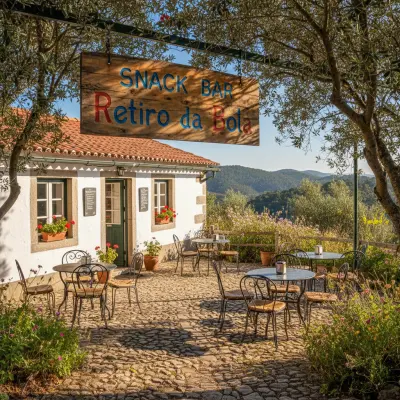
We recommend stopping at Snack Bar Retiro da Bola before getting on the 267. It's one of those places without pretension, frequented more by locals than tourists, where they serve decent coffee, toast with butter, and if you ask in advance, scrambled eggs. It's not gastronomy. It's fuel. And that's exactly what you need before two hours of getting battered.
The water paradox
Warning for anyone who has never surfed the Portuguese Atlantic: the water is cold. Even in August. The cold Canary Current passes just offshore, and the temperature rarely climbs above 19 degrees. In April and May, it's around 15. In February, around 13.
Practical translation: you need a wetsuit. In winter, 4/3 with boots. In summer, 3/2 will do. If the school doesn't provide one, rental runs around 8 to 12 euros a day, but confirm locally. Don't try to be the hero who paddles out in board shorts in May. You'll come out hypothermic in twenty minutes.
The good side of this cold water is that it keeps the sea clear, transparent, and there are rarely algae. You surf with fish passing under your board, and on good days you can see the bottom three metres down.
For those who just want to watch
Not everyone goes to the coast to get in the water. There's a respectable category of visitor who comes to look, and Monchique is a perfect base for that.
The Arrifana viewpoint, north of the beach, is one of the best spots in the country to watch the sea. On big swell days, with four-metre waves breaking against the offshore stacks, the spectacle is hypnotic. Bring binoculars. And a blanket. The wind up there is treacherous even in July.
Another less obvious option: drive down to Cabo de São Vicente at the end of the day. Yes, it's part of the tourist circuit, yes, there will be people, but the sunset at the southwesternmost point of mainland Europe carries a geographic weight you cannot fake. And driving back to Monchique through the mountains, with the sun already disappearing behind the ridges, is the kind of return that justifies the whole day.
The other side: when the sea is flat
There are days when the sea simply doesn't deliver. Strong south wind, zero swell, fog. It happens. And this is where the Monchique strategy proves itself superior to any coastal accommodation.
Instead of banging your head against a dead sea, you head into the mountains. You hike up to Picota or Fóia. You go to Caldas and soak in the thermal pools. Or you take a cooking class in Alferce kneading bread, which is probably the best way to spend a sea-less morning that exists in these mountains. It's the kind of plan B that only Monchique can offer: no coastal town has this fifteen minutes away.
What to do with kids
If you're travelling with family, the maths changes. Smaller children can't handle three hours of car for one surf session. But there's a viable middle ground.
Praia da Amoreira, in Aljezur, has a stream that flows into the sea and creates natural pools of almost fresh water. Kids play there for hours. Adults go in the sea. You leave late morning, have lunch in Aljezur, drive back to Monchique before peak heat.
If you want to explore more of the region with family, our honest guide to Silves with kids has ideas for days when the sea is out of the question. Silves is just twenty-five minutes from Monchique, it's a medieval town with a castle, and it's less bombastic than the beaches.
The return to the mountain: dinner and the beer
One of the best things about surfing out of Monchique is the return. You come back exhausted, salt drying in your hair, with that hunger of someone who burned three thousand calories in two hours of paddling. You drive up the mountain. The air changes. Five kilometres before Monchique, you open the window and it smells of eucalyptus and strawberry tree. It's a decanter between two worlds.
For the post-surf beer, Bar Travessa is the obvious choice. It's in the centre, it has a terrace, and the crowd mixes Monchique locals with people who came up from the beaches and have the look of someone who needs a very cold beer, very fast. Order an imperial, settle in. Night in the mountains starts early and ends earlier, and that's a virtue.
As for dinner, avoid the restaurants on the main street that have menus in four languages: they're waiting for tourists and price accordingly. Ask at Bar Travessa where the food is good that day. In Monchique, the good dinner is the one on the day the cook feels like cooking, and that changes.
The honest logistics
A few truths nobody tells you:
- The 267 between Monchique and Aljezur is narrow, twisty and has suicidal motorcyclists. Drive with patience. Twenty-five minutes is realistic, not twenty.
- Parking at Arrifana in July and August is war. Arrive before nine or after five. Otherwise, you leave the car five hundred metres up and walk down.
- There is no Wi-Fi at the beaches. Use forecast apps (Windguru, Magicseaweed) before leaving Monchique. You'll surf based on what you knew at eight in the morning, not eleven.
- Petrol in Monchique is more expensive than in Portimão or Aljezur. Fill up below if you can.
- If you're staying more than three days, consider renting a board in Aljezur by the week instead of paying daily. It works out cheaper and the rental can stay in your car.
When to come
The golden window for combining Monchique and surf is between May and mid-June, and again between September and mid-October. You get consistent swell, warm air in the mountains, water still surfable (with a wetsuit), and few tourists fighting for waves and parking.
July and August are chaotic: packed beaches, line-ups with fifty people, heat that suffocates even in the mountains. If you come at this time, surf only at sunrise and use the rest of the day for the mountain or for escaping inland.
Winter is for the brave: huge waves, often unsurfable seas, cold. But there are three or four day windows between storms when the Costa Vicentina delivers the best surf in Europe, and the locals know it.
The bigger picture
Surfing out of Monchique is a deliberate way of reading the Algarve backwards. Instead of planting yourself on a beach and never leaving, you stay high and dive into the sea. Instead of eating shellfish by the bucket every day, you alternate between mountain cooking (black pork, medronho, inland cataplanas) and coastal fish.
It's also the best way to get to know the real Algarve, the one that exists beyond the line of hotels. For that, it's worth complementing your surf with short trips to other towns: our guide to local culture in Faro opens up the eastern, more urban and traditional side; and the Lagos neighbourhood guide is useful for those who want two days of city in the middle of the beach abundance.
But the central strategy, the one really worth pulling off, is this: sleep in the mountains, surf in the sea. Wake up in fog, go to bed under stars. And when someone asks you where you went on holiday, say Monchique, and stay quiet long enough that they don't catch on to the secret.