Monchique Without Tourists: An Honest Weekend in the Serra
Forget the crowded viewpoints and the souvenir shop selling chouriço at saffron prices. This is a Monchique weekend the way locals actually do it: bread kneaded in Alferce, drinks at Bar Travessa, and the three-euro breakfast that alone justifies the trip.
There's a problem with how travel guides write about Monchique. Everyone covers the Caldas, the Fóia summit, and medronho as if they'd just discovered them. Then they send you to the same three viewpoints, the same two restaurants with a view, and the same regional shop where chouriço costs the price of saffron. That isn't Monchique. That's the version of Monchique designed for people with three hours and a cruise ship waiting in Portimão.
This weekend is different. You leave Friday afternoon, return Sunday night with mud on your boots, two extra kilos, and the sense of finally understanding why people from Monchique aren't entirely thrilled when their serra gets discovered. They won't be at the entrance with little flags. They'll be having coffee at the counter, speaking quietly until they figure out you can also say bom dia properly.
Friday afternoon: arriving without expectations
From the coastal Algarve, it's 30 to 40 minutes uphill from Portimão on the N266. From Lisbon, count on roughly three and a half hours. The road starts unremarkable and halfway up turns into a corridor of eucalyptus and strawberry trees. Don't stop at the first signs that say "miradouro". Stop at the third or fourth, when there's no one else around. The difference is 200 metres of altitude and zero coaches.
Arrive in the village with time to drop your bag and walk to the centre. Monchique is small: everything that matters fits in a 15-minute walk. Avoid the town hall car park on market days (Mondays and Thursdays) or you'll end up 10 minutes from anything.
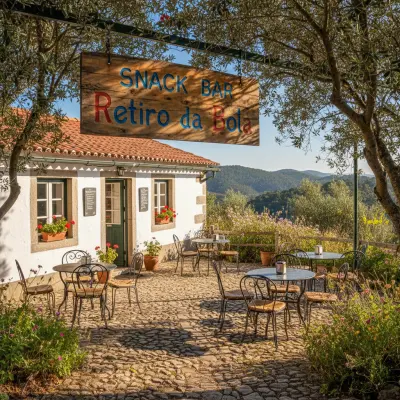
For a late lunch or early dinner, there's a place that solves Friday. Snack Bar Retiro da Bola isn't pretty from the outside. The menu isn't translated. There are no Tripadvisor stars blinking from the window. It has what matters: daily specials written in chalk, prices that still make sense in 2026, and a clientele that mixes builders, retired teachers, and the occasional German who found the place 15 years ago and never quite left.
Order whatever's on the board. If they have fava beans with cured sausage, get them. If they have bife à monchiquense (steak topped with presunto and serra cheese), get that. Don't order salads: they're on the menu out of obligation. Drink the house wine, which is honest and cheap. Finish with coffee and a medronho. Just one. We're at the start of the weekend, not the end.
Friday night: the right drink in the right place
After dinner, there are two options: go to bed like a reasonable person, or have a drink where the locals have a drink. I'd recommend the second, with moderation, because Saturday's going to be long.
Bar Travessa is the place. It's on one of the narrow side streets dropping from the centre, no big window display announcing anything. Inside it's small, loud when there's a match on, quiet on Wednesdays. Don't expect a cocktail menu. Expect cold beer, a decent gin and tonic, and the rare advantage of overhearing actual Portuguese conversation in thick Algarve accent, about things like the price of chestnuts or who passed away last week. It's the best anthropological briefing you'll ever get.
Tip: arrive around 10pm, not 7pm. Before that it's still coffee and quiet beer territory. Monchique's nightlife isn't a delirium, but it has its own rhythm. Leave around midnight. Stay longer if you want. But tomorrow is early.
Saturday morning: the version of Monchique nobody sold you
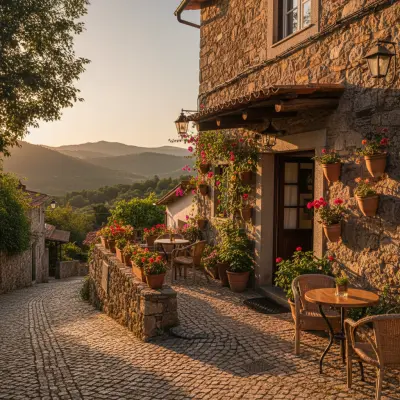
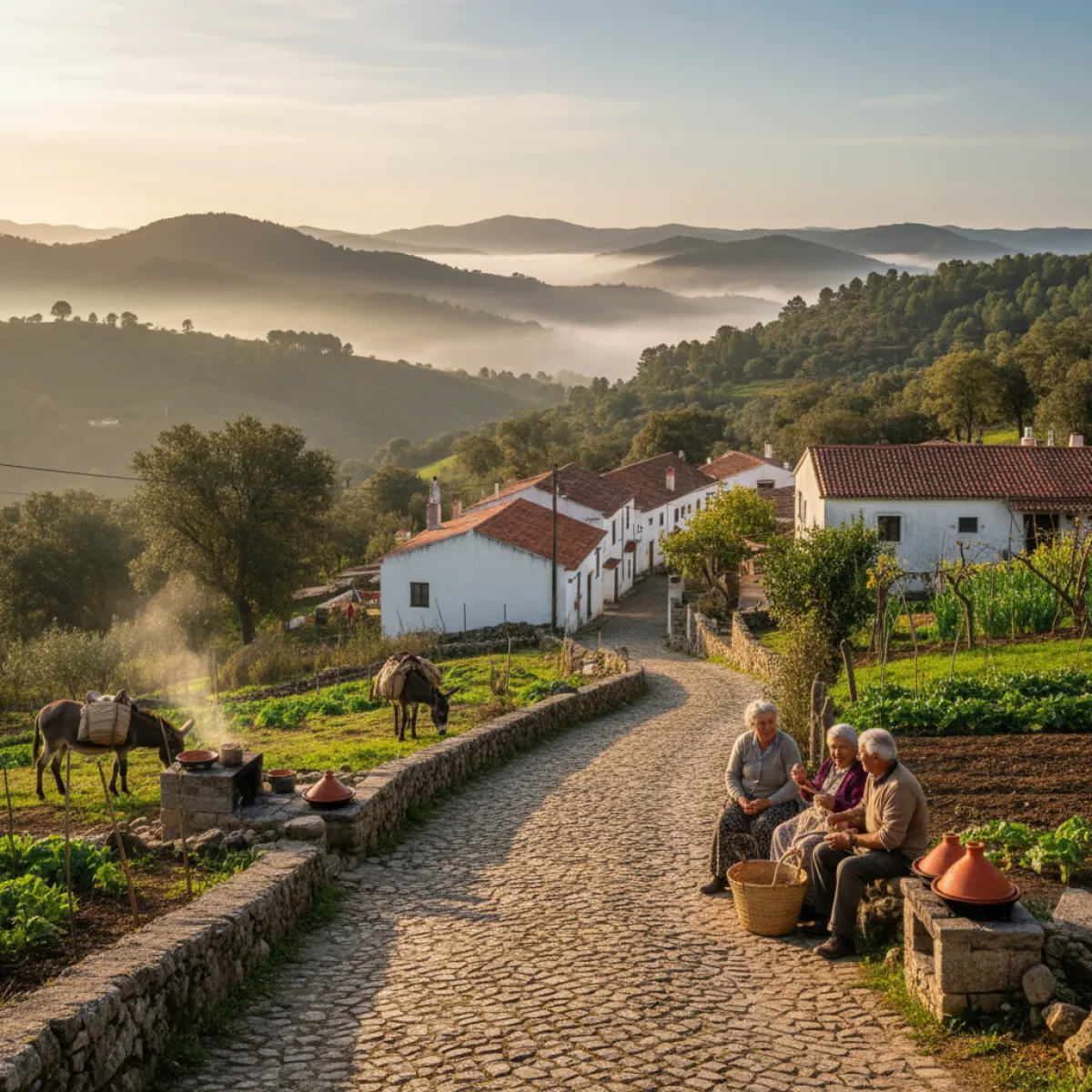
Wake at 7.30am. Yes, it's cold. Yes, you'll survive. Walk to the centre by the longer route. At this hour, before the first pastry shop opens, the dominant sound is somebody's chickens and an old van climbing the road to Fóia. It smells of woodsmoke and damp. This is the Monchique that pays the rent on the tourist posters and that nobody photographs.
Take breakfast slowly. Bread with butter, fresh serra cheese if you can get it, double espresso. In Monchique, unlike the coastal Algarve, breakfasts aren't choreographed for Nordic visitors with eggs Benedict. They're for bakers and postmen. Make use of that.
Mid-morning you have two options, and it depends on what you want from the weekend. If you want the serra in your legs, go up to Fóia. But not the obvious way. Park in Marmelete, or take the back road via Casas Velhas, and walk part of the route. The view from the top is the same for everyone. The view halfway up, with old stone tracks and gnarled olive trees, that one is yours if you know how to find it.
The alternative that changes the weekend
The second option, and this is what I recommend if you're a couple or a small group, is to do something instead of seeing things. Kneading bread in Alferce in a traditional cooking class is, without irony, the best thing you can do on a Monchique morning. Alferce is about 15 minutes by car from the village, a tiny place, and the class happens around a wood-burning oven that's been heating since 7am.
This isn't a sanitised workshop for Instagram. There's flour everywhere, somebody will tell you you're kneading badly, and afterwards you sit and eat your own bread with local olive oil, cheese, and house-made cured sausage. It costs proper money, yes. But it's the only activity all weekend that will stay in your physical memory, in the smell on your hands, for a week. Book ahead: there's no improvising on the day.
Saturday afternoon: the mistake is staying still
I'll be honest: spending the whole weekend in Monchique and immediate surroundings is possible but not obligatory. The serra rewards people who move between scales. There are two reasonable directions for the afternoon.
South, down the serra and into the water. Praia da Arrifana is about 50 minutes by car, turning towards Aljezur. It's the Vicentine coast, cold, dry, and everything the eastern Algarve isn't. If you've never put a board under your arm, this is a good excuse. Surf lessons at Arrifana, organised for people staying in Monchique, sort out transport and equipment. You return to Monchique by late afternoon, exhausted, salty, and properly hungry.
East, towards Silves. It's 30 minutes on the N124. Silves isn't Monchique, but it's the right complement. If you're travelling with kids, you'll be grateful. There's an honest guide on Silves with kids that tells you where to have lunch without complaints and where the castle stops being entertainment and starts being "I want to leave". Spoiler: by mid-afternoon.
If you're a couple in no hurry, my pick is Arrifana. The combination of bread in the morning and ocean in the afternoon is what makes this weekend memorable, instead of just another one.
Saturday night: eating where people actually eat
There's the temptation to have dinner at one of the so-called "view restaurants". I won't stop you, but here's the thing: what you pay extra for the panorama, you lose on the plate. In Monchique, the best dinners are inside the village, no scenic backdrop, on tables with plastic tablecloths that no magazine ever featured.
For Saturday night, you can return to Retiro da Bola if Friday went well. Or look for somewhere with a wood-burning oven serving free-range chicken, lamb stew, or cataplana (which in this part of the serra tends to be meat-based, not seafood, and better for it). Important: confirm they serve Saturday evening, because some smaller places close. Phone to book in early afternoon.
Pair it with regional wine. The Algarve has been producing serious reds in the last decade, and any decent place will have two or three worth attention on the list. Finish with medronho. Not the sweetened tourist version. The one that burns the way it should, served in a small glass, that will put you to sleep like a child.
Sunday: the morning that justifies the trip
Don't waste Sunday. Wake early again. Instead of a sit-down breakfast, buy bread from a village oven (there's a good one in Marmelete, but confirm the hours, which vary on Sundays) and eat it somewhere with a view, sitting on a rock. It's the best meal of the weekend and costs three euros.
For the rest of the morning, consider the Picota trail. It's the other Monchique mountain, lower than Fóia but, locals will tell you, prettier. Around two hours at a civilised pace. Bring water, decent footwear, and good sense: on Sunday mornings in April, fog hangs around until about 10am.
Return to the village around midday for a light final lunch. Petiscos, green bean soup if they have it, cheese. Don't load up if you still have a long drive ahead.
What to take and what to leave for next time
Take serra honey. Real honey, bought from a producer, not from a souvenir shop. Take regional olive oil in a bottle, and medronho if you genuinely like it (most people think they do and discover at home that they don't). Take fresh goat cheese if you have refrigerated transport. Don't take generic chouriço from a shop with golden lettering on the front: it's exactly the same as what you'd buy in a supermarket in Lisbon.
For the next visit, consider extending to Faro or Lagos. Each is a different face of the Algarve, and Monchique makes more sense in combination with them. Useful reading for that: a guide on local culture in Faro and a Lagos neighbourhood walkthrough that will save you a lot of wrong turns.
The honest budget
For a couple, two days and two nights, no extravagances but not skimping where it doesn't make sense: accommodation around 80 to 120 euros a night in a rural house or guesthouse, meals between 25 and 40 euros per person for dinner (lunches significantly cheaper), petrol that adds up because the serra eats kilometres, and 50 to 80 euros for one of the experiences (bread class or surf lesson). A reasonable total: 400 to 600 euros, depending on accommodation.
That's more than a packaged beach weekend in Albufeira. But it's a weekend, not a package. And it's Monchique, not a buffet queue. The difference lives in that gap.