Miranda do Douro: Which Museums Are Worth Your Time
Miranda do Douro has a handful of cultural spaces, but only two truly deserve your time. The Museu da Terra de Miranda is a surprisingly compelling ethnographic journey, and the Concathedral houses the Menino Jesus da Cartolinha, a Child Jesus figure that has worn military uniforms and a Barcelona FC kit.
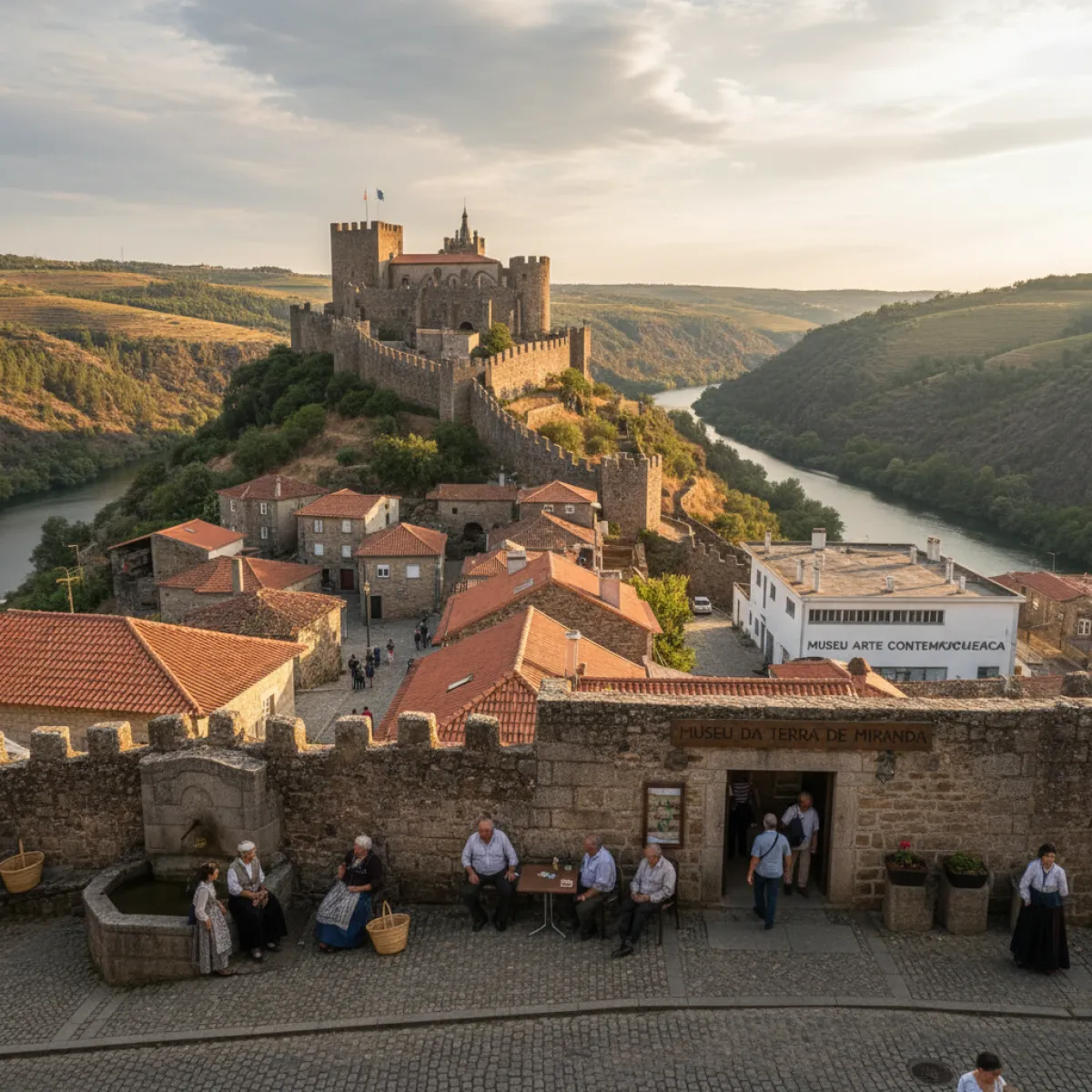
Let's be honest: Miranda do Douro is not Florence. You won't spend three days hopping between museums, guidebook in hand, feet aching by evening. The city is small, the historic centre takes half an hour to walk, and the museum offerings fit on one hand. But that's exactly why it matters to know where to spend your time. In a city with so few cultural spaces, the gap between a good one and a mediocre one is the gap between leaving Miranda thinking "what an extraordinary place" or "nice views, but there wasn't much to do."
Museu da Terra de Miranda: the only essential one
If you only have time for one indoor activity in Miranda do Douro, make it the Museu da Terra de Miranda. Founded in 1982 by Father António Mourinho, a man who spent his life documenting Mirandese culture before it disappeared, this ethnographic museum works even for people who normally run from ethnographic museums.
The collection is extensive and surprisingly well-curated: musical instruments, Pauliteiros dance costumes, shepherding tools, hunting weapons, ceramics, coins, and an archaeological section reaching back to the region's prehistory. But what sets this museum apart from the dozens of similar "land museums" scattered across Portugal's interior is context. Everything here connects to the Mirandese language, Portugal's second officially recognised language, and the museum does an admirable job explaining how that language shaped an entire region's identity.
Labels are in Portuguese and Mirandese, which is an experience in itself. At some point, you realise Mirandese isn't a quaint dialect trotted out for tourists. It's a living language with grammar, literature, and real speakers. If this sparks curiosity, there's a Mirandese language and Pauliteiros dance workshop that goes well beyond the surface and gives real insight into the cultural weight of these traditions.
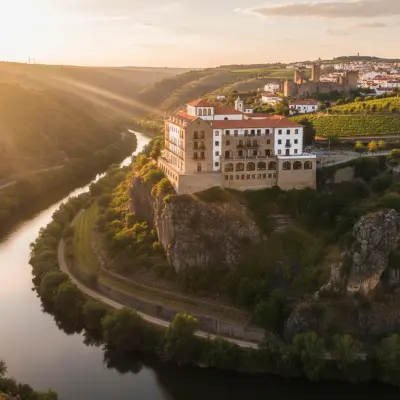
The museum was housed for years in the old Domus Municipalis, a 17th-century building in the historic centre. More recently, it relocated to the former Episcopal Palace while renovation works were underway, backed by over one million euros in investment. Check locally for the current location before visiting, because in small cities things change slowly, but they do change.
Allow 45 minutes to an hour if you want to see everything properly. Admission is cheap; check the current price at the ticket office.
The Concathedral and the Menino Jesus da Cartolinha: the museum that isn't one
Technically, the Concathedral of Miranda do Douro is not a museum. It's a church. But it's the most visited cultural space in the city, and frankly, it's more interesting than most museums in towns this size.
Built between 1552 and the late 16th century, it's a national monument in Mannerist style, with an altarpiece in the main chapel dedicated to Santa Maria Maior and 17th-century choir stalls worth examining. But nobody comes here for the choir stalls. They come for the Menino Jesus da Cartolinha, the Child Jesus in a Top Hat.
The story goes like this: in 1711, during the War of the Spanish Succession, with Miranda besieged and sacked by Castilian troops, a child dressed as a noble knight appeared on the walls, sword at his waist, shouting for the people to take up arms. The child appeared and vanished throughout the fighting. After the victory, he was never seen again. The Mirandese commissioned a sculpture of the Child Jesus dressed as a nobleman, complete with top hat and a ball in his hand, and placed it on a cathedral altar.
What makes this fascinating, and not just another religious legend, is that the Menino Jesus da Cartolinha is still regularly dressed. His clothes change according to the liturgical calendar: green in ordinary time, purple during Lent, red at Pentecost, white at Easter. And the faithful offer him outfits. Over the years, the Child has received an infantry captain's uniform, a firefighter's outfit, a National Republican Guard uniform, and even a Barcelona FC kit. This is not made up.
Entry to the Concathedral is free. Go in the morning, when it's quieter and light comes through the side windows.
Centro de Valorização do Burro de Miranda: charming, but know what to expect
The Mirandese donkey is an indigenous breed at risk of extinction, and the Centro de Valorização do Burro de Miranda exists to protect and promote these animals. It's a serious, worthwhile conservation project run by AEPGA.
That said, it's not a museum. It's a space where you can see donkeys, learn about the breed, and not much else. If you're travelling with children, it's a mandatory stop: they'll love it. If you're a couple on a cultural weekend, you can skip this without guilt. The visit takes about half an hour and you must book by email or phone beforehand. Don't just show up.
What you can skip without remorse
The Ruins of the Episcopal Palace are exactly what the name suggests: ruins. The cloister arcades and monumental doorway have some architectural interest, but there are no interpretive panels, no context, nothing that turns this into an experience beyond "looking at old stones." If you walk past on the way to the museum, glance over. Don't make a detour.
The Casa dos Távoras and Casa das Quatro Esquinas are historic buildings you see from the outside while strolling through the centre. They're not visitable spaces in any meaningful sense. Don't expect to enter, don't expect an exhibition. They're handsome, they have history, but they're part of the walk, not a destination.
Miranda do Douro Castle, dating from the 13th century, is partially preserved. It's worth walking up for the views over the Douro gorge and the feeling of being at the edge of the world, but as a museum experience it's thin. No interpretation centre, no structured information. It's a ruin with scenery.
What to do with your remaining time
And you will have time left. After the Museu da Terra de Miranda and the Concathedral, Miranda's museum itinerary is done. This is where the city shifts gears: instead of museums, Miranda offers landscape, food, and quiet.
The viewpoints at São João das Arribas and Fraga Amarela are spectacular. The Douro International Natural Park, with its granite gorges and Egyptian vultures, is reason enough to come here. And if you want to extend your Trás-os-Montes exploration, it's worth visiting Montesinho Natural Park north of Bragança, or making a detour to Chaves and its Roman thermal springs.
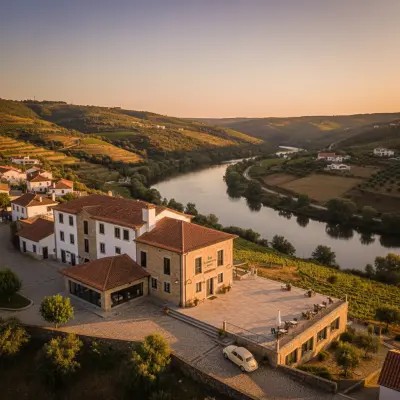
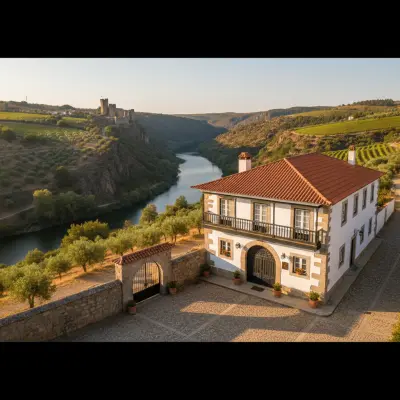
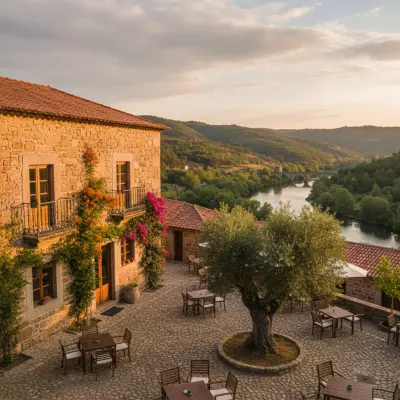
For accommodation, Miranda has honest options without big surprises. Hotel Turismo Miranda is the classic choice, with river views and a convenient location. Hotel Mirafresno is another solid option, slightly more low-key. For something with more character, Puial de l Douro (note the Mirandese name) is an interesting bet for those who want to feel the spirit of the place.
At the table, posta mirandesa is the non-negotiable dish. Mirandese veal, DOP breed, grilled over coals, served on a wooden board. Order it rare, with batata a murro (punched potatoes) and grelos (turnip greens). Prices at restaurants in the centre are reasonable for the quality of the meat. If you see alheira or butelo com casulas on the menu, order those too. These are Transmontano specialities done properly here.
Getting there and how long to stay
Miranda do Douro is about 90 km from Bragança and roughly 450 km from Lisbon. There's no train, no bus with a useful schedule. You need a car. The road from Bragança is good and beautiful, especially the stretch across the plateau. If coming from Spain, Zamora is about 50 km away.
One full day is enough to see everything: museum in the morning, Concathedral before lunch, a long lunch with posta mirandesa, viewpoints in the afternoon. If you want to include the Douro Internacional and the natural park trails, stay two nights. Miranda is not a place to rush.
If you enjoy the Transmontano spirit and want to keep exploring, Montalegre and its mountain kitchen are within reasonable distance and complement the experience well.