Manteigas: The Glacial Valley Hike Nobody Talks About
The Zêzere Glacial Valley is a finalist for Portugal's 7 Natural Wonders, yet on an off-season morning you can hike the entire 17-kilometre Glacier Route without seeing another person. Manteigas is the starting point for one of Portugal's finest walks, and the feijoca waiting at the finish justifies every metre of climb.
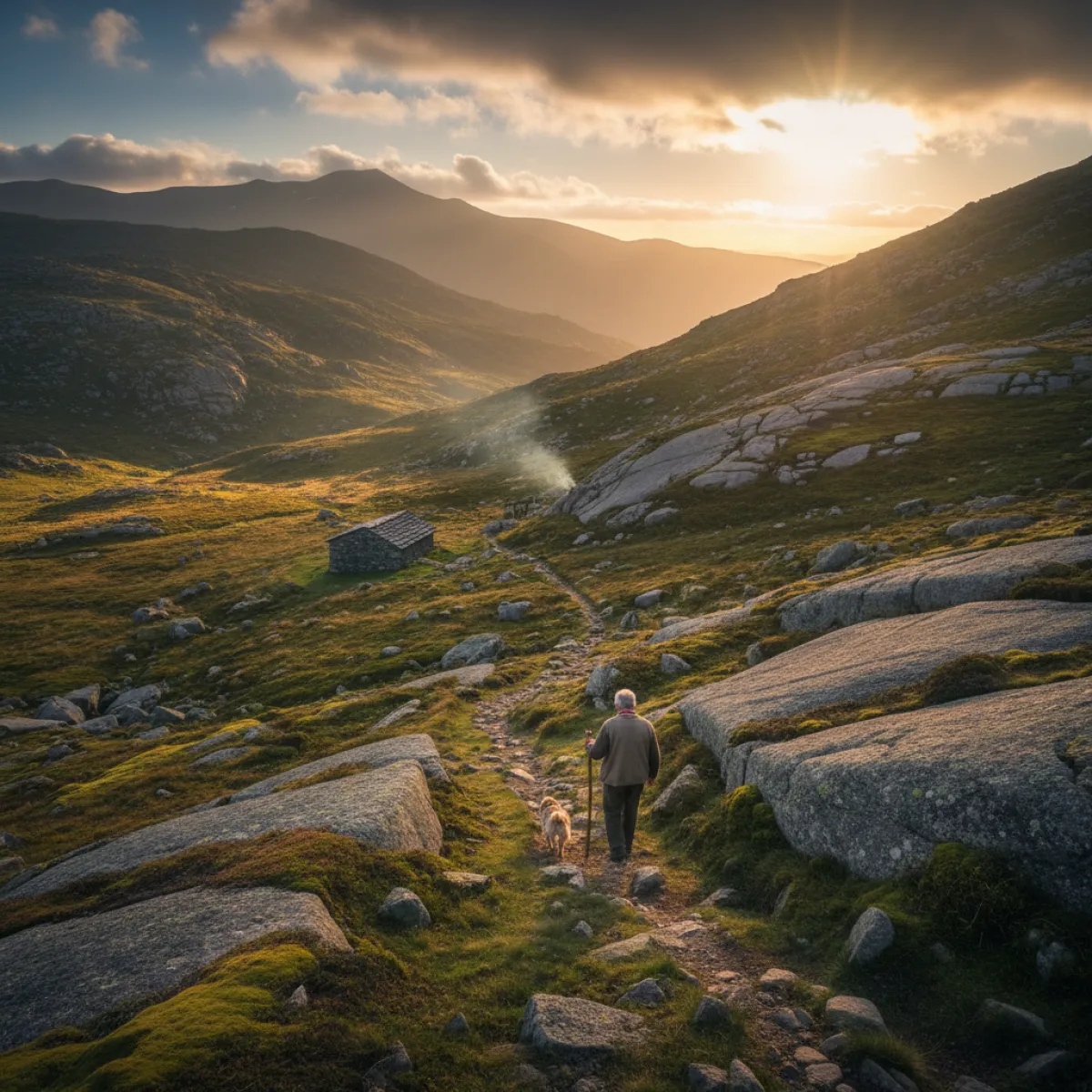
Here's the problem with Serra da Estrela. Everyone knows Torre, the highest point in mainland Portugal, where lines of cars park for selfies next to the obelisk and to buy requeijão from roadside stalls. And then there's Manteigas, the town wedged into the bottom of the valley that most visitors see from their car window, on the way to somewhere else. That's a mistake. A significant one.
Because what begins in Manteigas is, without exaggeration, one of the best hikes in Portugal. The PR6 MTG, the Glacier Route, covers 17.2 kilometres climbing through the Zêzere Glacial Valley, a U-shaped valley carved by ice thousands of years ago, a finalist for Portugal's 7 Natural Wonders. And yet, on a Tuesday morning outside peak season, it's entirely possible to complete the entire trail without crossing a single other person.
The Trail: What to Expect From 17 Kilometres
The Glacier Route starts in the centre of Manteigas, near the Town Hall. The first 3.5 kilometres are the hardest, a relentless climb with an average incline of 15% that sets your legs burning before you've properly warmed up. Don't underestimate this section. I've seen couples in running shoes give up at kilometre two, sitting on a rock with the look of deep regret.
But this is where the investment pays off. Once you gain altitude and the valley opens up ahead, you understand what glaciers did to this landscape. Granite walls rise on both sides, covered with erratic boulders that look like they were hurled by giants. The Zêzere River runs below, thin in summer, furious in spring. And the silence, this isn't poetic licence, it's literal. Apart from the wind and the occasional shriek of an eagle, there's nothing.
The trail passes some of the Serra's most spectacular points. Covão d'Ametade, at around 1,500 metres, is a natural amphitheatre created by glacial erosion, a cirque-shaped depression where low scrub and boulders create a landscape that looks more like Iceland than central Portugal. Further up, Cântaro Magro rises like an isolated granite tower, and Covão de Ferro, a glacial cirque at the head of the Alforfa stream valley, is perhaps the most impressive of all, with a small dam built in 1956 that took advantage of the cirque's natural shape.
What to Bring (And What Not To)
Hiking boots with good grip. Non-negotiable. The terrain is uneven, with loose rock and sections that demand care. Bring at least two litres of water per person, there are no reliable water sources along the route. A windbreaker, even in summer, because at 1,500 metres the weather changes in minutes. And food: good bread with Serra cheese, fruit, nuts. There are no cafés on the trail.
What not to bring: expectations of mobile signal. Above a certain altitude, it vanishes. Tell someone your plan before you head out.
The Shorter Alternative: Poço do Inferno
If 17 kilometres sound like too much, or you're travelling with children, the PR1 MTG, the Poço do Inferno Route, is an excellent alternative. It's only 2.5 kilometres as a loop, about ninety minutes, and the reward is a waterfall of around 10 metres that, in the harshest winters, freezes solid. It's a geological monument and one of Manteigas' signature landmarks.
A word of warning: the trail starts with steep climbs and the markings aren't always perfect. Go counterclockwise, you'll avoid difficult descents and arrive at the waterfall with fresher legs. For those wanting deeper context on this mountain's history, our guide to the Serra da Estrela Snow Wells Trail explains how snow was harvested and transported long before modern refrigeration.
When to Go
The best time for the Glacier Route is May to October. From November to March, snow can block sections of the trail and access to Covão d'Ametade gets cut off. Spring, April and May, has the advantage of wildflowers and snowmelt, which turns discreet streams into torrents with character. Summer is dry and hot in the valleys but cool at altitude. September is perhaps the perfect month: golden light, fewer people, mild temperatures.
Start early. At 7:30am in Manteigas, the town is still waking, the bakery is already open, the smell of fresh bread mixing with the cold mountain air. If you set off at 8am, you'll complete the trail in time for lunch before 2pm, which is exactly when you want to be sitting at a table.
Eating in Manteigas: The Reward
After 17 kilometres, the hunger isn't subtle. And Manteigas delivers. What this town does well is unpretentious mountain food, farinheiro, chouriça, morcela to start, followed by dishes that make sense at this altitude.
Feijoca à Manteigas is the dish to look for. It's a large bean variety, grown on the valley slopes and watered by the Zêzere, which when stewed with pork develops a velvety texture and a flavour you won't find anywhere else. It's the kind of dish that makes you wonder why feijoca doesn't have the fame of cozido à portuguesa. Trout, river-caught or locally farmed, served with butter and lemon is another safe bet.
Restaurante Central, in the middle of town, is a solid choice: 30 seats inside, a terrace, and a menu that covers the essentials, Serra cheese to start, feijoca, trout, veal with Serra cheese. The homemade puddings are worth it. Queijaria Manteigas, open since 2017, works as an artisanal cheese shop and wine bar, it's the place to taste and buy Serra da Estrela cheese from small local producers. Walk in, taste, buy a wheel to take home. You won't regret it.
Getting There
Manteigas is about 3.5 hours from Lisbon and 2.5 hours from Porto, via the A23 and then the N232 that drops into the valley. The final stretch, the road that snakes down the hillside, is beautiful and somewhat vertiginous, good preparation for what comes next. There's no reliable public transport to Manteigas, so a car is essentially mandatory.
For those wanting to combine with other destinations in the region, the one-day road trip from Covilhã to the Schist Villages works well as a complement, Covilhã is less than 30 minutes away and makes a good alternative base. And if you're visiting in spring, it's worth extending to Fundão to see the cherry blossoms in the Gardunha mountains, a spectacle that lasts just a few weeks between March and April.
Where to Stay
Manteigas has accommodation for various budgets, from rural tourism houses to small hotels. Stay in the town itself, it's small, everything is walkable, and waking up there, with the valley at your door, is part of the experience. Book ahead on summer weekends and long holiday weekends, because supply is limited and fills fast. Check prices and availability locally or on the usual booking sites.
What Nobody Else Tells You
Manteigas is a real mountain town. It doesn't have souvenir shops on every corner, doesn't have restaurants with menus in six languages, doesn't have bus tours. It has rock, river, forest, and people who live there year-round, even when the snow covers everything. That's why the hike works: because it hasn't been domesticated for tourists. The trails are well maintained, yes, but they're mountain trails, they demand respect, preparation, and a minimum of physical fitness.
And that's exactly what makes it special. In a country where mass tourism has already transformed entire destinations, Manteigas stays genuine because it's hard to reach and harder still to walk. Those who make the effort get the valley to themselves.
