Manteigas: Shooting the Zêzere Glacier Valley Without the Clichés
Manteigas isn't for amateurs; it's a canyon of granite and textile tradition where the Zêzere River is born amidst birches and ice. Discover how to shoot the Glacier Valley without the usual clichés, between plates of 'feijoca' beans and the rhythmic sound of burel looms.
Forget the Alps: Manteigas is Brutalist
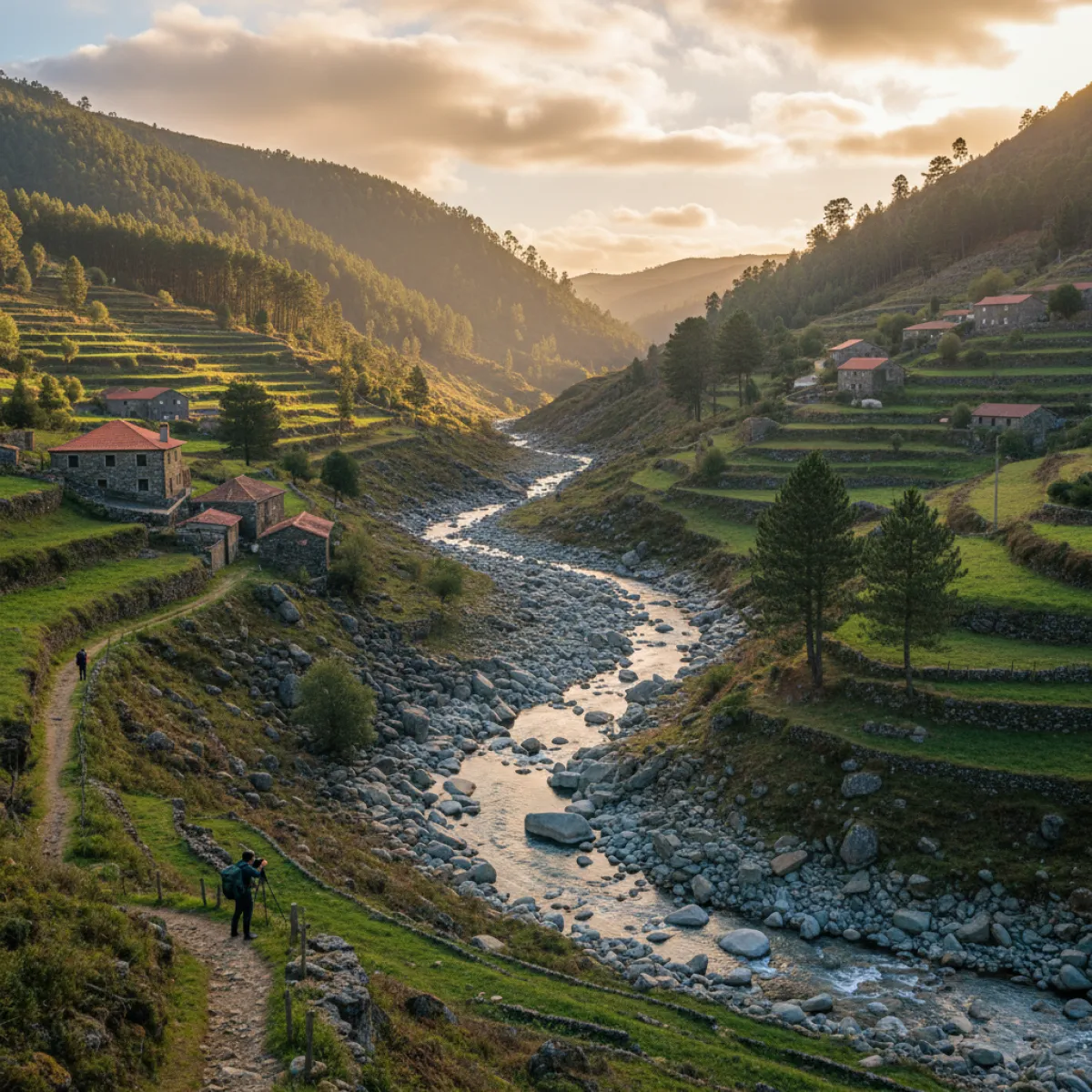
Arriving in Manteigas isn't a Sunday stroll; it's a negotiation with gravity. Whether you're coming from Lisbon or Porto, the ascent through Serra da Estrela demands attention to your brakes and a certain detachment from flat asphalt. The Zêzere Glacier Valley, stretching thirteen kilometers from Torre down to the village, doesn't look like those Swiss postcards travel agencies try to sell. It's harsher, grayer, and infinitely more interesting. It's a U-shaped scar left by ice that, thousands of years ago, was in no rush to carve through the granite.
For a photographer, Manteigas is an exercise in patience. Light here doesn't obey the rules of the plains. At 7 AM, while the rest of the country is waking up, the valley is still plunged in deep shadow, protected by steep slopes. It's in this moment that the village gains a particular texture: the smell of burning wood mixes with the freezing air descending from the mountain, and the only audible sound is the frantic rush of water through the 'levadas' that crisscross the narrow streets.
The Route of Modernism and the Way from Seia
Many make the mistake of ascending to Torre via Covilhã and ignoring the west side. Fatal error. The best way to enter the mountain spirit is to start in Seia. Before facing the curves that lead to Sabugueiro, it’s worth stopping to see how concrete and rock met in the 20th century. If you appreciate the intersection of architecture and altitude, I recommend exploring Modernism in the Mountains: The Architectural Legacy of Cottinelli Telmo in Seia. Understanding the visual impact of those straight lines in such an organic setting changes how we look at human interventions in the Estrela range.
As you cross the peak and begin the descent to Manteigas via the N338, the valley's scale reveals itself. Pull over at one of the few safe spots. Don't just use a wide-angle lens; switch to a telephoto and look for the textures of the rocks, the small flocks of Bordaleira sheep that look like white dots moving against the monumental gray, and the 'madas', the small, vibrant green pasture areas that endure on the valley floor.
Covão da Ametade: The Cathedral of Birches
Covão da Ametade is likely the most photographed spot in Portugal above a thousand meters. Is it a cliché? Yes. Should you ignore it? Absolutely not. Located at the base of Cântaro Magro, this ancient glacial cirque is an amphitheater of birch trees that, depending on the season, dress in vibrant green, melancholy gold, or a stark, skeletal white. In winter, when snow covers the branches, the silence is so dense you can hear the camera shutter echoing.
Photography tip: arrive before sunrise. When the first rays hit the top of Cântaro Magro while the base is still in shadow, the contrast is violent and magnificent. If there’s fog, which happens three out of four days in March, use a tripod and longer exposure times to soften the Zêzere River, which here is little more than a hurried stream.
The Industry of Cold: Burel and the Village
Manteigas doesn't just live on contemplation. This is a land of hard work, shaped by wool. The village sprawls across the slope with its granite houses and slate roofs, but the economic heart beats at Burel Mountain Originals. Visiting the factory isn't just a tourist tour; it's stepping into a time capsule where 19th-century looms continue to produce fabrics that now adorn luxury hotels in New York.
The sound is deafening, the smell of lanolin is omnipresent, and the light streaming through the factory's high windows is every documentarian's dream. Buy a scarf or a blanket. It's not a cheap souvenir; it's the survival gear required for anyone walking the Serra. Burel is waterproof and cuts through the wind like no synthetic material can.
Comfort Gastronomy: Feijoca and Cheese
Shooting in the cold builds an appetite. Forget salads. In Manteigas, the national dish is 'Feijoca'. These aren't just big beans; they are butter in legume form, slow-cooked with pork, local sausages, and sometimes a hint of mint. Head to O Berne or Santa Luzia. Order the feijoca and a red wine from Beira Interior. If the waiter tells you the portion is for two, believe him. Mountain hospitality does not recognize the concept of a 'small portion'.
Before leaving, you cannot ignore Queijo da Serra da Estrela. But be careful: there is cheese for tourists and there is real cheese. Look for the 'amanteigado' (buttery) version, the one that requires a spoon and has that characteristic thistle-flower tang. If you're lucky, you'll find a local producer selling directly. The price is around 20 to 25 euros per kilo, and it's worth every cent.
March Contrasts: From Snow to Flowers to Waves
March is a month of climatic schizophrenia in Portugal. You could be shooting a late blizzard in Manteigas in the morning and, by the next day, craving a completely different scene. If the austerity of the granite tires you, the descent south reveals another reality. A short distance away, Fundão is preparing for the cherry blossom spectacle. It’s worth checking The Ephemeral Bloom: A Guide to Seeing Cherry Blossoms in Fundão to plan the perfect chromatic contrast: the white of Manteigas' snow replaced by the white of Gardunha's flowers.
Or, if you’re a purist of movement and salt water, remember that while Manteigas freezes, the Portuguese coast is receiving some of the best spring swells. You can jump from the mountain to the sea following the tips in the Surfing Portugal in March: The Best Beaches and Conditions. This is the country's magic: three hours of driving separate glacial ice from the tubes of Peniche.
Poço do Inferno: The Fall and the Rock
About 10 kilometers from the village, climbing a narrow, winding road that looks like it was drawn by a madman, you’ll find Poço do Inferno (Hell’s Well). It’s a 10-meter waterfall that drops into a natural lagoon. The name is dramatic, but the place is one of serene, albeit cold, beauty. The rock here changes; it’s no longer just granite but includes schist, creating tones of rust and brown that contrast with the metallic blue of the water.
To photograph Poço do Inferno, avoid midday. Harsh light creates black shadows that ruin the delicacy of the waterfall. Prefer late afternoon or a cloudy day. Use an ND (neutral density) filter to achieve that 'silk' effect on the water without blowing out the whites. It’s a technical exercise that requires patience, but the final result, with green mosses framing the rock, is rewarding.
Logistics and Reality
Manteigas isn't for everyone. If you’re looking for nightlife and shopping malls, you’ve taken the wrong turn. Here, the night ends early, with the sound of the wind rattling the shutters. Where to stay? Casa das Penhas Douradas offers minimalist luxury and the best view over the village. If you prefer something more historical, Pousada de São Lourenço is an architectural landmark with interiors that respect the burel tradition.
Transportation: a car is essential. Don't trust regional bus schedules if you want to reach the photography spots before the sun. The roads are good, but in March, they can close due to snow or ice. Always check road conditions before heading up to Torre. And above all, respect the mountain. Fog in Manteigas can reduce visibility to zero in minutes, turning a photography outing into a dangerous situation.
At the end of the day, after downloading memory cards and wiping dew off your lens, what remains of Manteigas isn't just the visual record. It’s the feeling that the human scale is irrelevant in the face of geological time. The Zêzere Valley will be there long after our photos are lost. And it is precisely that indifference of the mountain that makes us want to return.
