Linhares da Beira: The Museum With No Walls or Ticket
Linhares da Beira has no ticketed museums, it has an entire medieval village where three Grão Vasco paintings hang in a parish church and a one-of-a-kind medieval forum hides in plain sight. Here's what deserves your time and what you can skip.
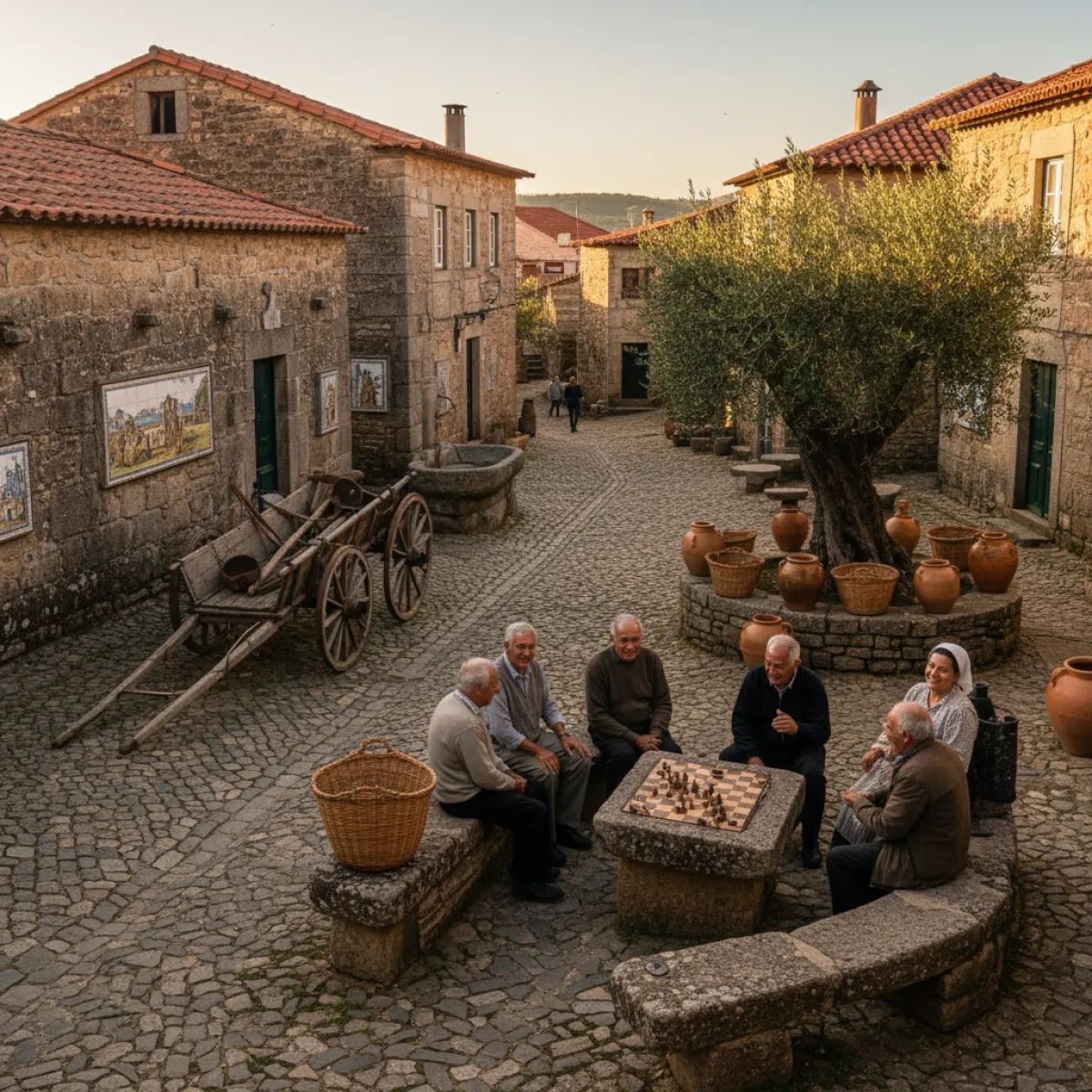
Let's be upfront: Linhares da Beira doesn't have museums. Not in the conventional sense, no white walls, no audio guides, no gift shop selling fridge magnets. What it has is an entire village that functions as an open-air museum, where every corner is a gallery and every granite stone carries a story. And like any museum, some rooms deserve your full attention while others you can walk through at pace.
So the question isn't "which museums to visit in Linhares", it's knowing where to stop, where to actually look, and what doesn't need more than five minutes of your time.
The Main Gallery: The Castle
Let's start with the obvious. Linhares Castle is why most people drive up here, and it's impossible to miss: it sits above 800 metres altitude, visible from the road long before you reach the village. Built in the 13th century, rebuilt by King D. Dinis in 1291, it features two crenellated towers, one facing east, the other west, and the remains of old cisterns in the parade ground.
Worth your time? Absolutely. But here's my advice, don't go at midday. Go in the late afternoon, when the light over the Mondego Valley turns golden and most visitors have already left. The walls are open and there's no admission fee. Climb the tallest tower. The view across the Serra da Estrela and the valley below explains exactly why Linhares became Portugal's paragliding capital, you get a taste of what the pilots see up there.
Time needed: 30 to 45 minutes if you explore both towers and the full perimeter. Bring water, there's no shade.
The Hidden Masterpiece: Grão Vasco's Paintings in the Parish Church
If the castle is the main gallery, the Parish Church is the room most people walk through without stopping, and they shouldn't. Built in the 12th century, rebuilt in the 17th, and dedicated to Nossa Senhora da Assunção, it's a relatively modest church from the outside. But inside hang three wood panel paintings attributed to Vasco Fernandes, known as Grão Vasco, the great master of Portuguese Renaissance painting.
The three works are the Adoration of the Magi, the Annunciation, and the Descent from the Cross. They're pieces of surprising quality for a space of this scale. Think about it: paintings that could hang in the Grão Vasco Museum in Viseu are here, in a village church, steps from the square where grandmothers sit in the sun.
Worth your time? Without question, this is the single most valuable point in the entire village in strictly artistic terms. The church is generally open during the day, but check locally for exact hours, especially outside peak season. Entry is free.
My advice: visit before the castle. Walk uphill with those paintings still in your mind, and by the time you reach the battlements, you'll have the full medieval context assembled.
The Medieval Forum: One of a Kind in Portugal
Halfway along the main street, almost beside the church, you'll find something that exists nowhere else in the country: a medieval forum. It's a rustic tribune, a stone structure raised above a granite bench, with a stone table at its centre, where the "good men" of the village gathered to govern, discuss affairs, and announce decisions to the population.
It's not monumental. There's no grand explanatory plaque. If you don't know what you're looking at, you'll walk past without a second glance. But that's precisely why it matters: it's a rare surviving example of local medieval governance, the kind of thing that appears as an abstract concept in history books but here stands in stone, right in front of you.
Worth your time? Yes, but five minutes is enough. The piece speaks for itself once you know what it is.
The Pillory: Pretty, Quick
Linhares' Pillory is a 16th-century Manueline piece topped with an armillary sphere and the Cross of Christ. It's handsome, well-preserved, and you can see it in two minutes as you walk between the church and the castle.
Worth a long stop? Not particularly. If you've seen pillories in other historic villages, this one won't add much, but it's a good reference point and makes for a decent photograph.
The Casa da Câmara: Look Up
The old Town Hall is a two-storey building with the coat of arms of Queen Maria on its facade. On the ground floor, if you look carefully at the left window, you can still see the bars from the former medieval prison. Government above, jail below. Medieval efficiency at its finest.
Worth your time? Walk past, look up, notice the bars, and move on. Two minutes well spent.
The Manueline Windows and the Jewish Quarter
Along Linhares' narrow lanes, granite houses display portals, gargoyles, and Manueline windows that are, in themselves, museum pieces. There's no formal route, the pleasure lies in walking unhurried and discovering them. Some of the finest are on the streets connecting the church square to the castle.
From the same area, traces of the old medieval Jewish quarter survive. Don't expect an entire neighbourhood or elaborate signage, these are architectural remnants woven into the village fabric.
Worth your time? Yes, if you like architecture and have an eye for detail. Allow 20 to 30 minutes to simply wander the narrowest streets without a destination.
The Solar dos Corte Real: The Exterior Will Do
The Solar dos Corte Real is an 18th-century Baroque manor house with an irregular polygonal plan, now converted into a Pousada hotel. It's a handsome building, but the interior is now a hotel, meaning, unless you're staying there, your interest is purely external.
Worth your time? Walk past the facade, appreciate the architecture, but don't waste time trying to get inside if you're not a guest.
What You Can Honestly Skip
Let's be honest: some guides sell Linhares as a full-day experience. It isn't. If you're efficient, castle, church, forum, a wander through the streets, three hours is more than enough. The tourist office, housed in the Chapel of Nosso Senhor dos Passos, can provide information and help arrange guided visits, but it's not an attraction in itself.
What you should not skip, however, is seeing Linhares from the air. If conditions allow, a paragliding flight over the Mondego Valley gives you a perspective no museum can match. Check locally for current prices, but it's worth the investment.
Before or After Linhares
Linhares da Beira works exceptionally well as part of a broader route through the Serra da Estrela and Beira Interior. If you're coming from the south, combine it with a road trip through the schist villages from Covilhã. In spring, the cherry blossom season in Fundão is within easy combining distance. And for those who want to push deeper into the mountains, Manteigas and the snow wells trail make an excellent next stop.
Practical Information
Linhares da Beira is in the municipality of Celorico da Beira, Guarda district. Access is by road, there's no practical public transport to the village. Park in the square at the bottom and walk up. The village is small and can be covered entirely on foot in under an hour.
Most points of interest are free to enter. The church may have variable hours, if it's closed, ask at the tourist office or the cafés in the square. Wear comfortable shoes: the streets are uneven granite with some steep sections.
Dining options within the village are limited, there are one or two small restaurants, but check availability, especially off-season. Celorico da Beira, a few kilometres away, has more choice and is also known for Serra da Estrela cheese, if you find aged cheese from a local producer, don't hesitate.
