Lamego’s Granite Logic: An Architectural Journey Through the Douro’s High Capital
Discover the tectonic beauty of Lamego through an architectural lens, from the theatrical Baroque staircase of Nossa Senhora dos Remédios to the austere Romanesque cistern. A sophisticated guide to the Douro's most resilient city.
The Granite Logic: Lamego’s Architecture of Permanence
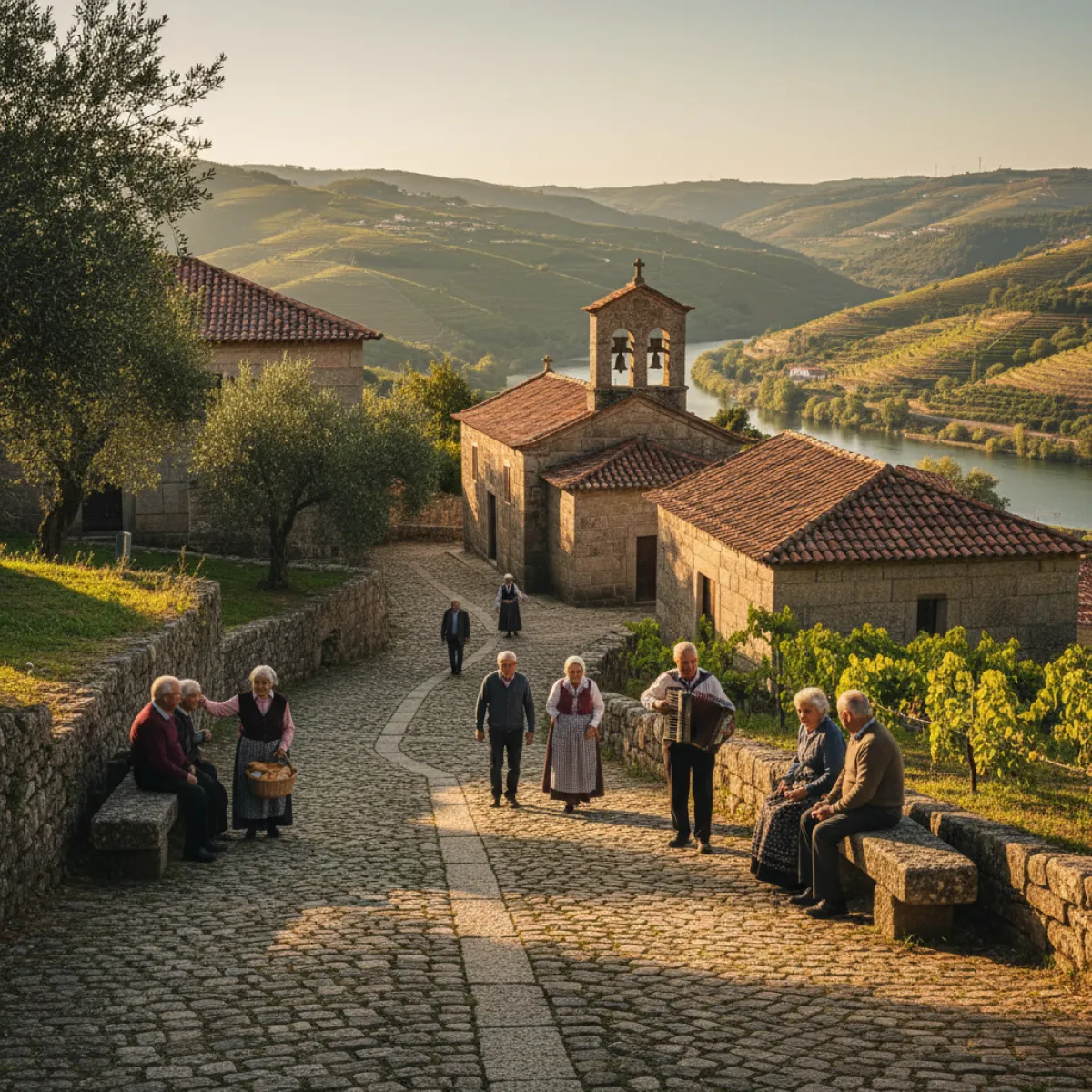
Lamego does not offer the immediate, sun-drenched gratification of a coastal resort or the frantic energy of Lisbon. This is a city that demands a slower pulse, a capacity for vertical observation, and a deep appreciation for the austere nobility of northern granite. Positioned at the historic gates of the Douro, Lamego is the region’s high capital, a city of stone that predates the nation itself. For the traveler who views architecture as a living dialogue between topography and human ambition, Lamego presents one of the most intellectually satisfying itineraries in the Iberian Peninsula.
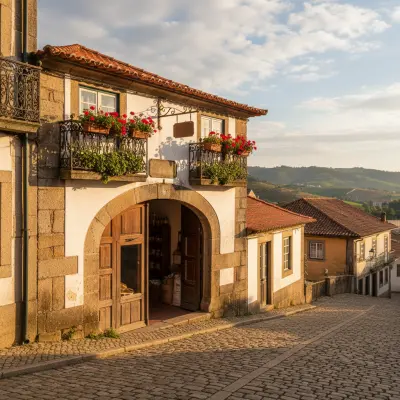
Walking through the urban core, the absence of artifice is striking. Here, luxury is found in the scale of the plazas and the rigorous proportions of Baroque window frames. For centuries, Lamego was a bastion of ecclesiastical and noble power, a fact reflected in the density of manor houses and convents that line its streets. There is no lightness here; instead, there is a monumental gravity that becomes particularly seductive when experienced in Lamego in Winter: The Geometry of Comfort and the Silence of Granite. During the colder months, the texture of the wet stone gains a tactile depth, revealing the precision of the stonemasons who carved the city’s very soul.
Baroque Grandeur: The Ascent to Heaven
If one monument defines Lamego’s silhouette, it is the Sanctuary of Nossa Senhora dos Remédios. However, to categorize it simply as a place of pilgrimage is a failure of architectural judgment. The sanctuary is, in reality, a masterpiece of urban scenography. The staircase cutting through the Santo Estêvão hill is a theatrical performance in granite and azulejo tiles, an ascending journey where each terrace introduces a new visual theme. It is The 686 Steps of Lamego: A Baroque Stairway to Heaven that provides a singular physical experience: the rhythm of one’s breath syncing with the cadence of the steps as the city below dissolves into a map of terracotta roofs.
The landings, such as the Court of Kings or the Pelican Fountain, are superb examples of the influence of Nicolau Nasoni, the architect who brought Italian Baroque sensibilities to the Portuguese North. The balance of volumes, the integration of water features with the dense surrounding forest, and the strategic use of blue-and-white tiles create a harmony that softens the inherent hardness of the stone. This is not architecture attempting to dominate the mountain, but rather giving the wild terrain an ordered, majestic voice.
The Cathedral and the Sonic Weight of Stone
Returning to the lower city, the Sé (Cathedral) of Lamego stands as an architectural palimpsest. Founded in the 12th century, its facade is a testament to the country’s stylistic evolution. The Gothic-flamboyant portal, with its intricate Manueline carvings, contrasts sharply with the Romanesque robustness of the tower, which once doubled as a prison. Stepping inside is a transition through centuries of intervention, from the painted ceilings by Nasoni to the gilded altars that capture the thin spears of light filtering through the clerestory.
The acoustics here are extraordinary, illustrating the intrinsic link between material and sound. The reverberation within these granite naves confers a solemnity that is explored in depth in The Resonance of Granite: Fado and the Sonic Identity of Lamego. Silence in this space is not empty; it is a weight-bearing silence that absorbs the footsteps of visitors and converts them into a rhythmic pulse echoing the identity of the Beira region.
The Subterranean Masterpiece: The Cistern
Beyond the obvious monuments, Lamego holds one of the purest examples of Romanesque utility in Portugal: the Cistern. Located in the Castle district, this subterranean structure is a rectangle of mathematical precision, supported by ogival arches that emerge directly from the water. It is a space of austere beauty, where the humble function of water storage has been elevated to an inverted cathedral aesthetic. It serves as a necessary counterpoint to the surface-level Baroque; here, the stone is stripped of ornament, focusing entirely on structure and proportion.
The Castle of Lamego, situated just above, completes this medieval triad. While only the walls and the keep remain, the vantage point it offers allows one to grasp the defensive logic and the organic growth of the city around the Sé. It is the perfect spot to observe how the town stretches toward the river, bridging the gap between the rugged highlands and The Inland Coast: River Escapes and the Luxury of Stillness in Lamego.
Inhabiting History: Where to Stay and What to Eat
To fully immerse oneself in this atmosphere of stone and memory, one’s choice of accommodation should reflect the city’s character. Casa do Pó is a notable example of how traditional architecture can be adapted for contemporary comfort without losing its essence. Tucked away in a quiet corner of the city, this vacation rental preserves the rustic granite exterior while offering an interior that prioritizes natural light and clean lines, respecting the local architectural heritage.
Regarding gastronomy, ignore the generic tourist menus on the main boulevards. Seek out the traditional bakeries for a genuine Bôla de Lamego, filled with cured ham, marinated pork, or cod. The pastry should be thin, slightly crisp, and saturated with the rich fats of the filling. For a more formal sitting, the slow-roasted kid (cabrito) with oven-baked rice is the regional gold standard. Pair it with a local sparkling wine (Raposeira or Murganheira); Lamego’s high-altitude vineyards produce an acidity and freshness that are the perfect foil to the region’s hearty cuisine.
Practical Essentials
- When to go: Autumn offers the golden hues of the harvest and a crisp, clean light. Winter, however, provides a poetic stillness that is ideal for architectural photography.
- Transportation: While a car is necessary for the Douro valley at large, the center of Lamego is best negotiated on foot. Wear shoes with grip; the granite cobbles can be treacherous when damp.
- Budget: Lamego remains exceptionally high-value. A top-tier lunch will cost roughly €30 per person, and the overall cost of living is noticeably lower than in Porto.
- Hidden Detail: Visit the Museu de Lamego, housed in the former Episcopal Palace. Its collection of 16th-century Flemish tapestries represents a form of "soft architecture" that is among the finest in Europe.