Lamego Museums: Which Are Worth It and Which to Skip
Lamego has more museums than seems reasonable for a town of twenty thousand, and not all of them deserve your time. One is among the best north of the Mondego. Others you can skip without missing anything. This guide tells you which is which.
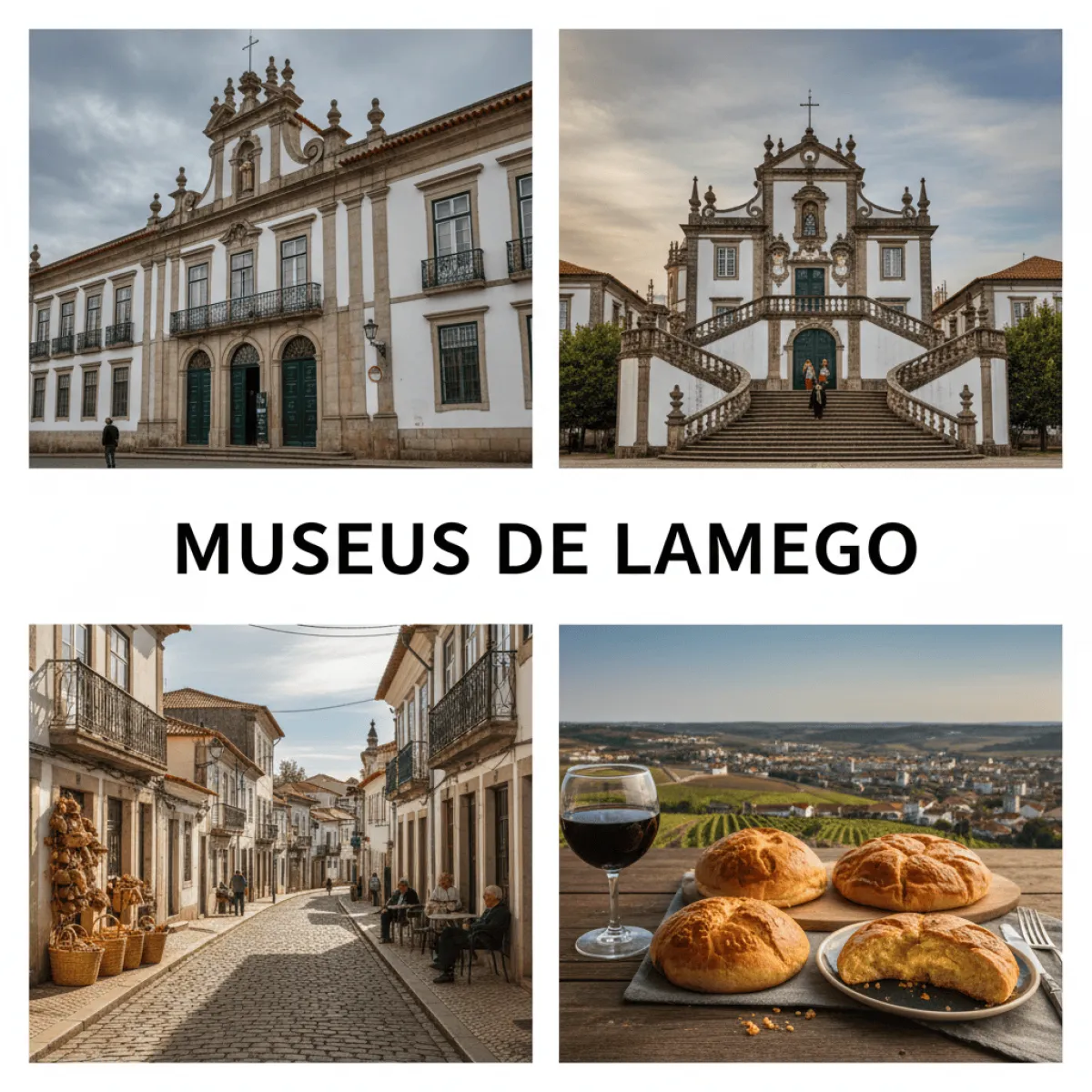
Lamego has an odd problem for a city its size: it has more museums than seems reasonable. In a town of twenty thousand people wedged between the Douro and the Serra das Meadas, you can visit four or five collections in a single day and walk out with the feeling that you saw the same thing over and over. You didn't. But you also didn't see anything properly, because you wandered from gallery to gallery without a plan. This guide is for the traveler who has half a day, maybe a full one, and would rather not waste it on dead vitrines when they could be drinking a glass of moscatel on the cathedral square.
Let me be blunt: not all of Lamego's museums are equal, and the actual hierarchy rarely matches what the tourist board leaflets imply. There is one museum that justifies the trip to the Douro all by itself. There are others that are pleasant if you happen to pass the door. And there is at least one you can postpone to your next life without missing anything essential.
The unmissable: Museu de Lamego
Let's start with what matters. The Museu de Lamego, housed in the former Episcopal Palace right next to the cathedral, is one of the three or four most important art museums north of the Mondego river. I am not exaggerating. This is where the five surviving panels of Vasco Fernandes's altarpiece live, the painter known as Grão Vasco, who painted them between 1506 and 1511 for the cathedral. The Creation of the Animals, the Annunciation, the Visitation, the Presentation in the Temple, and the Circumcision. Five panels of a technical and narrative quality that overturn the still-too-common notion that early 16th-century Portuguese painting was provincial.
If you only have time for one museum in Lamego, this is it. Plan on two hours minimum. The ticket office is at the entrance, the ticket costs a few euros (check locally, prices keep shifting), and there are discounts for students and seniors. It closes on Mondays, like virtually every museum in the country, which remains an irritation for anyone traveling on long weekends.
Beyond Grão Vasco, there is a remarkable collection of 16th-century Flemish tapestries, from the Brussels series, with mythological and biblical scenes. Tapestries are one of those things that photograph badly and impress in person. Take your time. Look at the gazes, the dogs under banquet tables, the hands. The sacred sculpture, especially the dressed figures used in processions, is another strong point, though less spectacular for untrained eyes.
How to actually enjoy it
Do not visit the Museu de Lamego after a heavy lunch. The rooms are dimly lit by curatorial choice, the silence is total, and sleep will catch up with anyone digesting Douro wine. The best hour is opening time, around ten in the morning. It is almost empty. You can stand for ten minutes in front of a single panel without anyone breathing behind you.
The honest one: Nossa Senhora dos Remédios museum core
Up there, at the top of the famous stairway, the Sanctuary of Nossa Senhora dos Remédios houses a small museum nucleus with religious pieces, ex-votos, vestments. It is not a museum in the full sense of the word. It is more of a complement to the sanctuary visit. But it has its interest, especially the collection of ex-votos: naïf paintings where 18th and 19th-century devotees give thanks for miracles with scenes of horses throwing riders, ships sinking, children with smallpox being saved. Visual anthropology in its purest form.
Don't go up there just for the museum. Go for the climb. Going up the 686 baroque steps is an experience in itself, and I wrote about it in detail elsewhere: the sanctuary stairway deserves its own chapter. For the museum, count twenty minutes. For the climb and the viewpoint at the top, count a morning.
The quirky one: Biscuit Museum
Yes, it exists. And yes, it is dedicated to the Lamego biscuit, that dry crunchy biscuit that gets dunked in port wine and that few tourists know about outside the region. The collection is modest: old bakery tools, photographs, some documentation about the confraternities and the convent sweet tradition. But it has charm and, more importantly, it has samples. Walking out of the museum without eating a freshly baked biscuit would be criminal.
For anyone traveling with children or with relatives who are tired of Marian iconography, this is a decent plan B. Twenty minutes inside, plus however long it takes to finish a packet of biscuits. Cost: symbolic.
What you can skip without regret
I won't name names because things change and some small municipal collections have been reorganized in the meantime. But in general, be suspicious of any place that advertises itself as a museum and turns out to be two rooms with poorly labeled pieces, no visitor route, and no fixed opening hours. Lamego has two or three of those. They appear on tourist maps, they seem to promise something, and when you arrive it is closed or the gentleman who opens the door doesn't know much more than the leaflet does.
Simple rule: if the place has no updated official website, no reference in a national museum catalog, and you can't confirm hours by phone, skip it. Use the time for something else.
How to structure a museum day
A well-planned day in Lamego, from a museum and food point of view, might look like this:
- 9:30 am: Breakfast with biscuits and coffee in the historic center.
- 10:00 am: Opening of the Museu de Lamego. Two hours, no rush.
- 12:30 pm: Lunch at a traditional restaurant. Meat pie, roasted kid, regional wines.
- 2:30 pm: Climb to Remédios, with a stop at the museum at the top.
- 4:30 pm: Descend slowly, photograph the baroque façade against the afternoon light.
- 5:30 pm: Coffee and another biscuit in Praça do Comércio.
- 7:00 pm: Aperitif. And here begins another story.
Where to sleep to do this right
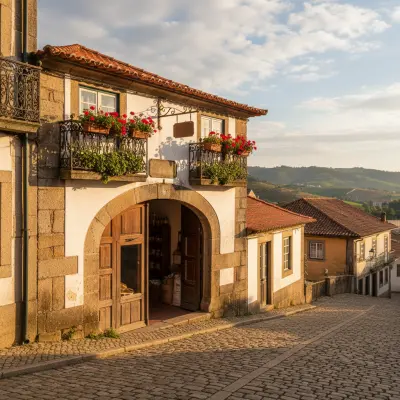
Lamego has no major hotels in the historic center, and so much the better. The best option for anyone who wants to wake up two minutes from the cathedral and the museum is a small house with personality. Casa do Pó is exactly that: a discreet vacation rental, well decorated, run by someone who knows how to host. Staying there saves you a car, parking, and the annoyance of driving up and down between periphery and center several times a day.
Drinking and dining after the museum
Visiting museums makes you hungry. It also makes you thirsty, especially when galleries are overheated in winter. Lamego is not a city of big nightlife in the capital sense, but it has three places that work well to close out the day.
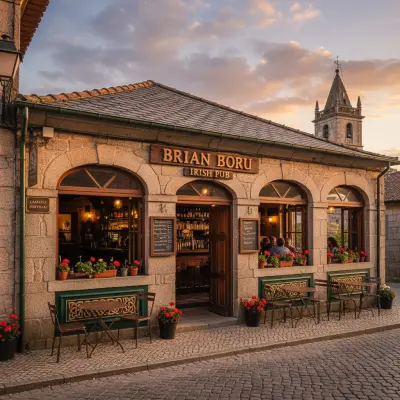
The Brian Boru Irish Pub is a pleasant anomaly in a city where you would expect only traditional taverns. Proper beer, relaxed atmosphere, ideal for conversation after hours of museum silence. Don't go expecting authentic Irish food, go for the beer and the mood.
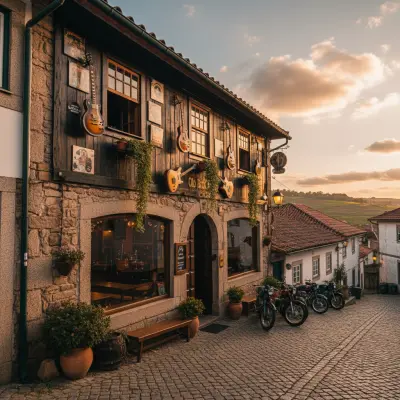
For those who prefer small plates and a glass of Douro wine with background music, Old Rock Caffe does the job. It is one of those places where the name promises one thing and the venue delivers another, calmer than the name would suggest.
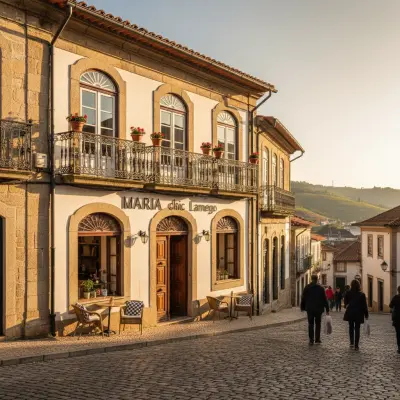
If you want more elaborate drinks, MARIA chic Lamego has a cocktail menu that is pleasantly out of step with what you would expect in an inland town. Careful atmosphere, small-town prices, good gin selection. It is the place to end the night, not to start it.
When to go, when to avoid
The worst time to see museums in Lamego is the end of August, during the Festival of Nossa Senhora dos Remédios. Not because the museums are worse, but because the city becomes impassable, restaurants fill up, and the queues at the Museu de Lamego, rare for the rest of the year, finally appear. Go between October and May, with a preference for a midweek morning in November or February, when the cold keeps tourists away and the Douro is at its most beautiful.
September and early October have another advantage that has nothing to do with museums: they are harvest months. Combine the museums in the morning with an afternoon stomping grapes, and the day transforms. I recommend the visit to Quinta da Pacheca during harvest season, even though it is on the other side of the river. It is the most memorable afternoon you can have within a fifty-kilometer radius.
Extending the trip
A city of museums alone gives you half a day. Lamego justifies more than that, and the surrounding region even more. If you have two or three days, it is worth crossing to Sabrosa, on the other side of the river, to visit estates where tour buses don't go. I wrote about the Sabrosa estates nobody talks about, and the natural starting point is Lamego.
For anyone here in June, there is an alternative program that breaks the usual circuit: the Santos Populares in Sabrosa don't have the scale of Lisbon's, but they have an intensity that big cities have already lost. In May, another excursion is worth it, this one to the northeast toward Torre de Moncorvo, where the flowering gardens repay the hour and a half of driving: I left a detailed guide to Torre de Moncorvo in spring for anyone who wants to push the trip beyond the obvious.
What to take home
Do not buy a Grão Vasco fridge magnet. Buy, instead, a good packet of Lamego biscuits, a bottle of regional sparkling wine (Lamego produces quality sparkling wine that is often overlooked), and, if the budget allows, a book reproduction of the Museu de Lamego catalog. The catalog is the best-produced thing to come out of Portuguese museum work in recent years. Worth every euro.
Practical summary
- Unmissable: Museu de Lamego, two to three hours.
- Worth the detour: the Remédios museum core, twenty minutes, combined with the climb.
- For a light moment: Biscuit Museum, more of a pause than a visit.
- Skip: anything advertised as a museum without fixed hours or proper catalog.
- Best time: midweek mornings, outside August.
- Where to sleep: historic center, small lodging.
- Where to close the day: a beer, a wine, a cocktail. In that order.
Lamego is a city that rewards travelers who decide what they want to see. Anyone who walks into every museum because they bought a multi-pass leaves tired and confused. Anyone who picks one and looks at it carefully, with time, leaves with the feeling of having understood something about Portuguese 16th-century painting, about baroque religiosity, about how an inland town managed, for centuries, to be more sophisticated than its scale would suggest. Make the second choice. You will sleep better.