Lamego After Dark: Wine and Petiscos for the Hungry
In Lamego, dinner is a strategic three-stop marathon: a glass of Douro white at Old Rock Caffe, proper petiscos at MARIA chic, and the closing Tawny at Brian Boru. An itinerary for those who know petiscos require method.
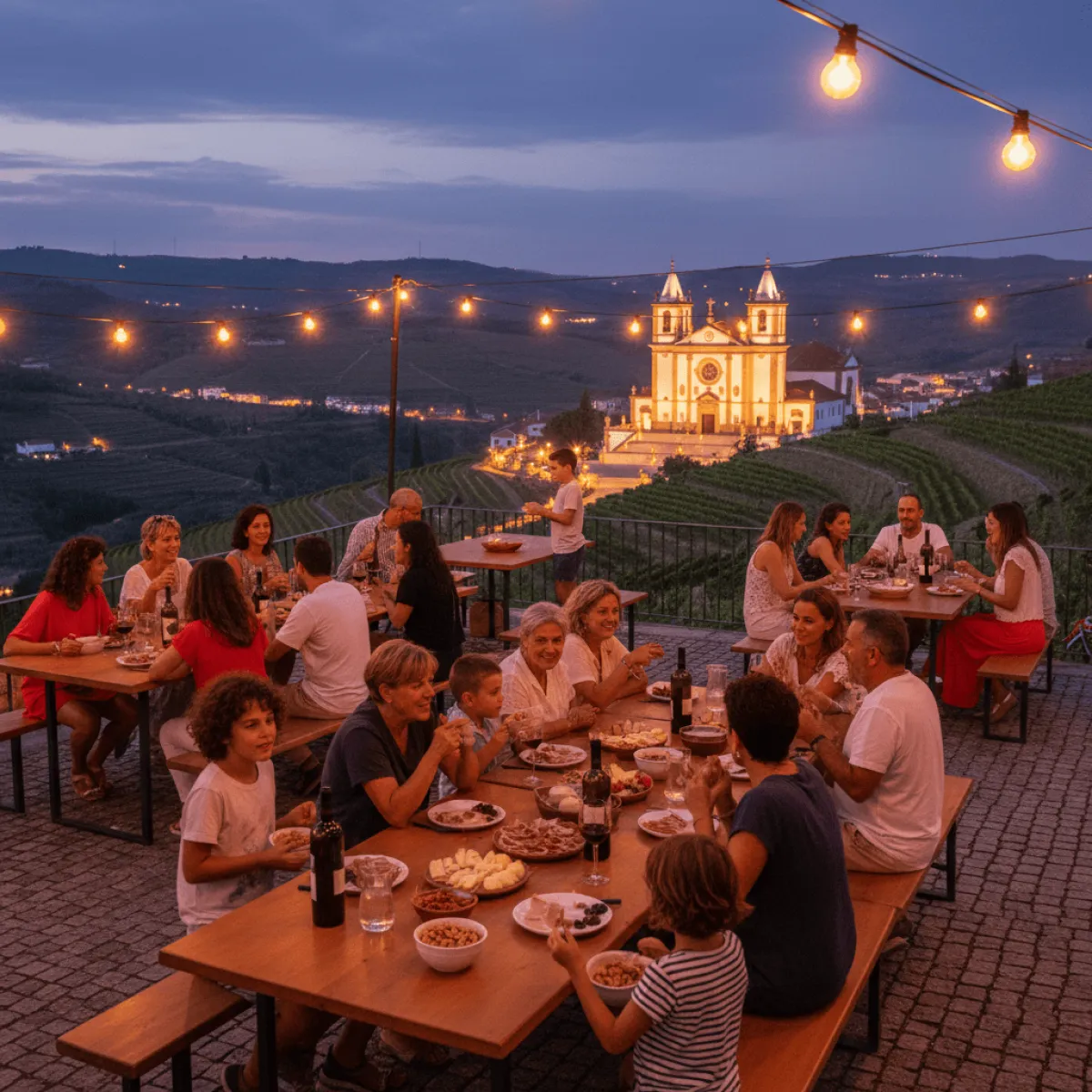
There is an hour in Lamego, around 6:30pm, when the light turns the colour of old roof tile and shopkeepers start closing their doors with the slow creak of someone who has been doing it for thirty years. That is the hour to start drinking. Not seriously, not yet, but with intent: a glass of Douro white near the cathedral, a board of Serra cheese with rye bread, and the patience of someone who knows the night will be long.
People forget about Lamego. Buses stop in Peso da Régua, dump tourists in Pinhão, and Lamego sits there, ten minutes above the southern bank of the Douro, with its baroque staircase and restaurants that serve proper roast kid. Their loss, your gain. Because dining in Lamego, done methodically, is one of the better ways to spend a night in northern Portugal. And yes, I said methodically. Petiscos require strategy. Otherwise you are full by 9pm with no appetite for the cabrito that was waiting for you at 10.
The plan: three stops, one principle
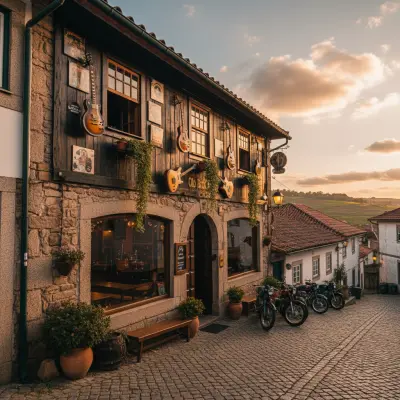
The principle is simple: never eat everything in one place. The pleasure of Lamego is in moving. An alheira here, a glass there, a shared board further on, and finishing the night somewhere a slightly out-of-tune guitar is still being played. Three stops is the right number. Four is ambitious. Five is for professionals or people who took an afternoon nap.
Before you start, a practical suggestion: sleep in Lamego. Do not try to do this and drive back to Porto, because there is real Douro wine on the table and the IP3 at night is no friend of anyone. Casa do Pó, a small rental in the historic centre, does exactly the job: decent bed, old walls, and the ability to walk home from dinner thinking of nothing more than the next glass of sparkling water.
Where to park (and why it matters)
Lamego has the flaw of nearly every Portuguese city with a historic centre: narrow streets, counterintuitive one-way systems, and parking that evaporates after 7pm. The fix is to leave the car at the lot near the Mercado Municipal, or in the lot up at the Santuário, and walk down. Twenty minutes descending the main staircase puts you in the centre. Twenty minutes climbing back up after dinner is less fun. Walk. Your liver will thank you.
First stop: the aperitif is a serious matter
The aperitif in Lamego is not a vodka tonic. It is a glass of Douro white, ideally a Rabigato or a Códega do Larinho, cold but not frozen, with something salty underneath. The olives from Trás-os-Montes they serve up here are half-sweet, half-bitter, with a thin sliver of garlic. Do not eat more than ten. You will need the stomach later.
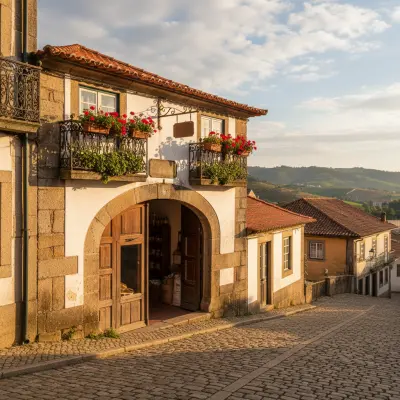
To get going, head to Old Rock Caffe, a centre-city spot with personality. It is not the most refined place in town, and that is part of its charm. Order a glass of white, or if it is already warm out, a craft beer on tap. The petiscos menu usually has a couple of decent boards to start: cheese, presunto, maybe small alheiras with salad. Do not make the mistake of ordering everything here. This is the warm-up. Eat one thing, drink two. Move on.
The wine rule
If you have never had Douro white in Lamego, you have two options: ask the server and trust them, or read the list carefully. Douro whites have changed everything in the last decade. It is no longer just the heavy grandfather red you used to expect in the North. There are whites with acidity, with minerality, with that green-citrus thing that begs for fish and cheese and olive. If you see a Niepoort white on the list, order it. If you see a Quinta da Pacheca white, order that too. If you see a Casa de Mouraz, stand up and hug the server.
Second stop: this is where you actually eat
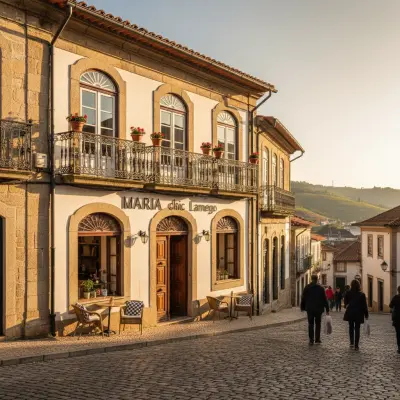
This is the stop where you sit. Not for too long, but long enough to order three or four mid-list plates and divide everything. MARIA chic Lamego, with its more polished proposition, is a good place for this phase of the night. The name might sound pretentious but the house serves serious things: modern petiscos with regional product, wine by the glass at civilised prices, and a room where you feel out of place neither in jeans nor in a buttoned shirt.
What to order? Start with a mixed board, or with something hot. If they have migas, order them. If they have pork cheeks, order those too. The rule is simple: two plates per person, shared, with a glass of Douro red per head. Not a heavy winter red. An elegant Douro, fresh, with red fruit. Something from the Pinhão bank if possible.
What NOT to order
Be honest with yourself: you are spending a night in Lamego, you are not going to order octopus à lagareiro. Octopus belongs in Olhão. Here, eat what comes from the land: pork, kid, alheiras, cheeses from Serra da Estrela and Tarouca. Grilled salmon in a Lamego restaurant is a surrender. If you see cod on the menu, hesitate. It might be good, but it might be the dish kept for the distracted tourist. Ask questions. Servers in Lamego are, on the whole, honest. If something is not good, they will tell you before you order.
Intermission: the stairs, always the stairs
Between the second and third stop, do something nobody does: climb a few of the Lamego stairs at night. Not all 686, obviously. But thirty or forty steps are enough to clear the head, make room for the next round, and see Lamego lit up from below, with the cathedral cut against the dark sky. If you want to do this properly during the day, there is a good experience dedicated to climbing all 686 steps of the Santuário, worth doing to understand the scale of that staircase in natural light.
At night the staircase has a different quality. It is empty. The tourists are gone. Only locals taking a shortcut home remain, and you can hear plates being washed in the kitchens of the restaurants below. Five minutes of this and you walk back to the third stop with renewed thirst.
Third stop: the last glass, no rush
The last stop is less about food and more about not wanting to go to bed. Lamego does not have Lisbon nightlife. It is a provincial city, with provincial logic, and that is a virtue. People know each other. Servers remember what you drank last week. Eleven at night in Lamego feels like two in the morning in Lisbon, without the tiredness.
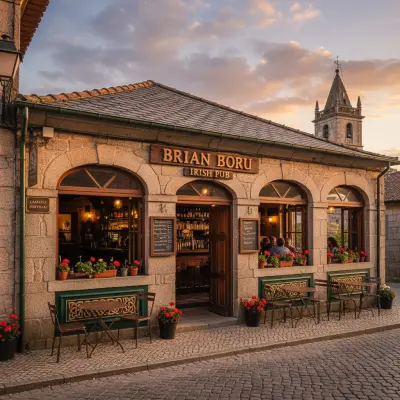
Brian Boru Irish Pub, a local institution for the closing glass, is where to end up. Yes, I know what you are thinking. I came to the Douro to finish in an Irish pub? Yes, you did. Because the truth is that Brian Boru is the place where the Portuguese local mixes with the foreigner who has been here two months studying oenology. You order a Guinness, or if you still have courage, a glass of Tawny Port, and you talk to whoever is next to you. That is how you learn anything about Lamego that is not in the guidebooks.
Tawny vs. Vintage: the right argument for late night
If you are going to finish with Port, do it properly. Tawny aged in cask, ten years minimum. Forget Vintage at this hour, it is too heavy. Tawny has walnuts, dried fruit, caramel, and it drinks at a slightly cool temperature, not iced. If you see a 20-year on the list and have five euros extra in your pocket, make the investment. Worth every cent.
The next day: the civilised hangover
The next day in Lamego should start late. Breakfast at 10, double coffee, fresh bread with butter. Then, depending on the season, there is always something to do in the Douro Vinhateiro that does not involve more alcohol. In September, the best of all is to throw yourself into a participatory grape harvest with foot-stomping at Quinta da Pacheca. Yes, with your feet, yes, barefoot, yes, it is as good as it sounds.
If it is spring, consider a short drive into the deeper Douro. Torre de Moncorvo in bloom is an underrated destination for parks and gardens in spring, an hour and a half by road through the interior, with stops at viewpoints along the way. In June, the detour to Sabrosa for Santos Populares is one of the most authentic festivals of the Douro. And if you take the wine thing seriously and want to see estates that are not in every guidebook, there is a good guide to the lesser-known estates of Sabrosa that avoids the obvious tourist stops.
Final notes for the hungry
A few things I learned the hard way, to share with anyone who has never been.
- Make reservations. Friday and Saturday night, especially at MARIA chic, without a booking is Russian roulette. Call the day before. Portuguese is better, but English works fine.
- Realistic costs: count 25 to 35 euros per person for a full night of petiscos and three glasses. More if you want a bottle. Lamego is among the best value places in the north.
- Do not eat before 8pm. Locals eat between 8:30 and 10. Before that, places are empty, and empty in Lamego is not atmosphere, it is just cold.
- Learn to ask for the bill. "A conta, por favor" works. Waiting for it to arrive unprompted, in Portugal, is a direct route to frustration.
- Bring a layer, even in July. Lamego sits at 500 metres of altitude, and nights cool down in a way that catches Algarve-bound tourists completely off guard.
The rest, you figure out. A good night in Lamego is not planned to the minute. You have a structure, three stops, and then you let the city do the rest. You sit at the bar, you listen to the conversations from the neighbouring table, you let the server suggest one more glass. At some point you realise it is past midnight and nobody seems in any hurry. That is exactly it. That is what you came here for.