Grilled Sardines in Barcelos: An Honest August Guide
Barcelos has no coastline, yet it's where some of August's best grilled sardines are eaten: at parish festas, dripping onto a slice of dense corn bread, washed down with cold red vinho verde. This guide covers how to find the festas, when to hit the grill, and why you should skip the restaurants entirely.
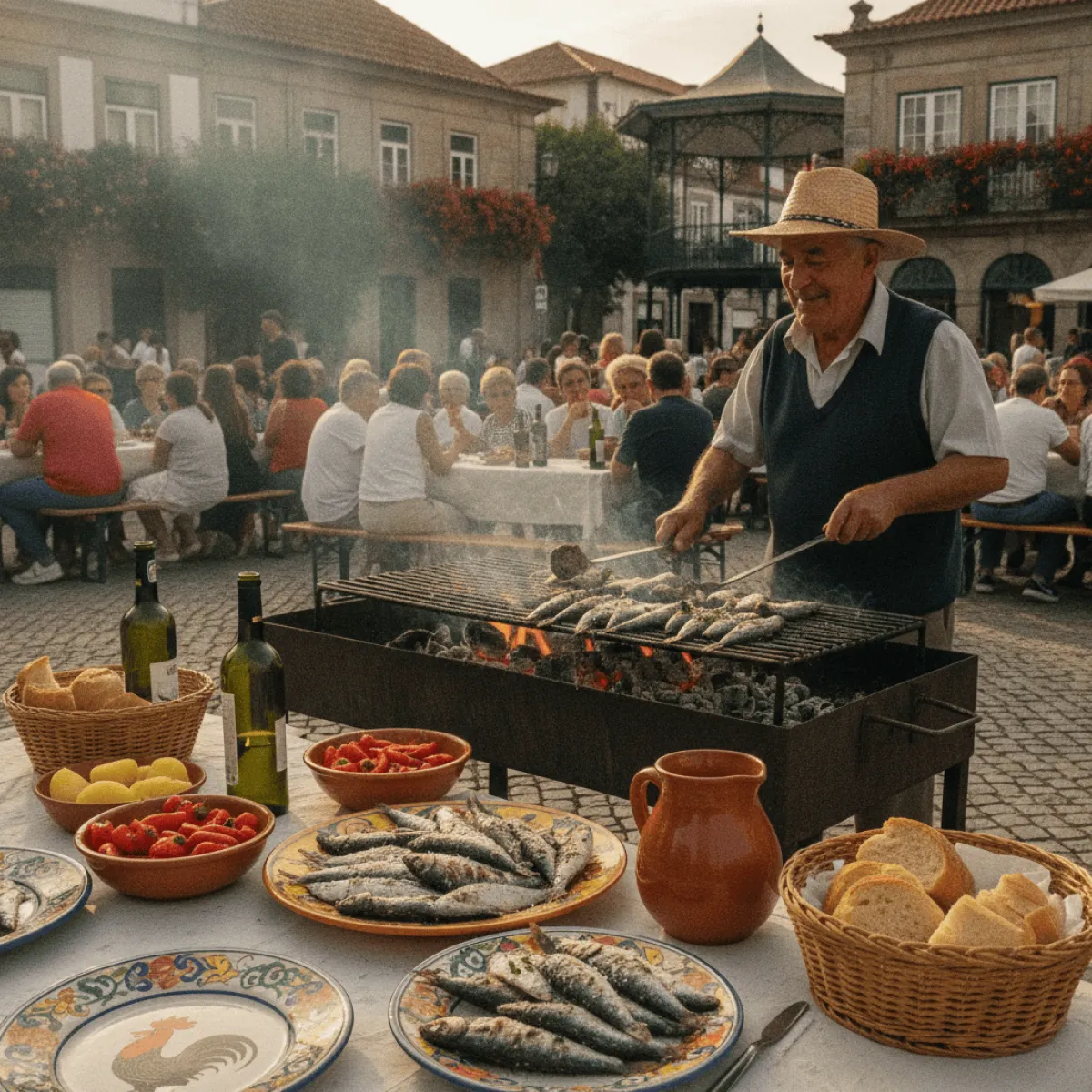
Let me get the awkward part out of the way: Barcelos has no beach. The Atlantic is about twenty kilometres west, at Esposende, and the river running through town, the Cávado, is famous for lamprey in March, not sardines in August. And yet some of the best grilled sardines I have ever eaten were not at a seafront terrace but at a village festa in the Minho, plastic plate in hand, charcoal smoke in my eyes, a cup of red vinho verde threatening to spill. August in and around Barcelos is exactly that. This guide is about how to find it.
First, the truth: the best August sardine is not in a restaurant
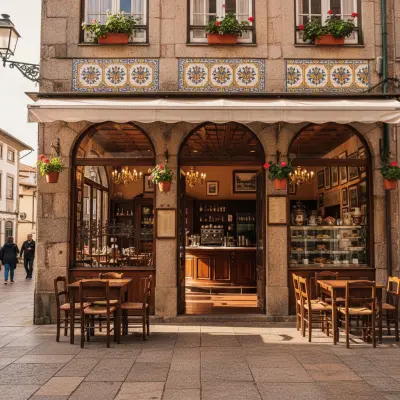
Don't go hunting the official calendar for an event literally called "Sardine Festival" in Barcelos. What exists is better and messier: August is when the parishes of the county hold their summer festas, and no Minho summer festa worth attending happens without a grill the size of a ping-pong table and a man in an apron who handles sardines like family. Dates shift every year and every parish, so the method is analogue: read the posters taped to lamp posts, ask at the parish council, or do what locals do and ask at a café counter. Historial Caffé, in the historic centre, is a good listening post: half an hour there and you'll know which festa is on this weekend, which one had the best sardinhada last year, and which one is just loud pop music and sad pork sandwiches.
Why do I insist on the festa over the restaurant? Three concrete reasons. First, scale. A grilled sardine needs live embers and volume, and a festa grill pushing out hundreds of sardines a night never lets the fish dry out waiting for customers. Second, price. At a parish festa, a plate of sardines with corn bread costs a few euros, far less than any August terrace on the coast. Check locally, and bring cash, because a card machine at a village festa is an optimistic concept. Third, context. The sardine is street food, hand food, shouted-conversation-over-the-band food. Sitting it on a tablecloth is a form of domestication.
How to recognise a good sardine (and eat it without embarrassing yourself)
There's a Portuguese saying that settles half the questions: sardines are good in the months without an R. May, June, July, August. That's when the fish runs fat, and fat is everything. A lean grilled sardine is a strip of leather with bones. A fat August sardine drips onto the coals, its skin blisters and crackles, and when it lands on a slice of broa, the dense Minho corn bread, the bread soaks up the fat and becomes the best bite of the meal. Practical rules for judging what lands in front of you:
- Sardines are grilled whole, ungutted, with nothing but coarse salt. If someone serves you a cleaned, filleted sardine, be suspicious.
- The skin should be charred and blistered, never pale. Charcoal only, never a flat-top. No smoke, no festa.
- You eat it with your hands, or close to it. Lift one fillet off the bone, flip, lift the other. The spine comes out whole if the fish was grilled properly.
- The canonical Minho sides: broa de milho, roasted peppers, boiled potatoes in their skins, tomato salad if someone nearby has a vegetable garden. Anything beyond that is noise.
- Drink: vinho verde, and at village festas often the red version, served cold. This is deep vinho verde country, and rough local red with fatty fish makes more sense in your mouth than on paper.
One opinion I will defend to the end: the sardine on top of the bread beats the sardine on the plate. Broa was engineered by centuries of Minho cooking to absorb fat. Always ask for broa. If you're handed sliced white bread, you are in the wrong place.
The ritual of a perfect day: market to smoke
If you can line up your visit with a Thursday in August, you've won. The Barcelos weekly market at Campo da República is one of the oldest and largest in Portugal, and it's where you see where festa food comes from: stalls of broa, peppers, oxheart tomatoes, and the earthenware it all gets served in. Arrive early, before the heat and the tour groups.
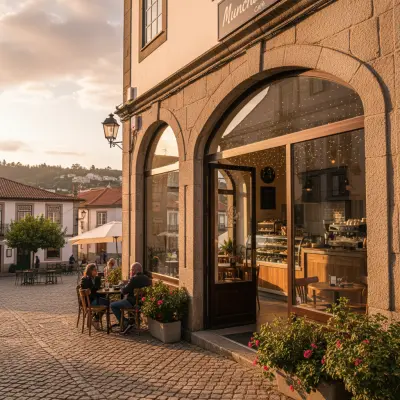
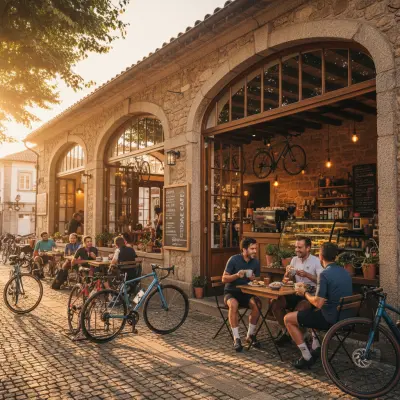
Before the market, eat a proper breakfast. Munchies Café does a brunch that lines your stomach for a day ending in sardines and wine, which, let's be honest, is responsible nutritional planning. If you arrived by bike, and increasingly people do, since the paths along the Cávado make for excellent gravel riding, Grava Bike Café is the obvious stop: decent coffee, a room full of people who understand pedals, and no side-eye at cleated shoes.
An August afternoon in Barcelos calls for shade and patience, because the festa only warms up after 8pm. Two suggestions that don't involve heavy digestion: cross the medieval bridge over the Cávado and wander the ruins of the Palace of the Counts of Barcelos, or make something with your hands. The hands-on pottery and figurado workshops are the honest version of a souvenir: instead of buying yet another mass-produced rooster, you learn why this town is the capital of Portuguese figurative pottery and leave with clay under your fingernails. Book ahead in August.
The night: how a sardinhada actually works
The Minho festa has its own choreography and it pays to know it. Things start in the late afternoon, but the right time to eat is between 8pm and 9:30pm, when the grill has found its rhythm and the queue hasn't yet hit half an hour. After 10pm, between the concert and the collective hunger, the wait grows and the prettiest sardines are gone.
The system is usually simple: pay for a plate at a stall, get a ticket or the food directly, and eat standing up or at long shared tables next to strangers who stop being strangers within twenty minutes. This is where August in Barcelos beats any restaurant dinner: the woman beside you explains that a sardine is eaten tail-first, the man across the table refills your cup without asking, and the band plays a cover of an 80s hit that is objectively bad and subjectively perfect.
Basic etiquette: don't ask for your sardine "well done" or "without the head", don't ask if there's a sauce, and compliment the grilling to the man in the apron, which is the strongest social currency in the Minho in August. Bring mosquito repellent if the festa is near the river. No guidebook tells you this. They should.
What if there's no festa that night?
It happens. Not every August evening has a festa within walking distance. In that case, the honest fallback is the grill houses and tascas in and around town that cook fish over charcoal through the summer. I won't invent names or opening hours for you: ask at the café where you had breakfast, because in Barcelos food intelligence travels across the counter more reliably than through any app. The golden rule stands: follow the smoke. If a street smells of charcoal and salt, you're close.
Practical: getting there, spending, planning
Barcelos has a station on the Minho railway line, with direct trains from Porto (Campanhã) in roughly an hour. It is, frankly, the best way to attend a sardinhada: nobody should drive home after a properly enjoyed Minho festa. If you drive anyway, expect difficult parking on festa nights and park far from the grounds without complaint; a ten-minute walk through charcoal-scented air is part of the experience.
A realistic budget for a sardine night: between the plate, the bread, the wine and a fartura (the fairground fried dough, and yes, have one, August is not a month for discipline), you'll spend well below the cost of an average dinner on the coast. Entry to parish festas is generally free. Exact prices vary festa to festa, so check locally and carry cash.
Two final calendar notes. If the idea of Barcelos in full festa mode appeals but August doesn't work for you, the town's big event is actually in May: the Festa das Cruzes, which we covered in an honest guide with zero postcard varnish. And if you're travelling with children, a festa works surprisingly well for families until a certain hour: Portuguese kids grow up eating sardines on bread in their grandparents' laps, and yours will survive it too. After 11pm, when the volume climbs, it becomes an adults-only conversation.
The summary, for the diagonal readers: come on an August weekend, ask about festas at a café counter, arrive at the festa before 9pm, order sardines with broa and roasted peppers, drink the house vinho verde, eat with your hands and thank the man at the grill. Barcelos has no sea. It has something better: embers, corn bread, and people who know exactly what to do with both.