Barcelos Pottery: Hands-On Figurado and Galo Workshops
Make your own Barcelos Rooster with the figurado masters of Galegos Santa Maria, through the municipality's Experiências Criativas programme. Book 8 to 30 days ahead, with prices generally from 4.50€ to 50€.
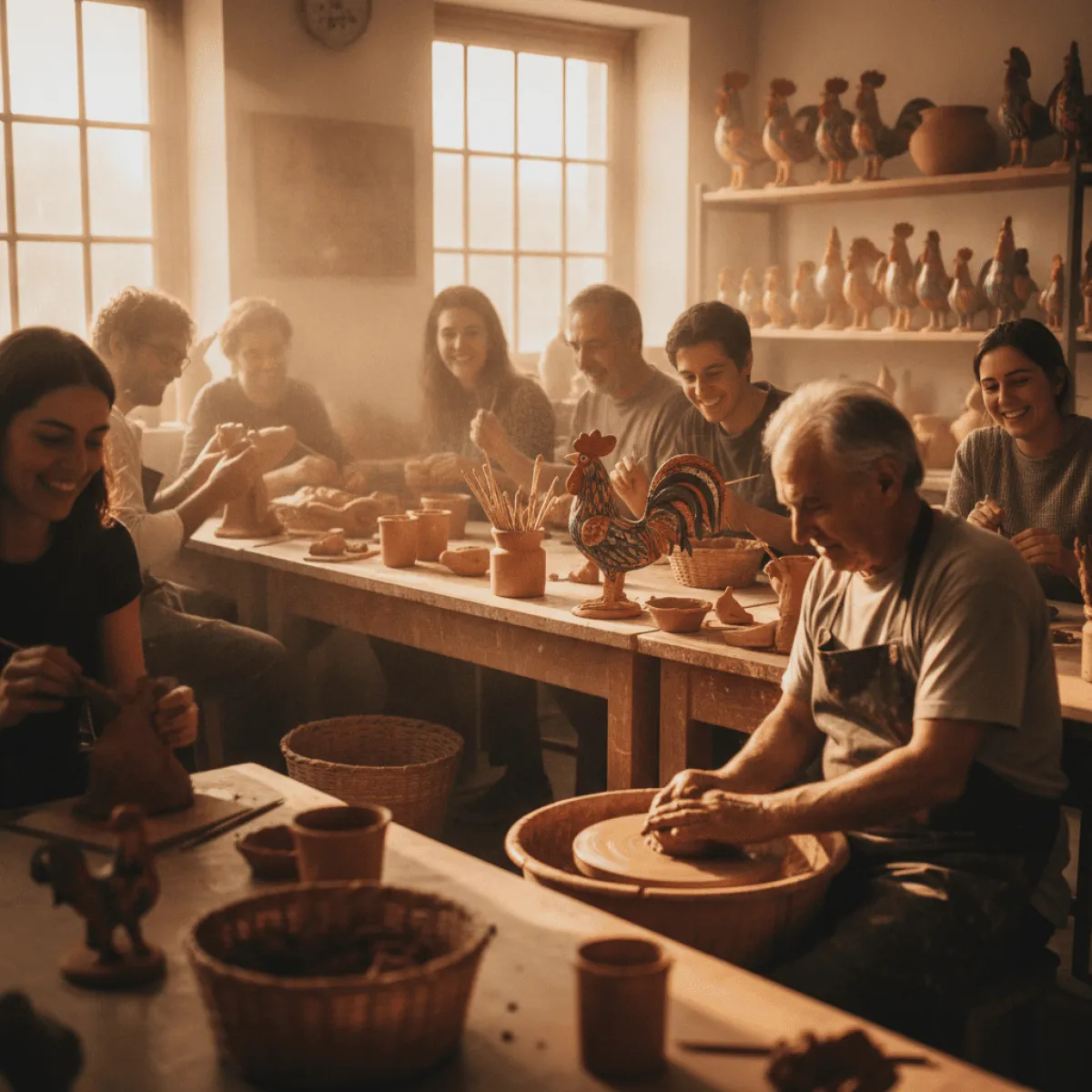
The Barcelos Rooster sits in every souvenir shop in Portugal, yet almost nobody watches one being made. They are born in family homes scattered across the rural parishes south of the town, mostly in Galegos Santa Maria, where red clay is shaped by hands that have done this for decades. And yes, you can walk in, sit at the workbench, and make your own figurado. This is not a staged show for tourists: these are real workshops in real working ateliers.
Who runs it (and what it actually is)
The programme is called Experiências Criativas (Creative Experiences), coordinated by the Barcelos municipality, which holds UNESCO Creative City status for crafts. It is not a tour company. It is a network of certified master artisans who open their ateliers for hands-on sessions. On the figurado side you learn "Modelação de Figurado de Barcelos", the hand-modelling of the little figures, musicians, and the famous rooster, and there are also "À Roda de Oleiro" sessions on the potter's wheel.
My honest opinion, having looked at how it works: if you have never touched clay, and especially with kids, hand-modelling figurado beats the wheel. The wheel is frustrating for the first twenty minutes; figurado lets you leave with something recognisable. If you only do one, do the figurado.
The ateliers where it happens
The heart of figurado is Galegos Santa Maria, and a few names are worth the trip for the conversation alone:
- Irmãos Baraça (Vítor and Moisés), Rua de Santo Amaro, no. 464, Galegos Santa Maria. Tel. +351 253 841 785 / +351 969 624 150. Website: baraca-artesanato.pt. They brought a more contemporary style to figurado and work entirely by hand.
- Irmãos Mistério, Rua de Santo Amaro, no. 511, Galegos Santa Maria. Tel. +351 253 841 227.
- António Ramalho, Rua Júlia Ramalho, no. 51, Galegos S. Martinho. Tel. +351 253 841 520. A small visitable space with pieces from several generations of his family.
- Júlia Côta, Rua Júlia Côta, no. 76, Manhente. Tel. +351 253 841 776. Website: juliacota.com. Her house-atelier is the place to watch the pieces being built and hear family stories.
Important: not every master runs a workshop at all times, and each works at their own pace. You book in advance, usually 8 to 30 days ahead, and groups range from a handful of people up to around 25. If you are solo or a couple, ask when booking whether an individual session is possible, because it depends on the artisan.
What the session is like, step by step
You arrive at the atelier, which is often literally the workshop attached to the house. Do not expect a polished studio with ambient music: expect benches loaded with clay, moulds hanging on the wall, dust, and a master who keeps working while talking. That is exactly the appeal.
You start with clay already prepared. The master shows the base gesture, usually a simple rooster or a figure, and then it is your turn. You shape the body, pull the tail, open the beak, mark the wings. The part that surprises everyone is the painting: traditional figurado uses bold colours over a pale base, and the dots and flowers are done with a fine tool, point by point. This is where you understand why a small piece takes as long as it does.
The best moment, for me, is not finishing the piece. It is when the master picks up your crooked attempt, corrects two gestures with his fingers, and suddenly it actually looks like a rooster. That is the gap between making and mastering, right there.
The piece needs to dry, and if it is fired, it will not be ready the same day. Confirm when booking whether you take your raw piece home, whether they fire it and send it later, or whether you paint an already finished piece. This varies from atelier to atelier, so confirm directly with the provider.
What it costs
The Experiências Criativas programme generally runs from around 4.50€ to 50€ per person, depending on the length and complexity of the workshop. A short, simple modelling session sits at the bottom of the scale; longer sessions or ones that include firing cost more. Exact prices are confirmed at booking, since they depend on the master and the type of piece.
Practical tips
- Clothing: wear something you do not mind staining. Red clay and paint cling to everything. Short nails help more than you would think.
- Getting there: the ateliers are in rural parishes 5 to 10 minutes by car from the centre. Public transport is awkward and unreliable, so plan on a car or taxi. Pair your GPS with the house number, because these are small streets.
- Booking: call or email ahead. These are working ateliers, not drop-in shops with a front desk.
- When to go: Thursday is Barcelos market day, one of the largest in Portugal, full of figurado, painted roosters, and basketry. Do the workshop in the morning and the market after, or the other way around.
- Kids: modelling is great for families. If you are travelling with children, this honest Barcelos family guide helps you build the rest of the day.
Before or after the workshop
To frame what you are about to do, the Museu de Olaria tells the story of this ceramic tradition. To know what is actually worth your time, read our guide to Barcelos museums first. And since the morning needs fuel, start with a proper coffee: Historial Caffé in the centre is a solid stop, with more options in our Barcelos café guide.
You leave with something few visitors ever get: a rooster you made with your own hands, suitably wonky, and a precise sense of the work behind every piece you saw in those shop windows. For what it gives you, it is cheap.