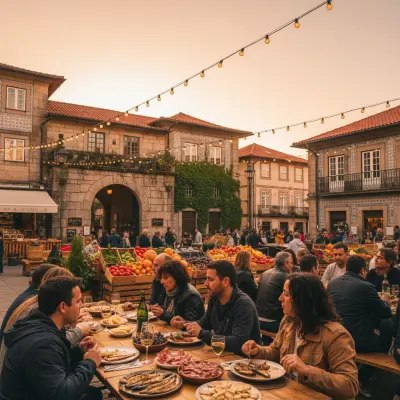
Granite Resonance: Fado and the Sonic Soul of Bragança
Discover how Bragança merges the melancholy of fado with the raw energy of traditional bagpipes. A deep dive into the musical soul and granitic silence of Portugal's wild northeast.
The Acoustics of Isolation
Bragança is not a city that reveals itself at first glance, nor at first sound. Perched in the far northeastern corner of Portugal, where the Mirandese plateau meets rugged mountains, the city possesses its own distinct sonic signature, shaped by the wind whistling through castle battlements and the almost liturgical silence of its stone-paved streets. For those arriving from the maritime hum of Lisbon or the melodic humidity of Porto, Bragança offers a different frequency: a resonance of granite and isolation that, paradoxically, cradles one of the country's most authentic and least explored musical expressions.
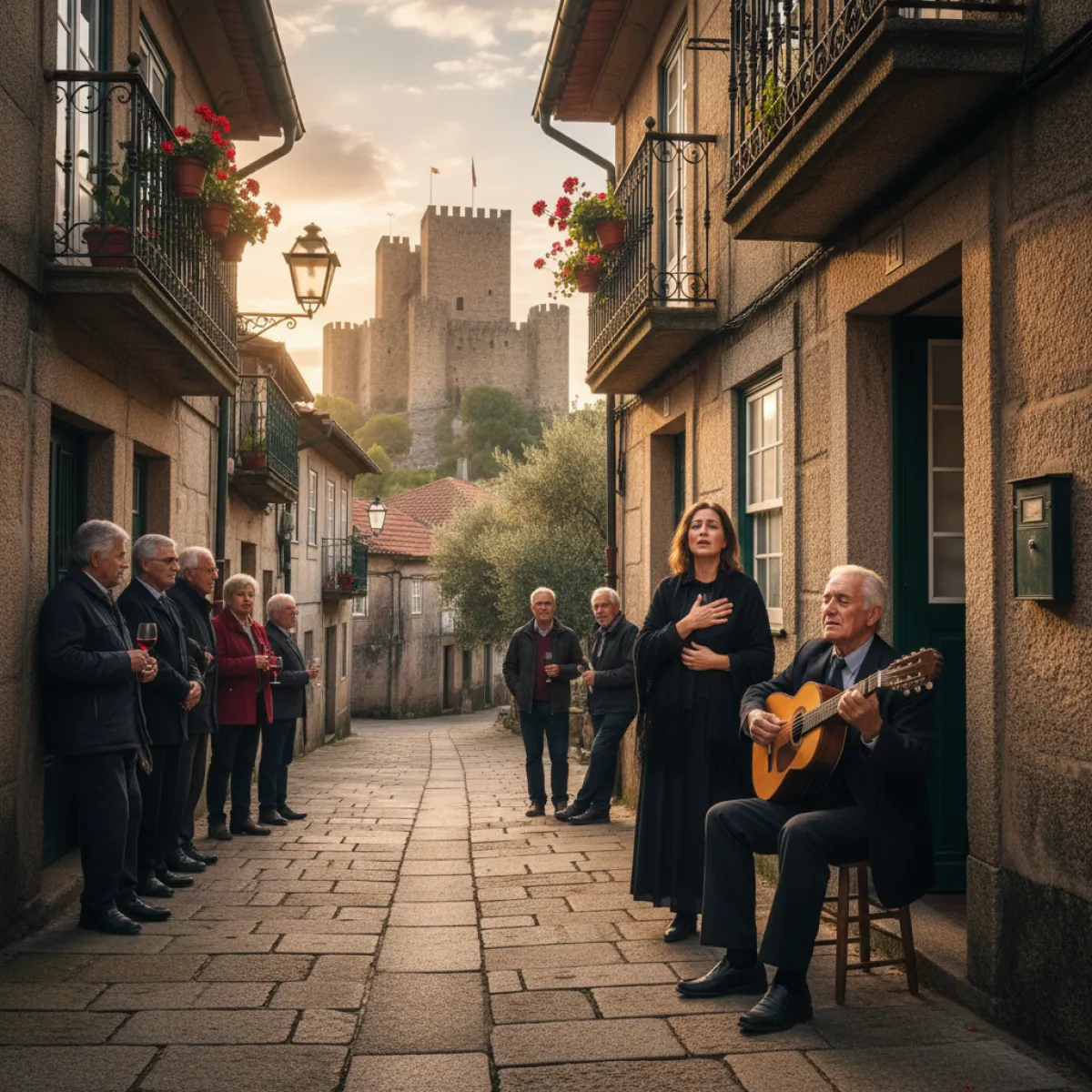
To speak of Fado in Bragança is to speak of an emotional transposition. While the genre has its roots firmly planted in the taverns of Alfama or the courtyards of Coimbra, in Bragança it assumes an austere mantle. Here, 'saudade' is not about the sea that took loved ones away, but about the land that remains, unyielding, rigorous, and eternal. The Fado heard in the small refuges of the historic center is stripped of unnecessary flourishes; it is frontier music, where Portuguese melancholy merges with Transmontano resilience.
The Rhythm of the Citadel and the Echo of Tradition
Walking through the Citadel, the city's medieval heart, one realizes that music is woven into the architecture. The Domus Municipalis, with its unique pentagonal structure, seems designed to amplify not just the voices of ancient magistrates, but the very spirit of the region. It is in this setting that the bagpipe (gaita de foles), the totemic instrument of Trás-os-Montes, finds its breath. Unlike Fado, the bagpipe is expansive, telluric, and almost pagan. Yet both share the same brutal honesty. There is no room for artifice when singing or playing at these altitudes.
To truly grasp this dialogue between silence and sound, one must venture slightly beyond the urban center. The Silence of Montesinho provides the perfect counterpoint to human music. In those villages of schist and slate, the sound of the brook and the crackle of winter hearths compose a natural symphony that explains why the music of this region is so introspective. It is a landscape that demands active listening, a quality modern travelers often forget to pack in their suitcases.
Modernity and Rupture: From the Market to the Stage
Despite the weight of tradition, Bragança does not merely live on echoes of the past. The city's youth, driven by the Polytechnic Institute, has injected a new energy into the nocturnal spaces. Mercado Club stands as the epicenter of this renewal. Where once only the voices of merchants were heard, today pulse contemporary rhythms that challenge the stillness of the Transmontano night. It is a necessary space of contrast, where jazz, electronics, and alternative rock prove that Bragança’s musical soul is capable of reinventing itself without losing its granitic identity.
This duality, ancestral fado and electronic beats, the bagpipe and the synthesizer, defines Bragança today. It is a city that understands that to preserve its essence, it must allow for dissonance. Music here is not background entertainment but a form of resistance against geographic oblivion. It is an assertion of presence in a land often described by what it lacks rather than what it possesses.
The Sensory Experience: When Music Becomes Physical
Music in Bragança is not limited to the sense of hearing; it translates into experiences that occupy the entire body. In the heart of the natural park, Serenity in Trás-os-Montes: A Yoga Experience in the Heart of Montesinho allows visitors to align their own vibration with that of the mountain. It is a study in harmony that mirrors the structure of a well-sung fado: beginning in silence, building in intensity, and resolving into deep peace.
For those seeking a more dynamic tempo, the Sabor River Kayak Expedition offers a different kind of aquatic percussion. The rhythmic stroke of paddles against the mirrored surface of the Sabor lakes creates a natural metronome while navigating through gorges that feel like a setting for a Wagnerian opera. This is the music of adventure, raw, invigorating, and a vital complement to the introspection found during city nights.
Practical Guide: Travel Notes
- Where to Listen: Look for the Bragança Fado Association for informal sessions that typically occur on Friday nights. For contemporary sounds and DJ sets, Mercado Club is the essential destination.
- What to Order: In any tavern where music breaks out, pair the moment with a glass of robust local red wine and a platter of Bísaro ham and goat cheese.
- When to Go: Autumn provides the color palette that best matches the melancholy of fado, while winter offers the ideal acoustic isolation for those seeking the pure silence of the mountains.
- Budgeting: Bragança remains refreshingly affordable. Expect to spend between €15 and €25 for a full dinner with live music.
Regional Connections: The Transmontano Symphony
The musical journey does not end at the gates of Bragança. The region is a living organism of interconnected sounds. In Mirandela, gastronomy takes on an almost rhythmic quality. In Beyond the Alheira, we discover a city where the clatter of knives on plates and the bubbling of clay pots form the soundtrack to a unique cultural resilience. It is a mandatory stop for anyone wishing to understand the 'edible soul' that sustains the frontier musicians.
Further west, in Chaves, the music becomes liquid. The Roman Legions' Legacy invites a dip into thermal waters where the sound of steam and ancient springs offers a millenary acoustic therapy. It is the perfect coda to a journey that began with fado: a transition from the melancholy of the human voice to the comfort of warm water, proving that in Trás-os-Montes, all paths lead back to a reconnection with the senses.
Bragança is, ultimately, an invitation to deep listening. It is not a city to be consumed quickly, but to be heard with the patience of someone tuning an ancient instrument. Between the fado of the taverns, the pipes of the villages, and the silence of the highlands, what one finds is the vibrant soul of a Portugal that refuses to lower its volume.