Gouveia: What's Left When Everyone Drives Past to the Summit
Gouveia is the town everyone drives through on the way to Torre without stopping. It has an unexpectedly good modern art museum, a viewpoint with a story dating back to the 1755 earthquake, and some of the best Serra cheese just steps from the centre.
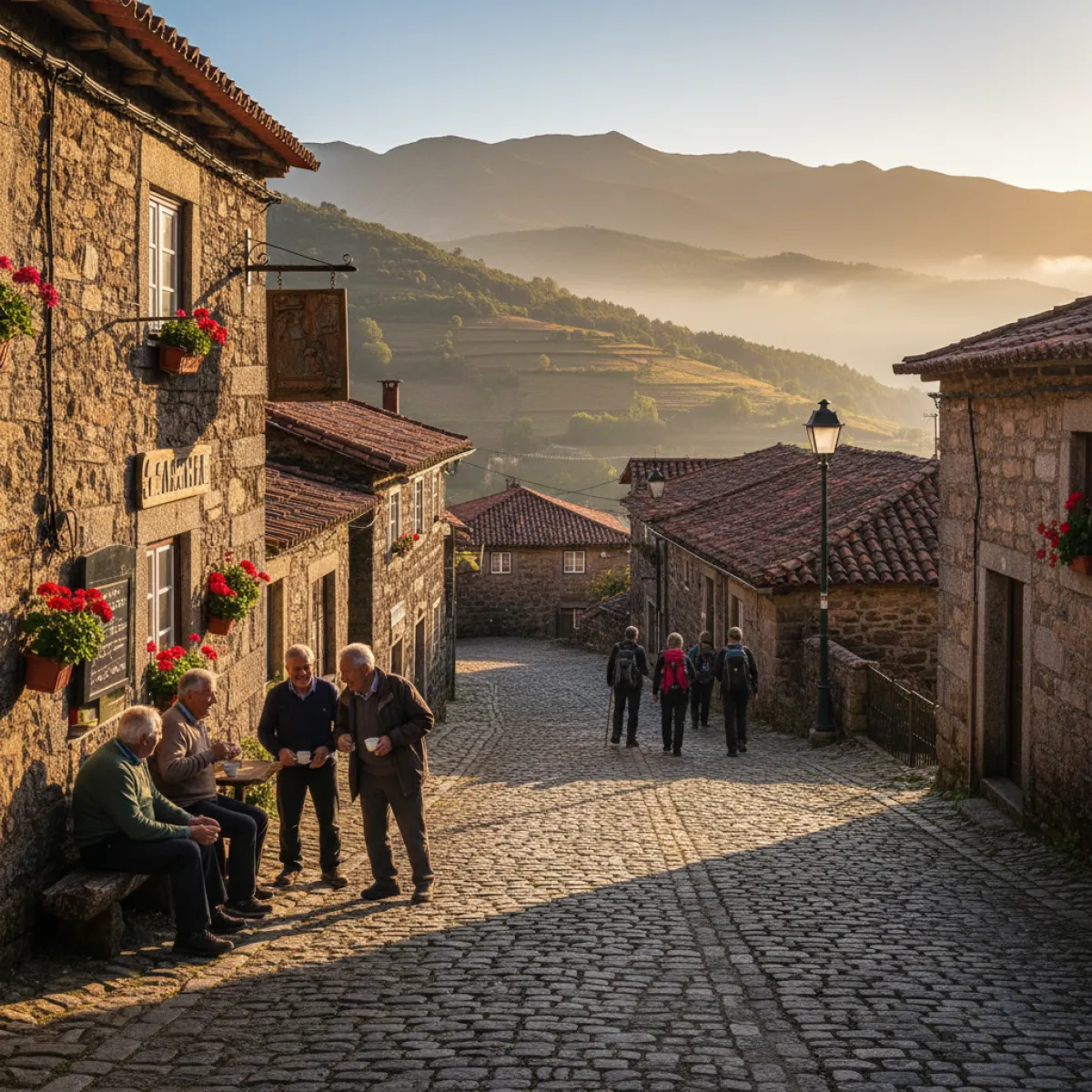
Most people who come through Gouveia do exactly that: come through. The town is a fuel stop on the way to Torre, a pause to buy Serra da Estrela cheese from a roadside shop, maybe a quick photo of the Mondego valley from a lay-by. Then they drive on. That's a mistake.
Gouveia doesn't need the Serra da Estrela to justify a visit. It has a granite old town with steep streets, a modern art museum that has no business being this good in a town this size, and a pace of life that works as an antidote to any overpacked itinerary. The problem is that nobody gives it the chance.
The Old Town on Foot
Gouveia's town centre is compact and hilly. There's no useful public transport, but you don't need any. Everything is within fifteen minutes on foot, provided you don't mind inclines. And the climbing is worth it.
The Igreja Matriz, dating from the 17th century, is the obvious starting point. It's not the most beautiful church in the region, but it has the quiet solidity of mountain churches built to last. A few metres away, the Casa da Torre deserves more than a passing glance. It's a 16th-century building, three storeys of squared granite, once belonging to the Marquesses of Gouveia. The Manueline window on the main facade is genuinely impressive: the kind of detail that in a bigger city would be surrounded by selfie sticks and multilingual information panels. Here, it's just part of the street.
Further along, the Igreja de São Pedro stands out for its exterior of blue and white azulejo tiles. It's not spectacular in the jaw-dropping sense, but it has an aesthetic honesty that suits Gouveia: no pretension, no excess, beautiful because it is. The 18th-century Igreja da Misericórdia completes a trio of churches you visit not by planning but by stumbling across them as you walk.
Look for the Pelourinho and the Fonte de São Lázaro, dated 1779. The fountain is a good spot to stop, drink some water (check it's running), and recalibrate your mental map of the town.
The Abel Manta Museum: Modern Art in the Mountains
Abel Manta was born in Gouveia in 1888 and became one of Portugal's most interesting modernist painters of the first half of the 20th century. The Museu Municipal de Arte Moderna Abel Manta, inaugurated in 1985, occupies a 17th-century building that was once home to the Counts of Caria, Vinhó and Almedina. The contrast between the baroque architecture and the modernist work inside is, in itself, a reason to visit.
The permanent collection includes around twenty works by Abel Manta, plus pieces by other contemporary Portuguese artists. It's not a big museum. You can see it in under an hour. But it's the kind of museum where you can breathe, without crowds, without competing audio guides, without the anxiety of having to see everything before the tour bus leaves. If you like painting and you're in the area, there's no reason not to go in. Check opening hours and admission fees locally, as they may vary seasonally.
Monte do Calvário: The Viewpoint That Tells a Story
Monte do Calvário, formerly known as Monte Ajax, is Gouveia's high point in every sense. You reach it via a stairway that leads to the Capela do Senhor do Calvário, built at the initiative of Jesuit priests from Gouveia's college in thanksgiving for divine protection during the 1755 earthquake.
Along the way, two small chapels depict scenes from the Passion of Christ: the Agony of Jesus in the Garden and the Kiss of Judas. But what truly justifies the climb is the panoramic view over the town's rooftops and the surrounding mountains. At the top, there are lawns, mature trees, and a bandstand that looks like it belongs in another century. It's the kind of place where you sit on a bench, eat a sandwich you brought from below, and understand why someone decided to build a town in this spot.
Come early morning if you can. Late afternoon works too, but the morning light is better and there are fewer people. Not that there are ever many people.
The Cheese, the Wine, and What to Eat
You don't come to the Serra da Estrela without eating Serra cheese. The real DOP version, made from raw Bordaleira sheep's milk and thistle rennet. You'll find good versions in some of Gouveia's regional produce shops. The difference between proper Serra cheese and the supermarket stuff in Lisbon is the difference between live fado and elevator fado.
Gouveia sits in the Dão wine region, which means reliable red wine is a constant. At local restaurants, don't overthink it: order the house wine if it's regional. It rarely disappoints.
As for restaurants, the town has options for traditional mountain cooking. Roast kid, veal, regional cured meats. I won't recommend a specific restaurant without being certain it's still open and good, but Restaurante Pontes dos Cavaleiros appears consistently well-reviewed. Check locally.
What To Do Around Gouveia
Gouveia works well as a base for exploring the Serra da Estrela without the pressure of being in the tourist epicentre. Folgosinho, a few kilometres away, is a granite village with a medieval castle and streets where time slowed down without anyone asking permission. Cabeça do Velho, the rock formation on the N232 between Gouveia and Manteigas, is a quick stop that's worth it, especially if you have children in the car who need to stretch their legs.
If you want to explore the serra in more depth, the guide to hiking the Snow Wells trail in Manteigas gives you a route that goes beyond the obvious. And for those planning to extend their trip southward, the one-day road trip from Covilhã to the Schist Villages is an excellent way to spend a full day, particularly in spring or autumn when temperatures are more forgiving.
Speaking of spring: if you're in the area between March and April, the detour to Fundão to see the cherry blossoms in the Gardunha hills is one of central Portugal's great natural spectacles. It's not far from Gouveia, and the contrast between the rugged serra and the flowering valleys is extraordinary.
Getting There and How Long to Stay
Gouveia is roughly three hours from Lisbon and two and a half hours from Porto by car. There's no direct train. Buses exist but with limited and impractical schedules. In short: you need a car. If you're doing a Serra da Estrela road trip, Gouveia fits naturally into the route, especially if you're coming off the A25 or the A23.
How long to stay? Half a day covers the old town, the museum, and Monte do Calvário. A full day allows you to explore Folgosinho and the surrounding area. Two days is ideal if you want to use Gouveia as a base for the serra without the crowds of Seia or the remoteness of Manteigas.
Accommodation: there are rural tourism options in the area that surpass most urban hotels in both quality and character. Check prices and availability directly, especially during summer months and long weekends.
The Verdict
Gouveia isn't the prettiest town in the Serra da Estrela. That title probably goes to Linhares or Manteigas, depending on your criteria. But it's the town where you best understand how people actually live in the mountains year-round, not just on snowy weekends. It has history, it has art, it has good food, and it has that slow rhythm you can't manufacture. Stop. Park. Climb to Calvário. Then decide if you really want to leave.